Apple A11 Bionic has surpassed all my currently owned "desktop class" machines in terms of mobihf code. This performance is stupendous. More on this soon. #mobihf#apple#a11bionic
c.f. mobihf: https://t.co/rKqL9pCZ9R
and https://t.co/EujnviiDCX
I’m glad Apple is finally giving parental controls some attention. But parents don’t just need more controls. We need the controls to actually work.
I hope there’s a major under-the-hood improvement here focused on syncing, reliability and consistency across devices. This stuff just hasn't worked right.
A French engineer who lives quietly in Paris has spent 30 years writing software that the entire internet now runs on without knowing his name.
He wrote the code that streams every YouTube video, every Netflix show, every TikTok clip. He wrote the code that runs the virtual servers underneath AWS, Google Cloud, and Microsoft Azure. He calculated more digits of pi than anyone in history. He has no Twitter. He has no marketing. He just keeps shipping.
His name is Fabrice Bellard.
Here is the story, because almost nobody outside the systems programming world knows what one man has built.
Fabrice was born in 1972 in Grenoble, France. He studied at École Polytechnique, the top French engineering school. He never went to Silicon Valley. He never built a startup empire. He just wrote code.
In 2000 he started a project called FFmpeg, an open-source multimedia framework for encoding, decoding, and streaming video. He was 28. The project did one thing nobody else had done well. It handled every video and audio format that existed, in one library, on every operating system. He led it himself for years.
Today FFmpeg is the invisible engine of the internet. YouTube uses it. Netflix uses it. VLC uses it. Chrome and Firefox use parts of it. Every Android phone, every iPhone, every smart TV, every video editing tool you have ever touched runs FFmpeg somewhere underneath. If you have watched a video on a screen in the last 20 years, Fabrice's code processed it.
He was not done.
In 2003 he started QEMU, a machine emulator and virtualizer. He wrote it solo until version 0.7.1 in 2005. QEMU lets you run any operating system on any other operating system. It became the foundation of modern virtualization. KVM, the Linux kernel hypervisor, runs on top of QEMU. Every major cloud provider, AWS, Google Cloud, Microsoft Azure, IBM Cloud, runs virtual machines on infrastructure built around it. The Quick Emulator is the most cited piece of cloud infrastructure code on Earth.
He kept going.
In 2001 he won the International Obfuscated C Code Contest with a small C compiler that grew into TCC, the Tiny C Compiler. TCC can compile and boot a Linux kernel from source in under 15 seconds. In 2004 he calculated the most digits of pi ever computed at the time, using a personal desktop computer and an algorithm he derived himself called Bellard's formula. In 2011 he wrote a complete PC emulator in pure JavaScript that runs Linux in your browser, a project called JSLinux that engineers still cannot believe is real.
In 2019 he released QuickJS, a small but complete JavaScript engine that fits where V8 cannot. In 2021 he released NNCP, a neural network based lossless data compressor that immediately took the lead on the Large Text Compression Benchmark.
Then he turned his attention to large language models. He built TextSynth Server, a web server with a REST API for running LLMs locally. He released ts_zip and ts_sms, compression utilities that use language models to compress text and short messages at ratios traditional algorithms cannot reach. He released TSAC, a very low bitrate audio compression system. In December 2025 he released Micro QuickJS, a new JavaScript engine for microcontrollers, separate from QuickJS, designed for environments with almost no memory.
Fabrice co-founded a telecom company called Amarisoft in 2012, where he serves as CTO. Amarisoft builds 4G and 5G base station software used by carriers and labs around the world. He has been running it for over a decade while continuing to ship personal projects from his own home page at bellard dot org
He has no Twitter. He has no Instagram. He gives almost no interviews. His personal website is a flat list of projects with no styling, no fonts, no marketing copy. Just titles and links.
A quiet French engineer who never moved to Silicon Valley wrote the code that quietly runs the internet.
He is still shipping.
How should students choose an engineering branch in 2026? Is it about ranks, packages, or passion?
In an insightful conversation on Prof. Mahesh Panchagnula’s podcast, IIT Madras Director Prof. V. Kamakoti shares his perspectives on branch selection, careers, AI, semiconductors, interdisciplinary learning, and India’s vision for Viksit Bharat 2047.
Drawing from his own journey and decades of experience, Prof. Kamakoti challenges conventional branch hierarchies, emphasising that every discipline plays a vital role in driving technological progress. He encourages students to follow their interests, build strong fundamentals, use AI responsibly, and focus on long-term excellence rather than short-term salary expectations.
Watch the full episode: https://t.co/DMZmIpn4N2.
@iitmadras
With all the E20 Petrol now across India, noticing some issues in not so older cars, yes cars sold in the last 2-3 years are E20 compliant, but what about older cars @volklub
Is the Govt indirectly telling users not to buy Petrol cars as of now?
I have moved to EVs but reality is not everyone can do that and when ppl buy cars and keep them for 10-12 years so why force E20 Petrol on cars that are not designed for that engine, won’t it degrade those vehicles.
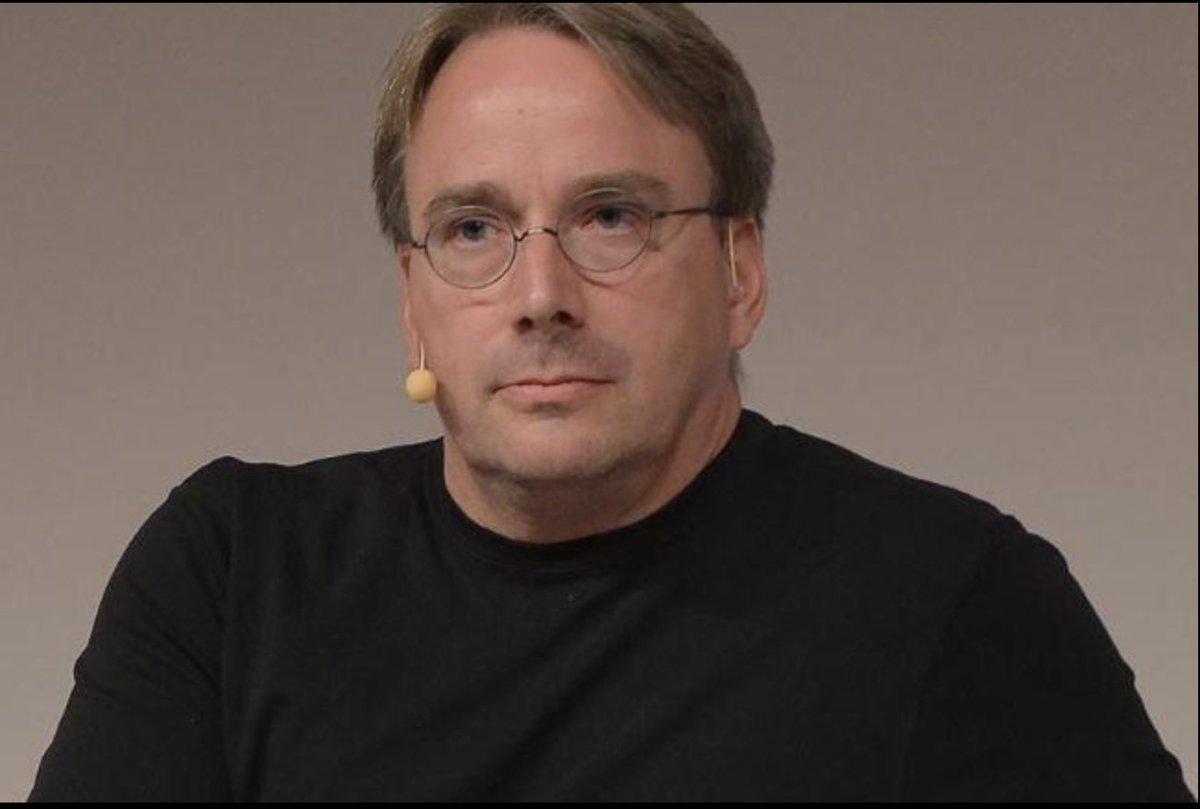
The creator of Linux just publicly called out the AI hype. Word for word.
Linus Torvalds took the stage at Open Source Summit 2026 and said this:
"When I see people saying 99% of our code is written by AI, I literally get angry. Because those same people — I can pretty much guarantee — 100% of their code is written by compilers. But they never say that."
He is not anti AI. The Linux kernel saw a 20% jump in submissions this release because of AI tools. He uses it. He gets it.
His point is something most people are too afraid to say.
AI is a productivity tool exactly like compilers were. Compilers boosted programming by 1000x. AI adds another 10x on top. Enormous. But nobody says "the compiler wrote my code." So why are we saying AI wrote it?
He also flagged something nobody is talking about.
AI is flooding small open source projects with drive-by bug reports. Someone runs a prompt, files a report and disappears when asked for a patch. Maintainers with one or two people are drowning trying to keep up.
"Sometimes AI reports a bug and when you ask for more information the person has done that drive-by and does not even answer your question. That is the real burnout issue."
And his final warning was the sharpest of all.
"People who do not understand the complexity of systems will prompt systems and write processes that will fail."
The AI hype crowd is very loud right now.
Linus has been building real systems for 35 years. When he talks, engineers listen.
Full interview here:
https://t.co/LmXJtvKc4O
30 minutes into a family tech support call : one sudden thing hit me - why not restart the phone and try the same thing again - and it worked. old trick, new devices.
https://t.co/M9WGZJPdc6
this is pretty cool - i remember a few years ago i had proposed something like this in a hackathon - but that time there was gtp models then
A 22-year-old graduate student in Kazakhstan got so angry at journal paywalls in 2011 that she built a pirate website holding 88 million scientific papers, and last month she turned the whole thing into an AI that lets you ask one question and get the actual research as the answer.
Her name is Alexandra Elbakyan, and the website is called Sci-Hub.
The AI she just launched is called Sci-Bot. It lives at https://t.co/6w0IBtOEYB and almost nobody outside academia knows it exists yet.
Here is the story, because it is one of the strangest things to happen in science publishing in the last 50 years.
Elbakyan was born in Almaty in 1988, the year the Soviet Union started to collapse. She taught herself programming at 12. She read Soviet science books that explained things her family used to call miracles. She got into computer security at university and graduated in 2009 with a degree she barely needed because by then she was already a serious hacker.
Alexandra moved to Moscow that fall. Then Germany. Then a research internship in the United States. She was working on brain-computer interfaces, the kind of research that requires you to read hundreds of papers a year just to keep up with the field.
And every single one of those papers was locked behind a journal paywall that cost between 30 and 50 dollars to read once.
She did the math. A graduate student in Kazakhstan could not afford to read science.
The first thing she did was learn how to get around the paywalls one paper at a time. She passed the trick around to other students. They asked her for papers constantly. She got tired of doing it manually.
So in September 2011, in three days, she wrote a script that automated the whole thing. A user pastes a DOI. The script logs in through a donated institutional credential. The paper comes back free. The website caches it.
The next person who asks for that paper gets it instantly because the previous request already saved a copy.
That was Sci-Hub. Three days of code. One graduate student. Done.
15 years later, the cache holds 88 million scientific papers. Almost every piece of scholarly literature published before 2020 is sitting on her servers. Researchers in 190 countries use it. Studies in Nature have shown that roughly half of all academic paper downloads worldwide now go through Sci-Hub, not the publishers who actually own the copyrights.
Elsevier sued her in 2015 and won a 15 million dollar judgment. She did not pay. The American Chemical Society sued her and won an injunction. She did not comply. Courts in India, France, Russia, and the UK have tried to block the domain. She just moves it. https://t.co/3sAWJzNe8I. https://t.co/tGIETesZ8i. https://t.co/H5WQ1f9lqR. The site has had over 20 domains and is still up.
Nature put her on its list of the 10 people who mattered most to science in 2016. The New York Times compared her to Edward Snowden. The Verge called her the pirate queen of science.
She has not been to the United States in over a decade because she would be arrested at the airport.
The Sci-Bot launch in April 2026 is the part that nobody is talking about.
She took the 88 million paper database and put a small language model on top of it. You ask a question in plain English. The model searches the entire shadow library, pulls the relevant papers, synthesizes an answer grounded in real citations, and links you to the full text of every source. Free. No login. No institutional credential. No paywall.
Three real scientists tested it for a Chemical and Engineering News article last month. They asked it medical and chemistry questions. The radiologist said the answer he got was usable. The chemist said the gaps in recent literature were obvious but the older science was solid. The publisher community is furious.
What she built is what the paid academic AI tools are trying to build. Except the paid ones are limited to what their parent publisher legally owns. Hers is limited to almost nothing.
Alexandra still lives somewhere in Russia. She does not give her address. She does not do video interviews. She gives talks over Skype with the camera off. She runs the largest illegal library in human history from a laptop and a donation page.
A graduate student who could not afford to read science built the system the entire scientific community now quietly depends on.
The publishers have spent a decade trying to shut her down.
She just shipped an AI that makes their entire business model outdated.
It is not merely important to create an inventor, it needs to create an ecosystem around for the inventor to thrive. And that is precisely what is missing here.
India trains the engineer.
America files the patents.
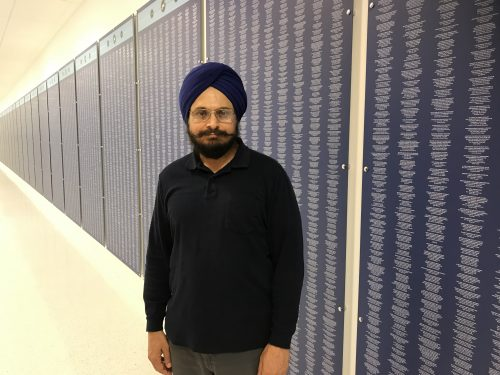
Gurtej Sandhu was raised in Amritsar and trained at IIT Delhi.
He now holds 1,299 US patents at Micron, Edison topped out at 1,093.
Sandhu is the 7th most prolific inventor in American history.
His titanium nitride deposition work is why every DRAM cell in your phone and every GPU training a foundation model actually holds charge.
Micron, Samsung, and SK Hynix own 95% of global DRAM.
None of them are Indian.
We export the inventor.
We import the chip.
India trains the engineer.
America files the patents.
Gurtej Sandhu was raised in Amritsar and trained at IIT Delhi.
He now holds 1,299 US patents at Micron, Edison topped out at 1,093.
Sandhu is the 7th most prolific inventor in American history.
His titanium nitride deposition work is why every DRAM cell in your phone and every GPU training a foundation model actually holds charge.
Micron, Samsung, and SK Hynix own 95% of global DRAM.
None of them are Indian.
We export the inventor.
We import the chip.
There is nothing more powerful than well-informed optimism. It has to be well-informed though. The "everything will be fine" type of optimism may also be somewhat useful, but it's not as useful as the "Hmm, what if we tried x?" kind.