If we only use AI to make the things that we already make, just faster, then we're definitely missing out on the most interesting part.
From my talk at @lennysan’s Summit, here are four ideas for raising the ceiling, not just the floor:
- Have a point of view [5:38]
- Encode your standards into the machine [9:07]
- Don't confuse done with good [12:21]
- Unleash creativity and artistry [16:19]
Full talk here: https://t.co/E3fvBWWtHs
Alexandr Wang on what matters in an age of abundant intelligence:
“The scarce resource isn’t going to be intelligence or agency. I really think it’s going to be vision and ambition.”
“Do you have a clear view of what you want the world to look like in the future? What is the one way in which you wanna put your finger on the scale for how the future of the world will develop?”
“AI will make that easier... But the flip side of that is then all of a sudden you can dream bigger.”
We’re sharing a solution to the Navier-Stokes Millennium Prize Problem, one of the deepest problems at the frontier of mathematics.
The proof was produced by a group of agents, using an OpenAI next-generation model significantly more capable than GPT-6 Astra.
The problem concerns whether the description of smooth three-dimensional fluid motion modeled by the Navier-Stokes equations can break down. It has remained unresolved for roughly 90 years.
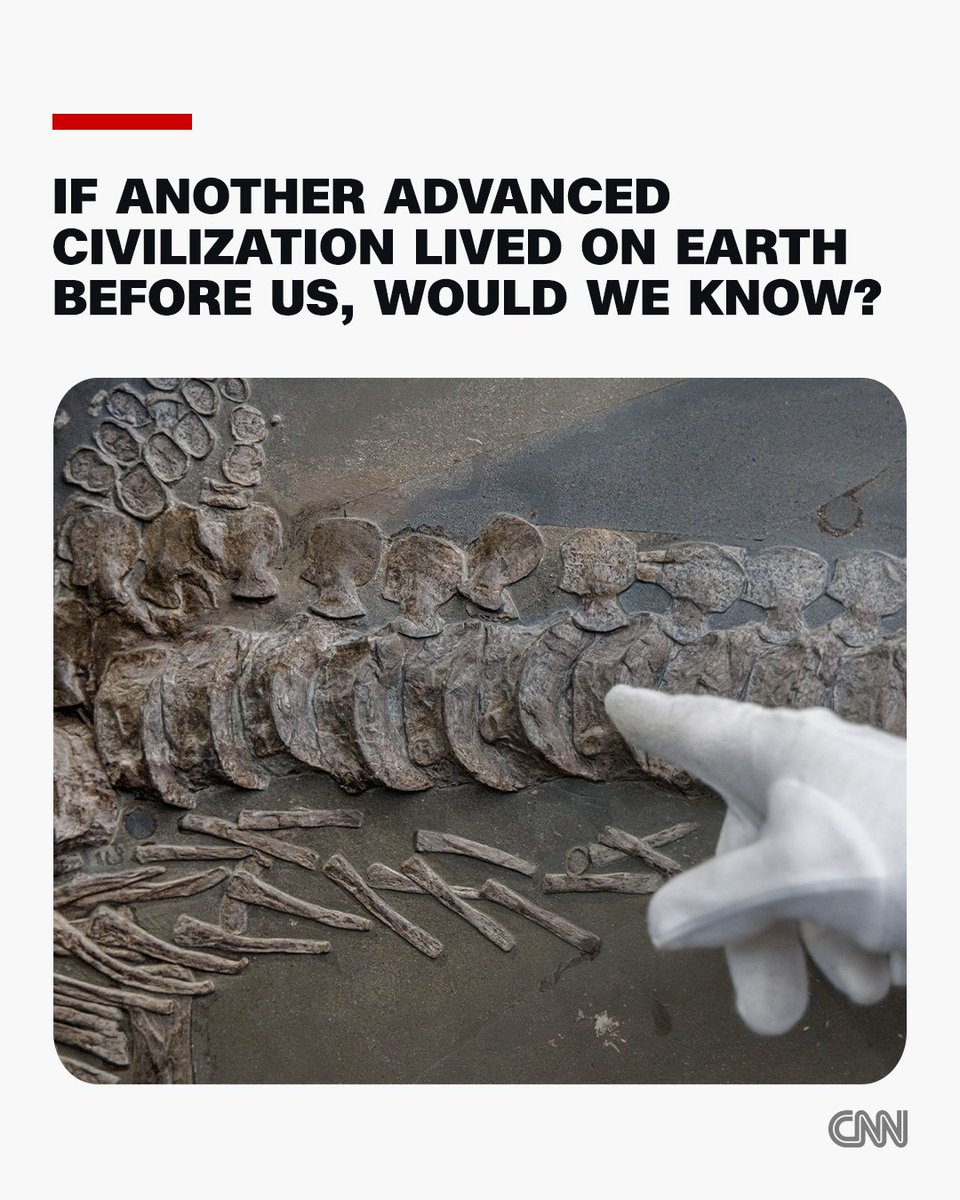
Today, only around 1% of the Earth’s surface is urbanized and it wouldn’t take long for what we’ve built to be erased. The further back in time a hypothetical civilization existed, the harder it would be to find direct evidence, like objects. https://t.co/jnathkJnxQ
Legacy Media types are calling this Alex Karp interview a “crash-out” so that’s your first clue that he is actually saying something extremely insightful. He is articulating what real “AI safety” looks like in the enterprise.
Not abstract alignment research or certification by a government-run DMV for AI. Real AI safety for businesses is the ability to control their own data, model weights, and compute — so a frontier lab can’t hoover up their proprietary knowledge and turn it into their next product.
As Karp explains, technical customers want “control over their compute, their models, their data stack, and their alpha. They want to know they own the means of production, and it’s not being transferred to someone else.”
Don’t think that can happen? Just look at Figma. According to The Information, Anthropic “blindsided” its then-business partner with the launch of Claude Design. Figma’s founder said Anthropic had not been “consistently honest” with them. Anthropic’s chief product officer had even served on Figma’s board until three days before the launch of Claude Design. Figma’s stock has fallen sharply this year while Anthropic’s valuation has surged.
This isn’t an isolated example. Anthropic has launched Claude Science, Claude Security, Claude Legal, and of course Claude Code — each expanding into categories previously served by companies building on top of their models. The pattern is consistent: watch where value is being created, then move in directly. Dominate the model layer, then use that position to capture the most lucrative verticals.
Dario has argued that open source models powerful enough to compete with Anthropic are “dangerous.” But dangerous to whom? Not to enterprises that want to retain control over their data and workflows. Dangerous to a business model that benefits from customers having few real alternatives at the model layer.
As Karp exposes, true enterprise safety isn’t trusting that a lab’s future roadmap won’t include your business. It’s retaining the ability to choose — at the model layer — who gets to see and use your alpha.