NEW: Muse is Zuck’s latest bid to reinvent Meta. But can a company synonymous with safety & privacy debacles become the AI-powered voice in everyone’s ear? A deep dive from me, @MiaRSato, @vicmsong & @lauren_feiner.
Thx to current/former employee sources. https://t.co/Bo6woq6HT0
I’m on vacation but had some thoughts about the Meta glasses backlash + asked an expert how Meta’s handled privacy concerns thus far.
https://t.co/olMfaBwIYZ
I wrote about AI wearables — not just glasses — and how they make me sometimes feel like a spy. A thing I don’t always feel great about, even though I’m just doing my job by testing them.
https://t.co/zUQq8jAA2A
It’s hot as balls out here in many parts of the world. This week’s Optimizer is about how hydrating with plain water is good enough most of the time — and when it actually makes sense to use electrolyte powders or sports drinks.
https://t.co/1JYs60y0te
:Taps sign:
The number one rule of wearable design is that they must be comfy and stylistically versatile enough for everyday wear.
These... are not that.
https://t.co/Mrxf2KwRA8
If you're seeing stories pop up on the proliferation of the "new SEO" — optimizing for AI — and how it works, my colleague @MiaRSato did a great story on this way back in April. Give it a read: https://t.co/Qk0rdd3DOH
The watchOS site updated to say Series 9 and later is supported. This makes more sense given that’s when the chip was updated to better support AI features.
Loved this discussion at the Fashionology Summit with @minafahmi, @lizwandersworld, @eleelenawa, and @vicmsong on how each of us approaches fashion in wearables. I’m biased, but this may have been the most stacked founders panel of this new wave of wearables.
This week in Optimizer, I expand on Fitbit nostalgia in light of the new Fitbit Air announcement. A Fitbit Charge HR was my first ever tracker, and while many ways, the Air is a return to Fitbit's roots... AI health coaching is a new era in health tech.
https://t.co/65KTvpbpMj
Sat down with the Science Quickly podcast to chat peptides — what's the internet hype and what's the science? A fun conversation about an increasingly cursed topic.
https://t.co/9CAog4iCvD
This week on Optimizer, my $5K smart bed tells my spouse to drink alcohol every night because it improves their snoring. It also introduced a sleep leaderboard to turn our nightly Zzz's into a competition.
AI health summaries: Still stupid.
https://t.co/AeQcbTRD6z
Instead of doing 12 separate smart glasses reviews, I wrote about my experience with the category overall. With some great photos to go along with it.
Gift link: https://t.co/RbzELRph1w
I spent over a year testing over-the-counter CGMS (also known as glucose biosensors) as a non-diabetic.
It helped me get a MAFLD diagnosis. It also highlighted the shortcomings of wearable tech, data overload, and how mental health is an afterthought.
https://t.co/dOGWZ2bhDz
As part of this week’s Apple 50 package, today’s Optimizer is all about how the Apple Watch shaped so much of modern health tech — and in some ways, stands in opposition to where wellness trends are headed.
https://t.co/svXjmZD8O3
Got some hands-on time with Project Aura and two other AI glasses. A big thing for me is that Google has some interesting ideas on how to address some of the biggest problems with smart glasses — the software.
https://t.co/yuD37IN85t
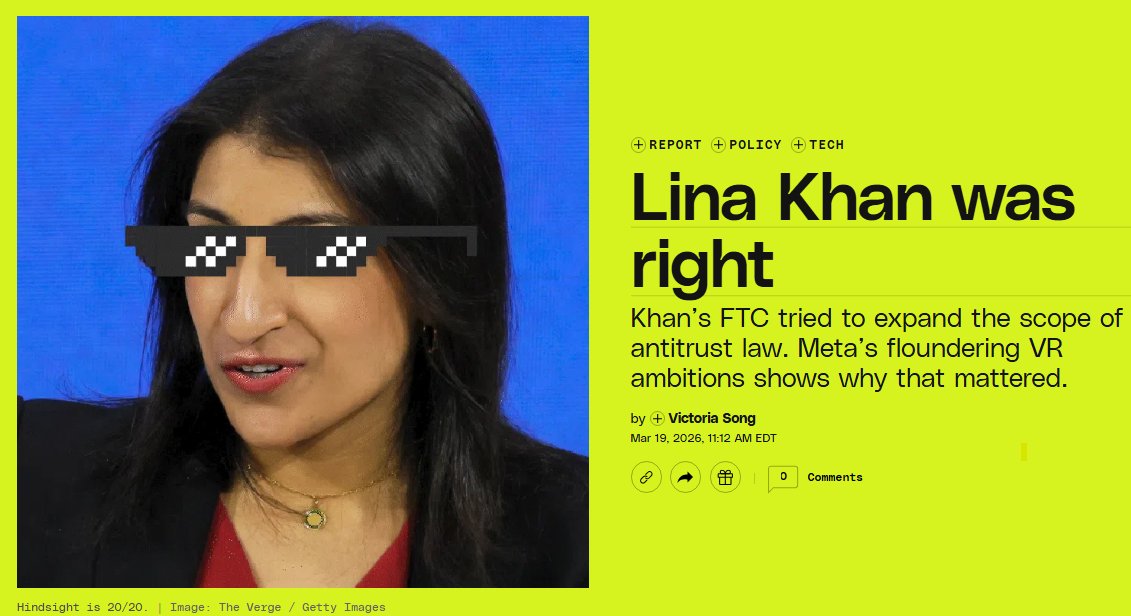
The FTC’s Meta lawsuit was often framed as an abstract attempt to rein in Big Tech. But in the end, the acquisition’s human cost was obvious — and an example of precisely why antitrust law matters.
“Bringing to light that [Supernatural] was a core way for communities to stay healthy shows that there were real stakes here.”
After my Supernatural report last month, I chatted with former FTC Chair Lina Khan to talk about why her agency’s failed attempt to block Meta’s acquisition mattered.
Critics mocked the case at the time but hindsight is 20/20.
https://t.co/cqKeekrliO