@bo66ie29 An I think the UK experienced exactly that as their freespeech & safe streets deteriorated in just two decades, sinister post Blair stress syndrom: PBS
Time to heal and become Great Britain once more.
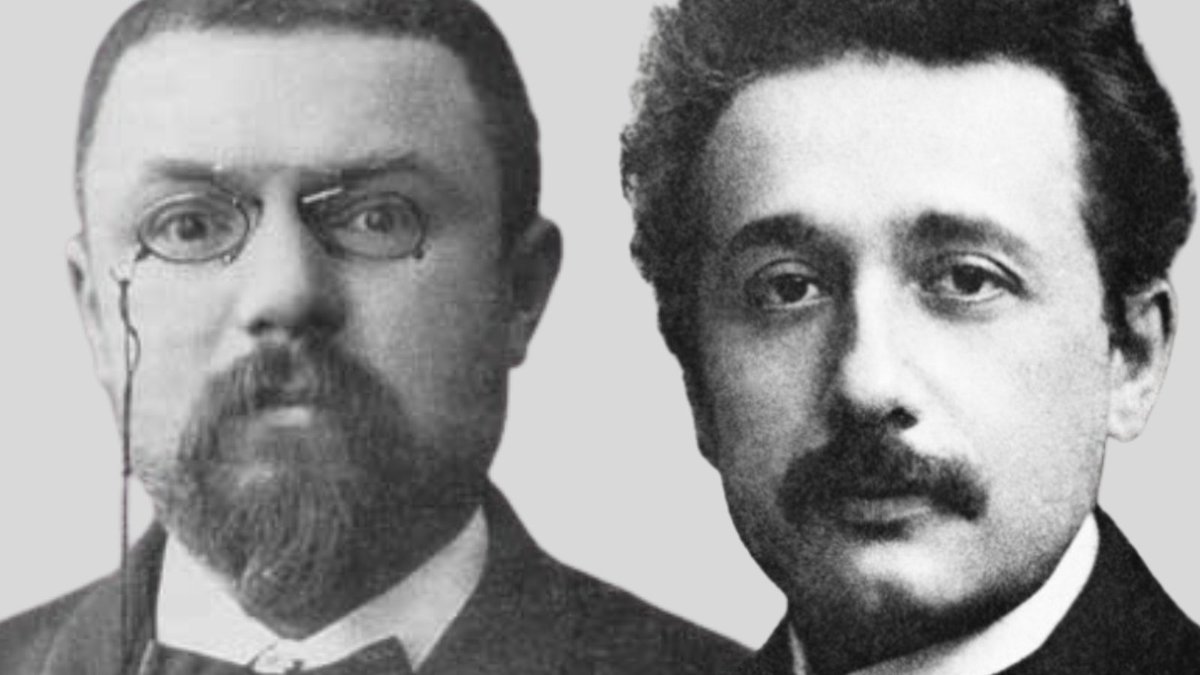
Albert Einstein once remarked, “You know, Henri, I began by studying mathematics, but eventually turned to physics.”
Henri Poincaré asked, “Why was that?”
Einstein replied, “Because although I could distinguish true statements from false ones, I couldn’t determine which were truly important.”
Poincaré smiled and responded, “That’s quite interesting, Albert. I began with physics, but ultimately chose mathematics.”
Einstein, intrigued, asked, “And why did you make that change?”
Poincaré answered, “Because I couldn’t tell which of the important facts were actually true.”
The exchange captures, with subtle wit, the contrasting philosophies of two of the greatest scientific minds.
I have said this before:
Movie makers raised on modern movies are shit.
Same for all media
Pokemon started because the creator liked collecting bugs and exploring as a kid, not just playing other video games.
Inbred Media.
You can't make music out of all samples forever.
The right kind of Americanism 🇺🇸 is aspirational in all the best ways.
Make more of your life, bring value to the world for you, your family, your community
Not because it is easy
but because it is hard and good
The leap of faith
is the hope of something meaningful beyond that bold step.
The bold step that takes you beyond that point where a bit of fear froze you in your track. The bold step when you decided: you're doing it despite the fear.
It moves you cross the bridge to your call.
A landmark study has found that two years of regular, structured exercise can dramatically rejuvenate the aging heart, effectively turning back the clock by as much as 20 years in previously sedentary middle-aged adults.
Conducted by researchers at the University of Texas Southwestern Medical Center and published in the journal Circulation, the trial involved healthy but inactive adults aged 45–64. Participants followed a supervised exercise program four to five days per week, combining moderate aerobic training (such as walking, cycling, or swimming), high-intensity intervals, and strength sessions.
After two years, the exercise group showed significant improvements in cardiovascular function. Their hearts became more elastic and efficient at filling with and pumping blood, changes that made their heart performance resemble that of people 15–20 years younger. The control group, which did not exercise, showed continued age-related decline in heart stiffness.
This NIH-funded study is one of the longest and most rigorous trials demonstrating that it’s never too late to start exercising in middle age, and that consistent effort can produce profound, measurable reversal of age-related heart changes.
[Howden EJ, Sarma S, Lawley JS, et al. Reversing the Cardiac Effects of Sedentary Aging in Middle Age—A Randomized Controlled Trial: Implications for Heart Failure Prevention. Circulation. 2018;137(15):1549-1560. doi:10.1161/CIRCULATIONAHA.117.030617]









![Rainmaker1973's tweet photo. A landmark study has found that two years of regular, structured exercise can dramatically rejuvenate the aging heart, effectively turning back the clock by as much as 20 years in previously sedentary middle-aged adults.
Conducted by researchers at the University of Texas Southwestern Medical Center and published in the journal Circulation, the trial involved healthy but inactive adults aged 45–64. Participants followed a supervised exercise program four to five days per week, combining moderate aerobic training (such as walking, cycling, or swimming), high-intensity intervals, and strength sessions.
After two years, the exercise group showed significant improvements in cardiovascular function. Their hearts became more elastic and efficient at filling with and pumping blood, changes that made their heart performance resemble that of people 15–20 years younger. The control group, which did not exercise, showed continued age-related decline in heart stiffness.
This NIH-funded study is one of the longest and most rigorous trials demonstrating that it’s never too late to start exercising in middle age, and that consistent effort can produce profound, measurable reversal of age-related heart changes.
[Howden EJ, Sarma S, Lawley JS, et al. Reversing the Cardiac Effects of Sedentary Aging in Middle Age—A Randomized Controlled Trial: Implications for Heart Failure Prevention. Circulation. 2018;137(15):1549-1560. doi:10.1161/CIRCULATIONAHA.117.030617]](https://pbs.twimg.com/media/HKyBM7mWIAAqrdh.jpg)


