@ArmandDoma@broseph_stalin Critical geography is not devoid of empiricism. Here is an article from Wyly et al., the same lead author whose abstract is circulating among YIMBY Twitter: https://t.co/EziMJ140El (https://t.co/STz160TTdn)
@ebwhamilton Dr. Wyly’s classes (article author) in particular exposed me to a rich suite of quantitative tools, and combined with the department’s bent for critical urban research, were eye-opening to me as a student and researcher-in-training and continues to be invaluable to my work. 3/3
@ebwhamilton I can’t speak for all geography departments, but at UBC, we were trained in a number of “technical geography skills” in GIS, cartography, data visualization, spatial statistics, and other applied social science & economic techniques. 2/3
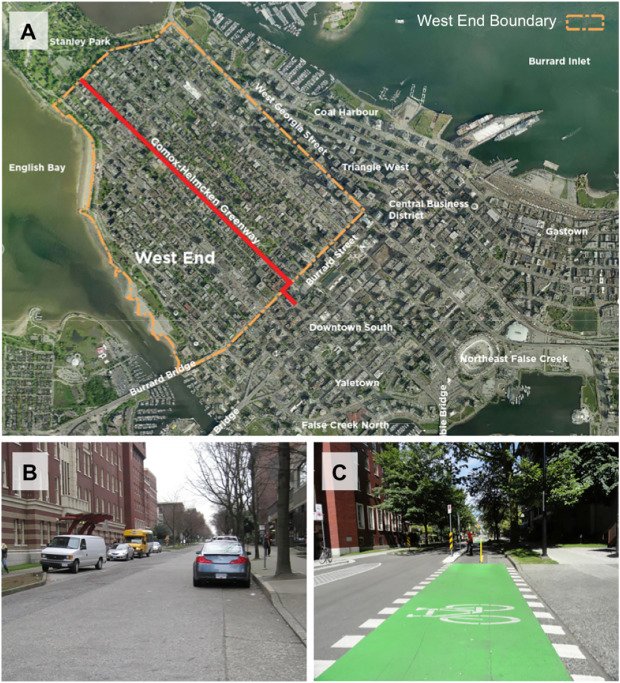
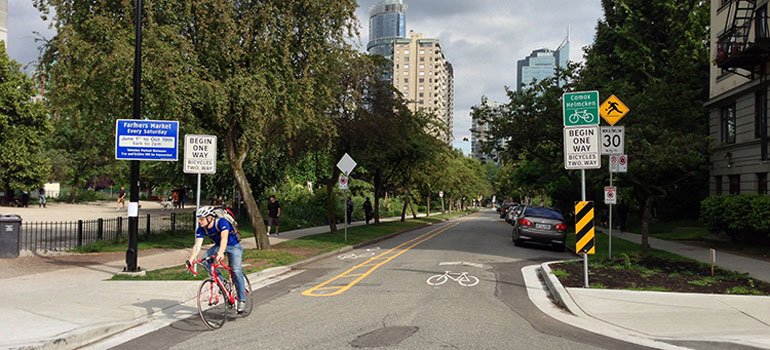
@EmilyRennalls Our study of the Comox-Helmcken Greenway in the City of Vancouver's West End neighbourhood uses the latter approach with a travel diary. We found a statistically significant change in cycling trips when compared to a control group. https://t.co/5FqfOBGTd1 2/2
@EmilyRennalls Two ways to evaluate the causal effect of cycling infrastructure on bike trips. First, facility usage (e.g., count of bike trips), but that is problematic as it may simply be capturing diverted cyclists. The second is changes in travel behaviour (e.g., travel diaries, GPS). 1/2
Excited to share our new paper. Using a rigorous longitudinal research design, we found that an urban #greenway (ped/cycle improvement) doubled physical activity but halved sedentary behaviour. @HealthyCityNet @evelynedeleeuw @sustrans @kteschke https://t.co/peSxDx1DZZ