"When you fail, be obstinate... never give up."
Get some valuable career advice from our 2023 Nobel Prize laureates Katalin Karikó, Claudia Goldin and Anne L'Huillier.
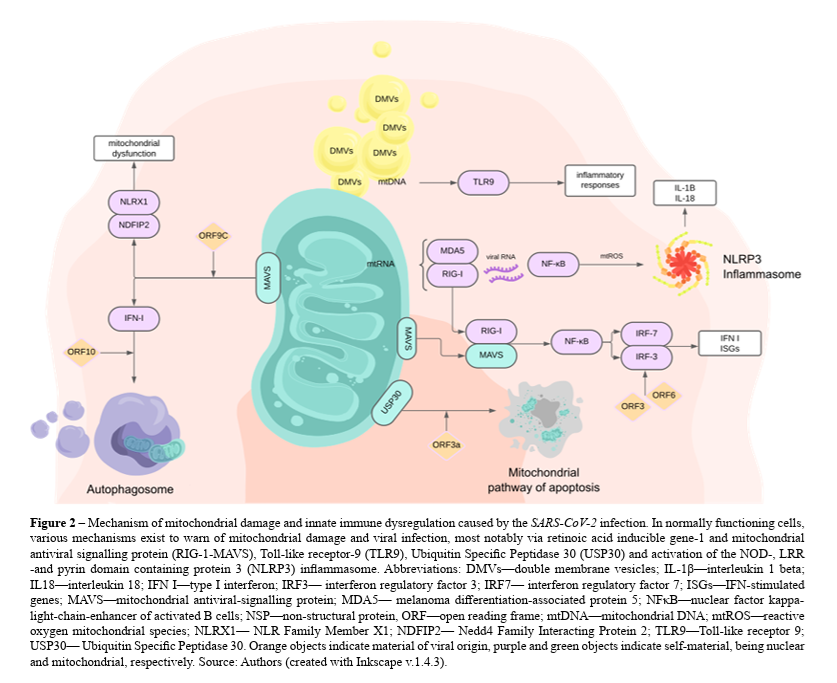
Mitochondria in SARS-CoV-2 infection: Immune interactions and molecular approaches in the Post COVID-19 condition
🚨SARSCoV2 doesn’t just infect you. It hijacks your mitochondria, the cell’s power plants and immune alarm system, and can leave them wrecked long after the virus is gone. That double hit may explain why some people never fully “get their energy back.”
➡️This interesting Brazilian review synthesizes how SARSCoV2 targets mitochondria and how that damage helps drive both acute disease and post-COVID-19 condition (PCC/LongC0VID).
➡️Review findings:
- Viral proteins (ORF9b, ORF10, ORF3a, ORF9c, Spike) interact with mitochondrial receptors, blunt MAVS/type-I interferon signalling, raise ROS, impair mitophagy, and promote apoptosis and mtDNA release as DAMPs.
- Released mtDNA and mtROS activate NLRP3 inflammasome and cGAS-STING pathways, amplifying cytokine storm (TNF-α, IL-1β, IL-6, IL-18) and shifting metabolism toward glycolysis while suppressing OXPHOS and ATP production.
- Specific mtDNA variants (e.g, 16223T and several East-Asian/Slovak haplotypes) associate with higher severity risk, others (7028C, 249delA, 16189T>C) appear protective. Additional variants link to cardiac, muscular, or neurological sequelae.
- In PCC/LongC0VID persistent mitochondrial defects include reduced PBMC ATP, lower muscle complex I activity, altered fusion/fission proteins (OPA1/PGC1α down, DRP1/FIS1 up), and metabolic reprogramming toward fatty-acid oxidation with excess ROS and lactate.
- These energy and inflammatory defects map onto fatigue, myopathy/cardiomyopathy, and cognitive/neurological symptoms.
➡️Vaccination or reinfection impact:
This review contains no mention of vaccination, boosters, hybrid immunity, or reinfection impact.
➡️Importance of this review:
It positions again mitochondria and mtDNA as a single convergent axis linking genetic susceptibility, viral immune evasion, acute hyperinflammation, and chronic multi-organ energy failure. That framing also suggests mitochondria-targeted strategies (CoQ10, MitoQ, NAC, exercise, omega-3s/B vitamins) as possible rational next steps and highlights the need for larger longitudinal genetic studies.
‼️So, this review of the available science underscores that SARSCoV2 does not merely infect cells, it systematically wrecks the organelles that produce energy and launch antiviral defenses, leaving a self-reinforcing loop of ROS, inflammasome activation, and ATP collapse that can persist as organ-level failure long after the virus itself is gone.
#AvoidSars2 #AvoidReinfections
https://t.co/I3MIKxFmDq
Scientists have extracted mitochondria from a woman’s leg muscles and injected them into her eyes in an attempt to treat severe blindness
https://t.co/8sW4vdqgzf
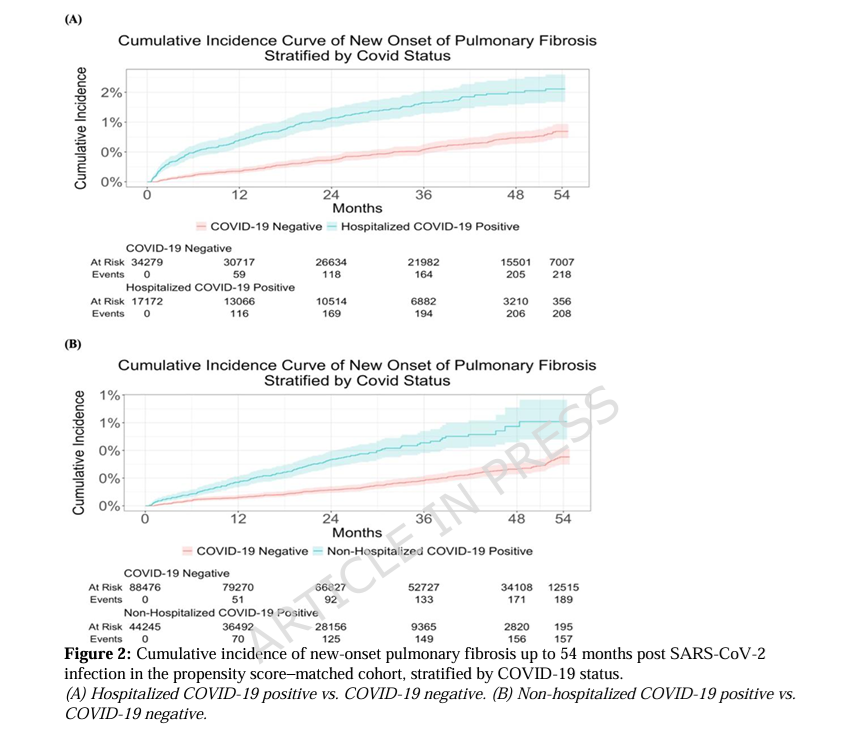
Incidence of new-onset pulmonary fibrosis 4.5 years post SARS-CoV-2 infection in an academic urban medical center
🚨IMPORTANT STUDY with the expected BAD NEWS!
🚨Even mild COVID roughly doubles your risk of new pulmonary fibrosis lasting 4.5+ years, and the fibrosis that follows brings far more pneumonia, respiratory failure & exacerbations. #LongC0VID
➡️This large retrospective cohort study from Montefiore Health System( March 2020–August 2024) examined new-onset clinical pulmonary fibrosis (PF, via ICD-10 codes) up to 4.5 years after SARSCoV2 infection,
➡️Follow-up runs from index date until new-onset PF, death, or the end of observation (August 2024), whichever came first,
- Only the earliest infections (spring/summer 2020) reach the full ~4.5 years / 54 months of follow-up,
- Patients infected in 2021–2024 have progressively shorter observation times.
- Average follow-up in the matched cohorts was roughly 600–630 days (~1.6–1.7 years),
➡️Hospitalized and non-hospitalized COVID-19 patients without prior PF were propensity-score matched 1:2 to COVID-19-negative controls,
➡️After matching, hospitalized patients had a subdistribution hazard ratio (sHR) of 2.05 (95% CI 1.69–2.49) and non-hospitalized patients an sHR of 2.33 (95% CI 1.88–2.88) for new-onset PF versus controls,
➡️Cumulative incidence remained elevated through ~54 months,
➡️Among those who developed PF, prior COVID-19 (especially hospitalization) linked to substantially higher odds of downstream complications:
- Pneumonia (OR up to 4.84),
- Respiratory failure (OR 3.76),
- Bronchiolitis, asthma/COPD exacerbations, plus elevated risks of pulmonary hypertension and embolism in subgroups,
➡️Vaccination status was collected and included in propensity-score matching to balance covariates (SMDs <0.1 post-match). It was not analysed as an effect modifier or outcome predictor,
➡️Possible reinfections(4 years) aren’t mentioned?🤔
➡️Conclusion:
“In a diverse cohort with up to 4.5 years follow-up, we found both hospitalized and non-hospitalized COVID-19 patients have a higher long-term risk of new-onset PF and higher burden of subsequent downstream respiratory complications compared to matched non-COVID-19 controls. These findings demonstrate post-COVID-19 PF as a relevant and clinically significant outcome and suggest the need for long-term surveillance, risk stratification, and targeted intervention.”
‼️So, according to this study, both mild and severe COVID-19 roughly double the long-term risk of clinically diagnosed new-onset pulmonary fibrosis for years afterward, and the fibrosis that does occur carries a markedly heavier burden of further life-limiting respiratory events. Post-COVID PF is a durable, clinically meaningful sequela requiring ongoing surveillance.
#AvoidSars2 #AvoidReinfections
https://t.co/tTjXtdYV47
First in vivo evidence of impaired brain energy metabolism in PCC. Altered pH–ATP/PCr coupling points to disrupted cellular bioenergetics, supporting mitochondrial dysfunction as a key mechanism and a potential therapeutic target.
https://t.co/uPDrQ3qCGE
📢Our Special Issue 𝑨𝒅𝒗𝒂𝒏𝒄𝒆𝒔 𝒊𝒏 𝑩𝒓𝒖𝒄𝒆𝒍𝒍𝒂 𝑰𝒏𝒇𝒆𝒄𝒕𝒊𝒐𝒏𝒔 has published 𝟓 open-access papers!
Covering immunology, epidemiology & vaccine development.
Submit by 𝟑𝟏 𝐎𝐜𝐭 𝟐𝟎𝟐𝟔 | Read & Share: https://t.co/hgDyjFHOdR
#Brucella#Zoonosis#OneHealth
New deadline for manuscript submissions!!! Advances in Novel Anti-Inflammatory Approaches for Lung Fibrosis https://t.co/jVKlTnl3er #mdpiijms a través de @IJMS_MDPI
What qualities do you need to be a successful scientist?
2018 medicine laureate Tasuku Honjo shares what he believes are the "three c's": curiosity, courage and challenge.
#NobelPrize
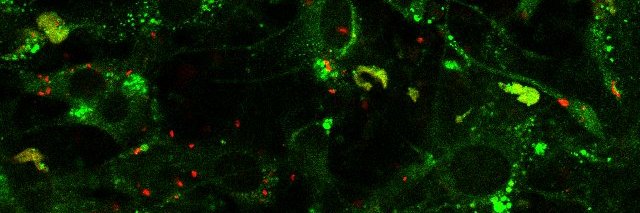
Carmen Sandi led some of the first studies that showed mitochondria in the brain can influence mental state. In 2021, after she boosted the mitochondria in the brain cells of anxious rats, the neurons recovered, and the rats showed fewer signs of anxiety. https://t.co/DCaAp7UCoJ
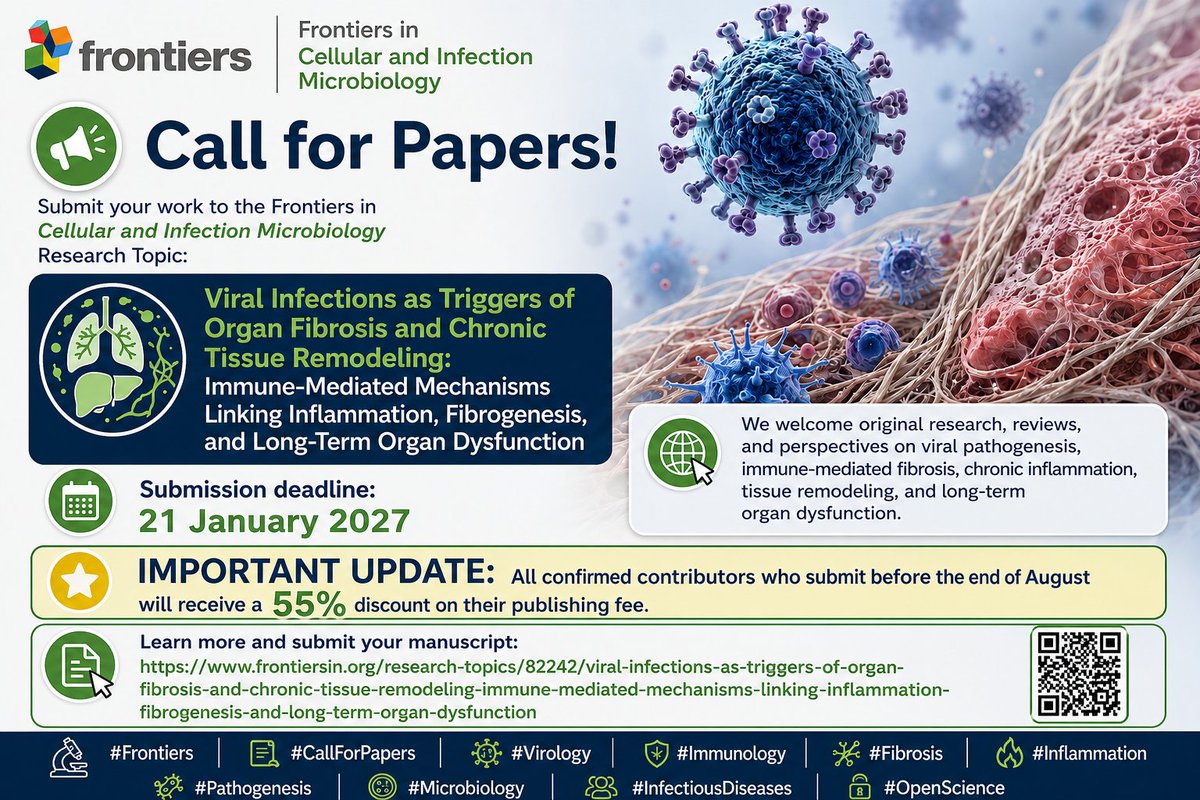
Viral Infections as Triggers of Organ Fibrosis and Chronic Tissue Remodeling.
All confirmed contributors who submit before the end of August will receive a 55% discount on their publishing fee. https://t.co/rlqMIqCR3T