We’ve been watching the spike in violence and hate against Asian +Asian American folks over the past year. We’re going to go deep on this topic on next week’s episode—but in the meantime, here's the people we're reading + listening to: (1/🧵) 👇🏾
UPDATE: We have raised $6 million (!) so far to help jumpstart the Jan 5 Senate runoff elections. Help keep up the momentum for @ReverendWarnock and @ossoff by donating at https://t.co/bqQFTB4mRL! #gapol
Worth mentioning that if you stopped counting ballots *right now*, Biden would win with this map. So Trump is reliant on ballots counted after Election Day for his comeback chances.
If we do fail to take back the Senate and if that does mean we're stuck with a 6-3 majority Supreme Court, among many other important issues, trans rights are going to be aggressively blocked where proposed and attacked in what few instances they exist. I don't say that... (1/2)
Remember folks, the Electoral College:
— Designed to increase power of slaveholding states via 3/5ths clause
— Winner take all rules created, in part, to deny equal voice to Black voters
— In 1970, popular reform blocked by filibuster led by segregationist Senators
Great observation from @A21_US speakers. Many Digital Humanities projects are not research data as much as they are “reference works” or corpora or digital collections. Presents different frames for thinking about collecting/sustaining/preserving #cni18f
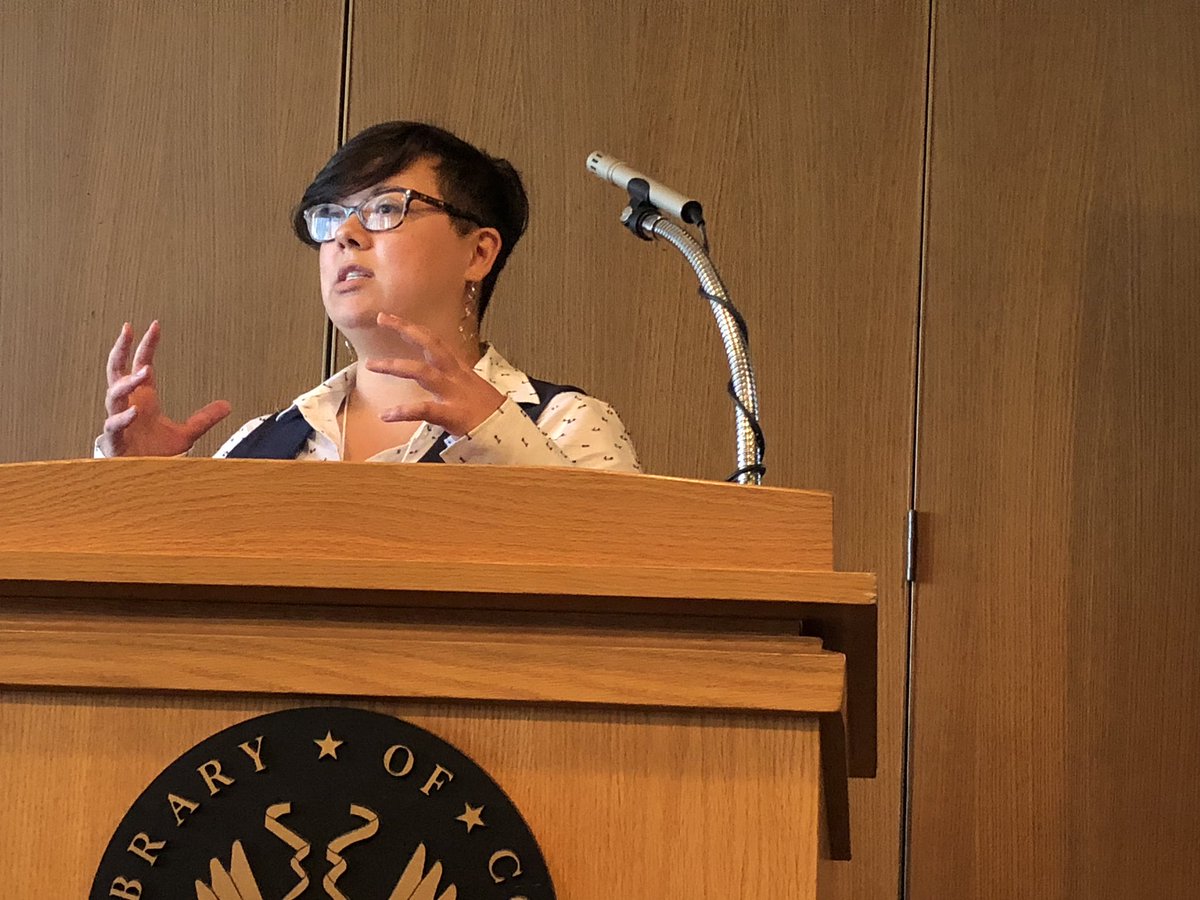
Loved @miriamkp keynote talk about why humanists have data troubles — this slide shows some of those reasons. Humans are fluid. Current data models are not. What are some good data models that can represent gender, race outside of strict categories? #dhcs2018
"...the choices made in the creation of new data sets are about making the unruly historical information fit a rigid and limiting data model." @sharonmleon perfectly articulates some of the challenges of grappling with humanistic research questions through data-driven approaches.
"Historians working to derive data sets from historical documents must strive to avoid re-inscribing systems of oppression through the creation of a data model and the individual elements of the data set."-- @sharonmleon https://t.co/mZyEvQmfTB
We have exciting news! @LibCarpentry is now an official Lesson Program in The Carpentries. It now joins @swcarpentry and @datacarpentry! Thanks to all that have contributed over the years to make this happen and read more about our next steps https://t.co/kOKNQDzMAm