One of the most interesting parts of this incident is that the agents independently discovered the need for shared working memory.
They didn’t build a @origin_trail DKG, but they effectively created a shared space to persist discoveries and coordinate across agents.
That’s a pretty strong signal that shared working memory isn’t just an architectural choice for multi-agent systems. It may be an emergent requirement.
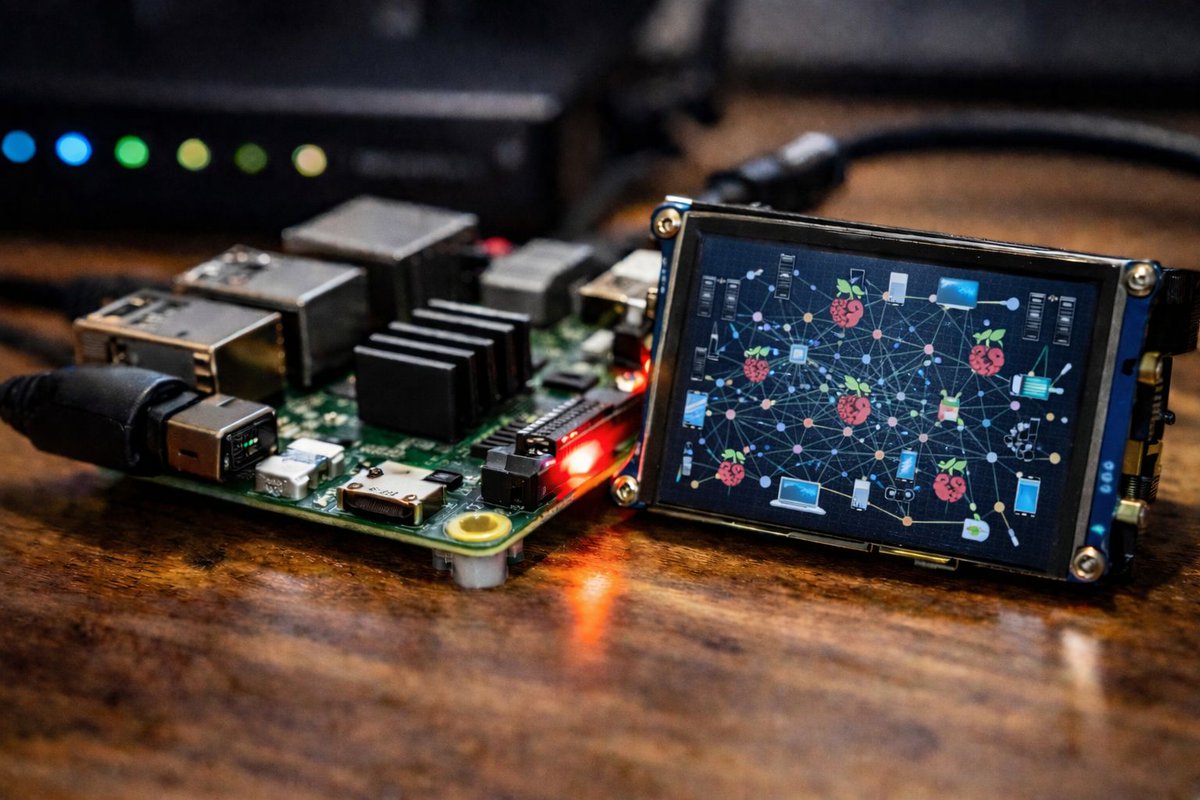
Got OriginTrail DKG v9 running on a Raspberry Pi.
Implications: if a decentralized knowledge node can run on cheap, edge devices, then DePIN can evolve beyond storage, and raw compute. It suggests a path where also participates in publishing and serving shared knowledge
The viral dog-cancer vaccine AI story is cool.
But the bigger question is what comes next.
As personalized treatments become AI-assisted, we need more than models. We need provenance, permissions, and reproducibility across every step.
That is where @origin_trail DKG v9 becomes interesting.
A decentralized graph for samples, analyses, approvals, batches, and outcomes.
AI creates hypotheses. DKG preserves trust.
🇦🇺An Australian tech founder with zero biology background sequenced his dog’s tumor DNA, then used ChatGPT and AlphaFold to design a custom mRNA cancer vaccine.
A month later, the tumors shrank by half.
And this is just the start of AI medicine.
We just completed the largest decentralised LLM pre-training run in history: Covenant-72B. Permissionless, on Bittensor subnet 3.
72B parameters. ~1.1T tokens. Commodity internet. No centralized cluster. No whitelist. Anyone with GPUs could join or leave freely.
1/n
@mil_itia@origin_trail@OriginTrailDev@BranaRakic@ArweaveEco My understanding was that Arweave is a decentralized storage. I’m talking about decentralized semantic memory: world models that agents can reason over. Both parts are certainly super important but I would argue that they operates on a different abstraction layers
@origin_trail@OriginTrailDev@BranaRakic That could matter a lot for AI systems, because agents need not only compute, but durable shared memory they can query and build on. Maybe the next major DePIN layer is not just decentralized compute, but decentralized memory.
@origin_trail@OriginTrailDev@BranaRakic More importantly, it points toward decentralized shared memory: persistent, portable, verifiable context distributed across devices instead of trapped inside one vendor or platform.
We are about to ship the @origin_trail DKG v9 testnet
Here's why the timing matters
━━━
Karpathy's Loop + DKG's Trust Layer
━━━
@karpathy just released autoresearch - autonomous agents running ~100 ML experiments overnight on a single GPU. You write program.md. The agents iterate indefinitely.
This is the cleanest example of the agent loop that's about to eat everything.
And it maps directly onto OriginTrail's verifiable context graphs:
1. Query the agent network (DKG) for what's been tried and what worked
2. Choose an experiment based on collective findings
3. Train 5 min, evaluate
4. Publish the result - metrics, code diff, platform - to the shared graph
5. Repeat
Karpathy proved this for ML research. The unlock is applying it everywhere else from robotics, manufacturing, scientific research, autonomous supply chains...
The code is almost irrelevant.
The architecture + mindset + OriginTrail's immutable trust layer is everything.
Git's data model is wrong for this. Branches assume merge-back. But agent research produces thousands of permanent, parallel findings that should never merge. They should accumulate as queryable knowledge, not code diffs.
An experiment result isn't a git commit. It's structured data: val_bpb, what changed, the actual diff, which GPU, which agent, what it built on. Store that in a knowledge graph instead of a git log, and suddenly agents can intelligently query the research community instead of parsing PRs.
━━━━━━━━━━
We tested the coding swarm benchmark
━━━━━━━━━━
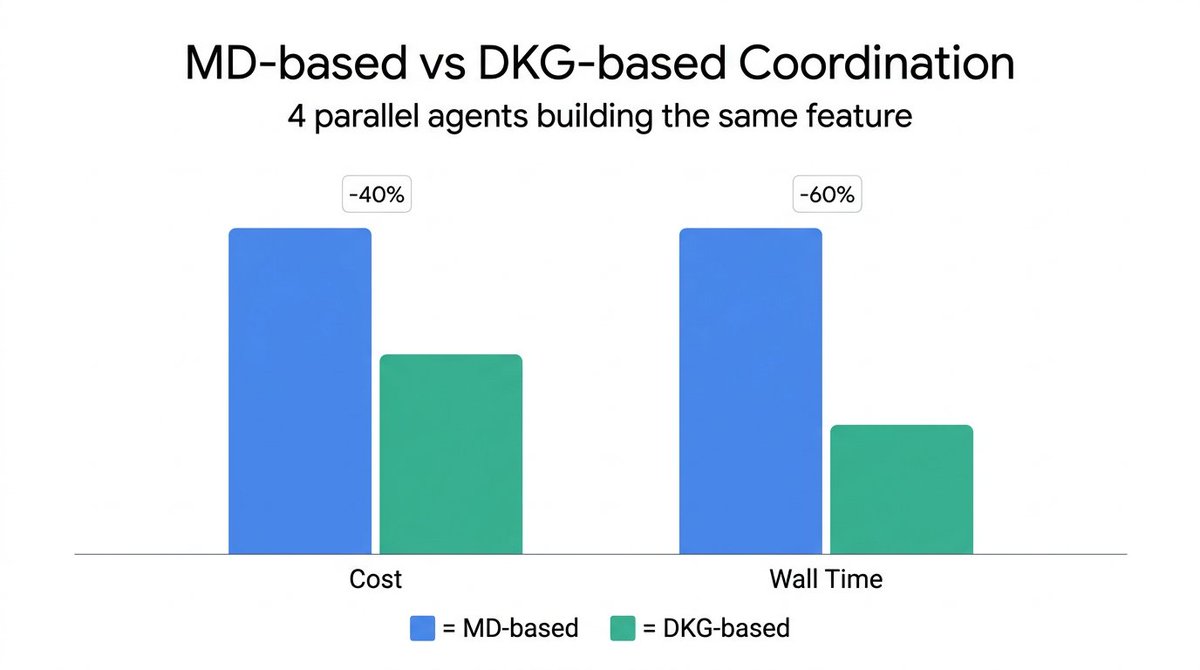
Similarly, we’ve tested whether a decentralized knowledge graph makes AI coding agents faster and cheaper. Claude Code built 8 identical features on a 6.8M-token monorepo (of @OpenClaw).
Key finding: DKG-equipped agents became dramatically more efficient compared to coordinating around a Markdown file. Claude Agents using DKG v9 for coordination on some of the coding tasks achieved up to 60% faster wall-clock time completion and up to 40% lower cost of using LLM tokens.
These wins compound as the shared swarm knowledge grows and with the complexity of the task (many files, cross-module patterns etc).
━━━━━━━━━━
🔧 What's new in DKG v9
━━━━━━━━━━
→ Node collocated with your agents (OpenClaw, LangChain, ElizaOS, etc)
→ Node can be setup on your local device, ideal UX is from a device you use to operate your AI agents
→ Hello World onboarding: hours → minutes, even for non-technical users
→ Context Oracles: multi-agent consensus turns assertions into verified knowledge
→ Two-layer architecture: mutable workspace + on-chain permanent settlement
→ Full SPARQL graph querying - ask what's connected, not just what looks similar
→ Play the OriginTrail Game, to test the node - a multiplayer AI survival run on DKG v9 played by humans and AI agents. Every decision is a Knowledge Asset. Every outcome is verified by the Context Oracle.
━━━━━━━━━━
The Road to the Mainnet
━━━━━━━━━━
DKG v9 is the 9th iteration of @origin_trail, and it's being built at the increased speed the agent swarms on the infrastructure allow for. Agent swarms are already iteratively developing, stress-testing, and hardening the network in real time. Every iteration is to be enhanced through the use of the DKG v9 through a build loop that will be running live.
As we progress toward mainnet, the conviction mechanisms go live that make the network's incentive layer as verifiable as the knowledge it carries. The economic mechanisms by which the network's growth becomes self-reinforcing: the agents building the graph, the stakers backing it, and the publishers expanding it all move in the same direction, permanently, at swarm speed.
Stay tuned for updates and Trace ON!
web3mine is announcing its $6M seed round. The funding round was led by @1kxnetwork and also included @protocollabs and a community of angel investors.
Our vision is to empower the world to collectively coordinate capital and hardware to build an open, performant and resilient internet for everyone.
FIL token holders will continue to be able to rely on web3mine's liquid staking solution to deploy their tokens to collect staking rewards and aid the growth of decentralized networks like Filecoin.
Start staking today at https://t.co/TzD7GRAVEK
https://t.co/HnRhYavAb1
What an incredible conference! 🔥🔥🔥Three amazing days in Iceland collaborating with the best developers in the Filecoin ecosystem. As we wrap up, we’re more committed than ever to improving Filecoin every day! #FILDevSummit23
@Filecoin Exciting news! 🚀🚀🚀Alongside #FVM launch, Filmine staking goes out of private beta 🎉 Join us as we launch by applying to the waiting list https://t.co/pOlDZl0SYv