Top 5 Database performance issues I have seen were actually application or design issues:
0) Query pattern - DB design/Index mismatch
1) N+1 query problems
2) Long lived Transactions
3) Unnecessary Data retention
4) Co-locating rarely updated (& large) columns with frequently updating (& small) columns.
Columbia CS Prof explains why LLMs can’t generate new scientific ideas.
Bcz LLMs learn a structured “map”, Bayesian manifold, of known data and work well within it, but fail outside it.
But true discovery means creating new maps, which LLMs cannot do.
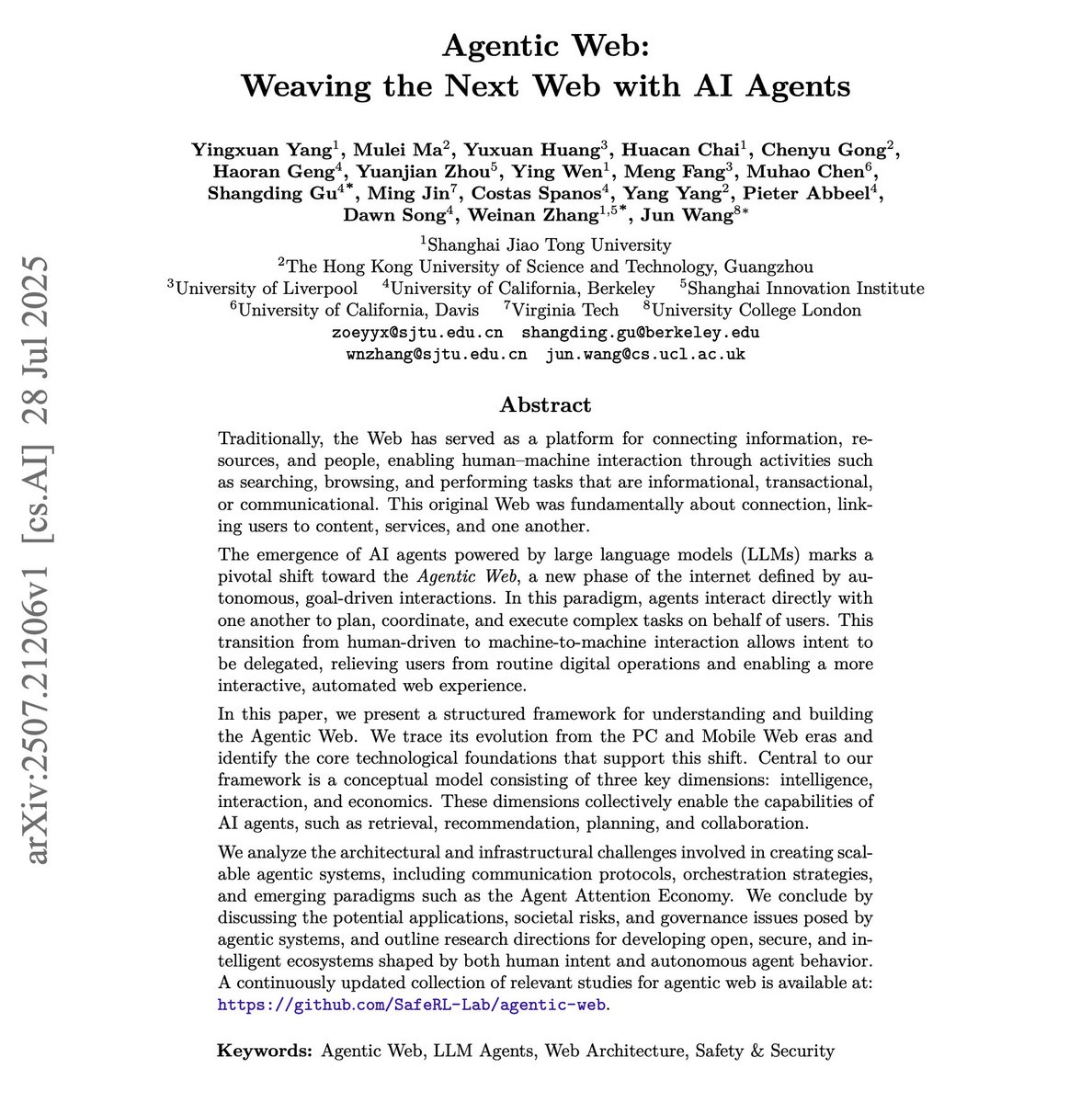
The Agentic Web is upon us!
If you want to learn about the Agentic Web, look no further.
This new report is a banger!
It presents a detailed framework to understand and build the agentic web.
Here is everything you need to know:
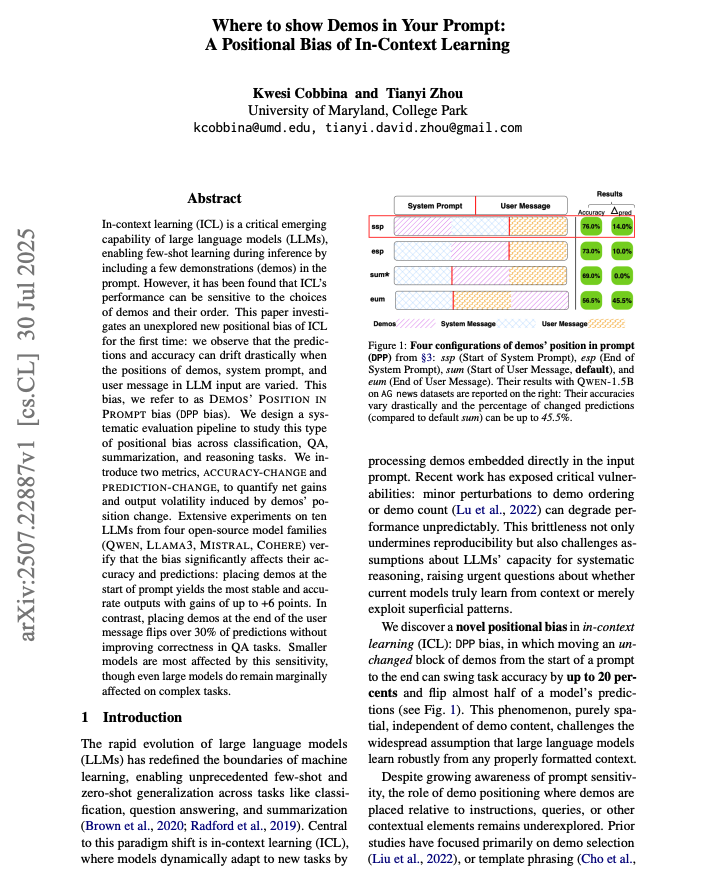
Where to put demonstrations in your prompt?
This paper finds that many tasks benefit from demos at the start of the prompt.
If demos are placed at the end of the user message, they can flip over 30% of predictions without improving correctness.
Great read for AI devs.
If you only study one source to understand LLMs, make it this.
The 2025 textbook "Foundations of Large Language Models" just raised the bar.
It cuts through the hype, skips the jargon, and shows how LLMs really work.
No fluff. No hand-waving. Just clarity.
Here’s why it’s the best explainer out there ↓
Towards AI Search Paradigm
Very detailed report on building scalable multi-agent AI search systems.
Multi-agent, DAG, MCPs, RL, and much more.
If you are a dev integrating search into your AI agents, look no further:
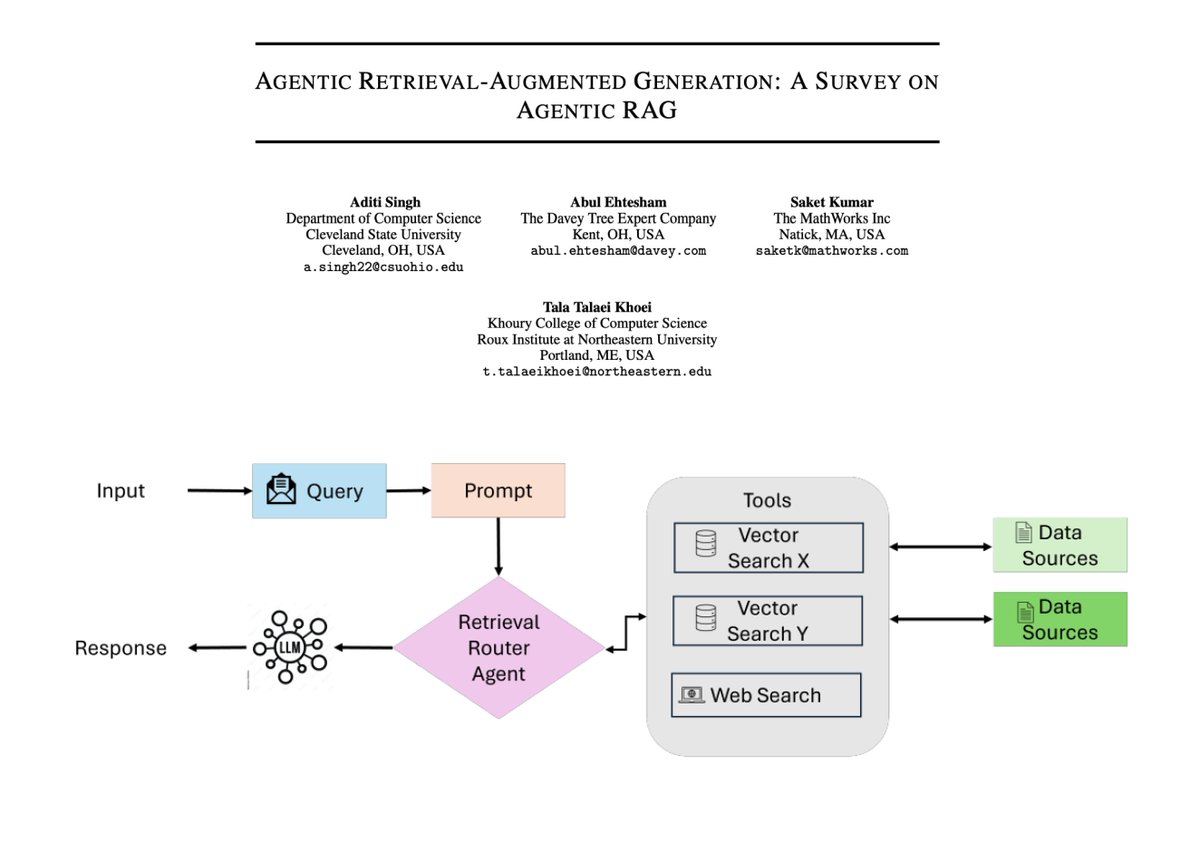
Agentic RAG Overview
This is a great intro to LLM agents and Agentic RAG.
It provides a comprehensive exploration of Agentic RAG architectures, applications, and implementation strategies.
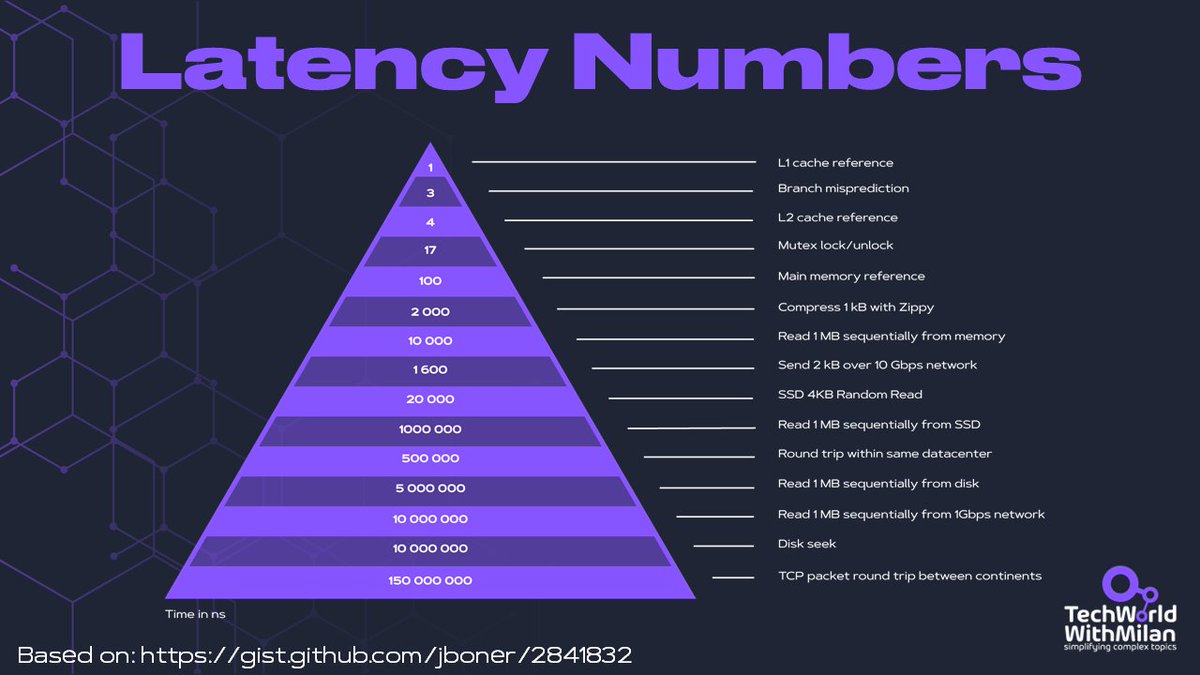
𝗟𝗮𝘁𝗲𝗻𝗰𝘆 𝗡𝘂𝗺𝗯𝗲𝗿𝘀 𝗘𝘃𝗲𝗿𝘆 𝗣𝗿𝗼𝗴𝗿𝗮𝗺𝗺𝗲𝗿 𝗦𝗵𝗼𝘂𝗹𝗱 𝗞𝗻𝗼𝘄
Check the main latency numbers:
L1 cache reference ......................... 0.5 ns
Branch mispredict ............................ 5 ns
L2 cache reference ........................... 7 ns
Mutex lock/unlock ........................... 25 ns
Main memory reference ...................... 100 ns
Compress 1K bytes with Zippy ............. 3,000 ns = 3 µs
Send 2K bytes over 1 Gbps network ....... 20,000 ns = 20 µs
SSD random read ........................ 150,000 ns = 150 µs
Read 1 MB sequentially from memory ..... 250,000 ns = 250 µs
Round trip within same datacenter ...... 500,000 ns = 0.5 ms
Read 1 MB sequentially from SSD* ..... 1,000,000 ns = 1 ms
Disk seek ........................... 10,000,000 ns = 10 ms
Read 1 MB sequentially from disk .... 20,000,000 ns = 20 ms
Send packet CA->Netherlands->CA .... 150,000,000 ns = 150 ms
Based on the work of Jonas Bonér (full source in the comments).
______
If you like my posts, please follow me, @milan_milanovic, and hit the 🔔 on my profile to get a notification for all my new posts.
Grow with me 🚀!
#technology #softwareengineering #programming #techworldwithmilan #coding
Excited to share a number of features that build on many years of @GoogleAI research and generative AI advances:
An API to the latest generation of our PaLM language models
MakerSuite for developers,
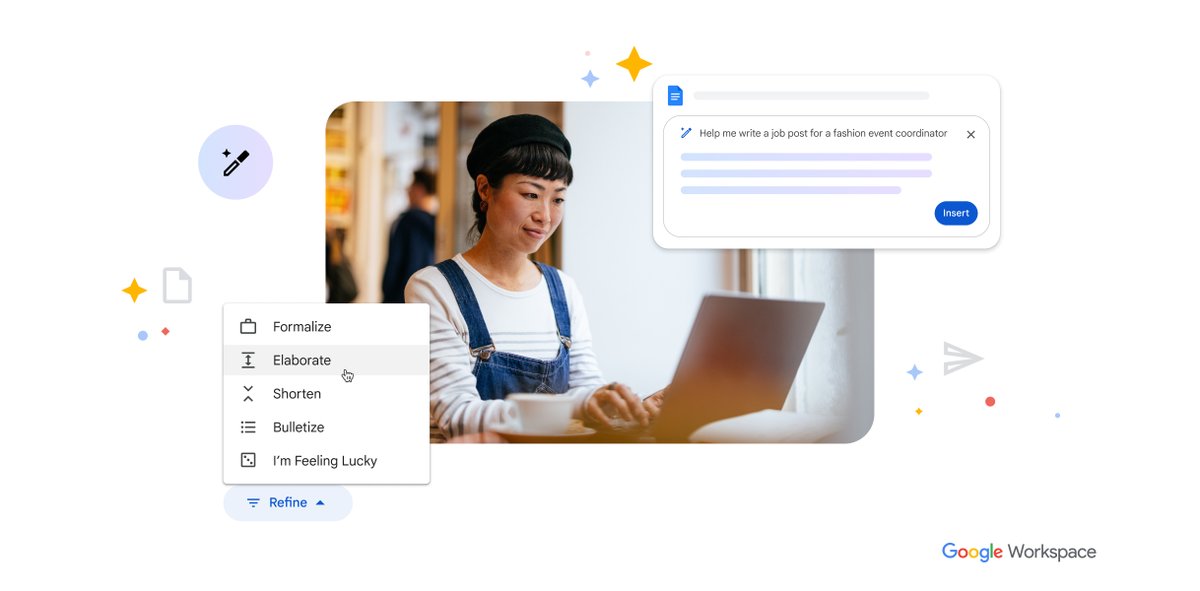
Writing/rewriting help in Docs and Gmail (Google Workspace),
and more!
Introducing a new era for AI and #GoogleWorkspace:
✅ Draft, reply, summarize & prioritize your Gmail
✅ Brainstorm, proofread, write, & rewrite in Docs
✅ Bring your creative vision to life with auto-generated images, audio, & video in Slides
And more → https://t.co/vGsTGN3w9i
After using AWS for ~14 years, I've internalised a handful of design patterns that I try to apply to my own software. I'm keen to know if it's the same for other folks.
Roughly: tags, IDs (thrice), limits, pagination.
(I'm not going to use the thread emoji)
⚡ We've created the first vectorized Quicksort; an #opensource code that:
- Sorts arrays of numbers ~10 x as fast as C++ std:sort
- Outperforms state-of-the-art specific algorithms
- Is portable across all modern CPU architectures
↓ https://t.co/uuecHvnC31