LA CIENCIA MODERNA ACABA DE CONFIRMAR LO QUE LOS ESTOICOS LLEVAN 2.000 AÑOS REPITIENDO.
No frases motivacionales.
No humo filosófico.
No “mentalidad de tiburón”.
Solo neurociencia, psicología y biología humana.
Aquí están los 7 hallazgos:
Ik vraag me af hoe mensen die zich serieus boos maken over controles bij zelfscankassa’s, en dat zijn er veel, omgaan met tegenslagen in het leven. De aankomende oorlog gaan ze sowieso niet overleven
One Battle After Another won 6 Oscars tonight:
• Best Picture
• Best Director
• Best Supporting Actor — Sean Penn
• Best Adapted Screenplay
• Best Editing
• Best Casting
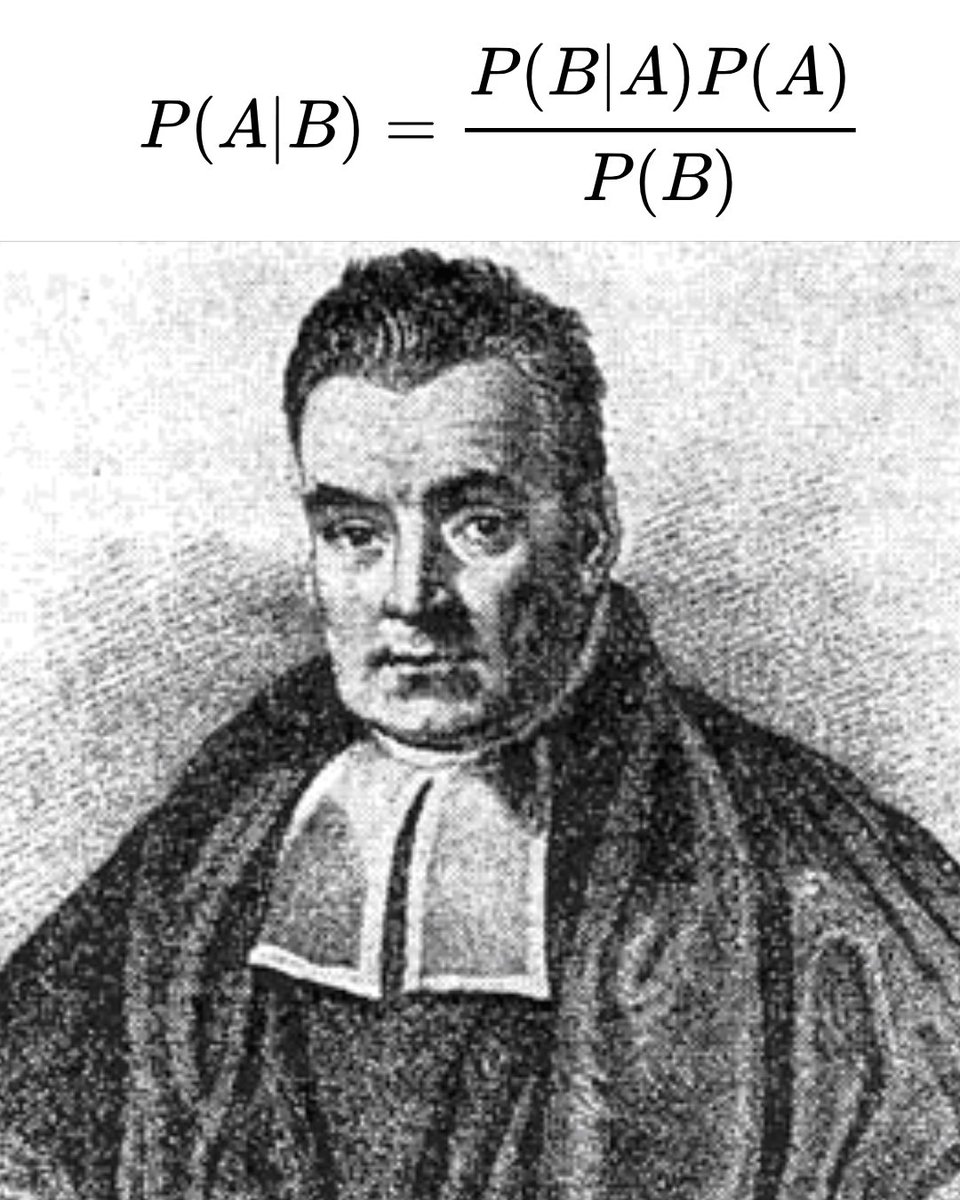
Bayes’ theorem is probably the single most important thing any rational person can learn.
So many of our debates and disagreements that we shout about are because we don’t understand Bayes’ theorem or how human rationality often works.
Bayes’ theorem is named after the 18th-century Thomas Bayes, and essentially it’s a formula that asks: when you are presented with all of the evidence for something, how much should you believe it?
Bayes’ theorem teaches us that our beliefs are not fixed; they are probabilities. Our beliefs change as we weigh new evidence against our assumptions, or our priors. In other words, we all carry certain ideas about how the world works, and new evidence can challenge them.
For example, somebody might believe that smoking is safe, that stress causes mouth ulcers, or that human activity is unrelated to climate change. These are their priors, their starting points. They can be formed by our culture, our biases, or even incomplete information.
Now imagine a new study comes along that challenges one of your priors. A single study might not carry enough weight to overturn your existing beliefs. But as studies accumulate, eventually the scales may tip. At some point, your prior will become less and less plausible.
Bayes’ theorem argues that being rational is not about black and white. It’s not even about true or false. It’s about what is most reasonable based on the best available evidence. But for this to work, we need to be presented with as much high-quality data as possible. Without evidence—without belief-forming data—we are left only with our priors and biases. And those aren’t all that rational.
Quantum entanglement is one of nature’s most haunting mysteries proof that the universe might be more unified than we can imagine. When two particles are created together, they share a single quantum state. No matter how far apart they drift, even light-years away, a change in one instantly affects the other. To Einstein, this was impossible yet experiments continue to confirm it’s real.
This strange bond seems to ignore the speed limit of light, suggesting that at the deepest level, space and distance may be illusions. The universe behaves like one continuous fabric, not a collection of separate objects. Every flicker of energy and every act of observation is a thread tugging on that cosmic web.
Entanglement blurs the line between “here” and “there,” “you” and “me.” It whispers that perhaps everything from atoms to galaxies is already connected, sharing one hidden heartbeat through the quantum field.
Sources: NASA, CERN, Max Planck Institute for Quantum Optics.