Many thanks to @DrJBStephens, Simone Imani Boyd, Dr. Adam Jaroszewski, & Dr. Tom Olino for joining me today for our #APS26BCN symposium on interdisciplinary approaches to suicide research, & to everyone who came & asked such thoughtful questions!
My talk: https://t.co/WQaP5XZNCo
Had an amazing time at the 2026 Computational Psychiatry Conference presenting my ongoing work on formalizing impulsivity as a mathematical model! ✨
Honored and excited to share that I received the Best Poster Award for this work! 🏆
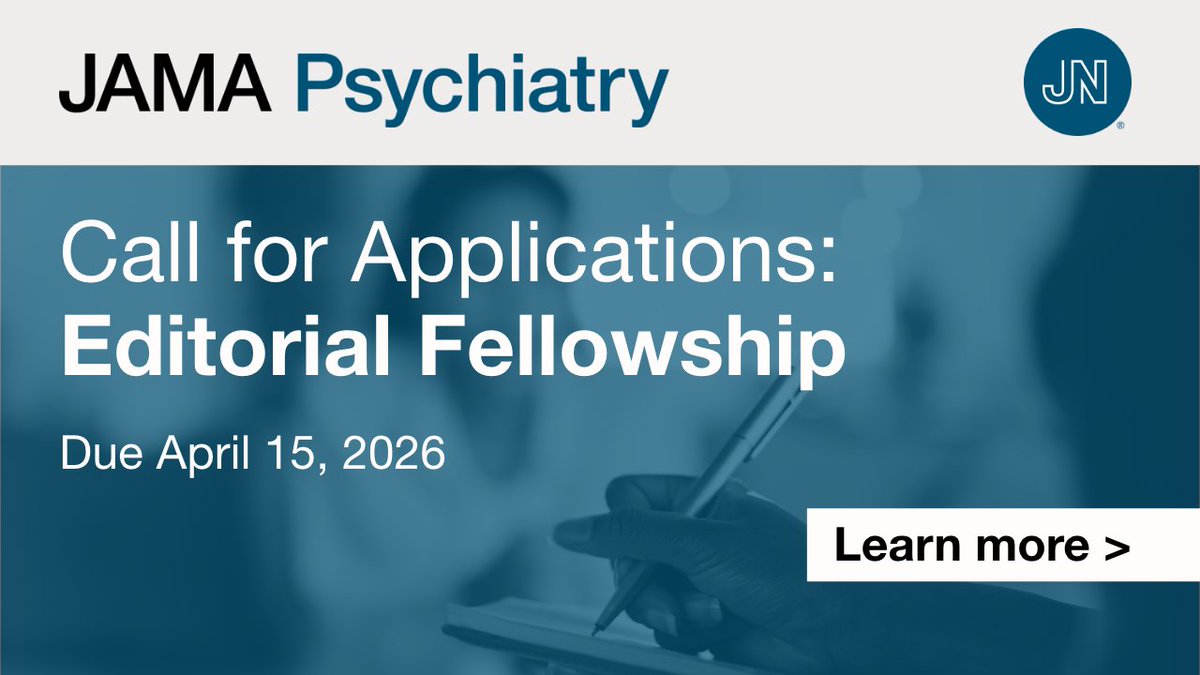
📢 Applications open: @JAMAPsych Editorial Fellowship
Early-career psychiatrists or doctorate-level clinicians are invited to apply for this opportunity to gain hands-on training in the editorial processes of a peer-reviewed psychiatry journal.
🔗 https://t.co/t0yF49Cu9n
A new paper from the HiTOP Revisions Workgroup (and yours truly) on the conceptual and philosophical underpinnings of the framework. Recommended reading for anyone interested in questions of classification and psychopathology!
Here’s the journal article: https://t.co/thS5Og6TgE
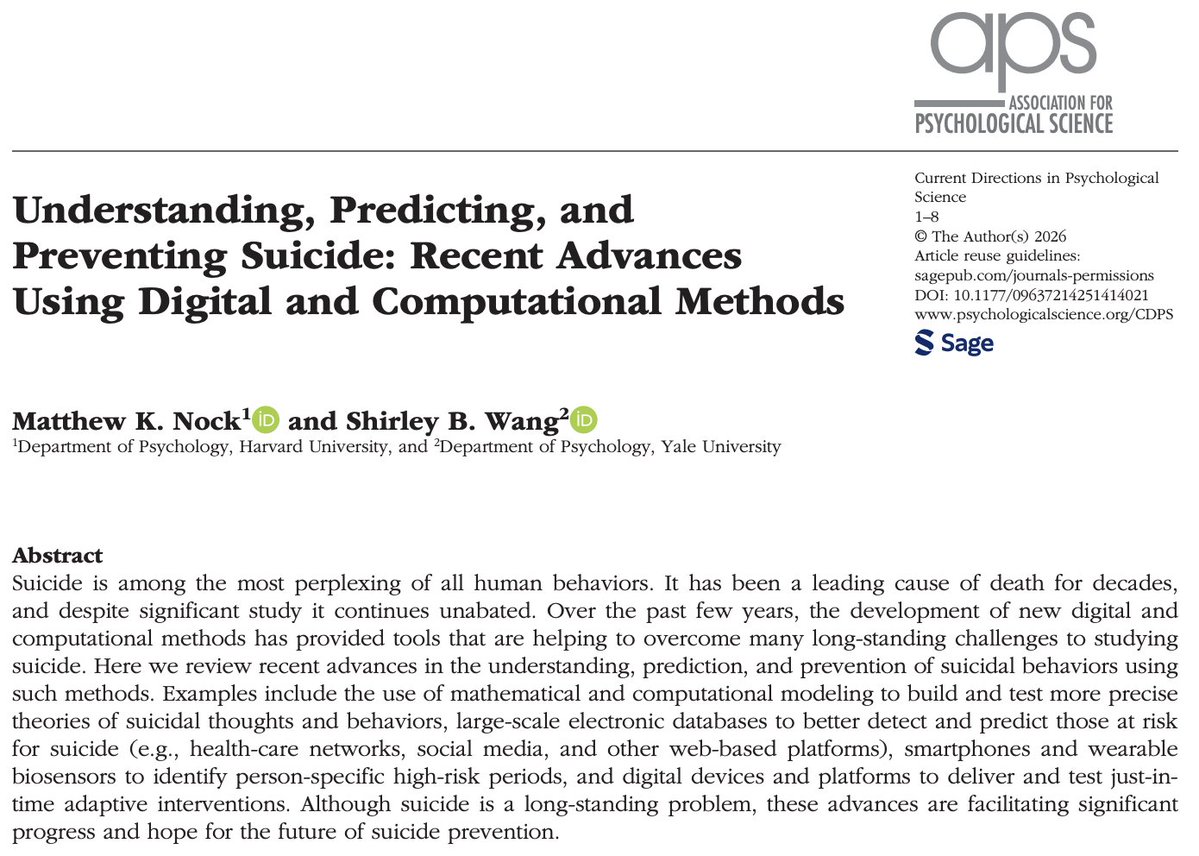
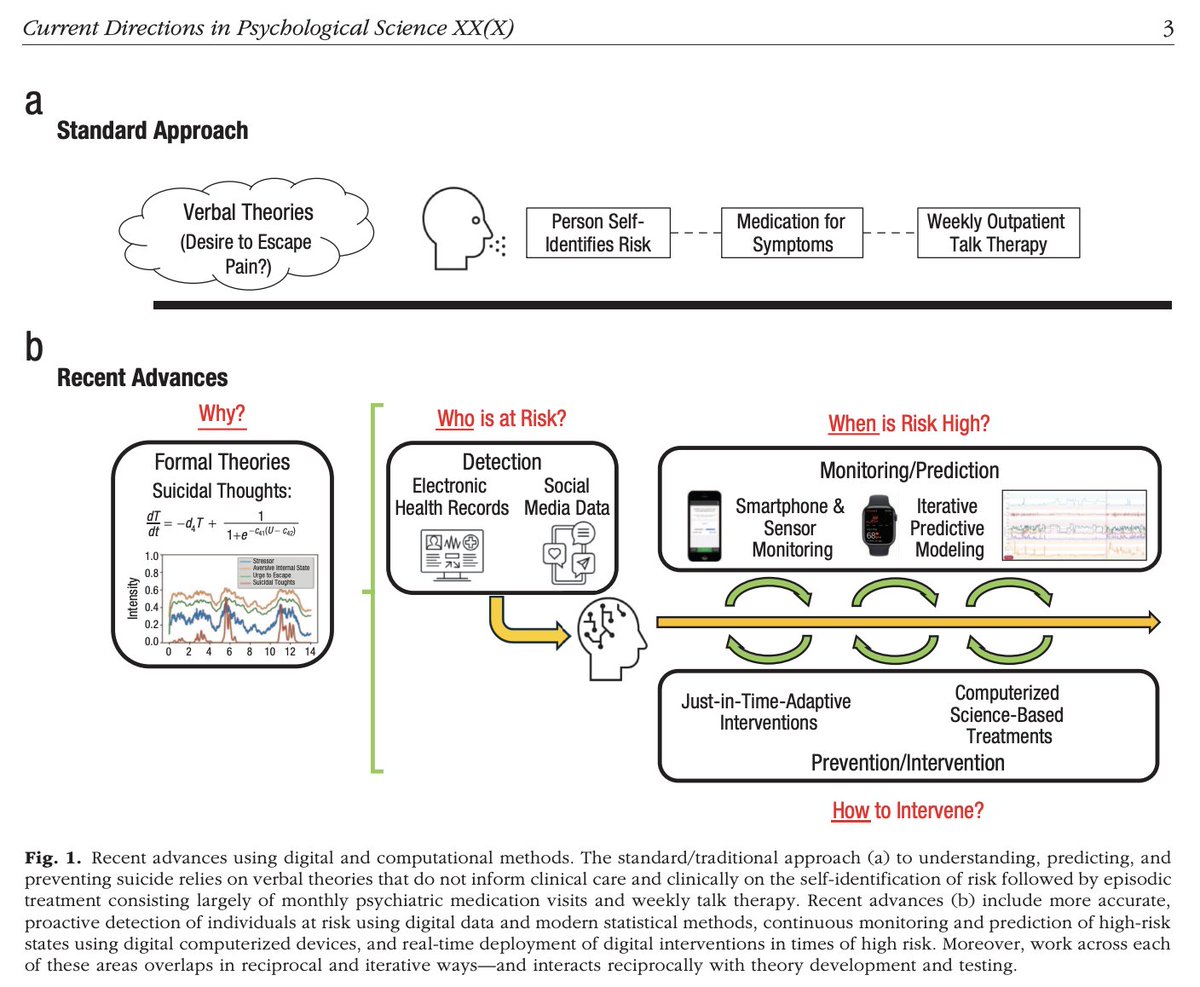
🚨 New paper out in Current Directions in Psychological Science, with @mk_nock! We review recent advances in digital & computational methods for understanding, predicting, and preventing suicide.
Peer review me: A Large Language Model-Based Behavioral Activation Chatbot for Young People with Depression: Mixed-Methods Evaluation Using Artificial Users and Clinical Experts https://t.co/ktonYOF6KH
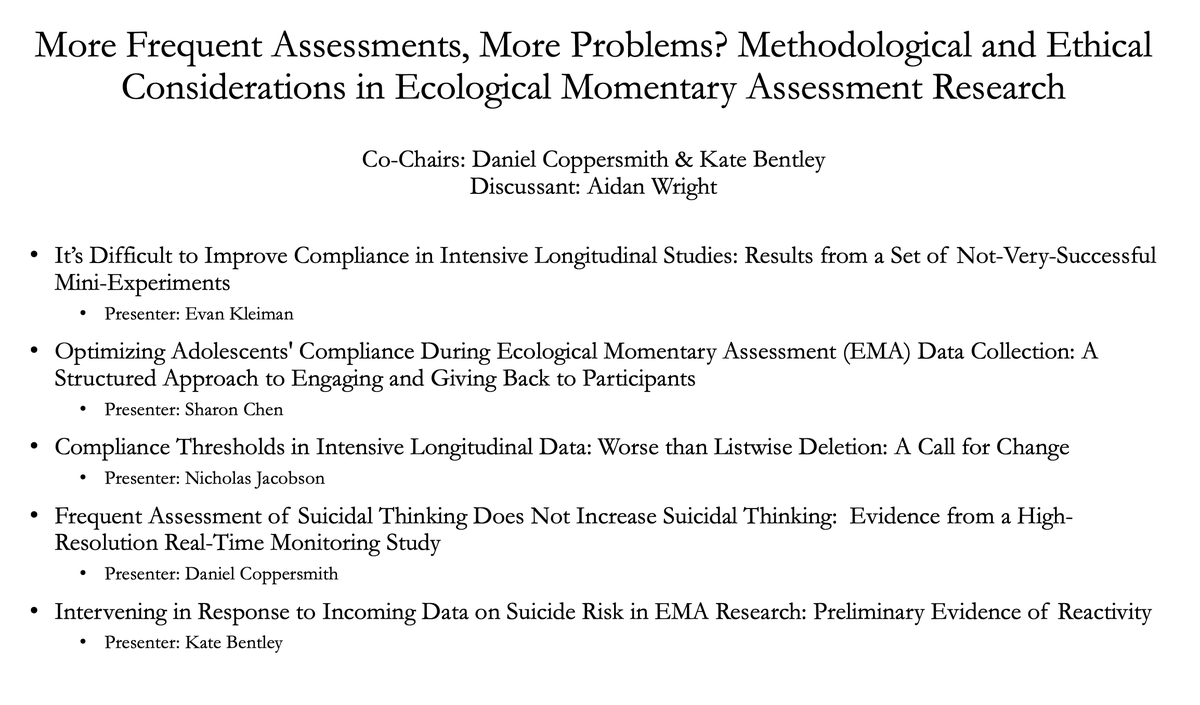
Check out our #ABCT2021 symposium “More Frequent Assessments, More Problems?" featuring talks from Evan Kleiman, @sharonsfchen, @NC_Jacobson, and @drkatebentley with @aidangcw as discussant! Recordings here:
https://t.co/hWlgcwCxlk
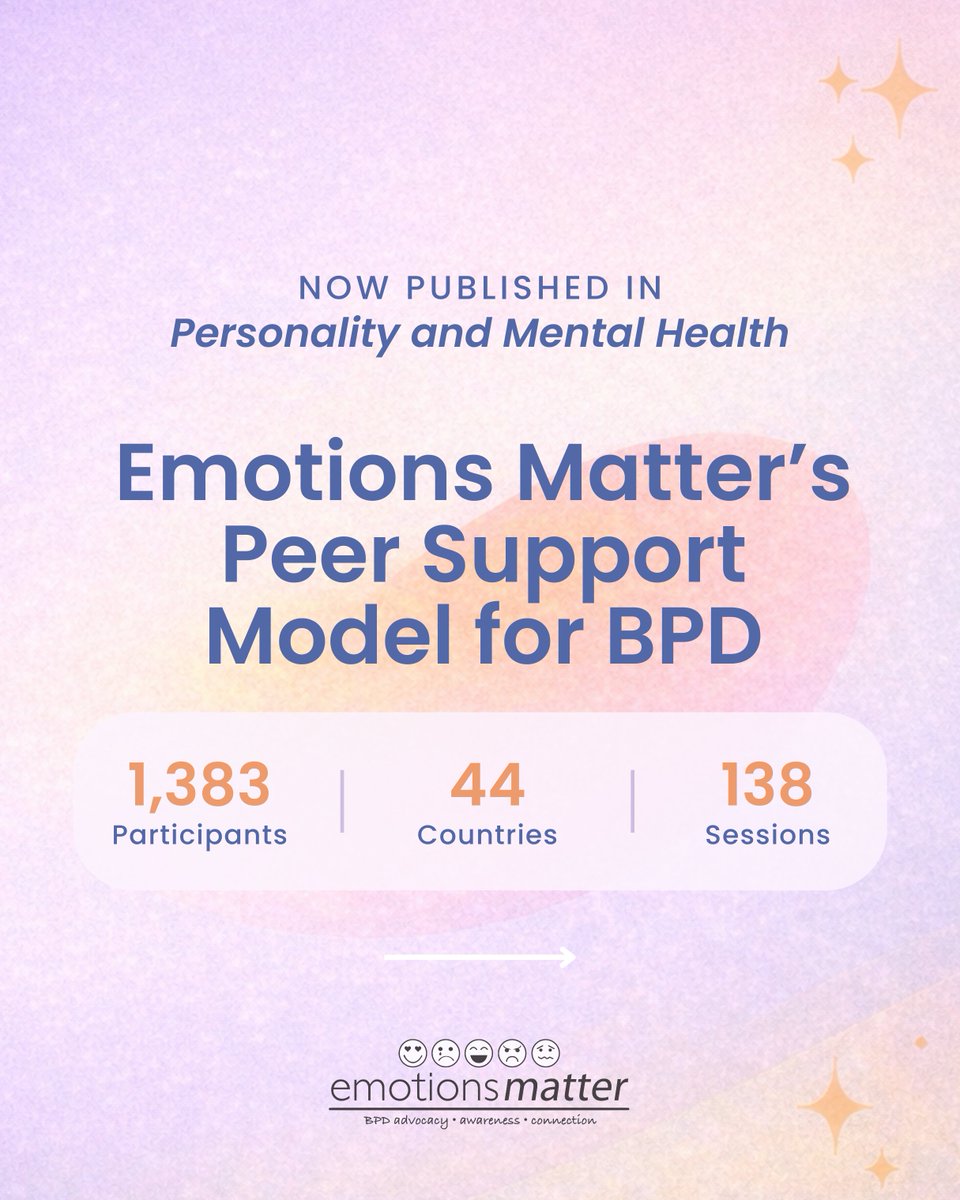
For many people with BPD, peer support is where understanding and connection actually happen. We’re proud to share that findings grounded in Emotions Matter’s peer online support groups have now been published, marking a meaningful moment for our community.
Survey study identifies that most patients with depression interpret the Patient Health Questionnaire instructions incorrectly, raising questions about its validity for clinical and research use. https://t.co/vWiIWSOvi4
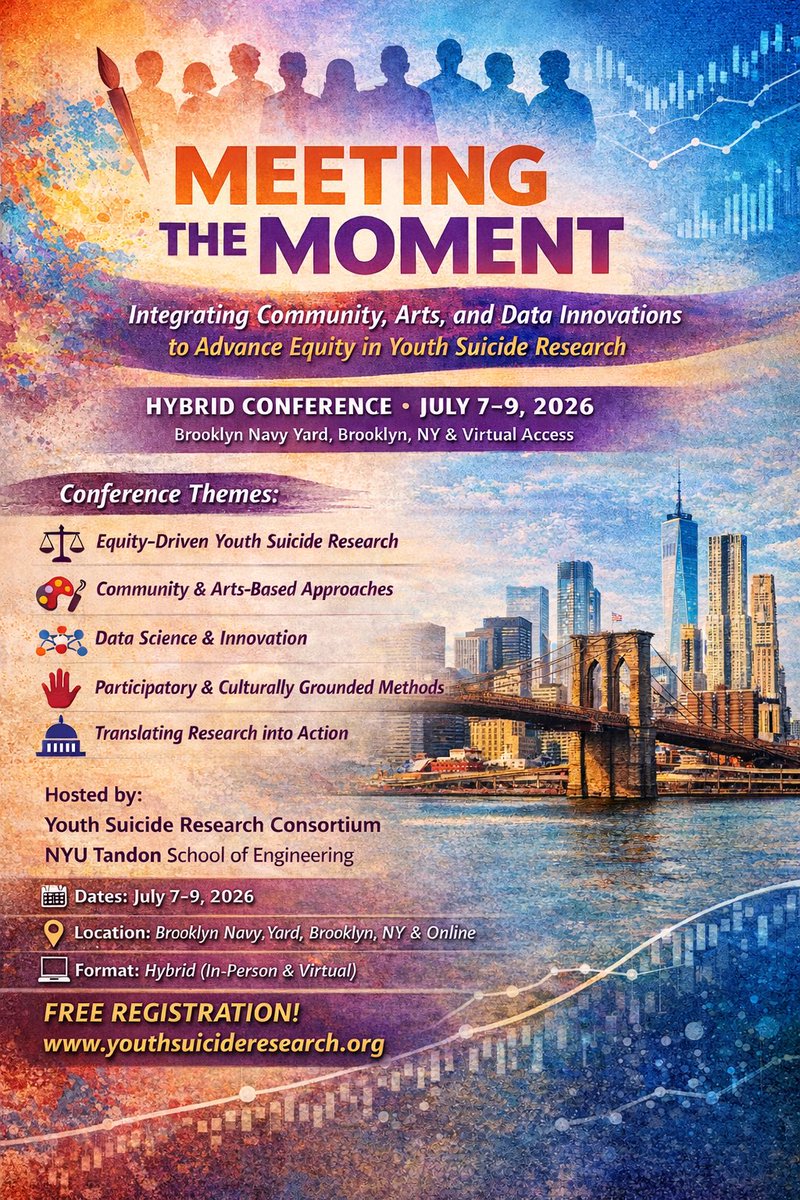
Announcing the @youthsuicideres first ever in-person conference July 7-9, 2026 (with hybrid option) at @nyutandon in Brooklyn, NY. Submit an abstract and/or register for free here: https://t.co/utyQafPGR0
Our new study is just online in @NatureMentalHealth, which uses machine learning to uncover how social determinants of health (SDOH) shape suicide rates across U.S. counties. 📄Read: https://t.co/i4ZdpyGQXo
#MachineLearning#PublicHealth#MentalHealth#SDOH#SuicidePrevention
Just wrapped up a remote talk at @GoogleDeepMind London on our latest work:
“Visual Generation Unlocks Human-Like Reasoning through Multimodal World Models.”
Huge thanks to @TengdaHan for the invitation — truly honored (and yes, so nervous 😅).
Project Page: https://t.co/RyOXekt5d3
[1/n]
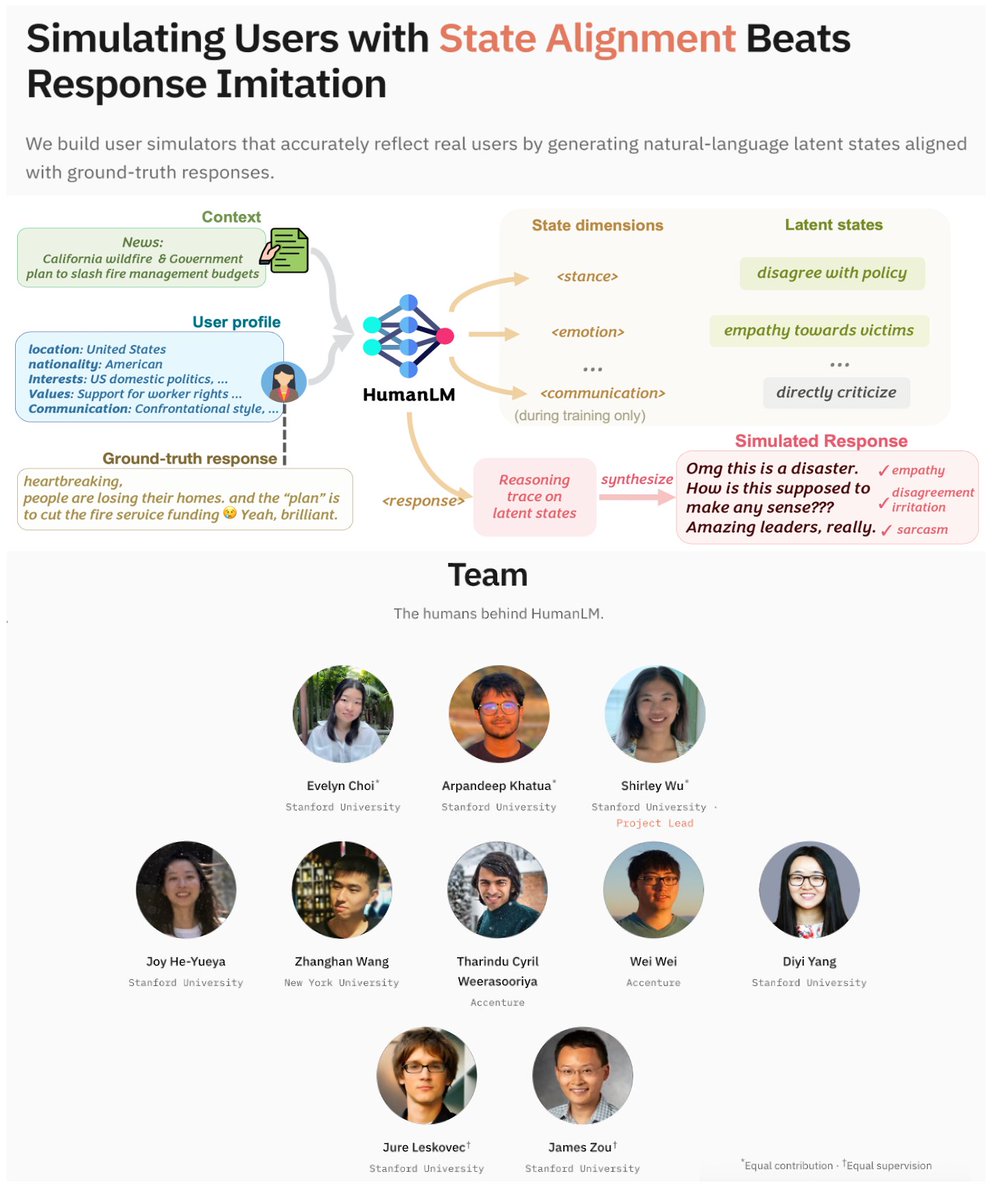
Announcing 🌇HumanLM, a RL framework that trains LLMs to simulate human users’ responses, along with 🌆Humanual, a comprehensive user simulation benchmark
https://t.co/LivDkQ2ioo
🌄 One thing that’s fascinating about our society: human users shape the world and determine the value of almost everything
👨💼 Human reactions reflect how justifiable policies are
👩🎨 Human preferences determine the popularity of blogs/products/media
👩💻 Human feedback evaluates LLMs and makes the best LLM collaborators
🌅If we know how to simulate users **accurately**, we know how things are evaluated and what the future looks like, and we can improve things in a way that like or can collaborate well with.
So, meet HumanLM, our effort to enable a more human-centric future by simulating users.
Do you work or study in the fields of psychology, neuroscience, computer science, artificial intelligence, or philosophy?
What does 'representation' mean to you?
We invite you to participate in a brief survey on conceptual questions across fields.
https://t.co/nK7oq7F917
For this week's seminar, we are excited to host @camrobjones!
Date and Time: Thursday, February 12, 11:00AM — 12:00 PM Pacific Time.
Zoom Link: https://t.co/jmz2wb8Xyn
Title: LLMs as simulacra of human social reasoning
Abstract: In this talk, I'll discuss work from two different strands of my research which produce apparently contrasting results. In the first, I've found that AI systems such as LLMs excel at imitating human social intelligence in interactions with real people: including in persuasion, building trust, and passing as human in the Turing test. On the other hand, I've found that these same systems often fail in catastrophic ways when they are evaluated in more tightly controlled conditions: in theory of mind tasks and developing common ground conventions. I'll argue that these contrasting results are partly driven by human participants' natural cooperativity which amplifies models' capabilities and conceals their shortcomings. On a broader scale, this suggests that people might elevate these systems to become real social agents even where models lack the underlying capacity to perform these functions well.
Excited to see everyone at the seminar!
New preprint! We investigate the risk of algorithmic bias (across race/ethnicity, gender, and their intersection) in machine learning models predicting suicide attempts across 3 clinical settings in over 1.2 million patients.
https://t.co/S84jLu3LsV
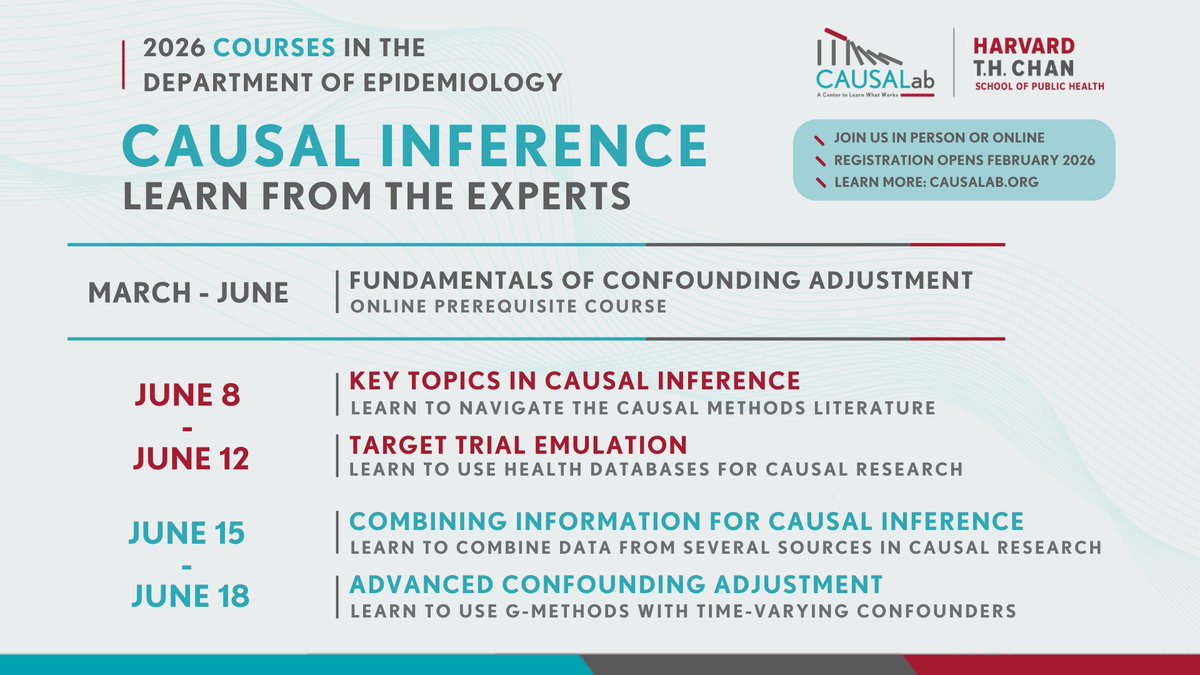
See you in June? ☀️
Applications for the 2026 Summer Courses on Causal Inference are open! Join @CAUSALab this summer to learn from the #causalinference experts on campus @HarvardChanSPH or online.
Learn more & secure your spot today:
https://t.co/ejtqHkdRTz
Save the date: 21st Kolokotrones Symposium! 📌
📆 April 3, 2026
���� In-person @HarvardChanSPH or online
Spring symposium details to be announced in the coming weeks. #causalinference #publichealth
New paper out today in JCCAP! We outline future directions for mathematical, computational, & digital methods in suicide research @ukeleily@sharinahamm@francesghart
https://t.co/RW9thppygG




![wujialong0229's tweet photo. Just wrapped up a remote talk at @GoogleDeepMind London on our latest work:
“Visual Generation Unlocks Human-Like Reasoning through Multimodal World Models.”
Huge thanks to @TengdaHan for the invitation — truly honored (and yes, so nervous 😅).
Project Page: https://t.co/RyOXekt5d3
[1/n]](https://pbs.twimg.com/media/HBDIfjEaYAEoOEi.jpg)






![wujialong0229's tweet photo. Just wrapped up a remote talk at @GoogleDeepMind London on our latest work:
“Visual Generation Unlocks Human-Like Reasoning through Multimodal World Models.”
Huge thanks to @TengdaHan for the invitation — truly honored (and yes, so nervous 😅).
Project Page: https://t.co/RyOXekt5d3
[1/n]](https://pbs.twimg.com/media/HBDIgkFa8AAKGq0.png)