@PRATIKBULANI555 Pessimism is at its peak. Two days of market upmove & suddenly people forget STT/ LTCG. The new age investors have very little patience and therefore social media is full of such traders advising the finance minister what to do. Great market to build a long term portfolio
@PoornimaNimo Actually this delayed the Bullet train project especially the Maharashtra stretch by at least 2 years. Once the chinese got to know that we are also manufacturing the machine, they allowed the exports from China😂
China :
Chairman, the Indian Army k*l1ed 40 of our soldiers at Galwan.
Xi : Delay all exports to India, mainly the Tunnel Boring Machines which India imports from us. We'll see how they complete their Bullet train, Metro and National Highways projects.
Minister Ashwini Vaishnav, Piyush Goyal, Nitin Gadkari at a meeting with PM Modi :
Lets import the Tunnel Boring Machines from Germany, sir. A company Herrenknecht in Germany is willing to supply us.
PM Modi : Baat Karo Unse.
Herrenknecht delays shipment as its own TBMs are manufactured in China.
Commerce Minister Piyush Goyal confronts German Vice Chancellor Robert over China blocking the sale of German made Tunnel Boring Machines (TBMs) to India on Metro train.
Video goes viral......
PM Modi : Ask them to manufacture TBMs in India. India will assemble. Send our engineers to collaborate with Herrenknecht in Germany Japan and Austria.
India starts assembling TBMs like "Arjuna", "Nayak" in India with German core tech, Herrenknecht, Japan and Austria.
After one year Bharat Earth Movers Limited of India manufactures its first indigenous Tunnel Boring Machines in India.
China Shocks.
India Rocks.
A smile breaks on the face of the man working diligently in his office, as the news reaches him, and he starts planning ahead.......
@captsinghjs All those thinking that we should pay back America in the same token should get a reality check. When your opponent is 10 times stronger, the best strategy is kadi ninda and then wait for your time.
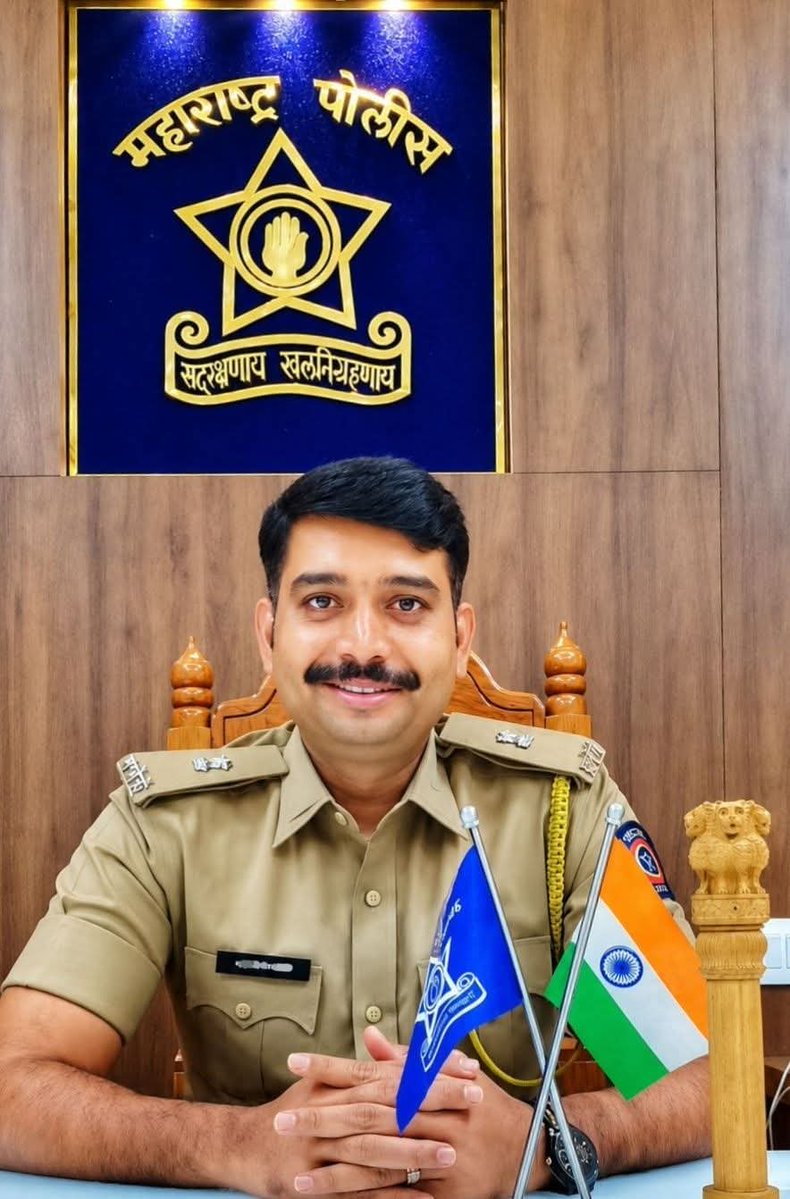
हे आहेत कल्याणचे डीसीपी अतुलजी झेंडे.
बुधवारी रात्री कल्याण मध्ये गुंडांच्या दोन टोळ्या आमने-सामने आल्या. आपापसात गोळीबार झाला आणि एका निष्पाप नागरिकाला गोळी लागली. तो आता हॉस्पिटलमध्ये दाखल आहे.
घटनेची माहिती मिळताच डीसीपी अतुलजी झेंडे स्वतः घटनास्थळी दाखल झाले आणि गुंडांना जनतेसमोर असा प्रसाद देत मग ताब्यात घेतलं.
महाराष्ट्र पोलिसांनी या भाई लोकांना वेळोवेळी संदेश दिलेला आहे.
समजला तर ठीक नाहीतर आता ॲक्शन मोड ऑन झालेला आहे.
⛓️⛓️
#MaharashtraPolice
@Dev_Fadnavis@DGPMaharashtra
India keeps getting repeatedly bombarded with the narrative that “FII outflows are destroying Indian markets.”
Context matters.
FIIs pulled out roughly:
* $6.7 billion in May 2026
* and another $2.6 billion in just the first 10 days of June.
Yet Indian markets have remained relatively resilient because domestic flows through SIPs, mutual funds, insurance and retail participation continue absorbing a large part of the selling pressure.
Now compare this with South Korea which is discussed every day now..
The KOSPI, after becoming one of the hottest AI and semiconductor-driven markets globally reportedly saw:
* nearly $30 billion of foreign selling in May alone,
* followed by another ~$13 billion in just the first week of June.
More importantly, foreign investors have reportedly been net sellers every single trading day since May 6th.
And the result?
At one stage, the market corrected nearly 20% in just two trading sessions during peak panic and volatility.
That is what excessive dependence on foreign capital and crowded thematic positioning can do to markets.
People underestimate how brutally fast global capital reversals happen once momentum breaks.
This is exactly why India building strong domestic participation over the last decade may actually be one of the biggest structural strengths of our markets.
India still has challenges:
* valuation excesses,
* policy uncertainty,
* slowing FII ownership and
* sector concentration risks.
But one thing has clearly changed:
Indian markets today are far less dependent on foreign capital for survival than they were a decade ago.
And that may become extremely important in the next global risk-off cycle..
P.S - Insightful inputs from Dinesh, Arihant and Kaushik.