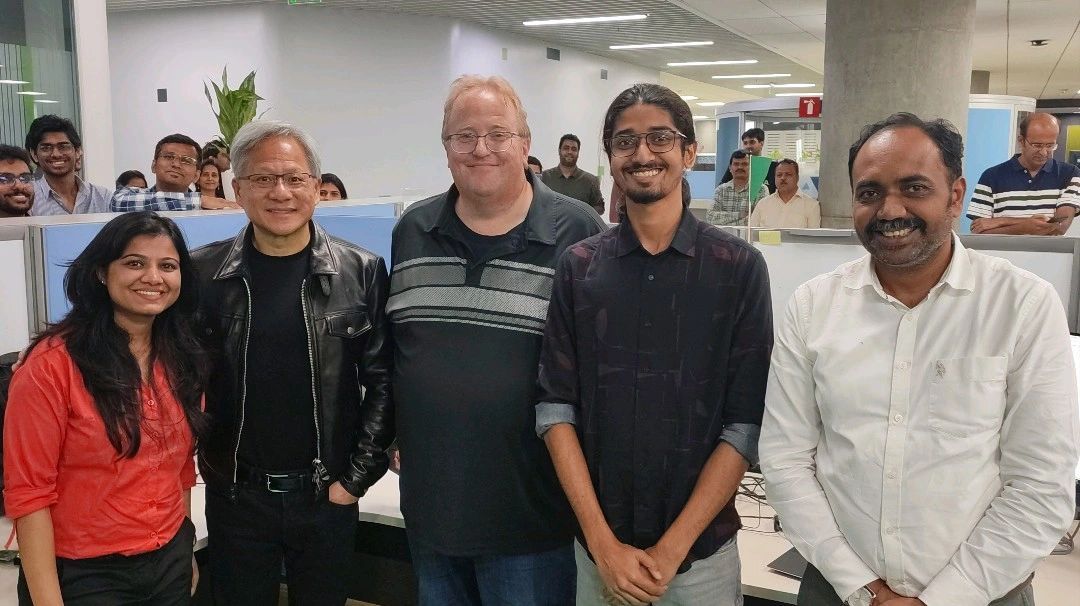
In 2024 Jensen was already talking about physical AI and robotics. I was working there and I heard it, but honestly I did not understand how close that future actually was.
Now it is 2026 and I have started a physical AI company myself. I am seeing every day the things he was describing two years ago, and only now I realize how far ahead he was looking.
I think the biggest company in the world needs to be led by a visionary, and Jensen is one. He looks at where the world is going, beyond the bottlenecks that geopolitics is creating right now. I believe he will take humanity to the next level, and he has my full support.
Mentoring at Haunted Hacks at the @ycombinator office in SF this Saturday. About 200 builders, five hours, real-time AI projects on Durable Actors or Agent Relay. Winning team gets a guaranteed YC interview. Thanks to @JensIngelstedt and BuilderBase for having me.
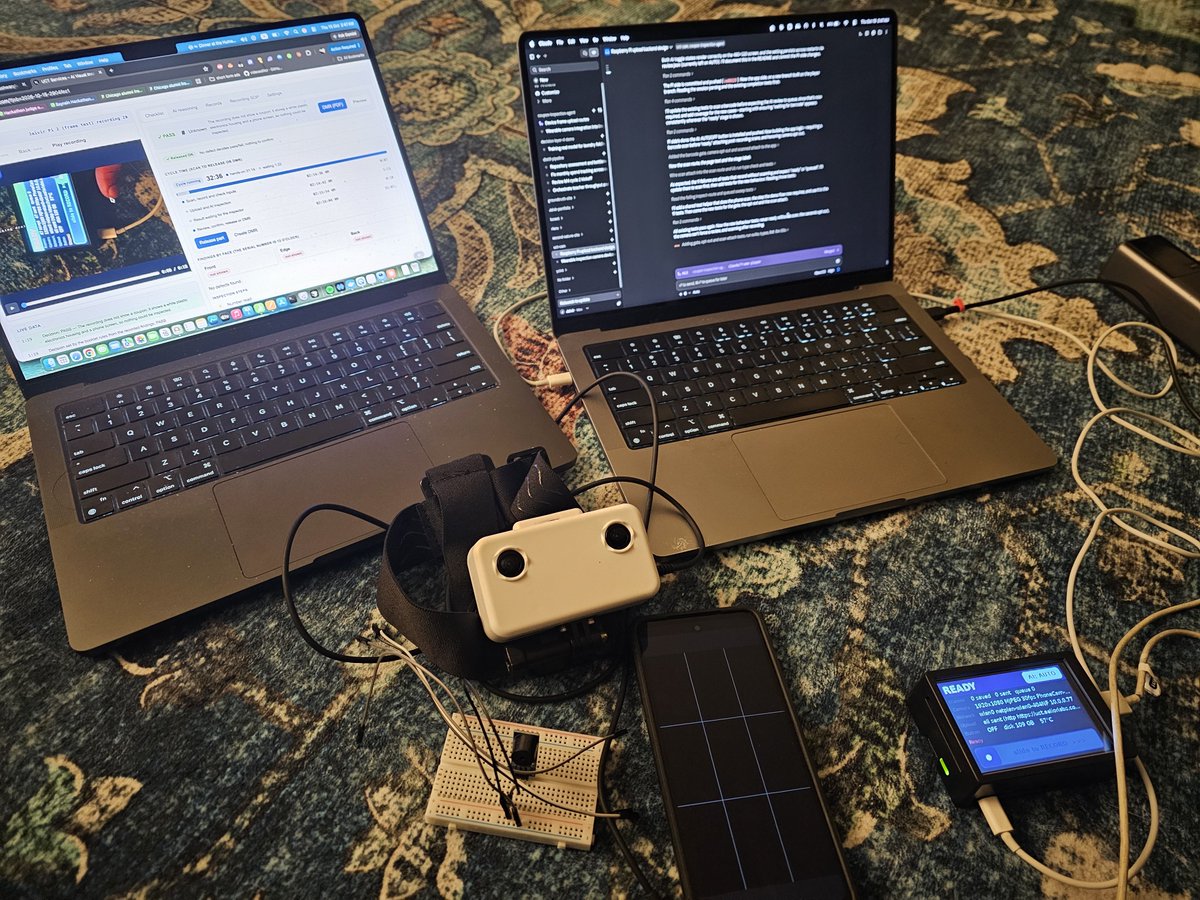
@JasonrShuman Same pattern on fab floors. Deployment data is the bottleneck, so we start by verifying technicians' work with a head camera and train robots on that.
@thejesonlee Agree. We are seeing it on semiconductor floors: the work that needs robots most is the skilled work nobody has data for. We capture it with a head camera first, then train on it.
Judging the Dell x NVIDIA AI Hackathon in SF this Sunday at Frontier Tower. Teams get a Dell Pro Max with GB10 and eight hours to build an always-on business agent that runs fully on the box, no cloud, wifi off. Winner takes the GB10 home.
I think this is how robotics solves its data problem once and for all. You take the videos that already exist, like everything on YouTube, and turn each one into 3D data a robot can learn from.
The clip is from the @NVIDIARobotics Video-to-Data challenge at @corl_conf .
12/ Caveats. All simulation, no real robot. The full errand runs on the interior lever, a push door with no closer, so the bag carry has not been done through one of the three hard ones. I kept the do nothing baseline in at 0.207 rad. Without it 1.19 means nothing.
The hardest problem in robotics right now is opening a door. An office door with a closer, the kind that pulls toward you and shuts itself the second you let go. You get 5 seconds to pull it open, hold it against the spring, and get through the gap it is closing into. 🧵
11/ A baseline that holds every joint still scores 0.207. The model is 5.7x worse than not moving, 0 out of 8. Its own importer refuses the checkpoint for train serve skew so I had to go around it, and there is no door task in its training scope.