She’s reinventing the science of aging.
Meet Julie Clark: the 56-year-old whose biological age clocks in at 36.
She’s outpacing Bryan Johnson, the $2M-a-year biohacker, on a mere $4/day.
Here's her simple anti-aging routine for peak health and lasting longevity: 🧵
🏴 Inglaterra: 4-2-3-1 en rombo, Kane de falso 9, Bellingham llegando desde segunda línea, Pontas invertidos, Presión alta, Rotaciones en el mediocampo
🇦🇷 Argentina: El que no se la pase a Messi es gay
Kecaman Sangat Keras dari Pelatih Mesir Hossam Hassan.
Dalam konferensi pers setelah pertandingan, Hassan menuding wasit Francois Letexier dan para pemain Argentina.
"Kami tidak melihat adanya rasa hormat atau fair play. Sebuah penalti dibatalkan dan insiden kedua yang seharusnya diperiksa untuk potensi penalti kami, bahkan tidak diperiksa sama sekali oleh VAR."
"Gol kedua kami terjadi secara luar biasa, entah karena alasan apa, dianulir. Tampaknya ada tekanan dari pihak Argentina terhadap wasit yang memicu hasil akhir seperti ini."
"Hidup ini memang tidak adil. Dunia ini tidak adil. Oke, tapi mengapa tidak ada keadilan dalam olahraga? Saya tidak bisa menerima hasil ini dan cara segala sesuatunya berjalan dalam pertandingan ini."
"Mungkin mereka ingin mempertahankan sang juara dunia di kompetisi ini? Mungkin mereka ingin Messi tetap berkompetisi? Dalam sepak bola, terkadang ada faktor eksternal yang melampaui aspek teknis. Juara dunia mendapatkan keuntungan dari dukungan di setiap level," kata Hassan via France24.
"Saya memberi tahu wasit bahwa apa yang terjadi itu tidak adil. Ini adalah kemenangan yang tidak layak bagi Argentina. Begitu saya kembali ke negara saya dan berada di rumah, saya tidak akan pernah menonton Piala Dunia lagi, karena tidak ada keadilan dalam kompetisi ini."
Mesir kalah 2-3 melawan Argentina meski unggul 0-2 di babak 16 besar Piala Dunia 2026.
🚨🎙️ZLATAN IBRAHIMOVIĆ ON JAPAN'S PERFORMANCE AGAINST BRAZIL:
🗣️“At this point, I'm short of words.
This loss is painful, but they've proven themselves to the world.
I have literally no words.
Because when I watched Japan today, I didn't see a team that was afraid of Brazil.
I saw a team that believed they could compete with one of the greatest football nations in history.”
“From the goalkeeper to the defence, everything was perfect.
The only thing lacking was the attack.
And I have to be honest...
I didn't feel like the attack really did their job.
The build-up was excellent.
The organisation was excellent.
The pressing was excellent.
But when the decisive moments arrived, they needed to be more ruthless.
Against Brazil, you cannot waste your moments.”
“Their goalkeeper should be the proudest man in that dressing room.
For me, he's been the best goalkeeper in this tournament.
The saves he made.
The confidence he showed.
The composure under pressure.
He kept Japan believing until the very end.
That's what elite goalkeepers do.”
“People will only remember that Japan lost.
I won't.
I'll remember that they stood toe-to-toe with Brazil.
They defended with courage.
They played with intelligence.
They fought for every ball.
That earns my respect.”
“They've lost, but it's a step to success.
Sometimes football teaches you more in defeat than it does in victory.
If this group stays together, learns from today and keeps believing in themselves, they'll become even stronger.”
“I hope this generation gets to win something.
Because generations like this don't come around often.
They have discipline.
They have quality.
They have humility.
And now they've shown they also have the mentality to compete with the very best.
That combination is dangerous.”
“So yes, they'll leave disappointed.
They should.
That's what competitors do.
But when they wake up tomorrow, they should also be proud.
Overall, they should be proud.
Because today they didn't just play against Brazil.
They earned the respect of the entire football world.”
🚨🎙️ZLATAN IBRAHIMOVIĆ ON JAPAN'S PERFORMANCE AGAINST BRAZIL:
🗣️“At this point, I'm short of words.
This loss is painful, but they've proven themselves to the world.
I have literally no words.
Because when I watched Japan today, I didn't see a team that was afraid of Brazil.
I saw a team that believed they could compete with one of the greatest football nations in history.”
“From the goalkeeper to the defence, everything was perfect.
The only thing lacking was the attack.
And I have to be honest...
I didn't feel like the attack really did their job.
The build-up was excellent.
The organisation was excellent.
The pressing was excellent.
But when the decisive moments arrived, they needed to be more ruthless.
Against Brazil, you cannot waste your moments.”
“Their goalkeeper should be the proudest man in that dressing room.
For me, he's been the best goalkeeper in this tournament.
The saves he made.
The confidence he showed.
The composure under pressure.
He kept Japan believing until the very end.
That's what elite goalkeepers do.”
“People will only remember that Japan lost.
I won't.
I'll remember that they stood toe-to-toe with Brazil.
They defended with courage.
They played with intelligence.
They fought for every ball.
That earns my respect.”
“They've lost, but it's a step to success.
Sometimes football teaches you more in defeat than it does in victory.
If this group stays together, learns from today and keeps believing in themselves, they'll become even stronger.”
“I hope this generation gets to win something.
Because generations like this don't come around often.
They have discipline.
They have quality.
They have humility.
And now they've shown they also have the mentality to compete with the very best.
That combination is dangerous.”
“So yes, they'll leave disappointed.
They should.
That's what competitors do.
But when they wake up tomorrow, they should also be proud.
Overall, they should be proud.
Because today they didn't just play against Brazil.
They earned the respect of the entire football world.”
Zion Suzuki on his performance against Brazil despite Japan's heartbreaking World Cup exit:
🗣️ “I gave everything I had tonight. Every save I made was for my teammates, my coaches and every Japanese supporter who believed in us. I'm proud of the fight we showed, but the result still hurts.”
“As a goalkeeper, you always believe you can save one more. That's the hardest part to accept. We came so close to something special, and losing it in the final moments is a pain I'll never forget.”
“I'll learn from this, I'll come back stronger, and I'll keep fighting for Japan. Tonight ends with heartbreak, but this team has shown the world that we belong on the biggest stage.”
Turut berduka cita. Hari ini 30 Juni 2026 kita memperingati MATInya KEADILAN HUKUM di INDONESIA. Setiap tanggal 30 Juni akan diperingati sebagai hari MATInya KEADILAN HUKUM di INDONESIA 🥀🪦🥀🪦🥀🪦
hasil putusan sidang vonis nadiem makarim :
- 10 tahun penjara
- pidana denda Rp 1M
- pidana tambahan pembayaran uang penganti senilai Rp 809 M sekian, apabila tidak dibayar dalam kurun waktu 1 bulan maka diganti dengan pidana penjara selama 5 tahun
hasil putusan sidang vonis nadiem makarim :
- 10 tahun penjara
- pidana denda Rp 1M
- pidana tambahan pembayaran uang penganti senilai Rp 809 M sekian, apabila tidak dibayar dalam kurun waktu 1 bulan maka diganti dengan pidana penjara selama 5 tahun
It’s simply impossible not to get emotional.
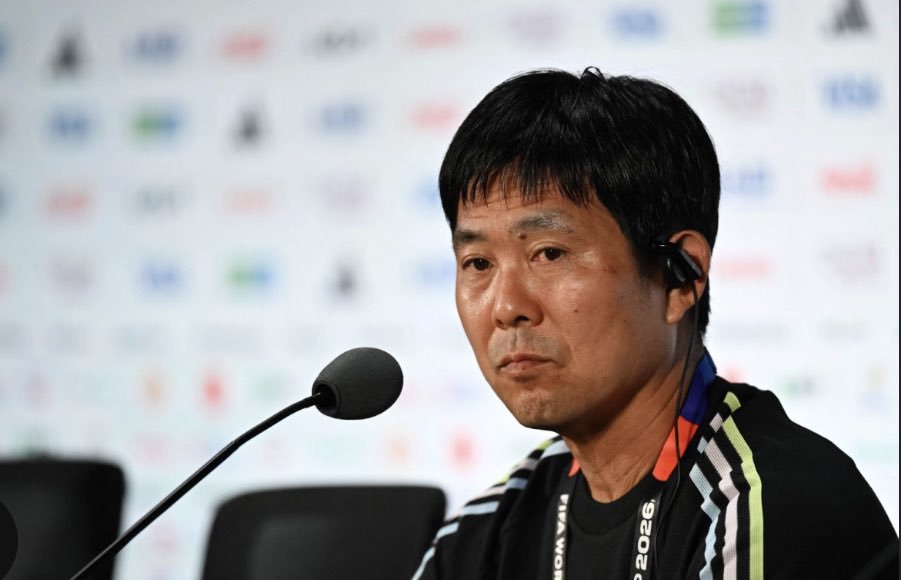
After Japan’s heartbreaking elimination against Brazil, Hajime Moriyasu gathered all of his players on the pitch to deliver a speech. No one feels happy after being knocked out of the World Cup, but Japan has every reason to be proud of the way they competed throughout the tournament.
Despite missing key players like Mitoma, Endo, Minamino, and Kubo, they made it through the group stage unbeaten and gave their country hope of pulling off a historic upset against Brazil. They fought until the very last second, showed incredible character, and never stopped believing.
Keep your heads up, Japan. This team has truly earned the respect of the football world. 🇯🇵❤️
Hajime Moriyasu Japan National Football Team 🫡. Very interesting to watch, sooooooo damn good and discipline. Huge respect 🫡. And like he said: they will come back stronger 💪🏼. Can't wait to see Japan match soon ⚽️🔥🐦🔥🐅🦅
Hajime Moriyasu after Japan crashed out of the 2026 FIFA World Cup following their heartbreaking defeat to Brazil:
🗣️ “This is one of the most painful nights of my career. We were only moments away from making history, but football can be unbelievably cruel. I have nothing but pride for every single player who wore this shirt tonight.”
“To the supporters of Japan, I'm deeply sorry we couldn't give you the ending you deserved. We heard you, we felt your passion, and we fought until the very last second. Seeing your tears hurts just as much as this defeat.”
“I refuse to blame these players. They gave everything—their energy, their courage, their hearts. They stood toe-to-toe with one of the greatest football nations in history and made the entire world believe that Japan could achieve the impossible.”
“In the dressing room there are tears, silence and broken hearts. That's because these players cared. They dreamed of taking Japan further than ever before, and watching that dream disappear in the final moments is something that will stay with them forever.”
“I told the players to keep their heads high. Tonight may feel like the end, but this team has shown the world that Japan belongs among football's elite. Defeat does not erase what they achieved throughout this tournament.”
“To every Japanese fan around the world, thank you for believing in us. We leave this World Cup with heartbreak, but also with pride. We may be going home tonight, but I promise you this team will return stronger, hungrier and more determined than ever.”
Hajime Moriyasu after Japan crashed out of the 2026 FIFA World Cup following their heartbreaking defeat to Brazil:
🗣️ “This is one of the most painful nights of my career. We were only moments away from making history, but football can be unbelievably cruel. I have nothing but pride for every single player who wore this shirt tonight.”
“To the supporters of Japan, I'm deeply sorry we couldn't give you the ending you deserved. We heard you, we felt your passion, and we fought until the very last second. Seeing your tears hurts just as much as this defeat.”
“I refuse to blame these players. They gave everything—their energy, their courage, their hearts. They stood toe-to-toe with one of the greatest football nations in history and made the entire world believe that Japan could achieve the impossible.”
“In the dressing room there are tears, silence and broken hearts. That's because these players cared. They dreamed of taking Japan further than ever before, and watching that dream disappear in the final moments is something that will stay with them forever.”
“I told the players to keep their heads high. Tonight may feel like the end, but this team has shown the world that Japan belongs among football's elite. Defeat does not erase what they achieved throughout this tournament.”
“To every Japanese fan around the world, thank you for believing in us. We leave this World Cup with heartbreak, but also with pride. We may be going home tonight, but I promise you this team will return stronger, hungrier and more determined than ever.”
Will watch all Japan match in 2026 World Cup. Wish they are keep winning and moving ahead. The game is soooo damn good to watch. The simplicity, the discipline, the passion, the grit, the persistence, everything, you name it.
A Japanese immunologist spent 20 years proving that the chemicals trees release into the air walk into your bloodstream, hunt down your stress hormones, and arm your immune system in ways no therapist or pharmaceutical has ever matched, and most of the data has been sitting in Japanese medical journals for two decades waiting to be translated.
His name is Qing Li.
He is a clinical professor at Nippon Medical School in Tokyo and the president of the Japanese Society of Forest Medicine. The Japanese government has been funding his research since 2004, and the body of work he has produced is the reason forest bathing is now an officially prescribed clinical therapy in Japan and Korea.
The story actually starts in 1982, when the Japanese Ministry of Agriculture, Forestry and Fisheries coined the term shinrin-yoku to describe the practice of slow, mindful walking in a forest. They did it for a practical reason.
Japan was urbanizing fast, stress-related illness was climbing, and the country had thousands of square kilometers of forest sitting unused. The idea was to give people a reason to walk into the trees... They had no idea what was actually happening to the human body during those walks until Qing Li ran the first proper experiment in 2005.
He took twelve healthy adult men on a three-day, two-night trip to a forest park. They walked for a few hours each day. Nothing strenuous. No prescribed routes or breathing exercises. They simply walked slowly through the trees, breathing the air, looking at the forest.
Li drew blood and urine samples before the trip, on the second day, on the third day, on day seven after returning home, and again on day thirty.
The numbers that came back from the lab were not what anyone expected.
The activity of a specific type of immune cell called the natural killer cell, which is the cell your body uses to hunt down cancer cells and virus-infected cells before they can spread, had jumped by roughly 50 percent during the forest trip. The actual number of natural killer cells circulating in the bloodstream had increased significantly.
Three different anti-cancer proteins that those cells produce, called perforin, granzymes, and granulysin, had all risen sharply. And the effect did not disappear when the men went home. The immune boost was still measurable on day seven and was still partially present on day thirty.
Two hours a day in a forest had upgraded the immune system for a full month.
Li ran the same experiment with women a year later and found nearly identical results. Then he ran it with a control group who took a three-day trip through an urban area with the same amount of walking, the same hotel quality, and the same diet.
The urban group showed no measurable change in natural killer cell activity at all. The forest was doing the work, not the vacation.
The mechanism turned out to be a class of airborne molecules called phytoncides. Trees produce these compounds to defend themselves against insects, bacteria, and fungi. Pine, cedar, oak, and cypress trees release them in particularly large amounts, especially in warmer weather and after rainfall.
When you walk through a forest, you are inhaling those molecules into your lungs and absorbing them through your skin, and once inside your body they appear to directly stimulate the production and activity of the very immune cells Li was measuring in his lab.
Roughly 50 percent of the health benefit of a forest walk, according to Li's data, comes from the chemistry of the air itself. The other half comes from what the forest is doing to your nervous system.
This is where it stops being only about the immune system and starts being about stress.
A separate Japanese research team measured cortisol, the body's main stress hormone, in 84 participants across 35 different forest sites. They drew samples before and after a 30-minute walk in each forest and compared them to control walks in matched urban environments. The cortisol levels of the people who walked in the forest were lower than the cortisol levels of the people who walked in the city by a significant margin. Their heart rates were lower. Their blood pressure was lower.
The activity of their parasympathetic nervous system, which is the part responsible for rest and recovery, had gone up. The activity of their sympathetic nervous system, which is the part that drives fight or flight, had gone down.
Then a researcher at the University of Michigan named MaryCarol Hunter ran the cleanest version of this experiment ever done. She recruited participants from a city and told them to take a nature pill three times a week for eight weeks.
They were free to choose the time, the place, and the duration of the nature experience, as long as it was outside, in daylight, and free of phones, conversations, and aerobic exercise. They sent her saliva samples before and after each session so she could measure cortisol changes accurately and rule out the normal daily drop in stress hormones that happens to everyone.
The result was that participants experienced a 21.3 percent drop in cortisol per hour spent in nature, with the biggest payoff happening between minutes 20 and 30 of the walk.
After that, the cortisol kept dropping, but more slowly. The threshold dose for measurable stress relief was just 20 minutes outside in something that looked and felt like nature.
What none of this means is that nature is a substitute for therapy or for medication when someone genuinely needs them. Therapy treats different things than a walk does, and Li himself has been careful in interviews to call forest bathing a complementary intervention rather than a replacement for clinical care.
But what the research has settled is that the human body has a physiological response to being among trees that operates on the same biological systems modern medicine is trying to reach with drugs and clinical protocols, and that response is fast, measurable, and free.
The strangest part of Li's work is the implication he keeps repeating in interviews. The average person now spends more than 90 percent of their life indoors. Their cortisol stays elevated. Their natural killer cells stay sluggish.
Their parasympathetic nervous system rarely gets a chance to take over. The system that was tuned by millions of years of life under a canopy of trees is being asked to run permanently inside a box made of drywall and screens.
Your body has not forgotten what it is supposed to do in a forest. It is waiting for you to walk into one.
A Japanese immunologist spent 20 years proving that the chemicals trees release into the air walk into your bloodstream, hunt down your stress hormones, and arm your immune system in ways no therapist or pharmaceutical has ever matched, and most of the data has been sitting in Japanese medical journals for two decades waiting to be translated.
His name is Qing Li.
He is a clinical professor at Nippon Medical School in Tokyo and the president of the Japanese Society of Forest Medicine. The Japanese government has been funding his research since 2004, and the body of work he has produced is the reason forest bathing is now an officially prescribed clinical therapy in Japan and Korea.
The story actually starts in 1982, when the Japanese Ministry of Agriculture, Forestry and Fisheries coined the term shinrin-yoku to describe the practice of slow, mindful walking in a forest. They did it for a practical reason.
Japan was urbanizing fast, stress-related illness was climbing, and the country had thousands of square kilometers of forest sitting unused. The idea was to give people a reason to walk into the trees... They had no idea what was actually happening to the human body during those walks until Qing Li ran the first proper experiment in 2005.
He took twelve healthy adult men on a three-day, two-night trip to a forest park. They walked for a few hours each day. Nothing strenuous. No prescribed routes or breathing exercises. They simply walked slowly through the trees, breathing the air, looking at the forest.
Li drew blood and urine samples before the trip, on the second day, on the third day, on day seven after returning home, and again on day thirty.
The numbers that came back from the lab were not what anyone expected.
The activity of a specific type of immune cell called the natural killer cell, which is the cell your body uses to hunt down cancer cells and virus-infected cells before they can spread, had jumped by roughly 50 percent during the forest trip. The actual number of natural killer cells circulating in the bloodstream had increased significantly.
Three different anti-cancer proteins that those cells produce, called perforin, granzymes, and granulysin, had all risen sharply. And the effect did not disappear when the men went home. The immune boost was still measurable on day seven and was still partially present on day thirty.
Two hours a day in a forest had upgraded the immune system for a full month.
Li ran the same experiment with women a year later and found nearly identical results. Then he ran it with a control group who took a three-day trip through an urban area with the same amount of walking, the same hotel quality, and the same diet.
The urban group showed no measurable change in natural killer cell activity at all. The forest was doing the work, not the vacation.
The mechanism turned out to be a class of airborne molecules called phytoncides. Trees produce these compounds to defend themselves against insects, bacteria, and fungi. Pine, cedar, oak, and cypress trees release them in particularly large amounts, especially in warmer weather and after rainfall.
When you walk through a forest, you are inhaling those molecules into your lungs and absorbing them through your skin, and once inside your body they appear to directly stimulate the production and activity of the very immune cells Li was measuring in his lab.
Roughly 50 percent of the health benefit of a forest walk, according to Li's data, comes from the chemistry of the air itself. The other half comes from what the forest is doing to your nervous system.
This is where it stops being only about the immune system and starts being about stress.
A separate Japanese research team measured cortisol, the body's main stress hormone, in 84 participants across 35 different forest sites. They drew samples before and after a 30-minute walk in each forest and compared them to control walks in matched urban environments. The cortisol levels of the people who walked in the forest were lower than the cortisol levels of the people who walked in the city by a significant margin. Their heart rates were lower. Their blood pressure was lower.
The activity of their parasympathetic nervous system, which is the part responsible for rest and recovery, had gone up. The activity of their sympathetic nervous system, which is the part that drives fight or flight, had gone down.
Then a researcher at the University of Michigan named MaryCarol Hunter ran the cleanest version of this experiment ever done. She recruited participants from a city and told them to take a nature pill three times a week for eight weeks.
They were free to choose the time, the place, and the duration of the nature experience, as long as it was outside, in daylight, and free of phones, conversations, and aerobic exercise. They sent her saliva samples before and after each session so she could measure cortisol changes accurately and rule out the normal daily drop in stress hormones that happens to everyone.
The result was that participants experienced a 21.3 percent drop in cortisol per hour spent in nature, with the biggest payoff happening between minutes 20 and 30 of the walk.
After that, the cortisol kept dropping, but more slowly. The threshold dose for measurable stress relief was just 20 minutes outside in something that looked and felt like nature.
What none of this means is that nature is a substitute for therapy or for medication when someone genuinely needs them. Therapy treats different things than a walk does, and Li himself has been careful in interviews to call forest bathing a complementary intervention rather than a replacement for clinical care.
But what the research has settled is that the human body has a physiological response to being among trees that operates on the same biological systems modern medicine is trying to reach with drugs and clinical protocols, and that response is fast, measurable, and free.
The strangest part of Li's work is the implication he keeps repeating in interviews. The average person now spends more than 90 percent of their life indoors. Their cortisol stays elevated. Their natural killer cells stay sluggish.
Their parasympathetic nervous system rarely gets a chance to take over. The system that was tuned by millions of years of life under a canopy of trees is being asked to run permanently inside a box made of drywall and screens.
Your body has not forgotten what it is supposed to do in a forest. It is waiting for you to walk into one.