#AN7Internacionales | China volvió a captar la atención en las redes sociales tras viralizarse un video que muestra un sistema de lluvia artificial instalado en el techo de un complejo residencial en Yuncheng. La tecnología utiliza agua nebulizada para disminuir la temperatura ambiente entre 5 y 8 °C, como parte de una estrategia para mitigar el intenso calor y mejorar el confort de los residentes-
🇺🇸‼️ | Figure firmó un acuerdo para desplegar robots humanoides a gran escala en la red logística de Catalyst Brands, gigante minorista dueño de marcas como JCPenney, Aéropostale y Brooks Brothers. El proyecto arrancará en Nevada y busca reemplazar tareas físicas repetitivas con inteligencia artificial avanzada, acelerando la transformación del trabajo humano en la industria logística.
🇬🇧 🔒 🤖
MEGA LEAK DE ONLYFANS ES FALSO
¡TODO FUE GENERADO POR INTELIGENCIA ARTIFICIAL!
¡SIGUE @ULTIMAHORAENX VISÍTANOS PARA MAS!
Un supuesto mega filtración de OnlyFans con 340 millones de registros de usuarios y creadores que circulaba en foros oscuros y redes resultó ser completamente inventada. Ninguna de las cuentas mencionadas existe en la plataforma y los datos son puro material generado por IA para crear pánico y clics. Expertos en ciberseguridad confirmaron que se trata de un engaño clásico que combina información vieja de otras brechas con imágenes falsas para parecer real. No hubo hackeo a OnlyFans y el riesgo real es caer en phishing o enlaces maliciosos que acompañan estos rumores.
FUENTES: International Cyber Digest, Cyber News, PurpleOps, Daily Dark Web, Grok.
🚨🚨 OnlyFans mega leak reveals 340M user records, hackers claim
⭕️ The alleged OnlyFans data leak was posted on a popular data leak forum, where attackers often share stolen details. According to the post, the attackers are selling 340 million records, scraped from internal OnlyFans databases.
⭕️ Cross-referencing information from seemingly unrelated data breaches is precisely why having your data exposed online is dangerous. Users often use a single or a few email addresses for multiple online accounts. In the event of a data breach, one dataset can serve as a reference point to match email addresses and obtain additional data.
Follow @warstrike88
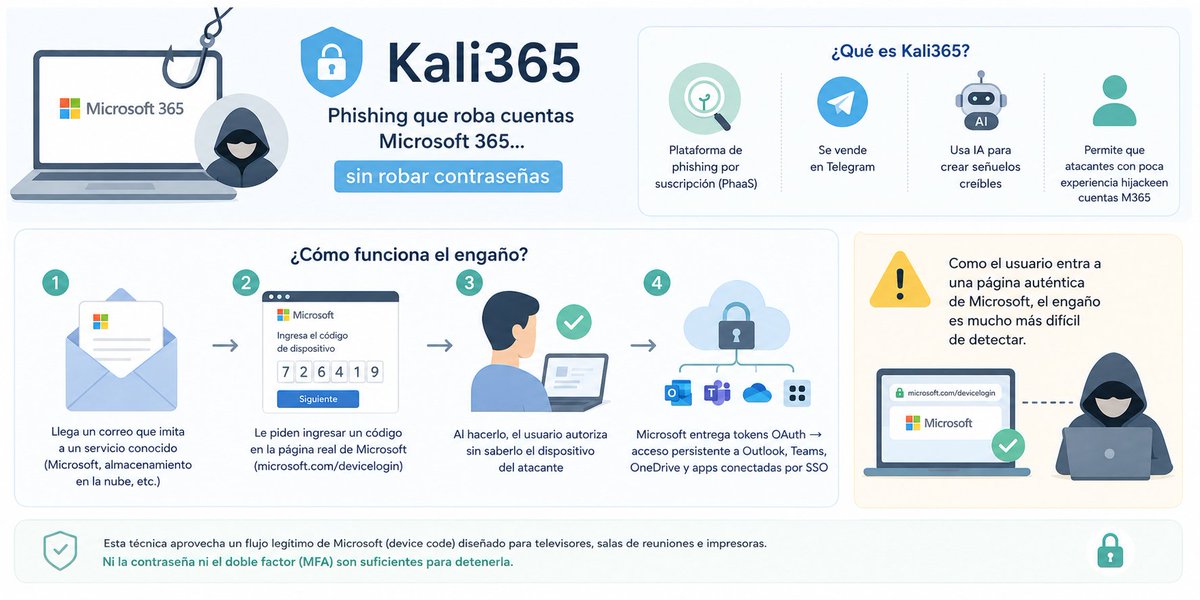
🔐 𝗙𝗕𝗜 𝗮𝗹𝗲𝗿𝘁𝗮 𝘀𝗼𝗯𝗿𝗲 𝗞𝗮𝗹𝗶𝟯𝟲𝟱: 𝗿𝗼𝗯𝗮𝗻 𝗰𝘂𝗲𝗻𝘁𝗮𝘀 𝗱𝗲 𝗠𝗶𝗰𝗿𝗼𝘀𝗼𝗳𝘁 𝟯𝟲𝟱 𝘀𝗶𝗻 𝗹𝗮 𝗰𝗼𝗻𝘁𝗿𝗮𝘀𝗲ñ𝗮
Phishing por suscripción (PhaaS) que secuestra cuentas de Microsoft 365 sin robar contraseñas y sin MFA.
Más info 👇
https://t.co/REfXek8gA5
A recently laid-off Meta engineer named Jeremy Bernier publicly accused the company of operating like “Squid Game.”
Bernier described Meta’s workplace as highly toxic due to its stack-ranking system.
He claimed workers are constantly pitted against each other in brutal performance competitions.
En #Meta, el 90% de mis compañeros eran chinos, y los no chinos eran sistemáticamente excluidos, discriminados y despedidos. En 6 de los 7 despidos que presencié, los no chinos eran una minoría.
At Meta, 90% of my coworkers were Chinese, and non-Chinese were routinely excluded, disadvantaged, and targeted for layoffs. 6 out of the 7 layoffs I observed targeted non-Chinese despite non-Chinese being the vast minority. Certain orgs like ads and MRS are notorious for being Chinese dominated. I think Americans would be outraged if they knew that their own citizens were getting marginalized and laid off at their own companies, while Chinese promote themselves up, conquer entire orgs, and reap millions.
Imagine if Huawei in Shenzhen had entire orgs and leadership chains completely dominated by Japanese people who brazenly spoke Japanese at work without a care in the world that their Chinese coworkers don't understand, imposed their own work culture without respecting Chinese culture, excluded the Chinese, and laid off Chinese people while promoting their own. I imagine Chinese citizens would be outraged, and never allow that to happen in the first place.
The most blatant and obvious way that non-Chinese are excluded is that Chinese primarily speak Mandarin at work. I'm not talking about one-off conversations, I'm talking about every single conversation. Loudly and brazenly with no respect for others. 10+ teammates and leaders having a group conversation in Mandarin while the 2 non-Chinese don't understand and feel excluded from the team. Although everyone at least has the decency to speak English during formal meetings with a non-speaker present, it was common that right after the meeting ended everyone would immediately switch to Mandarin.
Funny I'm in Korea right now and was just on a double date with 3 other Koreans, and I was shocked that when the conversation would split into two, the other couple would speak to each other in English in my presence just out of respect. A Korean couple on a double-date had the courtesy to speak to each other in English in front of me even though I'd never expect that from them, but my Chinese coworkers did not.
Lunch was another place where non-Chinese were blatantly excluded. Recall that the team I joined was an all Chinese team with only one other non-Chinese person. The Chinese would always get lunch together and never invite us (except for one of them who occasionally would, though at some point stopped). Me and the non-Chinese person would invite them, they'd always refuse, and then shortly after they'd disappear and get lunch together. As a result, it was usually just the two of us getting lunch. (caveat, some of the newer Chinese who joined afterwards also experienced similar treatment. So it's moreso a clique thing than a Chinese vs. non-Chinese thing, though 100% of the clique was Chinese)
On Wednesdays and Fridays I'd often be the only non-Chinese person on my team in the office, and they'd all get lunch together without inviting me. It was depressing, and made me not want to come into the office on those days.
One team dinner we went to a Korean BBQ. I arrived with a non-Chinese coworker and the first table was full, so we sat at one end of the next empty table. Shortly after one of the Tech Leads walked in, and sat at the complete opposite end of our table, alone and not in talking distance to anyone. We invited her over, and she declined. Later another Tech Lead came in and sat across from her. Non-Chinese and Chinese at opposite ends of a long table at a team dinner, and they refused to sit with us. Eventually more people came and the TLs joined our side because I guess maybe it was too obviously anti-social, and they spent the entire dinner speaking speaking Chinese to each other. These were our tech leads.
I could not understand how Meta could have "Tech Leads" that so blatantly excluded teammates. I thought Tech Leads were supposed to uplift the team, and that Meta would hold tech leads to a higher standard.
Now someone might say that it's just lunch or a one-off team dinner, who cares? To that I vehemently disagree. Lunch is extremely important for team bonding, and so much information is transferred through informal socializing. I'm not saying that everyone needs to get lunch together everyday, but if a minority of people are excluded from getting lunch with the rest of the team, and especially the most tenured and senior employees, then naturally that minority is going to feel alienated, disadvantaged, and excluded from opportunities. And the very fact that they're excluded from lunch is reflective of being excluded in general.
When 90% of an org and the entire leadership chain is dominated by one ethnicity, naturally their work culture is going to spill through. Chinese culture is completely different from American work culture, and learning to navigate that was a huge obstacle for me. For example I'm the type that tends to question everything and isn't afraid to challenge a "superior", but I quickly realized that my TL seemed to take offense to that, and would punish/retaliate me for it.
I want to make it clear - I have nothing against Chinese people. Most of them are very kind (strong correlation between kindness and not engaging in the kind of exclusionary behavior I mentioned above), and I have many good friends who are Chinese. I get that some barely speak English (though I question how they got hired). I do genuinely believe that most are good people, and not deliberately trying to exclude others. But regardless of intent, the result is that non-Chinese get excluded. The fact that 6 of the 7 layoffs I observed were not Chinese in a 80-90% Chinese dominated org is testament to this. The fact that 90% Chinese dominated orgs even exist in the first place is testament to this.
I might not even be posting about this given the sensitivity of the topic if not for the fact that I've seen and/or heard stories of some very toxic people who I do not believe would otherwise survive if not for their ability to exclude others, throwing others under the bus for the next layoff. The same people do this over and over again, and get away with it because they're part of the "clique" that essentially has immunity.
I think the company needs to take this more seriously. Some ideas would be enforcing English at the office (I've heard of other teams that do this), raising leaders to a higher bar when it comes to team inclusivity (eg. under the "People" axis), investigating potential discrimination cases (eg. layoffs and/or mistreatment disproportionally affecting certain groups) and having a zero tolerance policy around that, having a zero tolerance policy around injustice in general (eg. lying or deliberately throwing somebody under the bus), ensuring more diverse teams, etc.
But to be honest, I don't have faith that much would change so long as the entire leadership chain up to the VP level is dominated by the same ethnicity, language, and culture. Nor does it seem that leadership even remotely cares given that this has been happening in the HQ for probably at least the last decade, and is obvious to anyone who's stepped foot in the office.
#Meta fue fácilmente la empresa más tóxica en la que he trabajado. Hay una razón por la que los chinos la llaman "Squid Game". Otros la llaman "Hunger Games" o "Lord of the Flies". Creo que todas son precisas.
I joined Meta as a software engineer and was matched to an ads team. I thought I'd be coding (this is in 2024) and scaling high scale systems. Turns out the team was mostly tweaking parameters, clicking through outdated UIs on internal tools to pull metrics and screenshot paste them into Google Docs, and having alignment meetings to decide on the next parameters. The coding was just config updates.
The alignment meetings required presenting all the data points and recommendations to the Tech Lead, followed by them quizzing you on every combination of every data point. You needed to win the TLs approval on every "tuning", otherwise you wouldn't be able to get your next diff approved, your launch would be delayed, and the TL would tell your manager that you're not accountable to timelines, impacting your performance rating (as I previously mentioned, TLs have enormous influence over your rating. 1 bad TL feedback and you're screwed).
The whole thing felt incredibly inefficient and performative, and had little resemblance to software engineering. I'd question certain asks (eg. pointless backtest investigations) and processes, and would be punished for it. I'd offer suggestions for improvement that you'd think would be totally uncontroversial (eg. automation), and my manager would discourage me. Questioning itself seemed to be seen as a threat and punished.
The Team
The general team dynamic and incentives seemed to be completely off. The knowledge was mostly tribal, and almost seemed to be guarded. I already mentioned that the team/org was dominated by a clique from one country who'd primarily speak their language at the office and stick to their own. The team had gone through something like 5 managers in the last 2 years, and the TLs had recently kicked the previous manager out. The org had just brought in a new director, senior manager, and manager (interestingly they were all from another Asian country. Spoiler: they all left within a year).
Work being "suboptimal" is one thing, but there's nothing more miserable at work than people problems.
The Tech Lead was extremely rude, disrespectful, and had me questioning my own sanity. They'd ask me to do work knowing I don't have the context, refuse to provide the context, then gaslight me for not figuring it out. They'd inundate me with tasks telling me they needed to be done by end of day despite the tasks not actually being urgent and sometimes not even necessary at all, despite knowing that I didn't have the bandwidth, and then not even review the work they'd asked for that needed their approval to unblock (eg. a diff). They seemed more interested in getting me to commit to deadlines in public group chats than providing any real support.
They'd even go as far as to ignore me when I'd greet them when coming into/out of the office, and avoid eye contact when passing in the hallways. I heard a rumor that this TL and another TL had previously tried to modify the deadlines in a doc containing another employee's work to make it looked like that employee had missed deadlines. I legitimately felt like the Tech Lead was setting me up to fail.
The manager was the most toxic I've ever worked for. I have many stories here - but the most insidious was watching him deliberately set up another new hire to fail, driving them to having to see a psychiatrist, before getting them fired. After the half ended, the manager abruptly went on a 8 month leave, then left the company.
I only survived because other than that TL, practically every other IC (individual contributor) I worked with was very kind. The team hired a lot of new hires around the same time I joined, and we were all able to help onboard each other and bond over the absurdity of a lot of this. (All the new hires complained that the onboarding experience was terrible, so the manager made it a priority to improve the onboarding experience by tasking new hires with improving the documentation)
Work
Getting back to the work itself - I tried to improve things. For example as I mentioned we had to spend hours/day on routine metric pulling, clicking through various convoluted UIs of internal tools to query metrics just so that we could screenshot paste them into Google Docs. Metric pulling had been voted the team's #1 paint point, and it was something I was extremely motivated to improve because I thought this was absurd.
I suggested making the querying programmatic, especially since this could be used as a building block to automate the tuning process itself. My manager discouraged me, telling me that John (name has been anonymized) was working with an external team who's building a tool that will solve the problem. I spoke with John, looked into the tool, spoke with the external team (who were deprioritizing the tool), and it was clear that the tool would never solve the problem. John agreed with me. I brought it up to my manager, and he refused to believe me, adamantly insisting that the tool would solve all of our metric pulling problems, and that any other work I did would be throwaway work.
Long story short, the tool didn't get any adoption as expected. The manager then pivoted to shilling some other tool that also never got adopted despite similar concerns raised. Since I couldn't get buy in from my manager to work on it myself, I just spent my spare time working on a solution on the side. I managed to automate some metric pulling that didn't overlap with ongoing efforts - and some of this was leveraged for a separate auto-tuning initiative that managed to get some traction, but there was only so much headway I could make with my limited bandwidth. One day someone on the team found a tool that the Instagram team had created that worked well enough for most metric pulling, so we adopted that.
PSC driven engineering
At some point I realized that the primary goal wasn't actually to solve the problem, but to create a compelling story that looked good for performance review (PSC). The reason the preference was to coordinate with other teams on the solution and involve more people instead of just building it ourselves was in part because cross-functional collaboration (XFN) and involving more people was seen as higher level work entailing higher complexity, and thus valued higher in PSC. The mentality was that if one person could just build it themselves, then it must not have been that difficult. It seemed the reason the manager was against writing code (eg. a library or API) and preferred a GUI tool was because they felt a GUI would look more impressive.
The work was miserable. I wasn't learning anything valuable, and clearly there was no hope. The other engineer who'd joined the same day as me quit after exactly 1 year (you need to stay 1 year to keep your signing bonus). Others transferred out as soon as they were able to.
Thankfully there was another team in the org that seemed to be doing the real software engineering work, and I was eventually able to transfer. The new team was superior in every single aspect, and I have nothing but positive things to say about them.
Learnings
Although my experience on the first team was extremely difficult, I still learned a ton. I learned how to be more self-sufficient, and how to operate in a big company. From a technical perspective I did get exposure to high scale ad and machine learning systems, though I didn't get to go as deep as I wanted. I learned about experimentation and data. I learned how to work with difficult people. After this experience, it'd be much harder to phase me in a work environment.
What made this the most difficult time of my career was not the technical aspect which actually was fairly simple, but the Tech Lead and manager. I subsequently had 2 different managers and worked closely with 5+ more Tech Leads without any issues (otherwise I might still be questioning my sanity). I believe some of the difficulties may have been in part due to cultural differences where I hadn't yet learned about Asian work cultural concepts like the strict hierarchy and "saving face". But through this whole experience, I know that I'd fare much better if faced with a similar situation in the future.
I want to make it clear - this was just my experience. I think there are some great people on that team, and of course the team does do some legitimate work. The work was just nothing that I think any SWE would expect.
I do wish I'd been matched to the second team from the start because it was a way better fit for me. But I guess if that had been the case then I wouldn't have this ridiculous story.
Google has introduced Ask YouTube!
You’ll soon be able to ask about anything to find the exact video you’re looking for.
It can jump straight to the most relevant part of a video, remember context from your conversation, and even organize information into tables.
Rolling out this summer, starting in the US.
there's no catch; SAM3 is open source and really good
one of the things it does really well is object tracking, even in crazy complex scenes like basketball
probably my favorite computer vision model ever
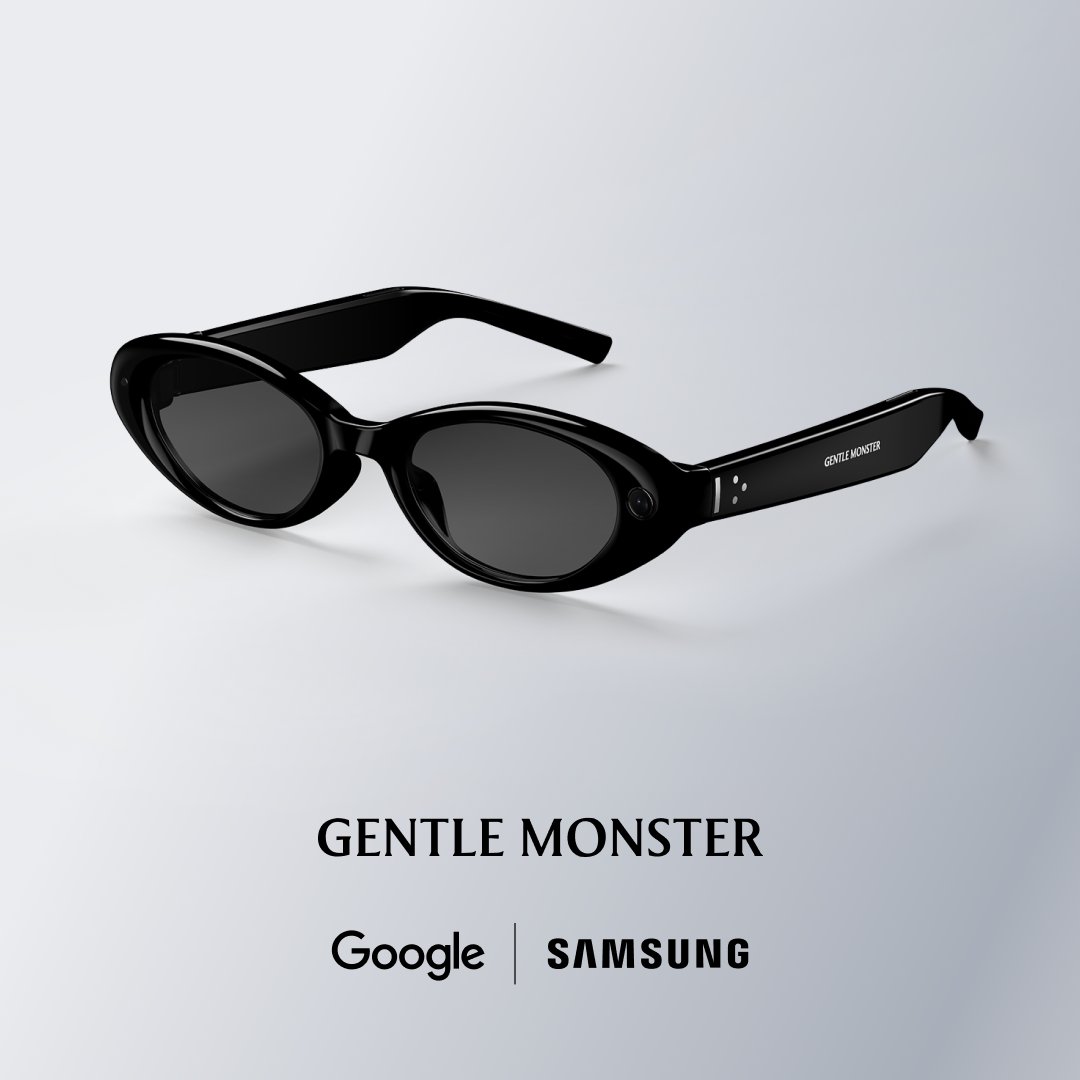
Google's back in the glasses game, with the reveal of Android XR smart glasses at #GoogleIO.
This marks our best look yet at what their collaboration with Samsung, Warby Parker and Gentle Monster looks like, with a focus on vocal interactions with Gemini as a companion to your phone, which you can watch in this demo 🕶️
Introducing Gemini for Science — a collection of AI tools to help accelerate the scientific process. Gemini can already assist in solving complex problems, but our new @GoogleLabs prototypes can help streamline more daily scientific tasks, including:
📃 Staying on top of new papers
🧑💻 Transforming research goals into usable code
💡Generating new hypotheses
#GoogleIO
Echa un vistazo a estas nuevas funciones de Gemini presentadas en Google I/O:
🎨 Bocetos que se convierten en vídeos
⚡ Nuevo modelo Gemini 3.5 Flash
✨ Un nuevo diseño fluido e inmersivo.
La única pregunta ahora es: ¿qué vas a crear primero? Etiquétanos en tus creaciones con #googleio
Now in @FlowByGoogle, you’ll be able to use the full potential of Gemini Omni Flash, our model that can create anything from any input, starting with video.
With a simple prompt and style reference, Gemini Omni allows you to transform the environment of an existing scene, add visual effects and other elements, all while preserving the original performance.
You can even add new characters with custom voices directly to a scene with the new Character feature.
#GoogleIO