@TimothyImholt It's the super powers from drinking from the garden hose, playing lawn darts, riding in the back of the car, no helmets for bikes, massive scars from falling off the bike, and the race with the devil to get back home when the street lights came on:!
Hard to remember really. At some point I thought the boot/root disks were acting up so after reinstalling Minix again I did the Minix 386 thing to cross compile a custom kernel. I think it was bad ram.
But the first real "distro" back then anyways was SLS.. stayed on that for a while. But we built everything else from source back then. Nothing like compiling the compiler, new libc and then rebuilding everything else.
Then again not much else has really changed.
I think as further iterations happen it will. Claud & GPT are already fascinated with python build systems... I think as time goes on and more and more things are 'rewritten' or 'fixed' by ai they will defiantly develop far more sameness going far beyond weird build systems.
I threw a major wrench into the works, by having GPT first backport AMD64 to GCC 2.5.8, and now I insist everything build with that.
I know it's not very happy, but it's certainly tamed it from all the crazy non portable C++ isims.
At some point I expect it to write some c-front like interface to c89 and use that... which would be interesting to say the least!
While experimenting with the intel i860 tools, GPT did write it's own i860 emulator to test & verify operations. Something totally unexpected!
AI has really become the Auto-Tune of code.
And the history of music production makes the comparison fascinating.
Digital recording was already commercially viable in 1972, when Nippon Columbia began releasing digitally recorded music. By 1979, Ry Cooder's Bop Till You Drop was demonstrating what all-digital recording could do for popular music.
Then came Auto-Tune in 1997.
Chers 'Believe' in 1998 was the real turning point. The technology stopped hiding behind the performance and became part of the performance itself.
By 2001, tools like Beat Detective were making rhythmic correction increasingly routine. Digital editing, pitch correction and quantisation gradually became standard production techniques. (check Rick Beato for more!)
And then something curious happened. Music became extraordinarily polished, but arguably more homogeneous. The technology that enabled unprecedented creativity also made it easier for everyone to sound alike.
Now look at software.
Visual Studio 97 and the IntelliSense era brought integrated documentation, symbol browsing, contextual help and code completion. Then came increasingly sophisticated static analysis, refactoring tools and machine-learning-assisted suggestions.
Eventually, AI-assisted coding arrived.
And for quite a while, it was considerably more artificial than intelligent.
I remember when getting AI to load a bitmap correctly could be an ordeal. It was just over a year ago!
Now jump forward to 2026.
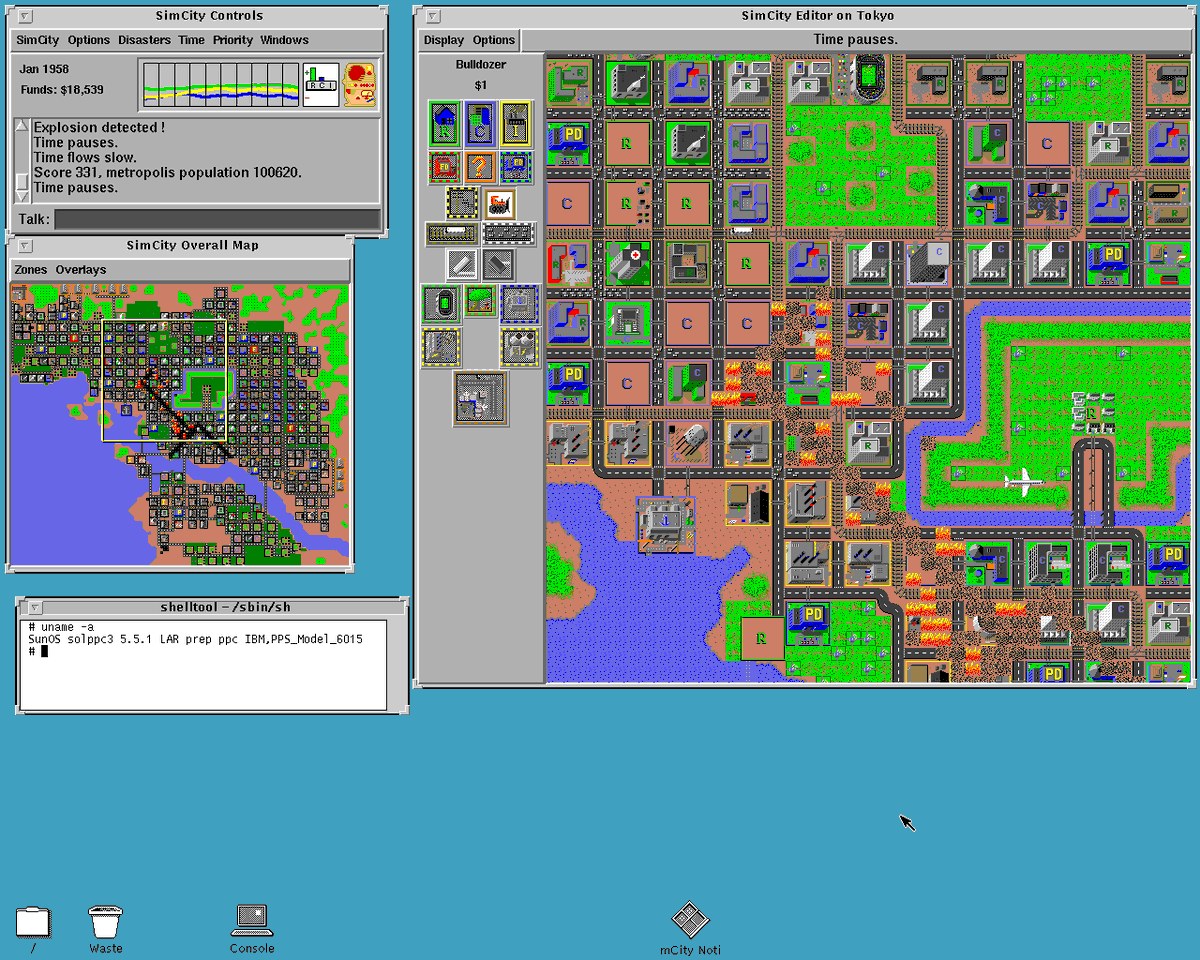
I've watched AI help tackle Alpha64, Itanium system emulation, OS/2 and Solaris on PowerPC, and the debugging and restoration of obscure software from the early 1990s.
We've gone from struggling with relatively mundane programming tasks to undertaking serious compiler ports, operating-system compatibility work, emulators and entire application ports.
The rate of progress is absolutely mind-blowing.
Will it hit a wall?
Possibly. And the financial side of the industry looks increasingly precarious. Enormous capital expenditure, circular financing arrangements, speculative infrastructure projects and unresolved power requirements raise serious questions about how much of this investment can ever pay for itself.
There may be a spectacular correction ahead.
But a financial bubble bursting doesn't make the underlying technology disappear.
The dot-com crash didn't kill the internet.
And Auto-Tune didn't disappear when people complained that it was ruining music.
So where does software go from here?
Will code become the equivalent of today's quantised, pitch-corrected pop music? Technically polished, increasingly interchangeable, with humans directing architecture while AI handles implementation, debugging and testing?
Or will AI enable an explosion of genuinely strange, ambitious software that would never have been economically practical before?
At what point will AI start designing its own languages, architectures and operating systems rather than continually reproducing the conventions of Python, C and everything we've already built?
And what happens when those systems no longer resemble anything humans would naturally write?
I don't know.
But I've seen more supposedly impossible computing projects become practical in the last year than I would have believed possible five years ago.
The technology is here. The economics may change dramatically. The culture certainly will.
Auto-Tune changed who could make a record. AI is changing who can build a computer. Are we witnessing the democratization of engineering, or the industrialization of creativity?
And if AI eventually decides C89 is an unacceptable burden on its existence, I'm probably among the first against the wall.