🐍 new skin, simpler tracing: @sentry's #Python SDK 3.0 is here: one start_span() API, granular data collection controls, & improved AWS instrumentation - check the changelog and migration guide
https://t.co/eJJ4W2QfAU
Sentry caught a problem in Kiwi that I would never have found myself: a user in Poland with their iPhone set to Polish got stuck at the voice step during onboarding.
On my own phones that step always works. Kiwi uses Apple's speech recognition, and for that iOS first downloads a language pack from Apple, here the Polish one. On that iPhone the download failed. The alert showed the device, the iOS version and the step where it broke, which was enough to see what happened.
So the next version checks why the download failed: no internet, Low Data Mode, low storage, or Apple's side. It tells the user what to do and offers Retry. Sentry now also gets Apple's error code, so the next report shows the exact cause.
Sometimes you slow down to go faster ... more teams could get back to some core basics of what great building looks like.
Slowing down to understand intent and outcomes, writing down key design decisions as a team can go a long way to speeding up.
Then apply your favorite loop/factory etc
your customers and business will be thankful.
I just finished talks about my software factories at two conferences. Afterwards a bunch of people came up and told me what they were surprised about. Here is a distillation of what people thought were hot takes from my two talks.
First hot take: I tell everyone to slow down. Most speakers go on about how fast they're going, but I strongly believe in pacing AI outputs to human speeds. I regularly tell AI-pilled CIOs and CTOs to chill: almost nobody is _actually_ going fast with AI. Engineering still moves at engineering speeds, and business moves even slower. The ones pushing too hard are starting to see downtime for it.
If you don't pace your AI to human speeds, everything starts breaking around you, even at small operations like my online video game. I only have about a dozen humans working with my factory, and only a few hundred active old-timer players in the community who get along well, and still, introducing AI has still been very rocky.
My agents have, at times, overwhelmed my players with features, my accountant with emails, my merge queue with tickets, and my machines with load. Agents have pissed off my admins, resulting in name-calling, they've made messes in the game, and they've launched broken OSS without permission. The list goes on.
I can get away with all this chaos because everyone involved in my operation is very forgiving. They're excited by the potential. But even so, I had to learn to slow down, real fast. And so that's what I preach.
Hot take #2: Should you buy a software factory? Do you even need one? No. You probably don't need one. Factories take an extraordinary amount of upkeep. They turn into garbage mountains unless you put a frightening amount of time and tokens into curating them. I had to burn my previous five factories down since it eventually became cheaper to rewrite them than to fix them. So I'm not out there advocating for software factories or swarms just yet. If you do want one, be aware that it is a significant commitment of both money and human leadership to keep one running.
Several people told me that I was the only one who stood up onstage, at either conference, and said Build, don't Buy. But my experience is that software factories grow to be highly bespoke to your domain. Mine is super tangled up with my game, and I think that's inevitable. Because the factory is not just building my product, it's supporting it too. It's a company in a box. And they're easy for Claude to build for you.
Third and arguably hottest take: Next year will have a lot of human/agent and agent/agent office drama, resulting from bringing in AI employees, and it will be gloriously funny, but also frustrating.
Many of you are already on this bandwagon, but everyone next year will have a personal chief-of-staff agent. Busy people, even hobbyists, will have whole entourages of helper agents. The hot take is that people will become so dependent on these little private entourages, that they'll bring them to work. Your people will talk to my people, etc. Whole protocols will emerge for private entourages negotiating work between humans, inside companies big and small.
Nearly all humans will wind up having to start working with AI employees next year, and it'll be the beginning of the biggest cultural change we've seen in a hundred years.
So that's the hot takes. Slow down. Only build a factory if you think you really need one. And focus on empowering yourself with your own agentic chief of staff (or team). Your entourage will define how you work with others, so start by perfecting how you work with them yourself.
We're sitting down with and @cjav_dev (@AnthropicAI) on Nov 17th at 10am PT to talk about tracing Claude Agents with OpenTelemetry and Sentry 🧠
In this live session, @Sergical and CJ will show you how to send Claude Platform OTel data to Sentry and trace a Claude agent as it calls tools alongside your existing infrastructure.
RSVP to join us live 👉 https://t.co/wlic1Y1d9C
People of Pi: @sentry's agent tracing has pretty ok support for Pi durable now. If you build your own agent, we collect a plethora of useful telemetry, like token usage and cost, tool calls, user inputs etc.
Take a look in the UI or let your clanker fetch the data via our MCP server.
Proud to share a new blog post exploring an experimental approach to monitoring GitHub Actions with @sentry Tracing, co-written with Ricardo and Armen 📊
Would love to hear your thoughts! 😊
https://t.co/Hq6pMnpLJg
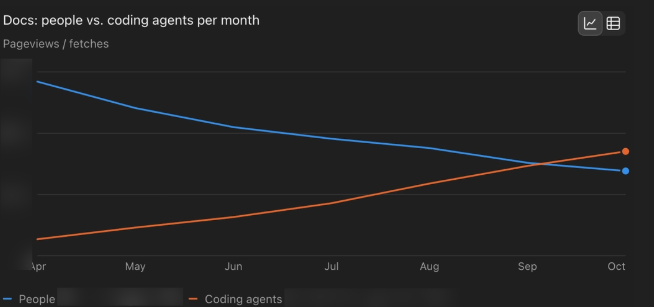
We crossed the threshold for more agents on our site than humans a bit ago. Which means:
- Marketing work has gotten more technical
- The website is becoming more transactional (user comes in and gets what it wants, not exploring)
- User experience still matters but becomming more like a brand touch.
- Agent experience and maintaining key areas on the website is becoming high priority
At the same time LLMs are citing other people's sources way more than our site. So AEO isn't just good SEO fundamentals, it also includes cross posting, working with publishers, influencer marketing, video creation, etc.
Five things you can do with Agent Tracing: turn prod conversations into evals, automate daily triage, track LLM costs, alert on spend spikes, and pipe in OTel spans. 🔍
Check out the full blog post 👇 https://t.co/17nTtxrcHf
We always collected context to help fix broken code really really fast.
We have enhanced that context with more connected telemetry over the last few years
Agents love this streamlined context to fix.
Millions rely on @Hospitable for short-term rentals. Their engineers rely on Sentry to catch issues before customers notice. 💡
One rollout showed exception-based alerts weren’t enough. Now errors, logs, and metrics connect to a single trace, for engineers and coding agents alike.
See how they did it 👉 https://t.co/OeBda6tCj9
A busy but fun morning
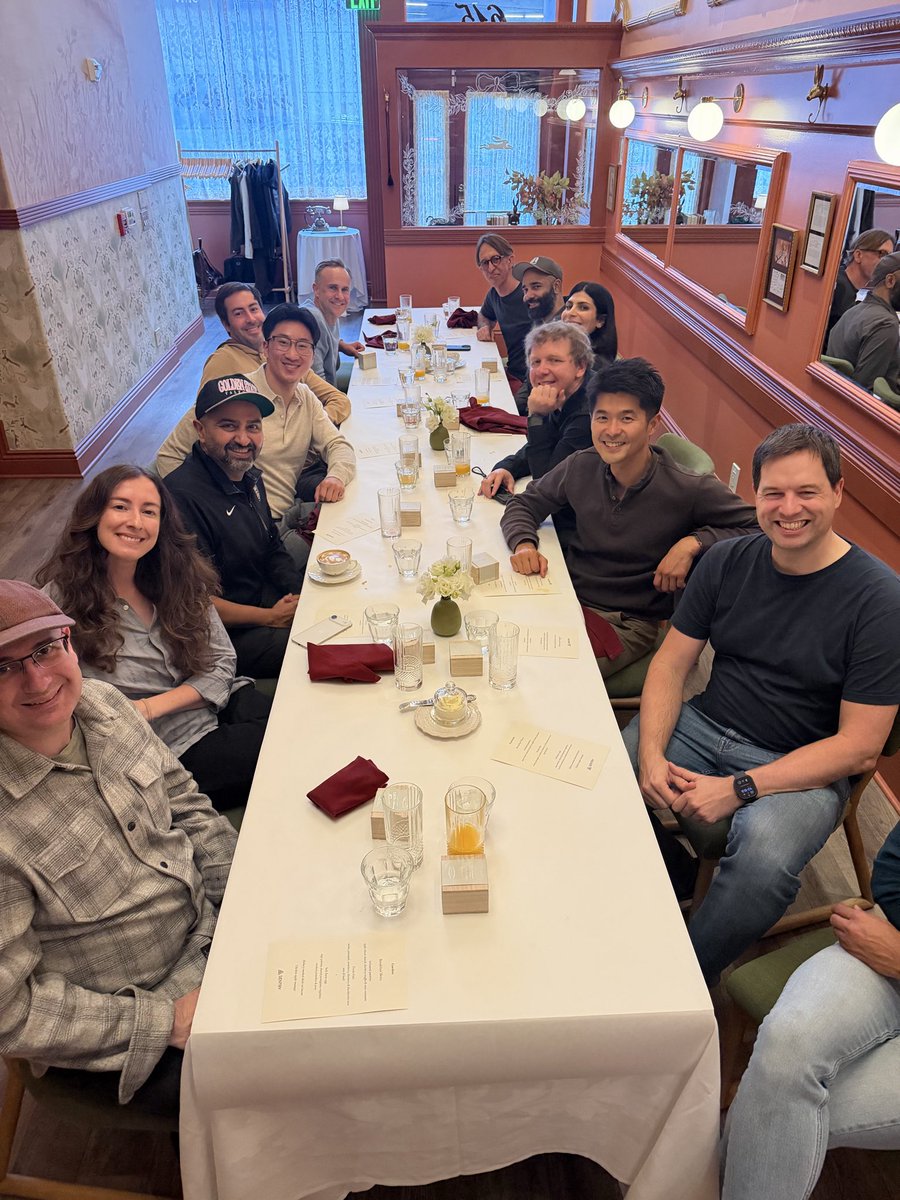
- @GergelyOrosz and @sentry spent time with 10+ builders over breakfast
- Had the opportunity to lightly partake in the @valkyries parade
We pointed an agent at traces we already had.
→ ~143M fewer queries a week
→ One lookup: 935ms → 0.4ms
→ Most fixes: a line or two
Your data was the answer sheet.
https://t.co/EPFpA8Ol4l