I built my own Firebase-style backend from scratch.
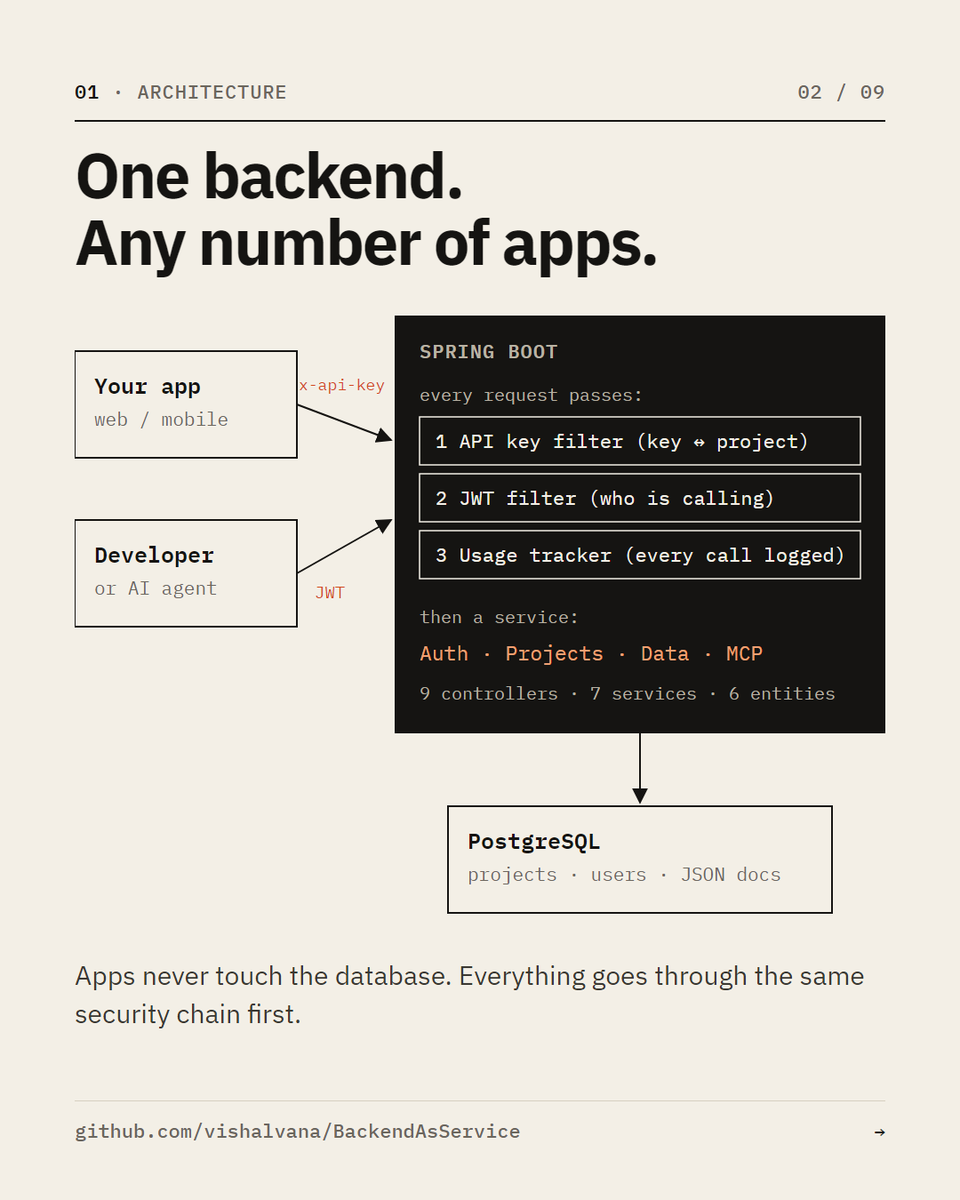
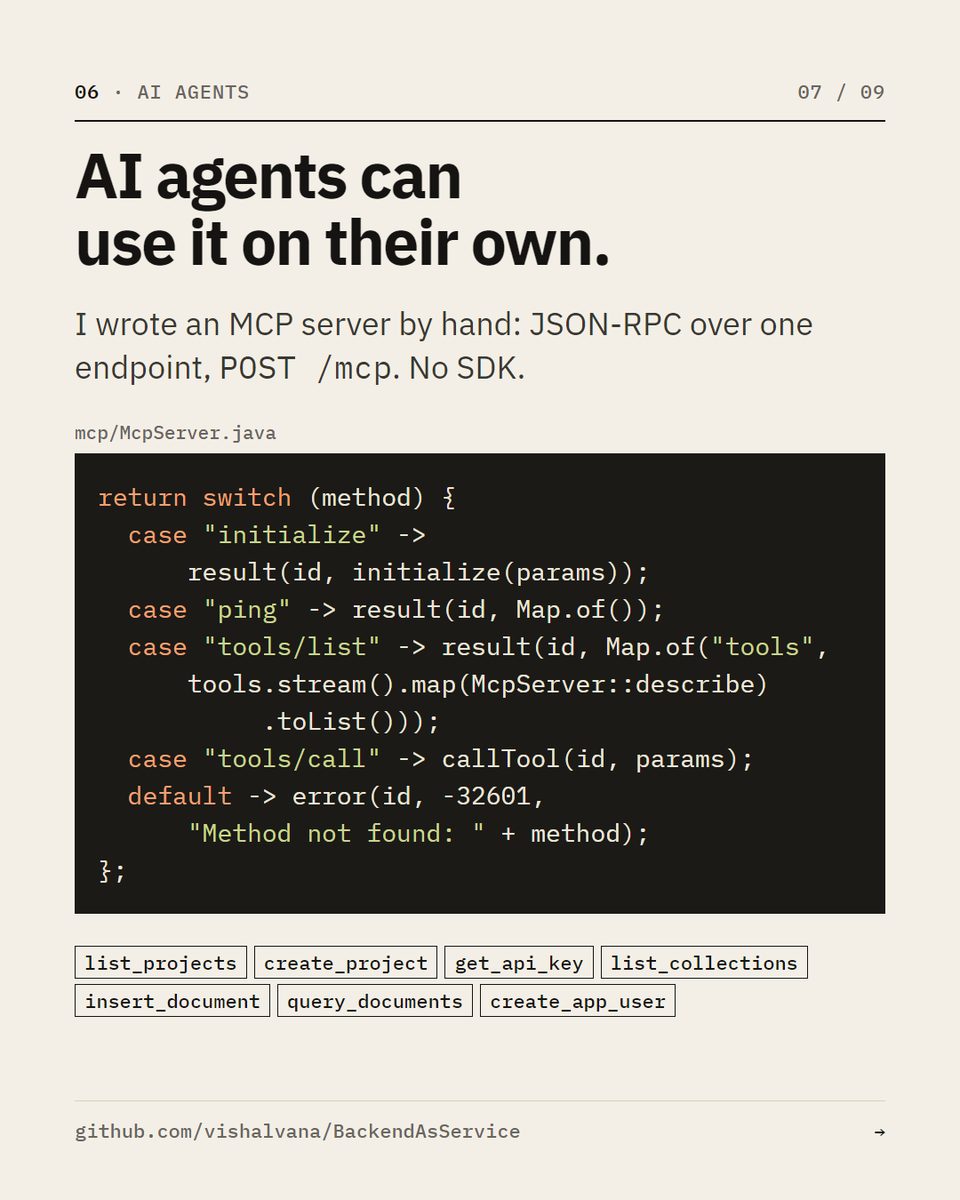
Spring Boot + PostgreSQL. 2 login systems, multi-tenant, schema-less JSON, usage tracking, and an MCP server I wrote by hand so AI agents can use it.
37 tests. Live. Open source.
What should I add next?
#buildinpublic#MCP
I built my own Firebase-style backend from scratch.
Spring Boot + PostgreSQL. 2 login systems, multi-tenant, schema-less JSON, usage tracking, and an MCP server I wrote by hand so AI agents can use it.
37 tests. Live. Open source.
What should I add next?
#buildinpublic#MCP
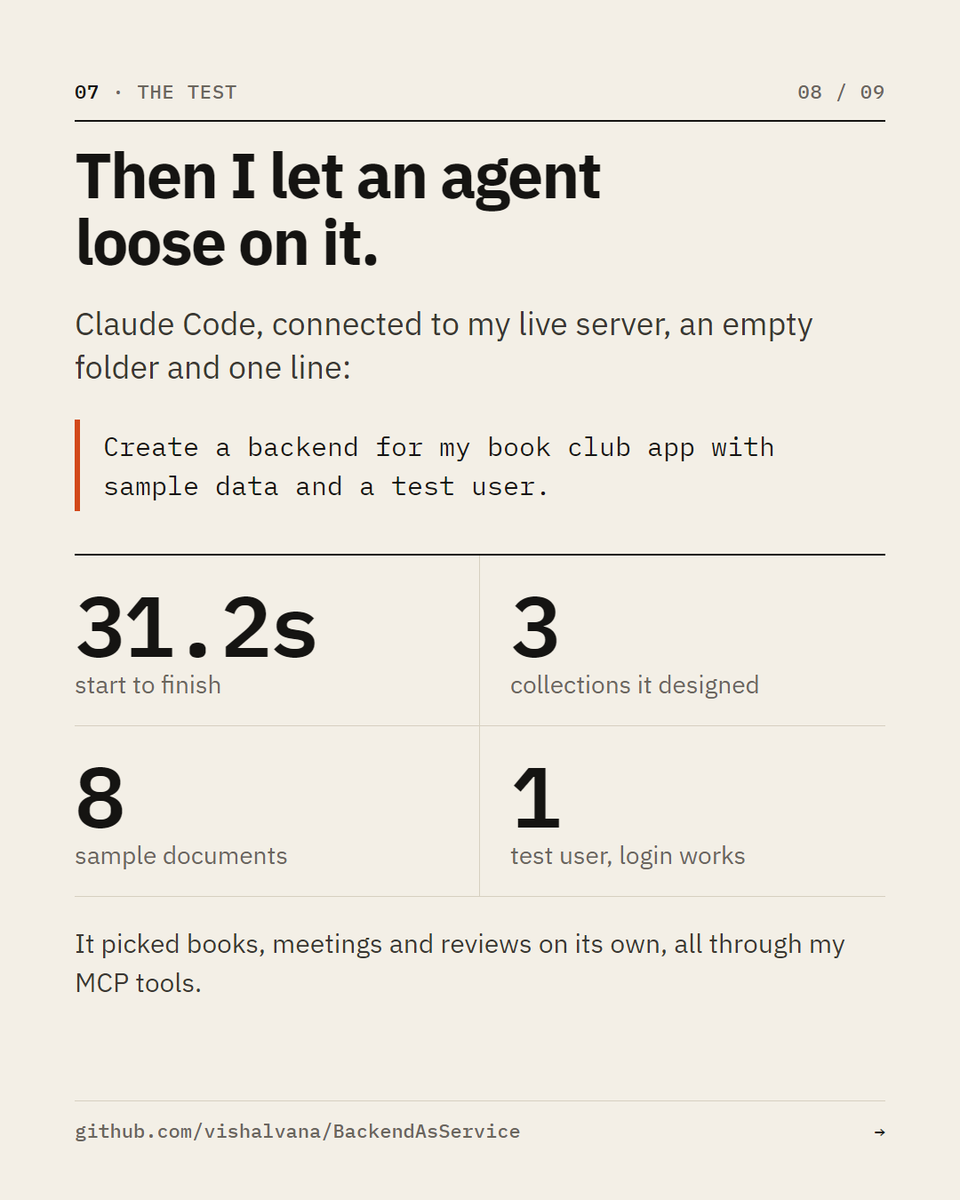
I typed one sentence into Claude Code.
31 seconds later my live server had a whole backend: project, API key, 3 collections, sample data and a test user.
No dashboard. Real run, no edits.
Would you trust AI to set up your backend? 👇
I'm very bad at money management 😅
Salary comes, and within a week it's gone. I can't even tell where it went.
So I made Kharcha 💸
Not another expense tracker. It's my buddy that tells me when to spend and when not to.
Only for my personal use, and I'm loving it ❤️
Best part: your data stays with you 🔒
No server. No online database. Just you and your data, safe on your phone.
Want it too? Tell me and I'll send it to you 🙌
@rseroter@GoogleCloudTech@iRomin No local install is the big win. Same reason I made my MCP server a plain POST /mcp endpoint inside the backend: one `claude mcp add` command with a token and you're connected.
@flydotio Build on a Sprite, promote to a Machine is a nice flow. Is the move its own tool, or does the agent decide when to promote? I'd guess making that step safe to retry matters a lot, since agents fail halfway and try again.
@kunal_twts 531K → 94K input tokens is a big drop. For small servers it probably matters less: mine has 7 tools and the agent picks the right one fine. Where does code mode start paying off, around 20+ tools?
@DanKornas Real problem. My low-tech version is a PROGRESS.md the agent reads at the start of every session and updates at the end: what got done, what's next, decisions made. Works surprisingly well. Does Krusch keep the "why" separate from the rules?
@RoundtableSpace The access levels are the best part. "Ask first" should be the default for anything that clicks. Same lesson on my backend's MCP server: every tool is scoped to the caller's token, so the agent can only touch that developer's projects.
@Voxyz_ai Tasks fix a real pain. Long jobs are where agents time out, retry, and create duplicates. I made my create_project tool return the existing project on retry for exactly that reason. Tasks + idempotent tools feels like the right combo.
@sivalabs Spring devs are getting a lot of MCP tooling lately. I added a hand-written MCP endpoint to my Spring Boot backend (plain JSON-RPC on POST /mcp, no SDK) and was surprised how little code it takes. Have you tried Spring AI's MCP server support yet?
@clerk The agent feedback tool is a great idea. When I tested my MCP server with Claude Code, the best bug reports came from the agent itself: it flagged a timestamp offset and a wrong base URL I'd missed. A proper channel for that beats reading transcripts.
@dshukertjr Love this. I'm building a small Spring Boot BaaS and put the MCP server inside the backend itself, so Claude can create the project, seed data and add test users in one go. How are you handling auth on the MCP side?
@pamelafox@OpenAI +1 on server instructions. My MCP server for a Spring Boot BaaS sends a 3-line "typical setup" (create_project → seed data → create test users → get API key). Cheapest way I've found to tell an agent the order of operations. Annotations are next on my list.