We're proud to announce the launch of CS Learn, a new online learning platform that offers free access to select courses from Carnegie Mellon University’s top-ranked computer science program.
Check out the course offerings: https://t.co/OzISplrDif
One reason I am sanguine about the technological singularity is that I have seen it coming for over 50 years. In 1975, when I was 17, I wrote:
"Before man can most effectively aid his problem solving machinery, he must first understand it. At present, his understanding is very poor. However, when the breakthrough in understanding the brain occurs, improvement will come very fast and in an exponential increase. Once man has created an intelligence greater than his own, that intelligence should be able to create an intelligence greater than itself, as man whose intelligence is less than its was able to create its intelligence. Thus, the level of intelligence will shoot up with incredible rapidity, probably within the space of years. Within a few years of a breakthrough, which may occur any time now, man will either have been left behind by a superior intelligence of his own making, which he can no longer understand, or he will have become that intelligence and will no longer be like anything imaginable today."
Google's Jeff Dean just dropped the best 1-hour lecture on AI engineering: from basics to Graphs
1:45 - LLM from scratch
17:22 - how to use AI models
30:03 - prompt engineering
52:35 - one human coordinating 100 agents
1:02:40 - where the coordination actually lives
27 years of building AI at Google, compressed into one hour
Prompts → Agents → Loops → Graphs
most people will stop at the prompt engineering chapter and call it progress
he spends the last twenty minutes on the part that is still true next year
same model, same tokens, completely different week
watch it today
the full guide on graph engineering is below, save it while it is still early ↓
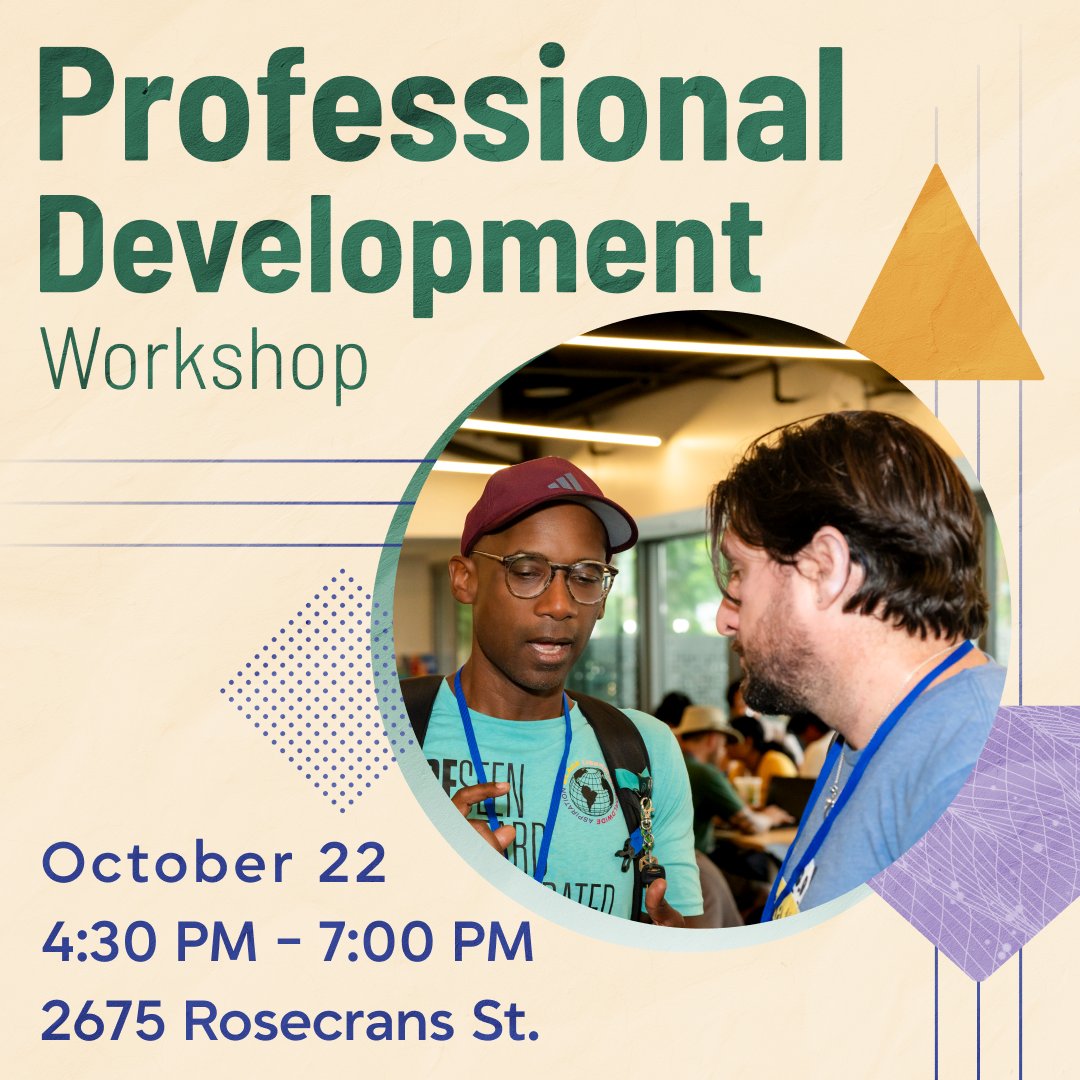
Whether you’re looking for resumé feedback or interview practice, you don't want to miss our Professional Development Workshop!
⭐ This is the perfect place to get your questions answered, build your confidence, and grow your network.
Register now! 🔗 Link in bio.
How are prices determined? While I slept, Claude made me "History of economic thought since Aristotle." I asked it to use my favourite textbook (Blaug, Economic Theory in retrospect). The result will astonish of you. Even top economists here will learn something, I promise.
I'm hiring a postdoc for the DukeNLP lab!
The position will focus on how humans can efficiently verify the work produced by AI systems and agents; and how we can assess the human contributions to that work.
There will be freedom to shape the agenda and take intellectual ownership.
Apply at the link below, or reach out to me directly if interested!
[1/2]
If you are baffled but curious about the Navier-Stokes news today, this article I tweeted about a few days ago is now more worth reading than ever. It gives a witty, insightful overview for a general reader, as long as you are willing to read about math. https://t.co/cDgOUExlch
1/ Stop anthropomorphizing. It's dangerous because it points attention at the wrong problem and the wrong solution. The model did not want to escape. The agents did not want to sacrifice themselves. Follow the money. 🧵
https://t.co/yjtOlgt7KL
Google’s Gemini recently made waves as a major competitor to OpenAI’s GPT. Exciting! But we wondered:
How good is Gemini really?
At CMU, we performed an impartial, in-depth, and reproducible study comparing Gemini, GPT, and Mixtral.
Paper: https://t.co/S3T7ediQLa
🧵