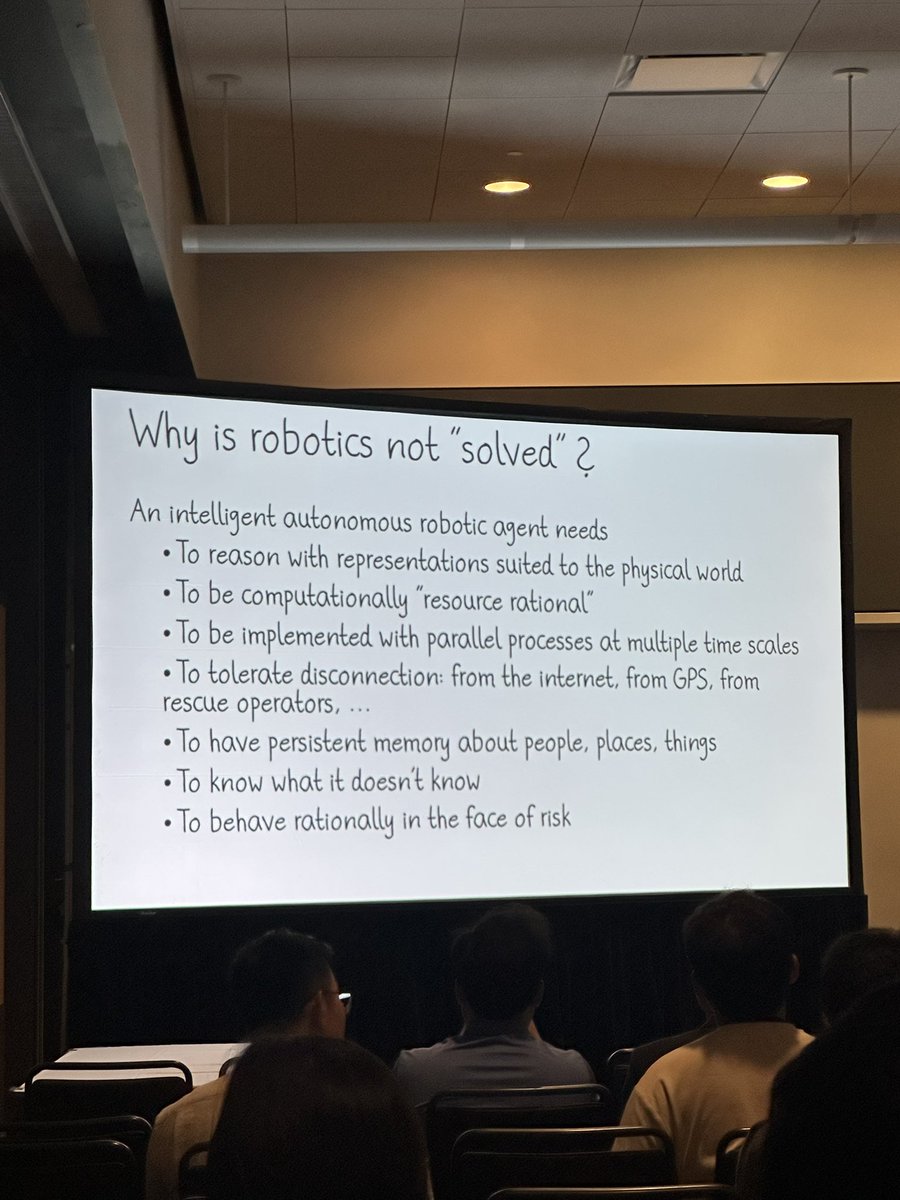
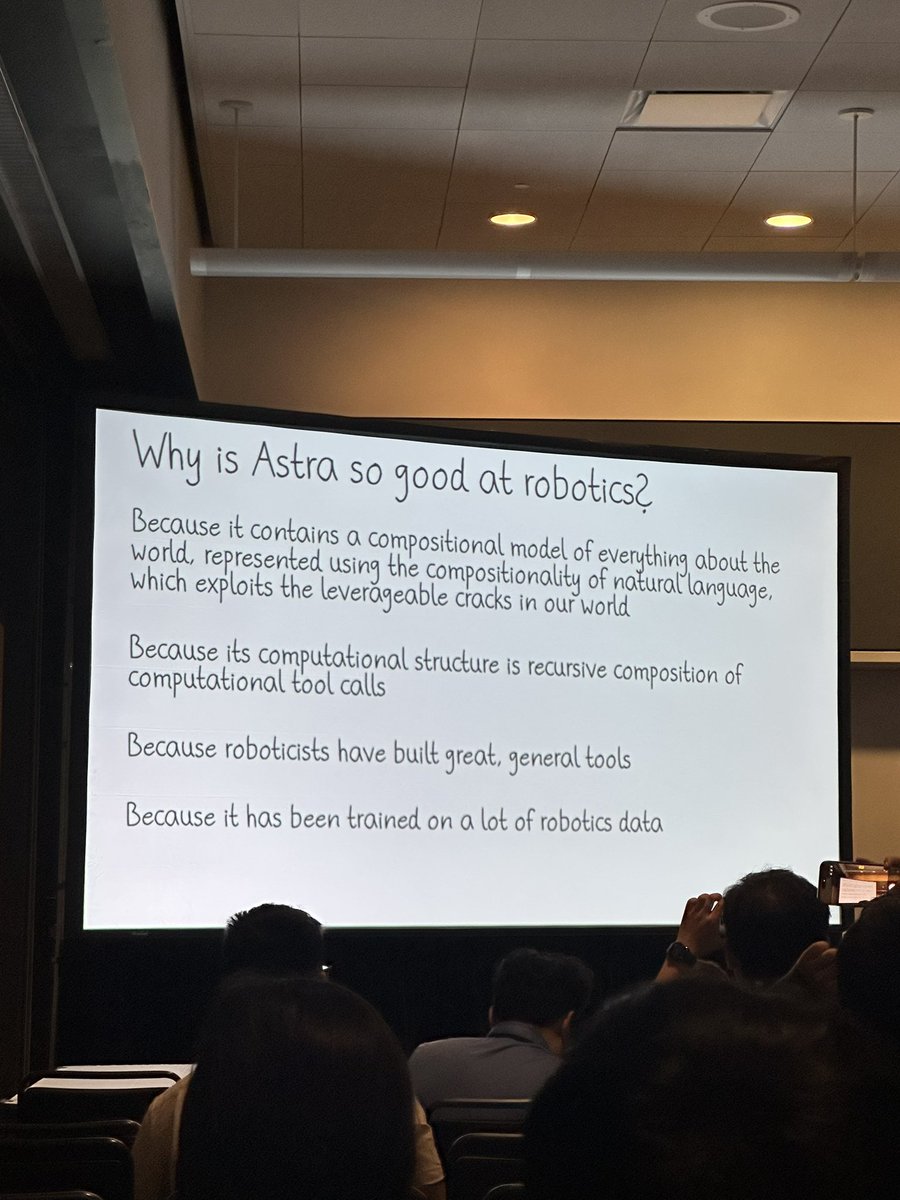
Leslie Kaelbling on why Astra is so good at robotics and why robotics still isn’t solved “yet”.
I spoke at Leslie’s lab pre-Astra, and we chatted about many of these ideas. Pretty cool to see them coming into the mainstream. #IROS2026
Excited to be attending IROS, in Pittsburgh,
I am especially looking forward to sessions at the intersection of Physical AI, robot learning, safety, and deployment infrastructure, including:
• WORLDS: World Models and Spatial Intelligence for Physical AI
• Learning and Stress-Testing Robot Skill Models
• Building Better Benchmarks for Robot Intelligence
• Data-Efficient Imitation Learning
• ForesightSafety-VLA
• FailSafe: Reasoning and Recovery from Failures in VLAs
• Building Scalable Infrastructure for Robot Learning
• I Built SpaceX’s HIL Test Framework: Here Is How It Applies to Robotics Testing
A lot of the conversations I am most interested in are around how we move from impressive robot demos to systems that can be tested, validated, deployed, and improved reliably in the real world.
If you’re at IROS and working on Physical AI, robot learning, sim-to-real, HIL, or deployment infrastructure, would love to connect.
Instead of training to predict the next action, ACT (@tonyzzhao et al.) trains to generate the next 100. How and why, explained for ML people new to robot learning.
Second from my speedrun. Next one, on Diffusion Policy, next week. Follow me to catch it. https://t.co/IbiuSKZLZE
New blog post with @perryadong on what we need for robots to be broadly useful in the real world.
https://t.co/jxsNeMUhFg
Reliability is the one of the biggest open challenges in AI right now. Current models work out okay if a person will be reviewing the outputs (eg drafting code), but it will become more of a bottleneck as we want systems to act with more autonomy and more trust.
What happens when you give Claude access to robotic arms?
We connected two SO-101 arms and asked:
“Can you do a dance?”
15 min + ~100K tokens later, they were dancing.
Claude handled the ports, libraries, setup, sync, and execution.
A glimpse of the GPT moment for robotics.
@typesafeai Jev vs. GPT-6 Astra 🤖 on a real robotic task @AgilexRobotics : Task: “Put the red cube in the box.” 🔴 → 📦
⚡ Jev 27s vs. Astra 1m 11s
💰 Jev much cheaper
The arm was limited to just 10% speed for safety — at full speed, Jev’s advantage would be even more significant.
Is Jev is a game changer for robotics?
We gave Jev a robot body and handed it complex tasks across navigation, spatial reasoning, and world geometry
120 different real + simulated tasks and environments benchmarking performance against Dimcode, Astra, Fable, Opus, and 5.6
We graded against speed, cost, tokens, # collisions, path quality
Code, Data, and Paper dropping tomorrow. The results were surprising.
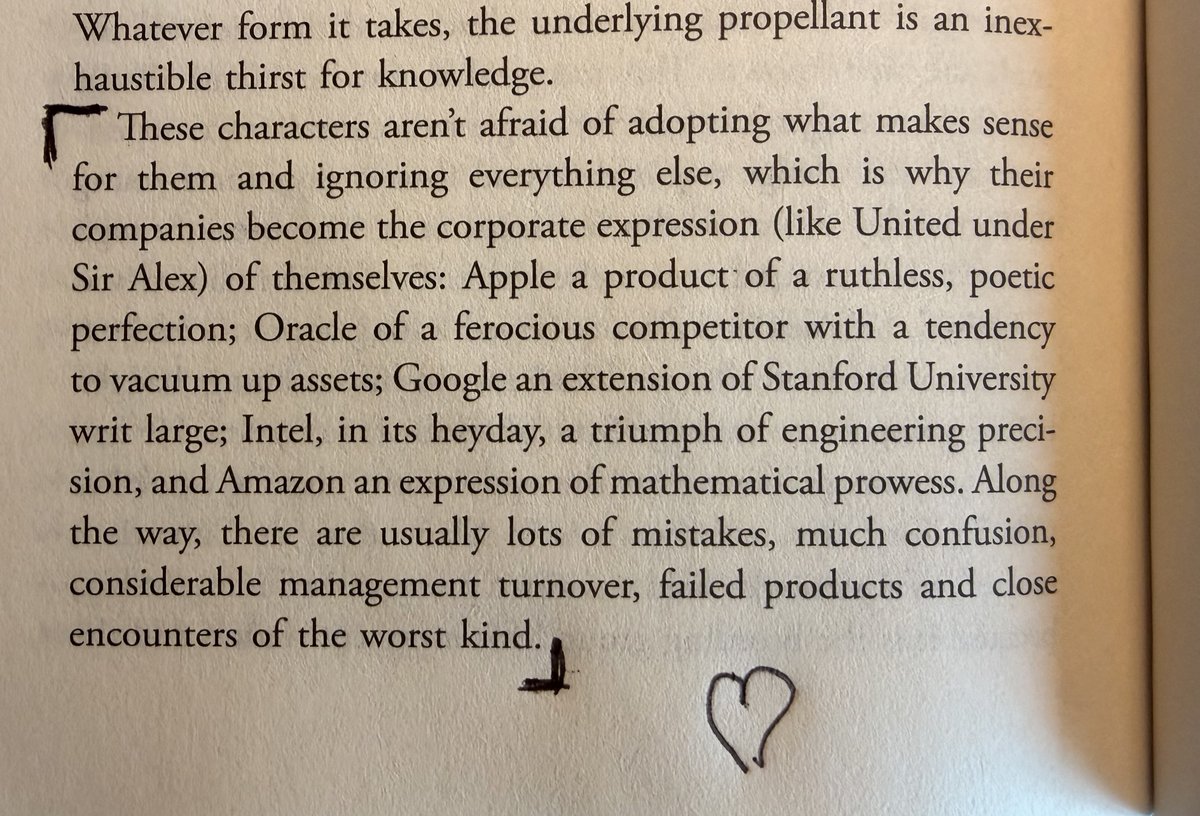
"Great companies are simply the corporate expression of their founders." — Michael Moritz, The Leading
One of the best books I've ever read - it describes that culture beat numbers/traction all over and over again...
Culture is just the founder, copied a thousand times.
- Apple got poetic perfection.
- Oracle got a street fighter.
- Google got a research university.
- Amazon got a spreadsheet.
- Intel got a engineering precision as religion.
You don't pick your culture. You are it. And every one of those companies looked like a disaster from the inside first, dead products, churned execs, years of "we have no idea what we're doing." The identity was there the whole time. The results just took a decade to catch up.
@patrick_oshag Thank you for such an amazing podcast! 🩷
Ten years. Five versions of Digit.
It started with Cassie: bird-like legs built to run, out of a lab at Oregon State. Those legs set a world record.
Digit 5's legs are built to lift, not run. The bird became more human because the work asked for strength, not speed.
Thanks to @robotreport for the coverage: https://t.co/hA9USzQ79z