India originally planned to buy bullet trains from Japan for its Mumbai-Ahmedabad high speed rail line. Japan gave massive ₹88,087 crore loan at near-zero interest for this project
Instead, BEML just won ₹5,432 crore contract to build 16 high speed trains right here in India. BEML will build train bodies at its factory in Bengaluru. Hyderabad-based Medha Servo Drives will make motors and control systems.
First test train should come out by early 2027, Trains will run at 250 kmph on Surat-Bilimora stretch first
BEML is getting roughly ₹340 crore for each high speed train, covering both manufacturing and 7 years of maintenance that matters because India just announced 7 more bullet train routes in Budget 2026-27.
These routes will connect Mumbai to Pune, Delhi to Varanasi, Chennai to Bengaluru, and more. Railways got record ₹278,000 crore budget. If every route needs 15 to 20 trains, India might need over 100 bullet trains in next 15 years.
Whoever builds first batch positions itself for repeat orders across all corridors
Right now, parts for B28 come from many countries. Motors and controls come from Hyderabad. Brakes and cooling come from Germany. Passenger seats come from Spain. Drive parts come from Austria. Design help came from Poland.
Only train bodies are fully made in India, at BEML factory in Bengaluru But BEML has started looking for Indian companies to make seats and interior panels too. With 7 new bullet train routes announced, orders will grow large enough that making parts in India starts making financial sense
if this work then lot of new order comes into place B2B and those who are linked to this or manage this vertical too
Do you know interest rates in USA was 0% in March 2022 but it increased to 5.50% till July 2023
Means in just 16 months, interest rates rose to 0% to 5.50% first time in the history of US after 40 years.
In between both US and Indian market delivered positive returns .
Just for information, because many people are worried about interest rates hike.
#fed
#interestrates
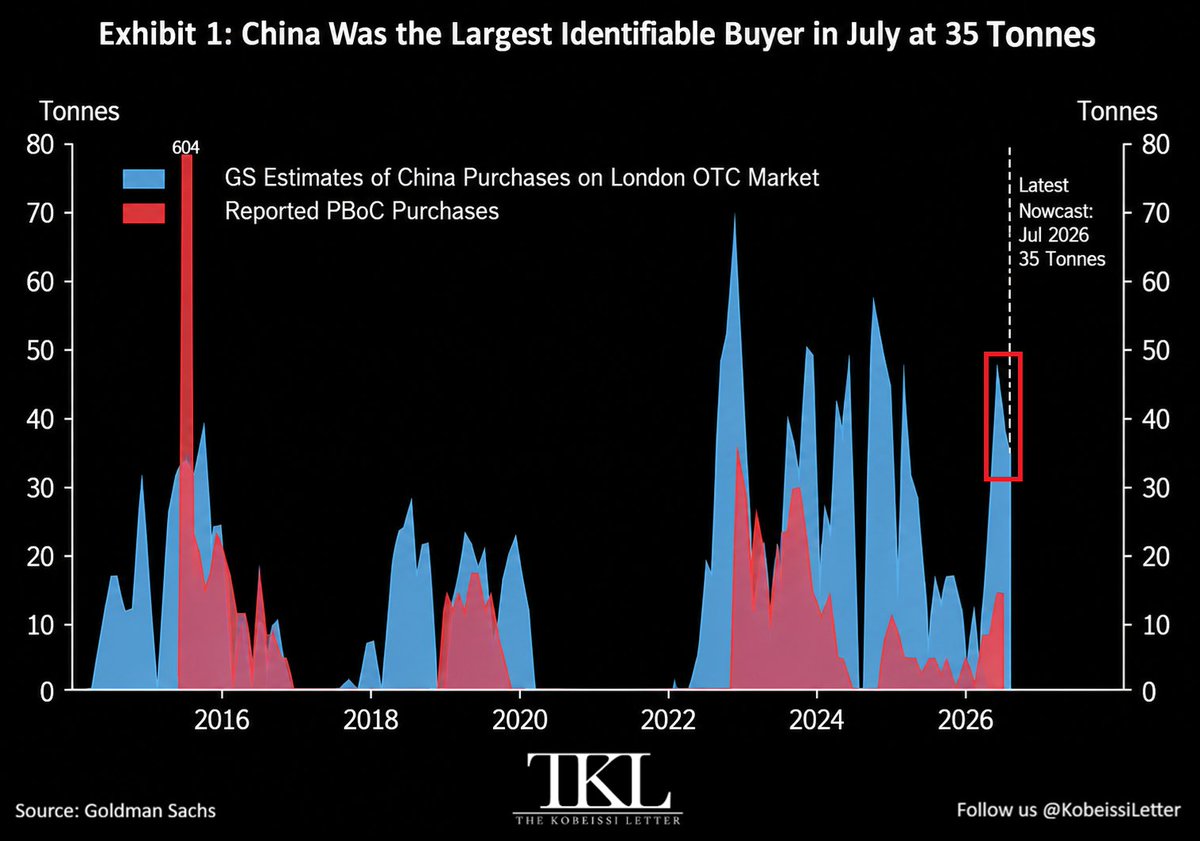
BREAKING: China acquired +35 tonnes of gold in July via the London OTC market, its 3rd-largest monthly purchase since mid-2025, according to Goldman Sachs estimates.
This is 75% more than the official +20 tonnes reported by China's central bank for July.
This also follows estimated purchases of +48 and +40 tonnes through the OTC market in May and June, respectively.
This brings the total for these 3 months up to +123 tonnes.
By comparison, China’s central bank has officially increased its gold reserves by +80 tonnes in the first 8 months of the year.
China’s gold accumulation is far larger than its official figures reveal.
PODCAST ≠ GLORIFYING TERRORISTS.
The so-called EXFARTS should stop praising terrorists live on camera. Terrorists use those clips as recruitment propaganda.
Terrorists are cowards. They attack from the shadows and target innocents. Calling it an “achievement” feeds their propaganda.
Venus pipes has approved a pretty significant fund raise of 372 Crores today by preferential allotment of shares (price 1670, CMP 1938)
The allotees include -
WhiteOak
Ashish KAcholia
Kotak
CARNELIAN
Tata
.....................
However, they have not disclosed the reason for the fund raise. At least I could not find.
Is it for capex? what kind of capex? debt repayment?
Management indicated 110 Cr capex for FY27.
So, this is much much more and will lead to significant dilution.
Promoter stake also falls from 48% to 43%
If anyone is aware, please share.
No speculation. Share if you know something only.
.......................
You pay 30% to republic of India and when you look around
• EPFO/service issues
• Potholes & broken roads
• Traffic everywhere
• No reliable public transport
• Water supply & quality issues
• Air pollution
• Poor food quality & adulteration
• Women’s safety concerns
• Reckless driving & road deaths
• Frequent power cuts
• Expensive fuel
• Weak currency
• Stock market going nowhere for years at a time
• Expensive healthcare
• Government school quality concerns
• Buildings, PGs & houses collapsing
• Garbage & waste-management problems
• Flooding & waterlogging after ordinary rainfall
• Poor urban planning
• Rising cost of housing and rent.
I think MDR on UPI was probably inevitable at some point, especially given how widespread UPI adoption has become. It could also lead to more competition, instead of just three apps accounting for more than 95% of the market.
That being said, there are some use cases, like investing and broking, where the proposed MDR structure doesn’t really make sense.
The problem with broking is that there is no guarantee that money transferred to a broker will actually result in a transaction.
As brokers, we can’t force a customer to trade after transferring money. And if we can’t pass the UPI charge on to the customer, there is essentially no limit to the cost a customer can impose on a broker without generating any revenue.
Just as an example, 10,000 customers could each make 50 UPI transfers of ₹2 lakh in a month without executing a single trade. At the proposed MDR, this could potentially cost the broker around ₹2 crore, without generating any business.
What makes this even more challenging is quarterly settlement (QS). This is a SEBI regulation that requires brokers to send unused funds back to clients every month or quarter.
Most customers then transfer these funds back to their broking accounts, with more than half of these transfers happening through UPI. So regulation essentially forces this movement of money every month or quarter, and the broker could end up bearing the cost when the money comes back, without any incremental benefit or revenue.
By the way, we currently don’t charge brokerage on equity delivery trades because the economics allow us to offer them for free. But if every UPI transfer starts carrying an additional cost, irrespective of whether the customer actually trades, I don’t see how we can absorb this indefinitely.
I think having an MDR is okay. It still doesn’t solve the problem of customers transferring money without transacting, but something like 0.02% with a cap of ₹5 or ₹10 per transaction seems much more reasonable for broking, instead of a cap as high as ₹300.
THE PRICE OF BEING A TAXPAYER IN INDIA 🇮🇳
You wake up → pay tax.
You travel → pay tax.
You eat → pay tax.
You shop → pay tax.
You invest → pay tax.
You withdraw → pay tax.
You earn → pay tax.
You sleep → pay tax.
You consume entertainment → pay tax.
If your income is fully white, your direct + indirect tax burden can feel enormous over the year roughly around 25-35%.
Most of stocks reached at same levels where they were two months before,
If fall continues then these stocks will touch April levels.
Traders who booked profits will not regret but people who doing long term investment will beat their chest .
During higher taxation, uncertainty, rising commodity prices and unsupportive stock market government,
Long term investment willl be very very difficult.
#stockmarket
This is economic vandalism. 😡
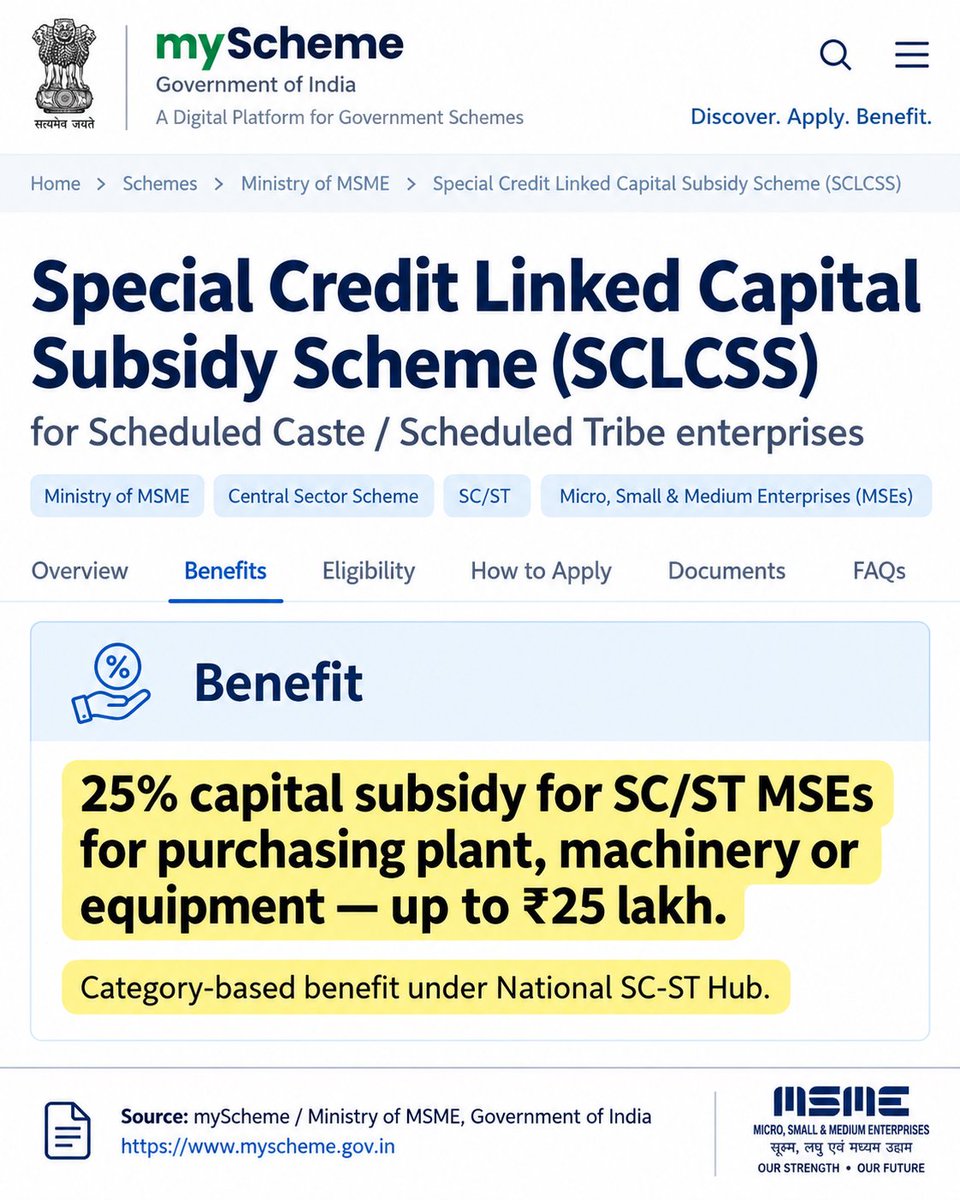
The Centre is giving a 25% capital subsidy, up to ₹25 lakh, based on the owner’s caste. That means taxpayers are literally helping one business compete against another on unequal terms.
When governments allocate capital by identity instead of productivity, money flows to political eligibility rather than the most efficient firms , the same kind of misallocation that made licence-permit economies slow, inefficient and uncompetitive.
Support poverty and genuine credit constraints -> not caste. Stop distorting markets with taxpayers’ money. 😡🔥
@ajeetbharti
#ModiAct_लगाओ_पैसा_कमाओ
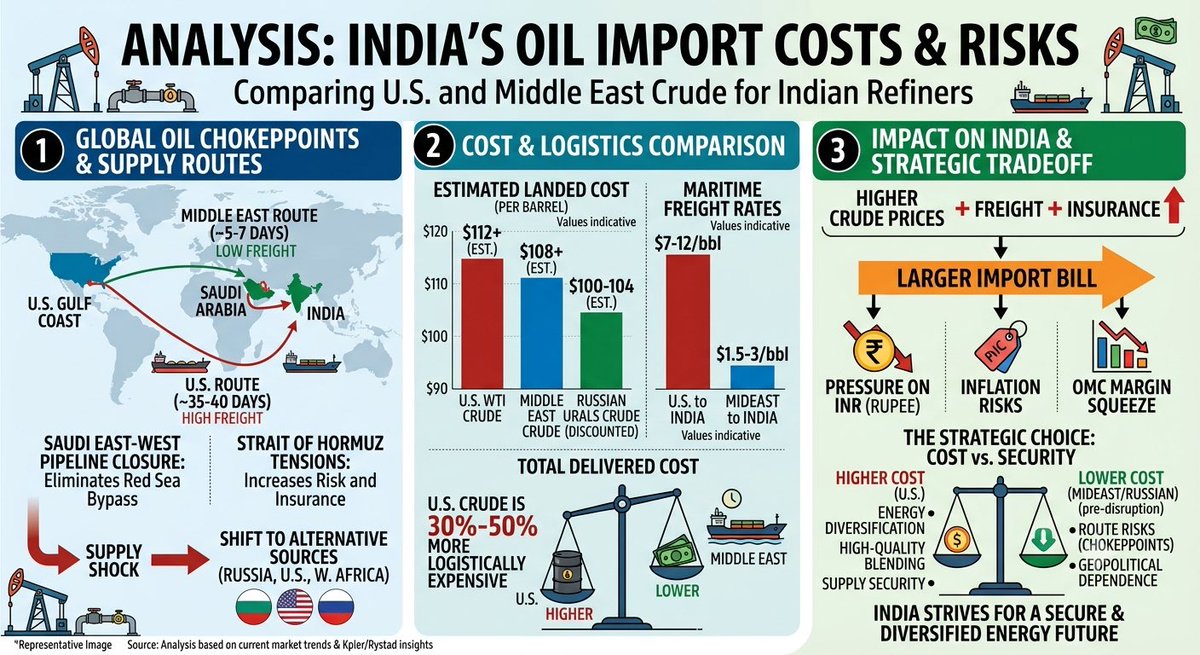
ड्रोन अटैक के बाद सऊदी वेस्ट पाइपलाइन बंद कर दिया गया है , इससे पूरे विश्व का 5% ग्लोबल आयल सप्लाई प्रभावित होगा, इसके पीछे यूएसए का रिकॉर्ड क्रूड सप्लाई है जिसे वो डिमांड बढ़ाकर बेचना चाहता है ।
Saudi Pipeline Shutdown: भारत के लिए क्या हैं इसके मायने?
सौदी अरब की East-West Pipeline बंद होने और Strait of Hormuz में तनाव से क्रूड ऑयल $108/bbl के पार पहुंच गया है। इसका सीधा असर भारतीय बाजार पर दिख सकता है-
Landed Cost में बढ़ोतरी: कच्चा तेल महंगा होने के साथ-साथ Freight Rates और Insurance Cost में भारी उछाल।
Supply Dynamics: खाड़ी देशों पर निर्भरता घटाने के लिए अब रूस, US और West Africa से इम्पोर्ट बढ़ाना पड़ेगा।
Impact on OMCs: अगर क्रूड के दाम लंबे समय तक ऊंचे रहे, तो IOCL, BPCL और HPCL के मार्जिन पर दबाव बनना तय है।
Macro Pressure: भारत का Import Bill बढ़ने से रुपये पर दबाव और Inflation का रिस्क।
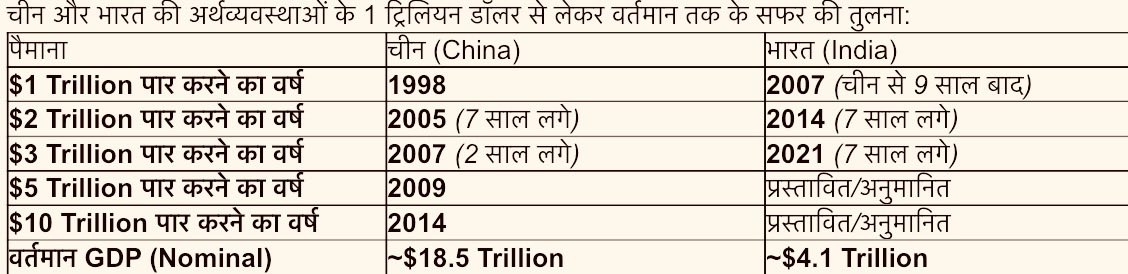
1990 के आसपास चाइना और भारत का जीडीपी लगभग एक समान $350-$400 Billion था ,
1998 में चाइना 1 trillion dollars का इकॉनमी बन चुका था ,जबकि भारत 2007 में 1 trillion dollars इकॉनमी बना ।
वहाँ से चाइना $18 trillion dollars का इकॉनमी बन चुका है लेकिन भारत अभी तक $ 5 trillion dollars तक भी नहीं पहुँचा ।
दोनों का सफ़र देखिए 👇
When inflation low,consumption increase
When consumption increase,then production increase
When production grow,Then GDP grow
When GDP grow then corporate earning increase
When corporate earnings increase then stock price increase
OVERALL low INFLATION cause market to RISE but currently it’s just opposite thanks to MC trump global supply chain disruption.
However that thing market already discounting in advance, and nifty going down continuously.
We have just two years left to make money
2027
2028
In 2029, again market will wait for upcoming general elections outcome.
So next 2 years will have to compensate us for last 3 years drawdown.
#stockmarket
#nifty