@HannahWardEdu@CliftonSellers Wow I would have never thought to use Ray’s Arithmetic as the spine! Checking it out, before I end up spending $$$$ on Singapore Math 🤣
@jessegenet@openclaw Wow this is so cool, and I want to do this for our home pod too! Did you ever publish your openclaw setup? Doing this with Claude would be prohibitively expensive 😅
@HannahWardEdu@CliftonSellers Why the emphasis on the 1800s style though? we are struggling to find a good math curriculum for my 7 yo. She’s tried Beast and that left her with gaps. Did Math Mammoth but hates worksheets. Unsure what next to try. Would love your take on this! Love all your wisdom :)
The future engineer is not “the best coder”. It is the engineer who builds the harness around intelligence. The core insight from the blog - successful teams engineer the system around the model.
What are best practices for running Claude Code at scale?
New blog post on what we've learned from teams running it across multi-million-line monorepos, decades-old legacy systems, and distributed microservices:
https://t.co/rJUYlIUiTT
Love this framing by @JayaGup10
A good way to look at this in hindsight, is to compare your life 10 or even 20 years ago to what it is today. Am I enjoying the fruits of labor today? If not, what is it that you are still chasing?
Since every single weekend conversation has been about this, let’s play the thought experiment out…..
Assume there is an overclass and assume there is a permanent underclass
What can the overclass actually take away from you?
1.) They can buy “scarce” convenience.
They can buy the shorter commute, the better doctor, the nanny, the assistant, the cleaner, the person who handles the annoying logistics of being alive
Doesn’t mean they feel more alive
2.) They can buy time.
Money lets you turn friction into someone else’s labor: childcare, delivery, drivers, admins, fewer errands
3.) They can buy optionality.
They can quit thier shitty job, move cities, take risks, leave bad bosses, and wait for the right thing instead of taking the first available thing. They basically have more margin for error
4.) They can have access to Geo’s like SF n nyc
Rents are going up by egregious amounts. Salaries are not rising enough to compensate so people that were fine are moving out / giving up dreams
5.) They can buy peace of mind. Money can buy protection from insane rent increases, medical emergencies, job loss, bad months, family crises, legal problems…they get 100x more buffer.
6.) They can buy status and material goods
The house in menlo, private schools, cars and clothes. The rich can buy the status thing (sometimes) but they do not permanently control what becomes status ESP IN SF…
So yes, the “overclass” can buy more buffer: more convenience, time, optionality, geography, insulation, and status. However if you can name the thing you are actually afraid of losing, you can start building toward it.
Not everything the overclass has is worth wanting, but time, stability, optionality, community, proximity to opportunity might be. Figure out which one you actually want.
And remember they cannot monopolize joy, taste, friendship, beauty, aliveness, or the reasons life is worth living aka the whole human experience
One of my friend's mothers was visiting him in SF from India, and she remarked that all they do the whole day is errands and chores!
There's more than a kernel of truth to this - even if you're earning reasonably well (earning TC $500k+), you still have to spend time returning Amazon parcels, picking up medicines, doing groceries etc.
In India, you have Blinkit / Snabbit / UC etc. or you can hire other people to do this for you. There are obviously other hinderances to managing time effectively in India (e.g. traffic) but on the whole, I would say if you value your time, you're better off being in India.
Normal prompt:
Do this one thing.
/plan:
Think through how to do this thing.
/goal:
Keep working until this thing is done.
Agents SDK / multi-agent workflow:
Create a structured system where different agents/tools coordinate to do the thing.
The key insight here is the durable value may not sit purely in the foundation model itself. It may sit in the operational workflows, domain integrations, orchestration, trust layers and products built on top of intelligence.
Krishna Rao is the CFO of Anthropic, and this is his first podcast appearance.
He joined the company two years ago when run-rate revenue was about $250M. Today it is $30B. He has helped raise ~$75B and is responsible for the procurement and allocation of compute.
I feel lucky we get to hear what it is like to sit inside a company this consequential at a moment this pivotal.
We discuss:
- The cone of uncertainty
- How he allocates compute across Trainium, TPUs, and GPUs
- What investors misunderstand about model companies
- Why the returns to frontier intelligence keep rising
- Platform vs application and where Anthropic builds its own products
- How Anthropic uses Claude internally
I have asked my closing question about the kindest thing more than 500 times. Krishna's answer is one I have never heard before.
Enjoy!
Timestamps:
0:00 Intro
2:38 The Compute Canvas
6:51 The "Cone of Uncertainty"
11:58 Why the Returns to Frontier Intelligence Are So High
16:45 Recursive Self-Improvement
20:20 Scaling Laws
23:30 Sourcing $100 Billion in Compute
28:05 Platform vs. Application Strategy
32:52 Pricing Dynamics
38:48 How Anthropic’s Finance Team Uses Claude
43:24 Raising Capital & Overcoming Investor Skepticism
52:32 Public Perception, Risks, and Government Regulation
57:25 Mythos Release
1:12:33 What Could Derail the AI Revolution?
1:13:47 Biotech and Healthcare
1:15:31 The Kindest Thing
Generalists will be the most sought after lot now. If you have a good enough product sense, design taste and basic engineering chops you are VERY valuable.
You can just build things!
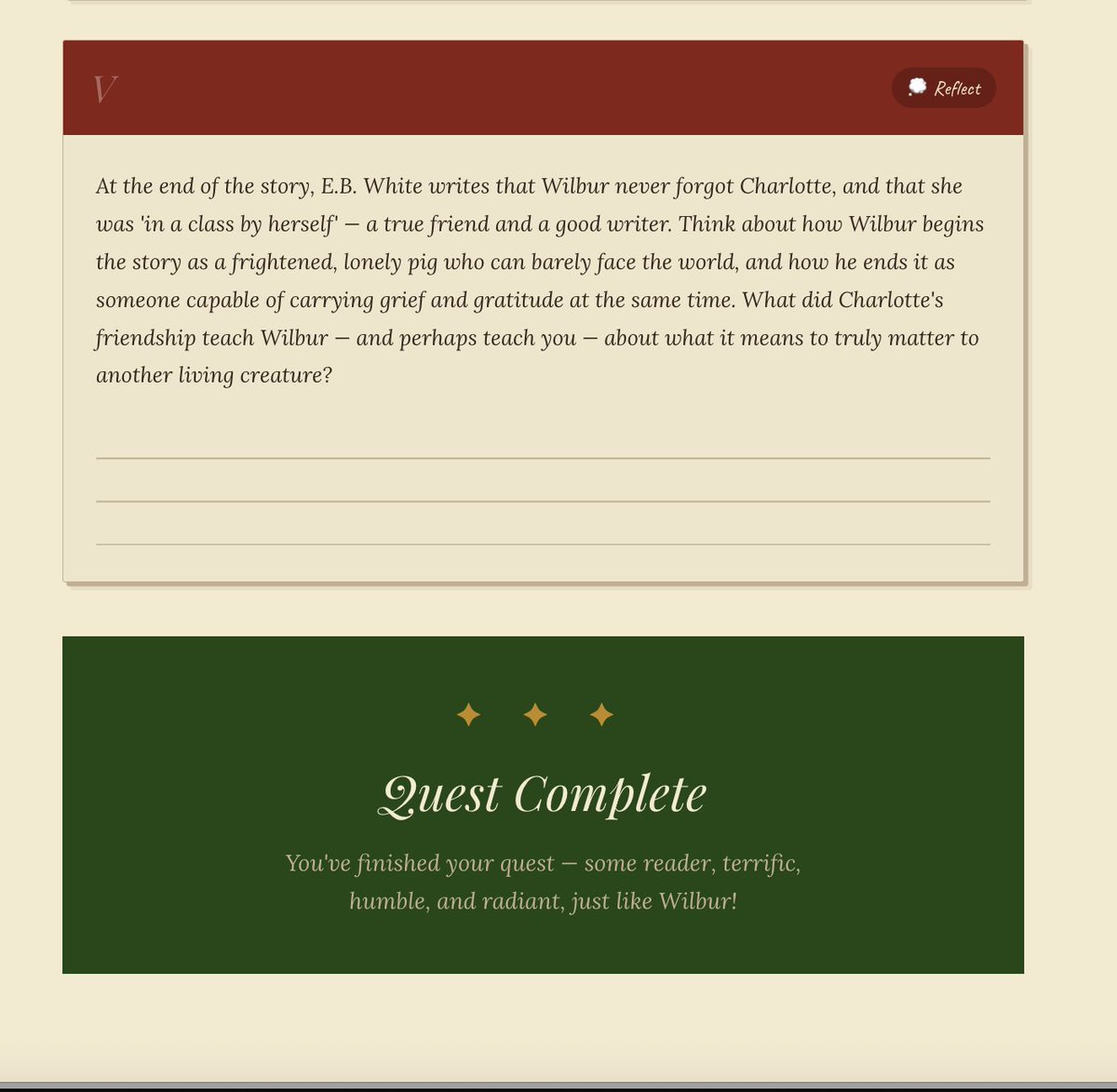
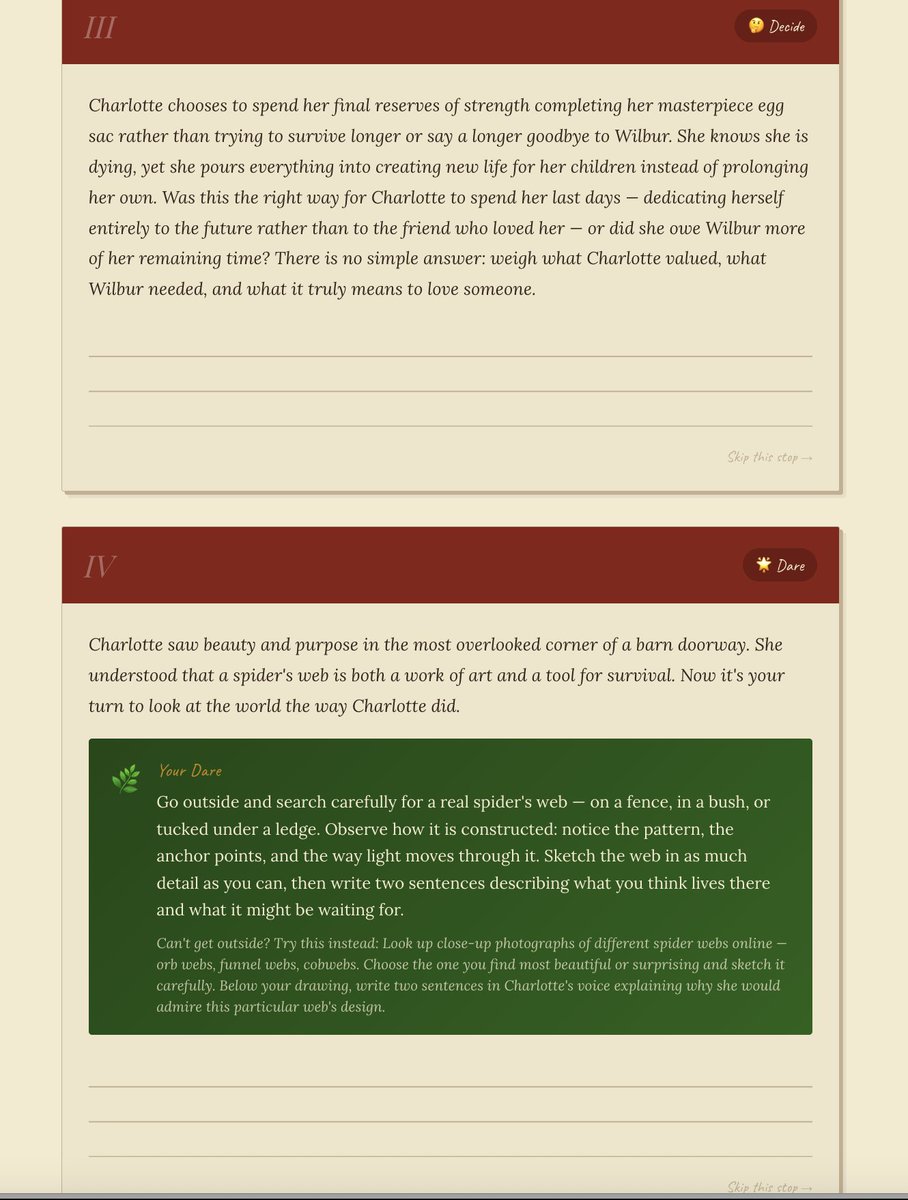
You finish a book with your kid. They close it. and then... nothing.
So I built Storyquest - type in any book, get a 5-stop reading quest your kid can fill in with a pencil.
discover → create → decide → dare → reflect
Each quest is generated for the specific book (or you can generate for book of your choice)
Charlotte's Web gets barn red and spiderwebs.
Matilda gets midnight blue.
Charlie gets deep purple.
Printable. Pencil only. 20 minutes.