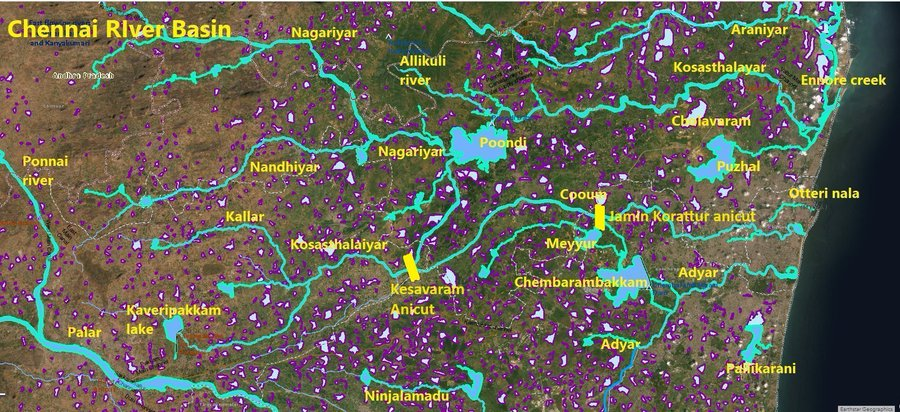
plundering of river sand and mountain rocks shouldn't be allowed. Jus check the rainfall the Western ghat areas receive and the begging bowl we carry for water every year.
https://t.co/OY4maIzrye
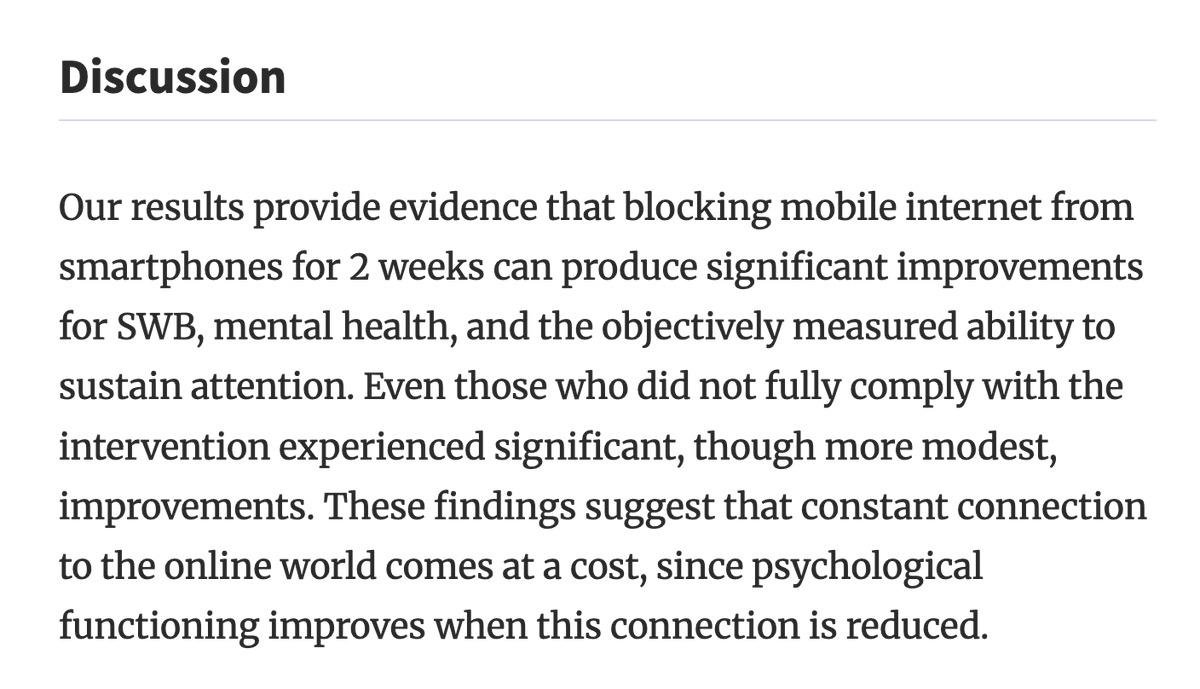
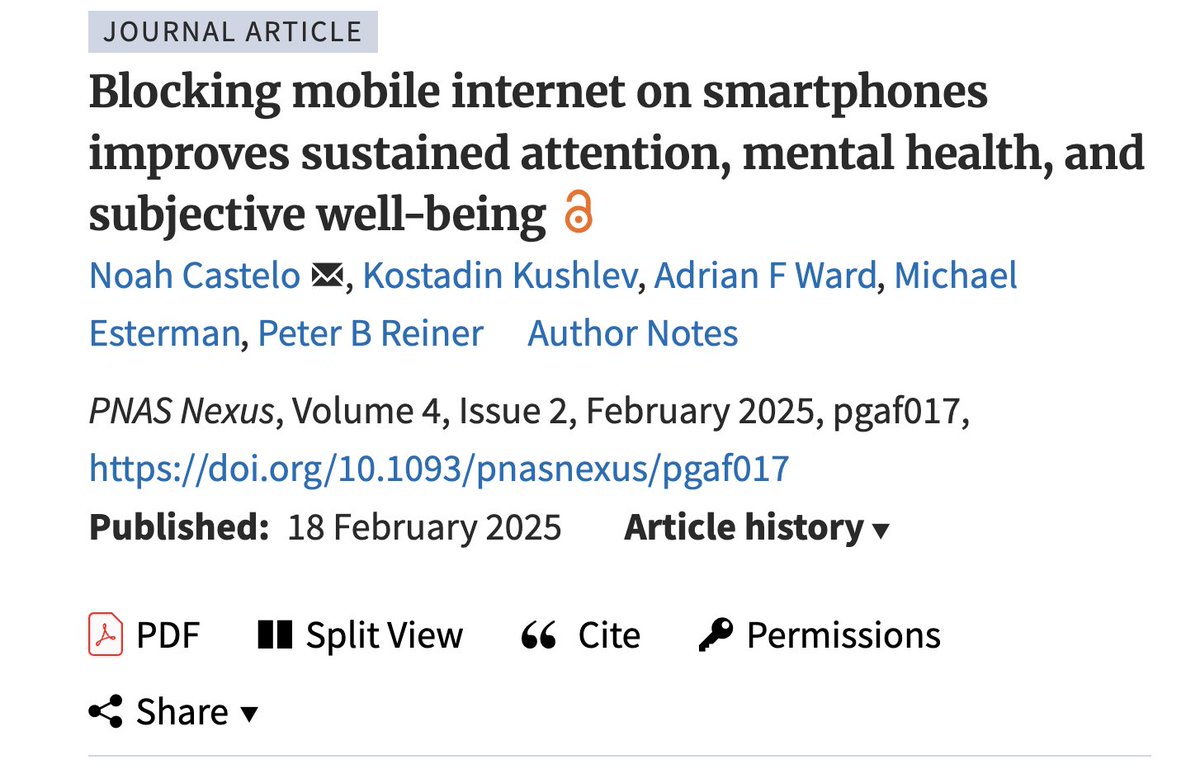
In adults, limiting smartphone functionality to texting and calls and blocking all social media and mobile internet for 2 weeks significantly improved attention, self-reported well-being and mental health. 90% of participants experienced a benefit.
Despite post 2015 flood mitigation effort, mostly stop-gap, Chennai is still a highly flood prone city. We need to desilt the storm water canal, Couum, Otteri nala, Adyar..etc rivers. Expressway debris should be removed from Couum. The work has to start now, atmost priority 3/3
Let me explain what just happened today because it deserves so much recognition.
GalaxEye is a Bengaluru startup founded in 2021 by IIT Madras engineers. Today they launched Mission Drishti on a SpaceX Falcon 9. It is India's largest privately built satellite at 190 kg. And it carries a technology that no commercial satellite has ever carried before.
Normal satellites take photos of the Earth using optical cameras. Like your phone camera, but from 500 km up. The problem is obvious. Clouds. Night. Fog. Smoke. If any of these are in the way, the photo is useless. India has monsoon cover for 4 months a year. That is 4 months where optical satellites are partially or fully blind over large parts of the country.
The alternative is SAR. Synthetic Aperture Radar. Instead of taking photos with light, it sends radar waves down and reads what bounces back. Radar goes through clouds, through darkness, through smoke. A SAR satellite can image a flooded village at 2 AM during a cyclone when no optical satellite can see anything.
The problem with SAR is that the images look nothing like photos. They look like grainy black-and-white radar maps. A military analyst or a trained geospatial engineer can read them. A farmer, a disaster response team, or a city planner cannot.
Until today, if you wanted both optical and SAR data for the same location, you needed two different satellites, passing over at different times, at different angles. Then someone had to manually align and fuse the two datasets. Expensive, slow, and the data never perfectly matched because the satellites saw the same spot minutes or hours apart.
GalaxEye put both sensors on one satellite. Optical and SAR, fused into what they call OptoSAR. Three times more information than a single sensor. Processed onboard by an NVIDIA AI chip at 1.8 metre resolution.
Now in practice, during the next cyclone hitting Odisha, one satellite pass gives you a clear image of which villages are flooded, which roads are cut, and which buildings are standing. Day or night. Cloud or clear. In near real-time.
For defence, it means you can monitor a border area 24/7 regardless of weather. For agriculture, it means tracking crop health across an entire monsoon season without a single cloud gap. For infrastructure, it means monitoring construction progress on highways and bridges without waiting for a clear day.
GalaxEye tested their SAR tech on ISRO's POEM orbital platform. The satellite was tested at ISRO facilities. IN-SPACe provided regulatory clearance. NSIL, ISRO's commercial arm, will distribute the imagery globally. And it launched on SpaceX because ISRO's PSLV doesn't have the right orbit slot for this mission.
Yes, four IIT Madras graduates built a world-first satellite in 4 years in Bengaluru.
Take a bow!
A Gmail ID was used to impersonate a Central PSU. Nobody questioned it. And ₹20,000 crore in govt tenders got rigged.
Let me tell you the story of India's most absurd corruption case.
Jal Jeevan Mission, PM Modi's flagship scheme to give tap water to every rural home. Rajasthan alone got ₹10,180 crore from the Centre in FY22 and ₹13,328 crore in FY23. Almost 23% of the entire national JJM budget went to one state.
Two tubewell companies wanted these tenders. Problem? They had zero experience. Solution? They forged experience certificates of IRCON, a Railways PSU. Fake letterheads, fictitious officer names. And for verification, they created a Gmail ID pretending to be IRCON officials.
A Central govt PSU under Ministry of Railways. Replying from @ gmail. com. Not .gov.in. Not .nic.in. Gmail. And nobody in the entire PHED department found this suspicious. Not one officer. Combined, these two firms filed 230+ tenders using these forged documents.
But the real Bollywood moment? PHED sent an engineer to Kerala to "physically verify" IRCON's work. The contractors and a forger reached Kochi ONE DAY before him. Checked into Hotel Woodlark. The forger was introduced to the engineer as "Vijay Shankar, CEO, IRCON International." Random photos of pumphouses were submitted as proof. The contractor left his personal phone in Jaipur and used an employee's SIM card to avoid GPS tracking. The engineer came back and submitted a "positive verification report."
Now here's the part that makes your blood boil.
In June 2023, IRCON's own Vigilance Department wrote DIRECTLY to the Addl Chief Secretary Subodh Agarwal — "These certificates are fake and fabricated." What happened? The warning emails were deleted. Compliant engineers were handpicked to give false positive reports. Three separate legal notices were sent to the department. All ignored.
But the scam wasn't just about fake certificates. That was just ₹960 crore. The bigger game was ₹20,000 crore.
Agarwal introduced a rule — "Site Visit Certificates" mandatory for tenders above ₹50 crore. Sounds like transparency, right? It actually exposed which companies were bidding BEFORE tender opening. Once everyone knows who else is bidding, you form cartels. You fix prices. Tender premiums were inflated 30-40% across the board.
The numbers:
₹20,000 crore in tenders rigged 30-40% inflated premiums, 4% bribery formula ₹47 crore seized by ED so far — 0.2% of the scam
The fraud ran from 2021 to 2023 under the Congress govt in Rajasthan. IRCON warned in 2023. CBI filed an FIR in 2024. ED arrested the minister in 2025. Agarwal was finally caught this week — after being on the run for 2 months, evading 40+ ACB teams across 100 locations in 21 cities.
JJM 2.0 just got approved. Budget: ₹8.69 lakh crore. The real question — has the system that enabled this actually changed? Or are we just funding the next scam on a bigger scale
I want to place this on record clearly.
After DMK came to power, I was subjected to sustained, targeted abuse by Sai LakshmiKanth, son of senior dmk leader RS Bharathi.
For years, I was harassed, defamed, and deliberately targeted. False narratives were created about me including claims that I ran a spa centre simply because I had invested in and held a franchise of the Naturals salon chain, founded by CK Kumaravel. A reputed brand with 700–900 outlets across India and presence abroad was twisted into something defamatory to malign me.
This was not random trolling. This was organised, persistent character assassination.
The mental trauma from this prolonged abuse forced me to step away from my career in media. As one of the few women HODs in the digital space from Tamil Nadu, this was not just a personal loss it reflects the hostile environment created for women who try to build their space independently.
What is more painful is the silence.
No support from the Press Club.
No support from activists.
No institutional backing.
I was left to fight this alone.
If this is the level of safety and protection available to a woman journalist in Tamil Nadu under the current ecosystem, it raises serious concerns about accountability and freedom.
I stood my ground alone then, and I stand by my truth even today.
@mkstalin@CMOTamilnadu@MadrasJournos
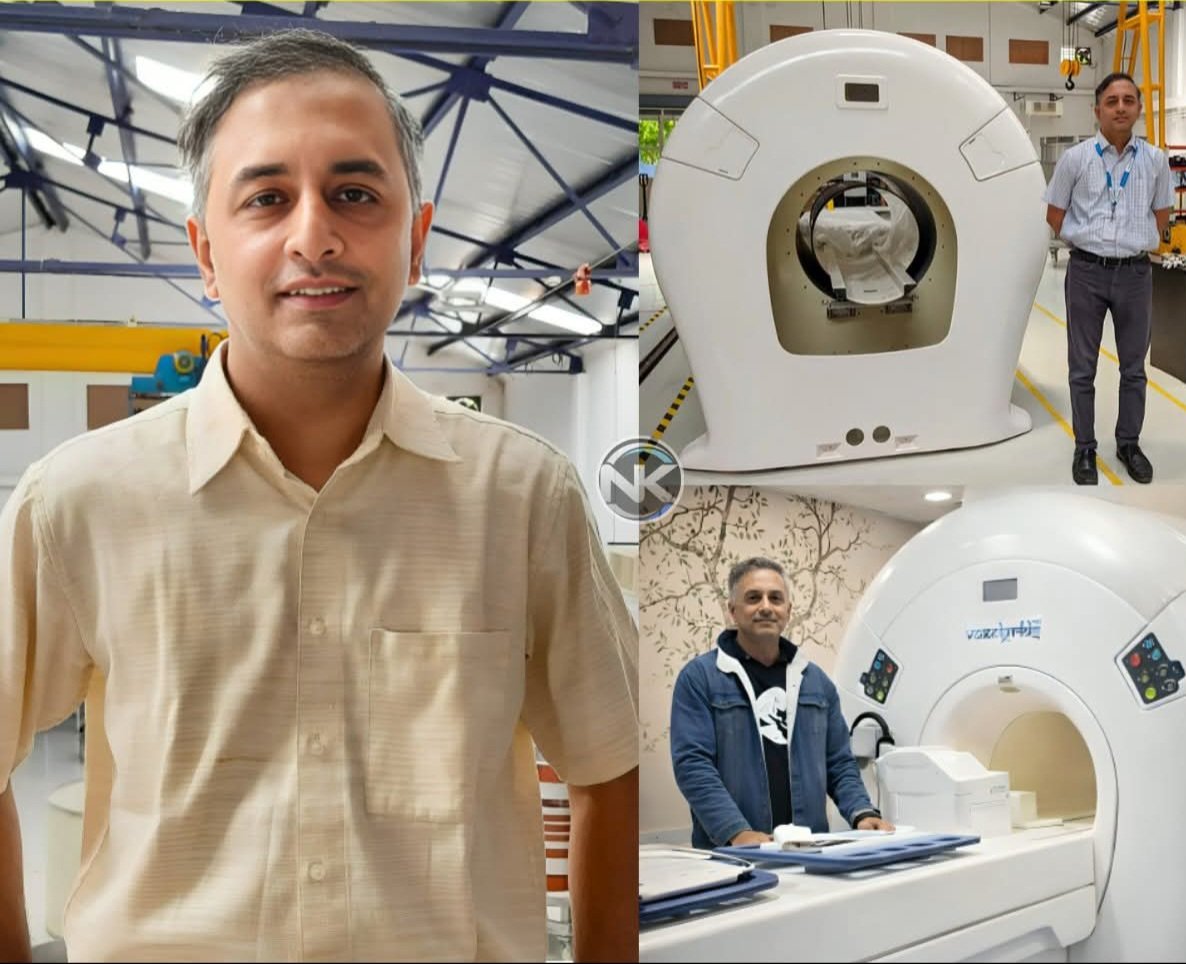
For many years, India depended heavily on imported MRI machines — expensive systems that required liquid helium and consumed high amounts of power, placing them beyond the reach of numerous hospitals.
Now, Bengaluru-based startup VoxelGrids has introduced India’s first fully indigenous 1.5-tesla MRI scanner. The system is already functioning at a cancer care centre in Chandrapur, Maharashtra, marking a meaningful development in the country’s medical technology journey.
What makes this innovation stand out is not just that it is manufactured in India, but that it is engineered specifically for Indian conditions:
• No dependence on liquid helium
• Reduced power consumption
• Approximately 40% lower cost compared to imported alternatives
For hospitals operating under tight capital budgets, VoxelGrids also provides a pay-per-use model, helping extend advanced diagnostic imaging to underserved and remote areas.
Leading this breakthrough is founder Arjun Arunachalam, who returned from a research career in the United States with the goal of addressing a long-standing gap in India’s healthcare infrastructure. With support from institutions such as Tata Trusts, the team dedicated years to research, refinement, and development to build a solution suited to domestic needs.
This achievement represents more than just a new medical device. It reflects a broader transition — from reliance to self-reliance, from importing technology to innovating at home, and from limited access to wider inclusion in healthcare services.
#MakeInIndia
#HealthcareInnovation
#MedicalTechnology
#IndianStartup
#AffordableHealthcare
#Innovation
In response to U.S. sanctions on Iranian oil in 2019, India abruptly ended its longstanding energy relationship with Iran, effectively ceding that market to China, which has since emerged as the near-exclusive buyer of Iranian crude — the cheapest in the world. Washington, however, has conspicuously refrained from penalizing Beijing for its open defiance of U.S. sanctions.
Now, as the U.S. sanctions exemption related to Chabahar Port approaches its expiry in April, a compliant India is withdrawing from the Indian-operated port, which is a strategic counter to Pakistan’s Chinese-run Gwadar Port.
This retreat is all the more striking given that in May 2024, India and Iran formally signed a 10-year agreement granting India the right to develop, equip and operate the Shahid Beheshti terminal at Chabahar. The contract, concluded between Indian Ports Global Ltd (IPGL) and Iran’s Ports and Maritime Organization (PMO), replaced earlier short-term arrangements and appeared to lock in India’s long-term strategic and commercial stake in the port. It provided India operational control over the general cargo and container terminal for a decade, with an option for renewal.
Yet last September, the U.S. gratuitously withdrew the Chabahar-specific sanctions exemption it had first granted India in 2018. The following month, Washington issued a temporary six-month waiver — not to protect India’s investment, but merely to allow New Delhi to wind down its operations by April 2026.
This is how the U.S. chooses to build, and assert, leverage over India.
Found some hard truths in the Economic Times:
India — fourth-largest economy in the world. Pharmacy of the world, and gung-ho about becoming a developed economy by 2047 — has had 5 major DEG poisoning tragedies prior to the latest one.
🔴Madras in 1972, killing 15 children
🔴Mumbai’s JJ Hospital in 1986 killed 14 patients;
🔴Bihar in 1988 claiming 11 lives;
🔴Gurgaon in 1998 when 33 children died; and
🔴Ramnagar, Jammu, in 2019, death of 12 child
After the 1986 DEG poisoning deaths at JJ Hospital, the Maharashtra CM appointed Justice Bakhtavar Lentin to head an inquiry commission. The 289-page Lentin report, tabled that year, sharply criticized public health administration and urged a major overhaul. Yet, nearly 40 years later, the case lingers in a Mumbai metropolitan magistrate’s court. Since 1991, two accused have died, one is absconding, and most others are now aged 70-90.
Since 2022, India has made it mandatory for cough syrups to be tested before export. However the hypocrisy is, the same rules don’t apply to products sold within India. It seems India has decided that Indian lives, including those of its children, are cheaper than those abroad.
Some lives are carved out differently. They do not fit neatly into the moulds handed down unquestioningly through centuries. They are born into environments where reverence for tradition is paramount, where rituals and festivals, customs and conventions form the very fabric of identity. Yet, their path is not to rebel against this inheritance, but to reinterpret it with a sharper clarity.
At the heart of tradition lies a profound faith, the unshaken trust that the divine presence never abandons, that life is sustained by something larger than human effort alone. That faith is eternal; it is the anchor. But what often masquerades as “culture” in our age are practices that have hardened into rigid shells, practices clung to without reason, defended without reflection. These are not the true spirit of tradition, they are the shadows of it. Faith is not fear. To place trust in God is not to tremble before imagined punishments, but to recognize, especially from the lens of Advaita, that divinity resides in oneself. To have faith in God is, ultimately, to have faith in the Self.
Rituals, family observances, and cultural habits should serve as grounding forces. They should strengthen, not suffocate; they should guide, not chain. A festival should inspire joy and connection, not guilt for failing to replicate every step. Lighting a lamp at dusk is indeed beautiful, it carries auspiciousness and radiates positivity through a home. But to miss it a few days is not calamity; it is not doom. If entire nations across the world thrive without such daily observances, how fragile could human life really be to collapse at the absence of a single flame?
The essence of culture is to evolve. When customs resist change, when they refuse dialogue with time, they begin their quiet march towards irrelevance. What once was a living river of wisdom turns into a stagnant pool of blind adherence. Clothing, appearances, the public performance of piety, these should never become prisons. Culture survives not by freezing itself in a bygone century, but by flowing forward, adapting while holding on to its soul.
To live a life cut out differently, then, is not to reject tradition but to distill its essence. It is to keep the lamp of faith burning, not merely in oil and wick, but in spirit and action. It is to know that God, being within us, demands not fear but trust, not rigidity but depth, not smallness, but a vastness of vision that works for the greater good of the world.
And when it comes to festivals like Navaratri, it is worth remembering that our very tradition allows for both simplicity and grandeur. One may celebrate with elaborate displays and rituals, or with the quiet offering of a single flower and a heartfelt prayer. The scriptures themselves give us the freedom in the spirit of yathā śakti kariṣhye, “I shall do according to my capacity.” What matters is not the scale, but the sincerity. Happy Navaratri to all! Let’s pray to Devi to bestow us with buddhi and bala.
Kerala reported 68 cases of rare Naegleria fowleri infection(brain-eating amoeba) in 2025 with 19 death. This infection leads to certain death, last 20 days has been worst. It live in stagnant warm waterbodies (20-40 degC) like lakes/ponds & moist soils, it enter through nose 1/3
@TNDeptofRevenue why your servers are down most of the time.. not able to generate cash receipts even in corp office. Why so poor network n server infra
@PanvelCorp Air quality in Kharghar v.bad next 2central prkmetro large tracts cleared leadg 2 dust n sand Entire node is gaspg 4 https://t.co/y93h9T2FNI check on constr activities/air polln. PcMc nt visible @ Kharghar
@ithakurprashant@KhargharCity@KhargharCivic@TOINaviMumbai