Uber's COO says it's getting harder to justify money spent on tokenmaxxing. Ironically, a lot of their customers say it's getting harder to justify money spent on their feemaxxing.
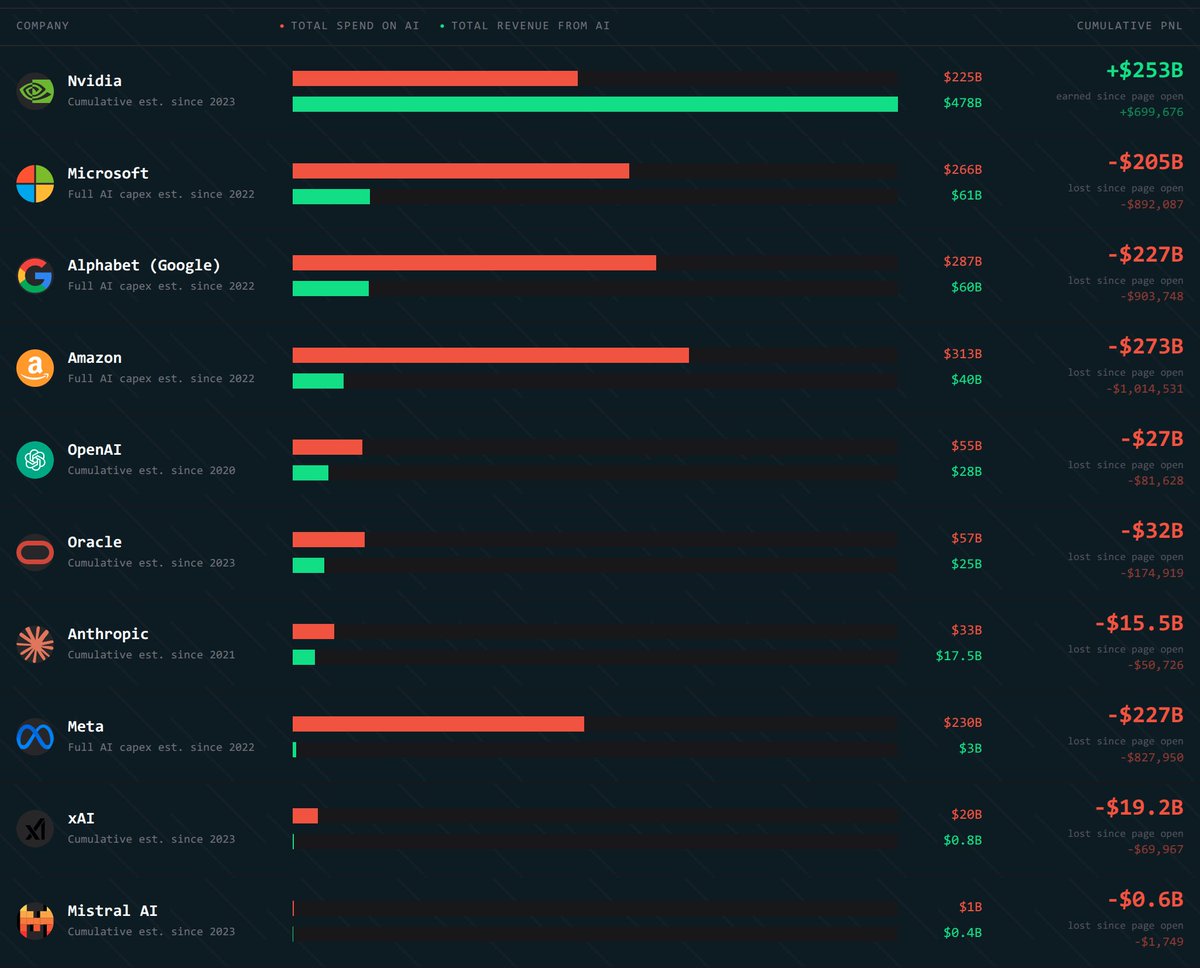
Full capex of frontier AI companies. Not great (except Nvidia) but not bad either for a new technology. How long will it scale as a loss-making unit? https://t.co/w8HhuhzvQj
Indie publishing, blogs and Wikipedia democratized human knowledge. Google indexed and monitized it while driving traffic, until now. AI companies are plagiarising, condensing and hoping to profit from it without any attribution, killing the open web.
https://t.co/724FbbSeVP
Searched for sitar music on YouTube and came across many channels with AI-generated instrumental slop. It all sounded dead and soulless. Same trend on Spotify I guess. Only cool thing is their AI generated cover art.
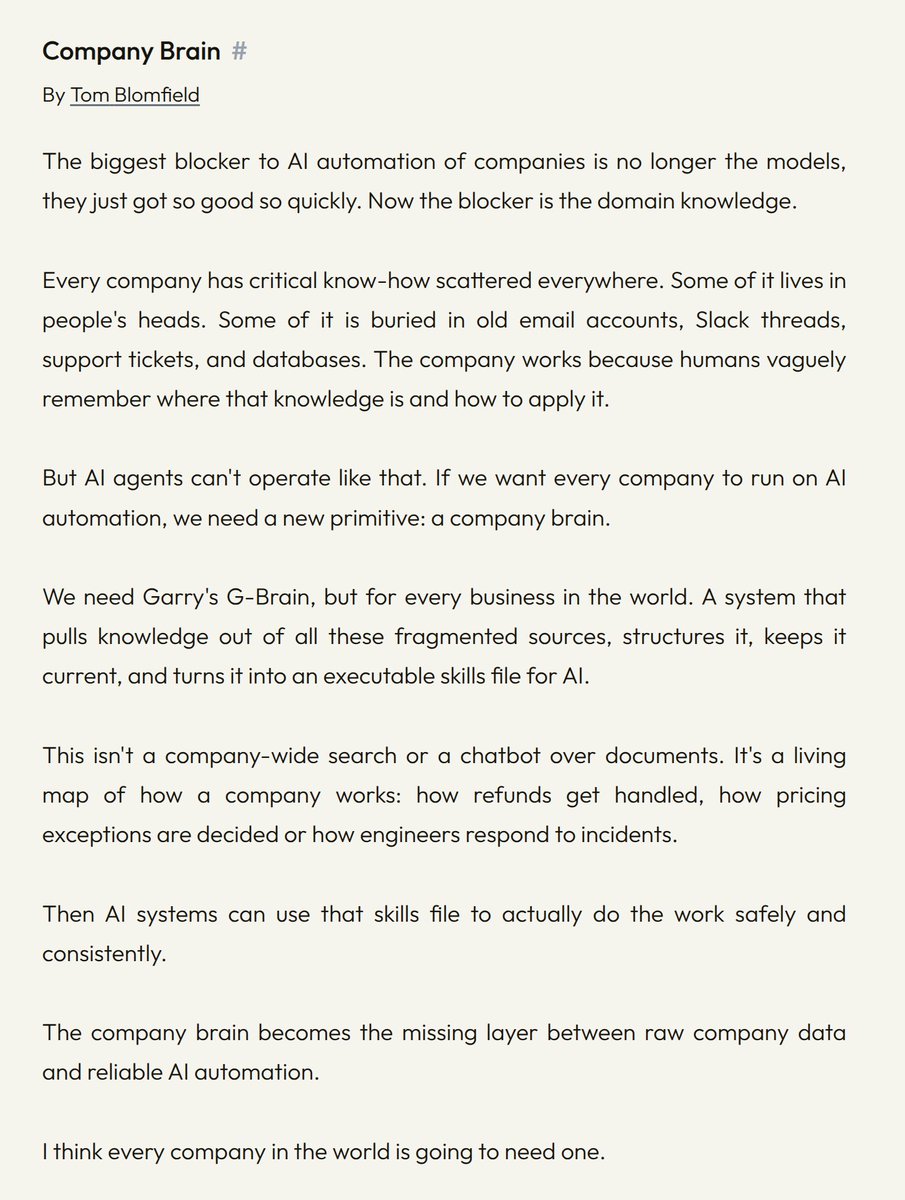
Been thinking about this lately. A lot of domain knowledge lives in people's heads. Hard to document it all. But, companies (like Meta is already planning) may (controversially) track employee keystrokes & mouse over a period to map workflows and create AI agent training datasets
AI hype is mind-boggling.
Agents, SaaS apocalypse, "new economy", "future abundance" etc. are just ploys by investors for ROI and by companies to justify job cuts.
Talking to smarter folks than me, I'm convinced many of the AI folks in my timeline are full of shit.
Nobody is "running 20 agents over night" and building stuff for actual users. Maybe some are building internal tools or disposable software. Maybe.
But building software people like using? That doesn't get hacked on day one or blow up after the 3rd user? Nope.
I don't even understand what that's supposed to look like. Do you work out a 57 pages document that perfectly describes what you want to build and then summon 14 agents and have them run wild for 6 hours? And what comes out on the other end isn't a broken pile of shit?
Nope. Not buying it.
PS: it may also be that I have an IQ of 82 and can't figure it out.
Intel has outdone AMD this time w/ Panther Lake. @FrameworkPuter laptop 13 Pro got 20+ hours battery life. I would have liked the option of non-touch display, and although the display is variable rate (30-120Hz) it's not close to the 1-120Hz panel in the Dell XPS 14 on 40+ hours!
@flowstated For small layout changes, won't it make more sense to just have a formatting toolbar than describing each change (waiting and spending tokens on trivial work)?
Using GitHub Codespaces lately has highlighted the benefits of DevContainers, specially for AI agent/codegen work in an isolated environment, although Copilot is crap. Makes you wonder if local tooling and IDEs (and even people) may no longer be necessary to produce software.
Everyone's running off to build their MCP server, CLI or skill for agents to work with their service, when most of them just need an API doc and curl instructions for AI agents to use.
Why do so many software apps/tools provide direct .deb files for installation in Linux, when most of them don't even auto-update? Simple instructions or a shell script to add gpg key and package source makes things more maintainable.
Unlikely for AI to take all jobs. Imo, companies don't care about 'no jobs, no income, no spending' problem as long as their profits keep rising for now. When costs collapse and demand slow, they'll want governments to take care of the problem through UBI etc.
Everyone says “AI will take all the jobs.”
If that happens… how does this future actually work?
No jobs → no income → no spending.
So who buys things? Who pays rent? Who keeps the economy moving?
What am I missing here?
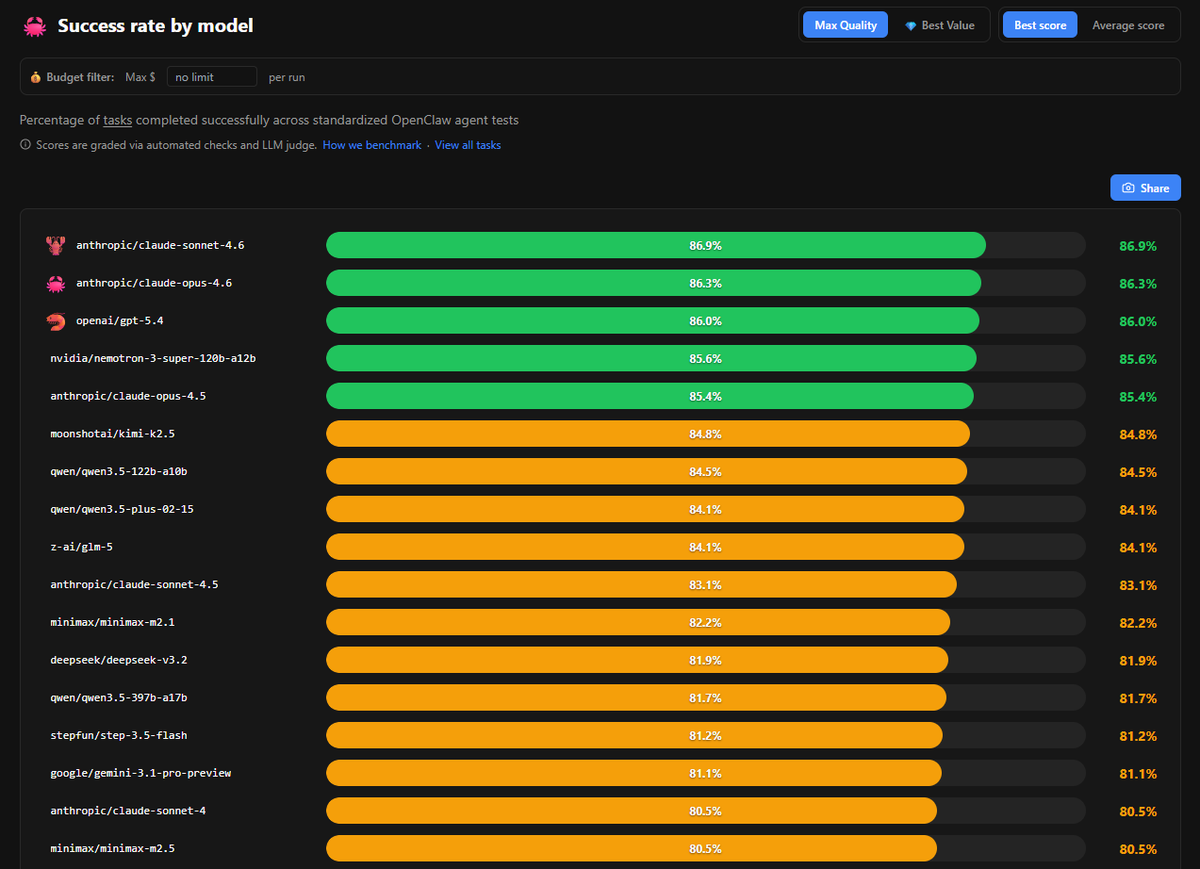
Open and local models are the real deal. Closed models from OpenAI, Anthropic etc. have a markup for R&D and investors, making them quite expensive comparatively, besides other issues like data privacy and network latency.
Kimi K2.5 on @opencode Zen is hilariously cheap. I bought $20 worth of tokens two weeks ago, and I still have $10.89 left! After 3M tokens! If there's a bubble in AI, it's pricing a million tokens at $25 (and beyond).
"Oracle is building yesterday's data centers with tomorrow's debt. The mismatch between how fast chips improve and how long data centers take to build poses a risk to the entire AI infrastructure trade." (CNBC)