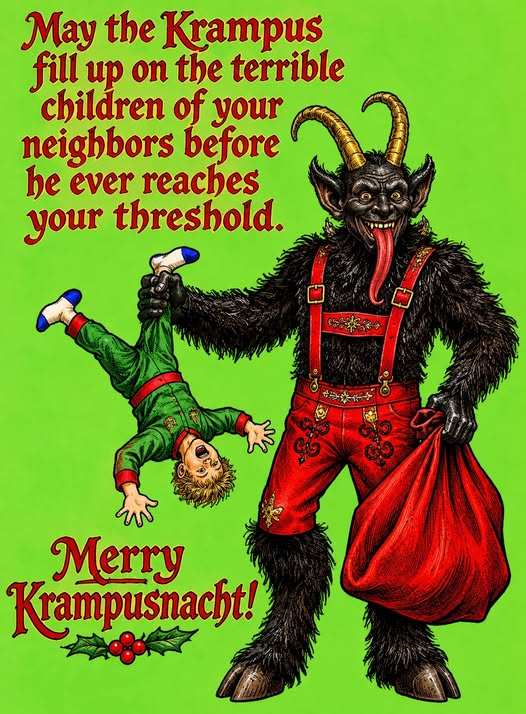
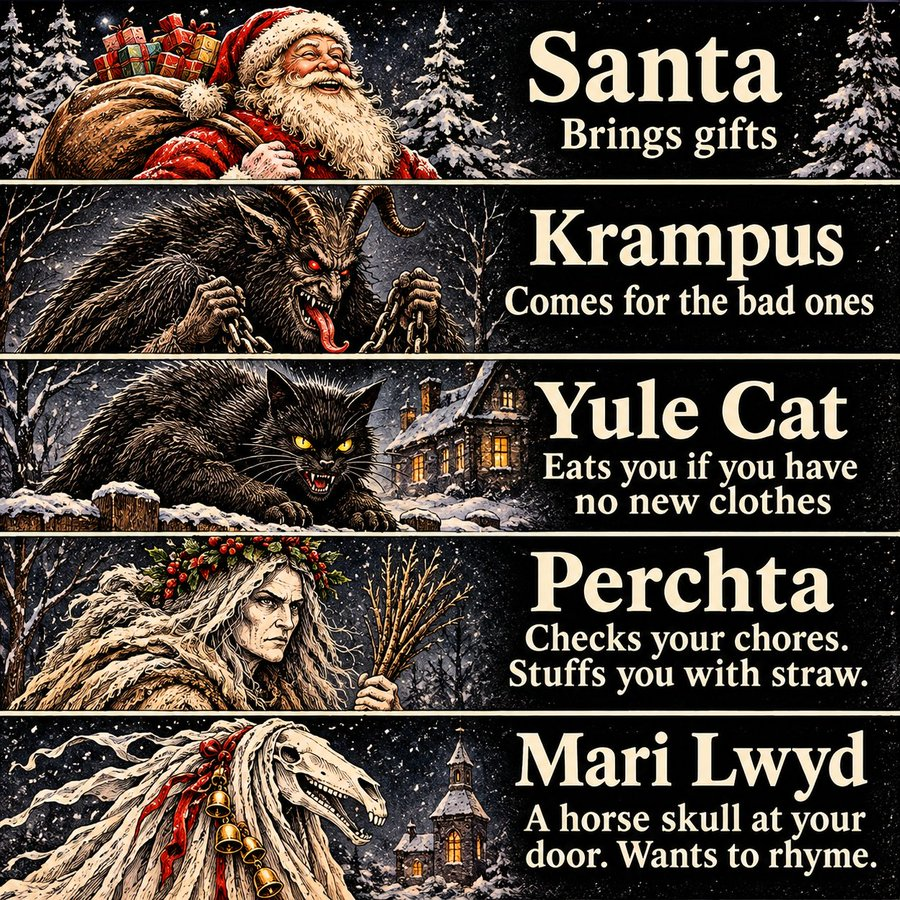
Krampusnacht is a traditional Alpine celebration on December 5th, where a horned, demonic figure named Krampus roams the streets, punishing naughty children while St. Nicholas rewards the good ones on his feast day the next day. The tradition, which dates back centuries, involves men dressing as Krampus, complete with horns and bells, to scare children and perform other festive activities.
Date: December 5th, the night before the Feast of St. Nicholas on December 6th.
Origin: Ancient Alpine traditions, later incorporated into Christian customs.
Key figures:
Krampus: A horned, demonic-like beast who punishes the naughty.
St. Nicholas: A benevolent figure who rewards good children with small gifts.
Celebrations:
Men dress as Krampus and parade through streets, sometimes carrying switches or chains.
The event is known for its festive but frightening atmosphere, with costumes featuring horns and furry suits.
Modern traditions: Krampusnacht is celebrated in various forms today, from traditional parades in Alpine countries to modern festivals and parties in places like the United States.
#witchyvibes #witchesofinstagram #witches #witchy #witchlife #witchtok #pagan #paganism #paganwitch #paganpride #wicca #wiccan #wiccanlife #wiccanwitch #wiccansofinstagram #wiccanmagic #wiccans #wiccanspells #stregheria
#magick #gardenerian #alexandrian
#dianic
#witchcraft
#witch
#witchyvibes
#witchcraftcommunity
#witchesoftiktok
#magic
#divinefeminine
#goddess
#pagan
#occult
#spiritual
#spiritualawakening
#herbalism
#tarot
#solstice
#equi
#halloween
#fullmoon
#newmoon
In light of recent events, cancellations, attacks and culture shaming I wanted to share.
Every December, when photos of Krampus runs pop up online, the same misconception follows:
"Isn't that a demon?"
Short answer: No. Judging Krampus by modern Hollywood horror movies is like judging a Chinese New Year dragon or a Halloween pumpkin without knowing the history behind it. Here is what the tradition is actually about:
1. He’s St. Nicholas’s Partner, Not His Enemy
In Central European folklore, Krampus isn’t an evil monster fighting against good—he works with Saint Nicholas on the night of December 5 (Krampusnacht). St. Nicholas rewards kindness and generosity, while Krampus serves as the theatrical reminder that actions have consequences. Even the chains he carries are an old symbol representing the binding of evil—not spreading it.
2. Deep Alpine Winter Roots
Long before modern holidays, communities in the European Alps celebrated midwinter solstice festivals to chase away the dark, harsh spirits of winter and welcome the return of the light. Heavy sheepskin and goat-pelt suits, horns, and loud cowbells were worn to drive off winter’s gloom—not to frighten neighbors out of malice.
3. Celebrated Across a Dozen Countries
While most famous in Austria, Germany (Bavaria), and Northern Italy (South Tyrol), Krampus and his winter counterparts are a beloved part of heritage across Switzerland, Liechtenstein, the Czech Republic, Slovakia, Hungary, Slovenia, Croatia, Poland, and Romania.
4. Living Heritage & Artisan Craft
At Black Forest Attire, we preserve the traditional leatherwork and hide craftsmanship behind these suits. Across the world, traditional Krampus runs are moving exhibitions of folk art—showcasing hand-carved wooden masks and custom-fitted pelts made with skills passed down for centuries.
Suppressing or shaming a tradition just because it looks unfamiliar misses the point of celebrating diverse cultures. Folklore isn't meant to be sanitized—it's meant to be understood.
CBC
via Krampus Victoria
#krampus #HappyHolidays #OldChristmas #FolkloreThursday #Thorsday