Quizás a medida que nuestro planeta recorre su órbita alrededor del sol añade más y más materia, sumando al radio del geoide y creando espacio para lo nuevo y de sus habitantes, más debemos ser prudentes en la captura y añadidura de recursos y nuestra capacidad para mantenerlo.
A retired NASA engineer who had worked on the Space Shuttle program for 25 years was hired by SpaceX at age 62. He described the first week as the most disorienting experience of his professional life.
At NASA, a design change required 3 meetings, 2 committees, a review board, and 6 to 18 months of documentation. At SpaceX, his new supervisor said "if it works, build it. If it doesn't, change it by Friday."
He sat at his desk after the first day and called his wife. He told her he felt like a man who had been swimming with ankle weights for 25 years and someone just cut them off. He could move. He could decide. He could build something in the morning and test it in the afternoon. The constraint that he had accepted as the nature of aerospace engineering turned out to be the nature of bureaucracy.
Within 6 months he had contributed to more design iterations than he had completed in his last 5 years at NASA. Not because he was working harder. Because the time between having an idea and testing the idea collapsed from months to hours. The same brain. The same knowledge. A different operating system.
He described a specific moment where he proposed a modification to a Raptor engine component. At NASA, the proposal would have entered a queue. At SpaceX, the modification was machined by the end of the day and tested by the following morning. He watched his idea become a physical object in 18 hours. At NASA, 18 hours would not have been enough to schedule the first meeting to discuss whether to schedule a meeting.
He told an interviewer: "I didn't get smarter when I went to SpaceX. I got faster. The intelligence was always there. The system was in the way."
The difference between SpaceX and NASA is not talent. NASA has extraordinary talent. The difference is the time between a thought and a test. SpaceX compresses it. NASA elongates it. The same engineer produces 10x more at SpaceX than at NASA because the bottleneck was never the engineer. It was the meetings about the meetings about the work.
@fiucv Si va a divulgar opiniones personales y arte utilice su cuenta personal y no un canal con el nombre de la facultad de Ingeniería UCV, está llenando de basura una cuenta que tenia información importante.
#OnThisDay 1969: “This is the dominion of the computers… so intricate they can be understood only by their own kind.”
James Cameron visits the enormous IBM computing and data processing system at NASA and contemplates “how long before the electronics take over?”
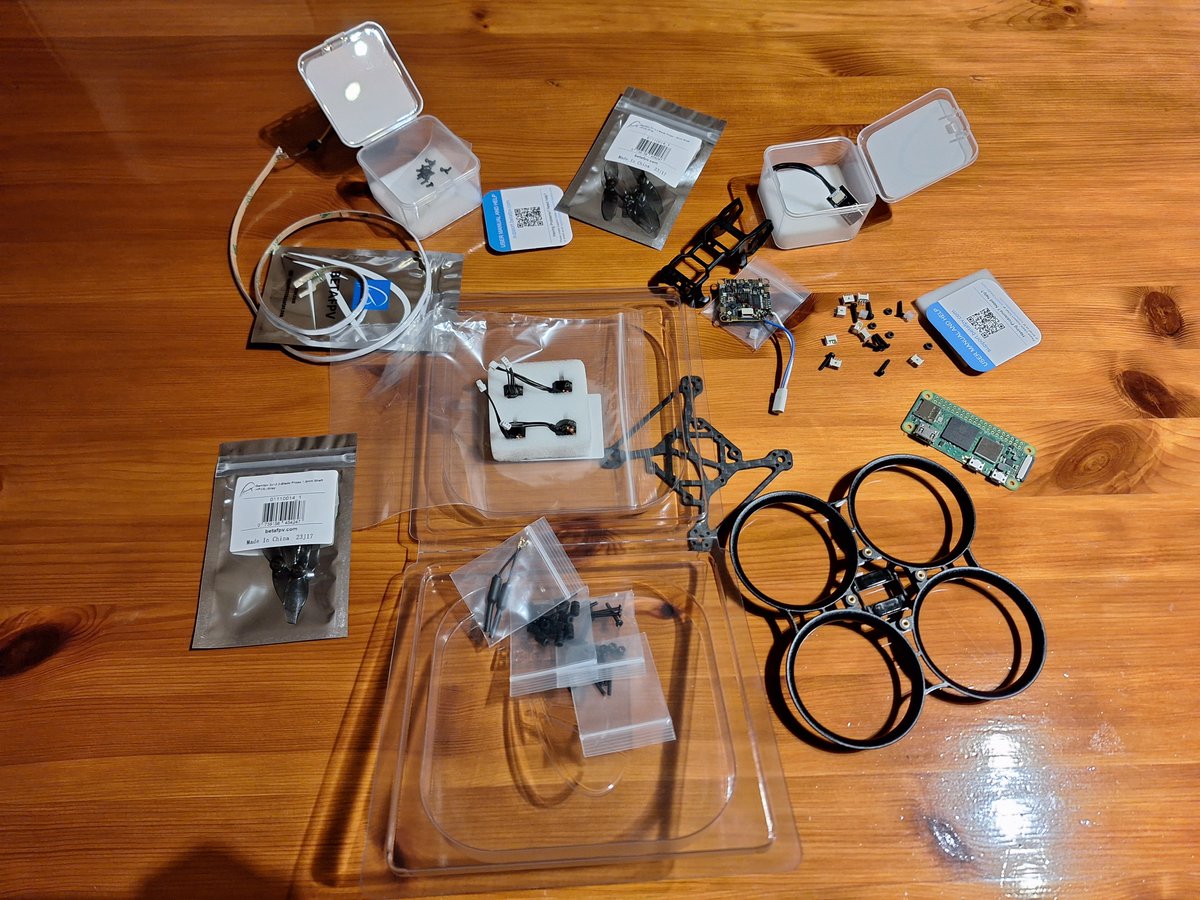
A small FPV drone with a Raspberry Pi Zero 2 w and a Camera Module V3 for on-board video recording and analog transmission. @hackaday
🤖For more details: https://t.co/J8BDlnHPRC
Computers set...
Getting some essentials out of the office for the lockdown...
It is absolute ghost town on-campus.
It might be the safest place right now, if not the most serene...lol
Elon Musk:
"Don't pursue money.
Make useful products, and money will come as a consequence."
A simple philosophy that has shaped some of the world's most ambitious companies.
Wild: When the BYD Zhengzhou factory is fully complete it will be larger than San Francisco (but smaller than the Denver airport!)
~10x larger than the Gigafactory Nevada. Not apples to apples because it's effectively a city - employees live there in dorms.
Update: got it working with the real arm. Reworked the code to allow multiple button presses at the same time, but it's still writing to the motors sequentially, so there's a bit of a delay compared to the visualization. 🦾