Are @ACTFibernet is working? App even not working and poor speed and customer service! Not even able to raise a ticket through app! Worst service ever!
@TANGEDCO_Offcl@TVKVIRUGAMBAKAM Is that enough for you now to look into the issue? Not yet a single person from EB department looked into the issue so far and even closed my complaint without my approval and no proper response for that also @TANGEDCO_Offcl@CMOTamilnadu
From morning I’ve been trying to get a proper response from the @TANGEDCO_Offcl team regarding the power cut issue from the morning itself and more than 6hrs power cut & no proper updates given! Is this how it works? No proper updates so far lethargic behaviour @TVKVIRUGAMBAKAM
Not even getting a proper response from @TANGEDCO_Offcl is really DISAPPOINTING - Everybody gets the complaint and no one is looking on it or giving a proper update on why such issue happened for the next consecutive days? Totally unacceptable
Frequent Powercuts in our area and no proper responses from any end. Only complaints is being taken, and no updates. The whole area is suffering due to this unannounced power cuts. Please take action on high priority @TANGEDCO_Offcl@TVKVIRUGAMBAKAM
@TANGEDCO_Offcl@TVKVIRUGAMBAKAM You can take the complaint number for your reference in which you have the complete required details - 2416821
Till now no response or update regarding the power cut from KK Nagar Eb Office
To get more views on your long-form video, it's important to focus on retention. That's because YouTube considers how long people watch as a signal to decide how much viewers enjoyed the video. So, here are 10 tips you should consider to improve your YouTube videos.
Note: These are best practices, but this doesn’t instantly mean breaking them is going to ruin your entire channel. Look at them as improvement guidelines.
1. When you’re writing your intro, it’s important to understand that the intro isn’t meant to deliver high-quality content. Its job is to set up the story, provide context, and make sure the viewer understands the journey they’re about to go on. That’s why intros should be tight and condensed. A good rule of thumb is to keep them between 8 and 25 seconds and focus only on four core elements. A strong intro confirms the concept behind the title. It establishes any structural context, or context needed to understand the twist. It sets clear goals, so viewers understand how each scene moves toward that goal. And lastly, through the way it’s edited, the intro sets the tone and creates a sense of excitement for the viewer.
2. Many times, when a creator is in a conversation with another character in a video, they tend to neglect the connection with the viewer. This neglect could come from something as simple as turning your body completely towards the other person, rather than having a more open position so the viewer feels like they are a participant in the conversation. So, to make viewers feel more welcomed and connected to the creator, we often focus on keeping open body language, especially in content where that viewer-creator connection is important.
3. While subtitles are actually great for clarifying language to help the viewer take in the story at their own pace (traditional use), subtitles can also be used to emphasise keywords or phrases for comedic effect (modern use). However, people often forget another benefit of adding subtitles. This is the benefit of increased perceived effort put into the content. Viewers often care about feeling that the creator cares about the content. And while they don’t always see the amount of work put into a video behind the scenes, subtitles make the effort more apparent. So, particularly in content where the natural visual appeal isn’t that great, subtitles can have a whole range of benefits.
4. One of the easiest ways to lose interest from a viewer is to have long transitions between segments. Most of the retention issues actually originate from this particular part in the video. We have just resolved one conflict, and I’m now transitioning to the introduction of another conflict, rather than instantly jumping into the next conflict. And this downtime of uncertainty leads to a loss of engagement in a lot of cases. This particular loss is often referred to as segmentation loss. So, keep transitions very short.
5. To make talking head videos more engaging, we want to avoid overusing side angles. The use of too many side angles for cinematic reasons can often have an adverse effect in YouTube content. This is because the viewer feels less connected to the host. So, mainly use side shots as a means to strategically hide cuts or break up long frontal shots, but don’t just use them for cinematic reasons because it might bite you in your back. Also, when you come back from B-roll, it’s often a good idea to start on your frontal shot to instantly reconnect to the viewer rather than your side shot.
6. When you're having time-sensitive challenges, make sure to use visual timers. This visual countdown keeps viewers constantly aware of the time limits and helps the viewer maintain that sense of urgency. A common mistake is to have a time challenge and only show the timer at the beginning and the end of the challenge. This makes it so that, throughout the challenge, the viewer has no grasp of time, which makes it harder for them to stay engaged through the tension.
7. Many people, when they make storytelling content, often overthink their storylines. They try to come up with a complex why and insert multiple layers of obstacles. However, the more complex your story becomes, the less widely appealing things are. This is also why we often begin our story extremely simply and only introduce new rules and layers of complexity segment after segment. This makes it so that viewers can ease into the complexity, and it makes it more likely that your videos appeal to a wider audience. It’s false to say that YouTube videos cannot have complex storylines. They just should not push viewers away right off the bat.
8. Repetition can come in many shapes and sizes, and many creators think that repetition is showing the exact same visual or saying the exact same thing. However, repetition can also happen through subtext, which is referred to as implied repetition. This is when you show or say two different things, but their hidden meaning is the exact same, and to the viewer this still feels like repetition. It slows down pacing, sometimes to the detriment of engagement. So always ask yourself, am I just repeating the same idea I’ve just told the viewer, or are we truly moving on?
9. You shouldn't be afraid to break the fourth wall, as it can help to build authenticity. Many viewers still come to YouTube to have a genuine connection with the creator, or what they believe is a genuine reaction (parasocial relationships). However, breaking the fourth wall in educational content has an even bigger benefit. It can increase the perceived quality of the content, especially when you are using this method to talk to your producer. There's a lot of nuance around breaking the fourth wall. So don’t see it as something you can or cannot do, see it as situation- and goal-dependent.
10. Memes are often a great way to make content feel culturally relevant. However, there's a massive danger in overusing memes. Not only is there a high likelihood that they become timely, meaning that they lose their comedic value over time, but they are also very subject to overusage. That's why it's important to recognize when you are using a meme as comedic relief and to not use them multiple times, in case they lose their cultural relevance or in case too many people use them and then it becomes redundant and straight up annoying. One example is the SpongeBob “10 hours later” meme, or the old man laughing, or even recently the 6–7 meme.
These are just some tips to improve your retention, but what I would really like you to take away from this is the nuance behind each piece of advice, as nuances are often where the real gains are.
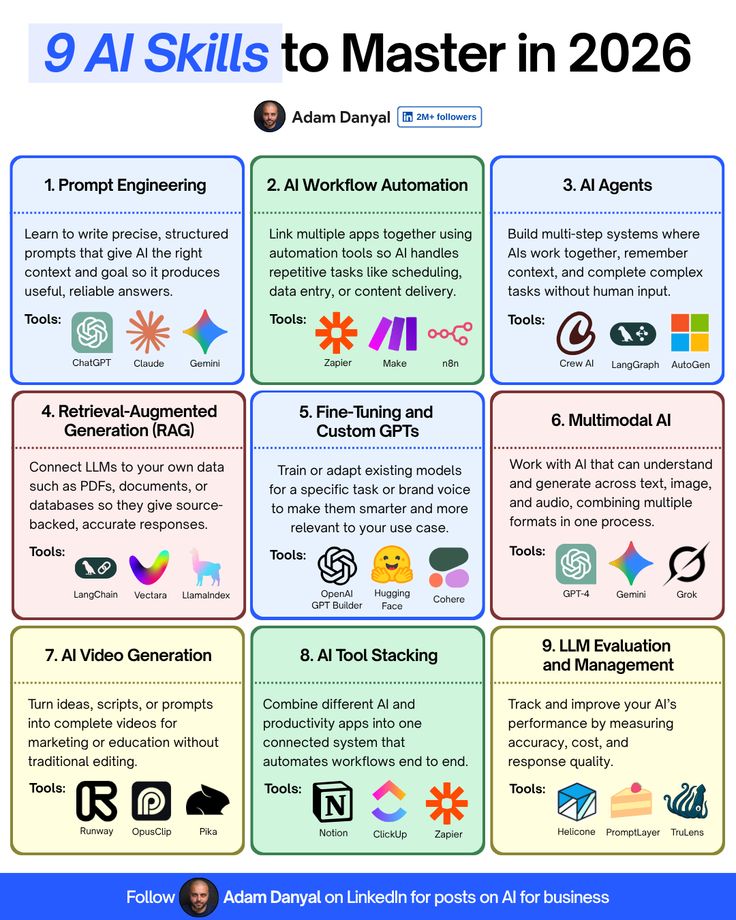
🚨 9 AI Skills You MUST Master Before 2026 🚨
Ignore these, and you’ll be irrelevant.
Bookmark this thread 🔖 — you’ll need it.
👇 Let’s dive straight into the skills…
🧵 ChatGPT vs Grok vs Gemini vs Claude vs Perplexity — 5 leading AI tools explained.
Best use cases, strengths & pro tips.
No hype, just practical insights to choose the right tool.
📌 Save this post & read the full thread 👇
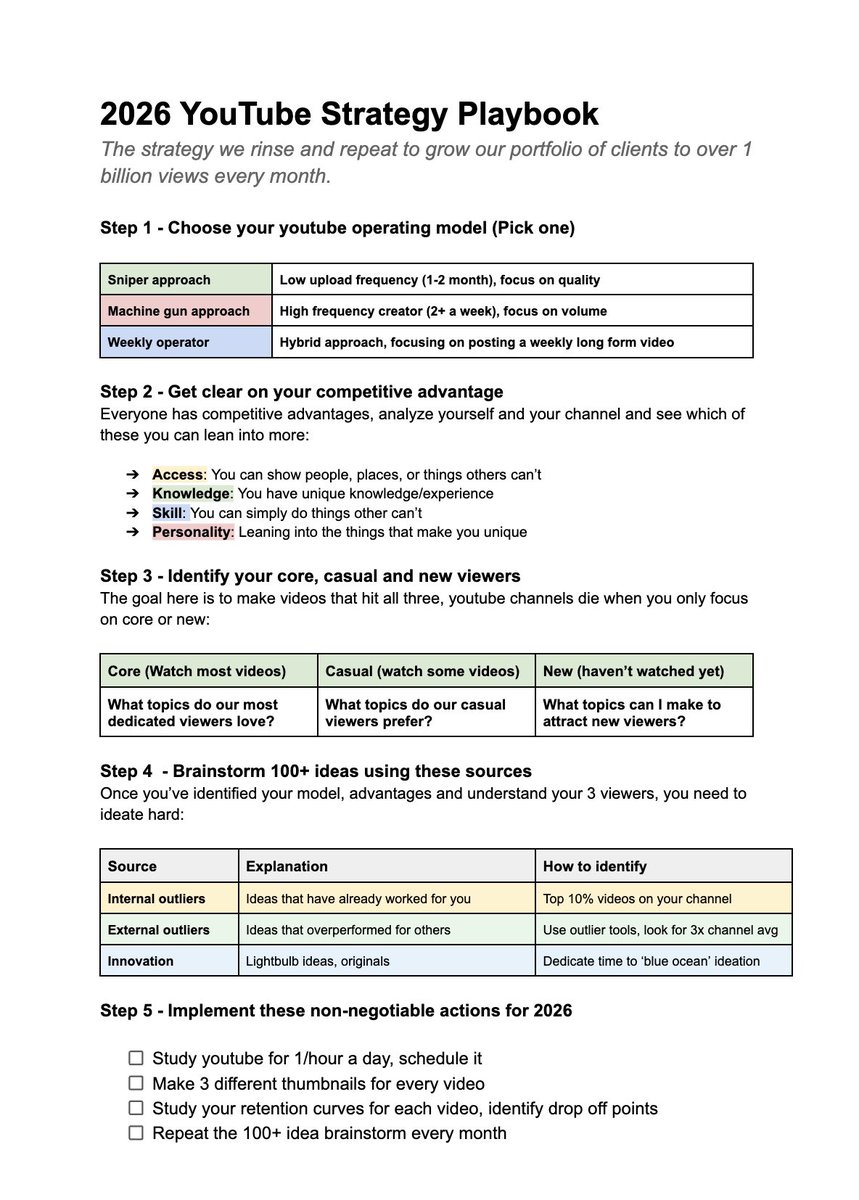
If you want to grow on YouTube, audience retention is extremely important. But it’s so easy not to know where to start. Here are 10 simple quick tips to help you improve your audience retention.
Note: These are best practices, but this doesn’t instantly mean breaking them is going to ruin your entire channel. Look at them as improvement guidelines.
Tip 1: On YouTube, there are many creators using overused lines, such as “this video is sponsored by” or “make sure to subscribe because the amount of non-subscribed viewers is too high,” or any of those kinds of things. When you say those phrases, you indirectly remind the viewer of an association with those types of creators, and that can negatively impact you. That’s why you often want to be aware of overused phrases used by other creators, so that you can avoid saying them and avoid being grouped with those creators by the viewer. This makes it more likely that new viewers stay engaged longer.
Tip 2: People often try to remove things that go wrong during the filming of a video. However, viewers tend to love it when a video takes an unpredictable direction or when mistakes are made. Not only do they give the illusion of authenticity, they also make the storyline more uncertain. This leads to higher levels of curiosity, which is good for overall engagement. If things don’t necessarily go wrong, you can still jump on unseen opportunities during filming to make sure the story becomes more unpredictable. This is a more planned way to create something unexpected.
Tip 3: It’s important to balance the amount of screen time each character gets in your video. You, as the main creator, should get the majority of screen time, as people tend to connect more with the main character of any story, and your video is often a story. This is good for retention. When the imbalance favors other people, and there’s not enough screen time for the main creator, people tend to connect less with that creator. This is a pattern you often notice with creators who turn into hosts.
Tip 4: While repetition is often good in an educational setting, it tends to harm retention on YouTube because it lowers the overall pacing of a video. Retention is very driven by progression, and repetition tends to stall progression. Therefore, it’s often recommended to reduce repetition. When you’re explaining something, say things once. Don’t restate them with an analogy or say something in a different way, because that is also seen as a type of repetition. This is what we often refer to as implied repetition.
Tip 5: One big, notable difference between bigger and smaller creators is the confidence with which they speak. Newer creators tend to speak without a confident tone or without proper voice projection, which is exactly what you need to appeal more to an audience. Viewers love confident presenters, and when this confidence disappears, even if it comes from side characters, engagement tends to go down with it.
Tip 6: Overused or outdated memes are one of the easiest ways to kill retention. Think about the Spongebob “10 hours later” meme, or the old man laughing, or any other meme that creators tend to overuse when they struggle to be comedic. All of these lack the novelty needed to remain funny, and they can leave a wrong taste in a viewer’s mouth, which makes them more likely to tune out, even at the exact moments when the meme is shown.
Tip 7: People often ask me whether breaking the fourth wall is bad for retention. This means the viewer gets insight that what they are watching is a production. Breaking the fourth wall is often something producers try to avoid when making a movie. But what about the creator industry? For educational creators, breaking the fourth wall can actually increase the perceived effort behind a video, and this boosts credibility in a way that makes people more likely to respect what is being said. However, in entertainment content, the more something feels like a planned production, the more it takes away from the overall authentic experience many viewers are looking for. So we often recommend only breaking the fourth wall if it’s done with the intention to either connect with the viewer or heighten perceived effort.
Tip 8: Blurring is something a lot of people do to make viewers curious. But not all blur is good blur. When we use too much blur, where things become harder to predict, or even too hard to predict, it actually lowers curiosity. When there’s too little blur, the viewer can easily guess the answer, and therefore curiosity levels are also low. The goal is to figure out the right amount of blur, where the viewer can predict an answer but isn’t certain. This makes it more likely to create a higher level of curiosity, which then leads to interest.
Tip 9: Long sentences with multiple ideas can have a detrimental effect on retention within a scene. The reason for this is that they often make it harder for viewers to understand what is being talked about. As viewers cannot easily re-read/re-hear a sentence, unlike with text, this makes watching the video more effortful. This is less widely appealing than simply choosing simple sentence structures and shorter sentences overall when you’re speaking. Yes, we’re talking about sentence structures as a way to keep people more engaged.
Tip 10: In general, title screens, logo screens, or intro seconds that showcase a channel’s logo are not great for retention. They provide the viewer with unessential information, are often associated with lower-quality content, and tend to be seen as more amateuristic, as they are not commonly used by bigger creators. Because of this, they often don’t perform well. My advice is simply to remove them altogether, unless you’re trying to make a very strong statement. This is a rare case, so I don’t recommend it for 90% of creators.
Disclaimer: Even if you follow all of these tips, your channel won’t necessarily get millions of views. There are many factors that influence the success of a YouTube video, and you could even break a few of these tips and still succeed. However, success often comes from an accumulation of doing enough of the right things that the viewer feels the overall experience of your video is great. So take these tips as inspiration to improve your content and gradually make your videos better, one step at a time.
Why Amazon is becoming very poor at customer service? Not able to contact anyone regarding return and refund! Need immediate action @amazonIN@AmazonHelp@amazon
Hey @amazonIN what kind of cheap act is this? I paid annual subscription for 1499rs and getting ads all time and no payment option for 2089rs is available? Why cheating people like this? Need to sort it! @AmazonHelp@PrimeVideo
@AmazonHelp It’s not helping me to upgrade my plan to ad free. Kindly provide a valid link to make this happen. Since I’m an Indian, it’s showing me it’s not available