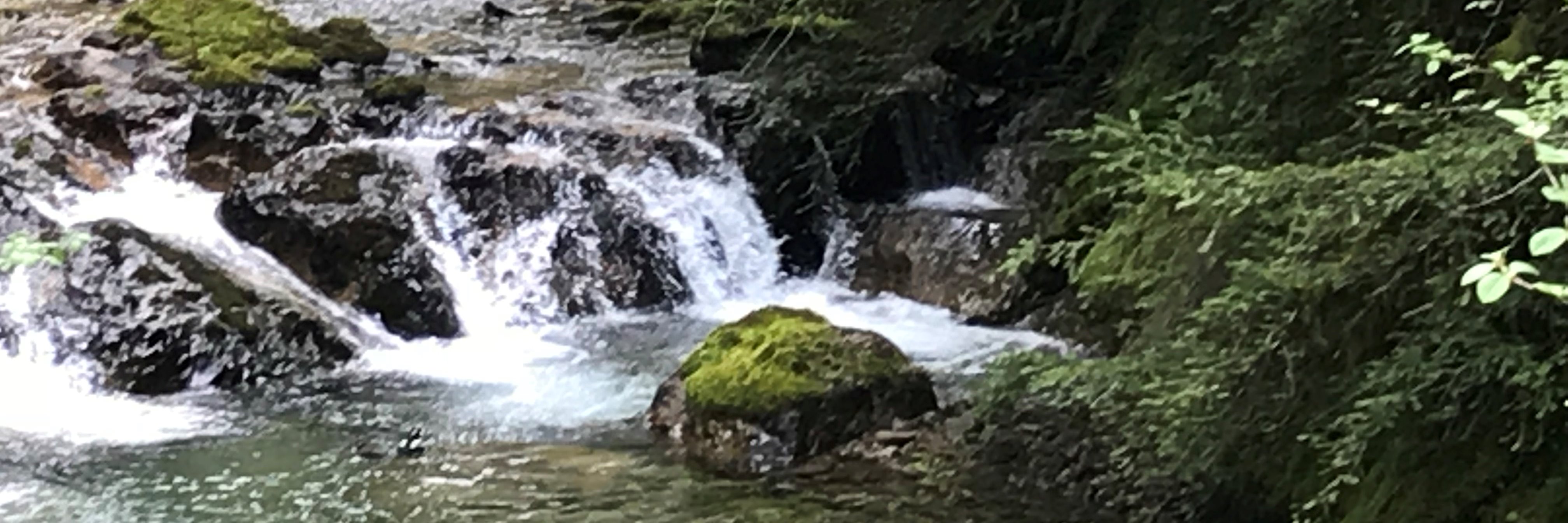
“Large wood in rivers can connect habitats that were potentially disconnected in the past. It can increase the size of habitats for wildlife, serve as a place to search and handle food or act as potential refugia," says study author @Timaukel. https://t.co/dRMxMN581Y
With the current trend for declining numbers of Atlantic salmon across their native range, images like this are likely to become much harder to capture than they already are - enjoy 👍
#beboldforsalmon#wildlifephotography#highlands#scotland
Nice summary of Oregon State University scientists Ezmie Trevarrow and Ivan Arismendi (@Timaukel) recent publication!
Aside: We've seen some of the motion-triggered video and it's absolutely amazing.
https://t.co/zZg4KvePsb
@USLTER
Environmental DNA, or eDNA, can help identify who’s in a river, stream or creek. Now, it’s helping scientists learn how threatened salmon and trout adapt to a changing environment.
https://t.co/jB03vRgKh0
New Research: Assessing Hybridization Risk Between ESA-Listed Native Bull Trout (Salvelinus confluentus) and Introduced Brook Trout (S. fontinalis) Using Habitat Modeling https://t.co/itrBn9f8Z1 #Envsci
Our new pub is out "OSU researchers create tool to help protect native fish from hybridizing with non-natives" https://t.co/dRI9Sx9ct3 @w1mam@OregonAFS@osufwcs@OSUAgSci
Researchers created a model that calculates the risk of nonnative brook trout & native, protected bull trout breeding together in Oregon. @OregonSeaGrant's Guillermo Giannico was one of the authors of a paper on the research, which @FrontEnvSci published. https://t.co/jAmxUm7cdL
@heavy__static @MichelBrewer@Weather_West The challenge with using NWR is that very few households (less than 15%) actually have, or use, one even though it covers over 90% of the population in the country. https://t.co/VvWYzPEuvP