Crews continue to remove debris across Western North Carolina in the aftermath of Hurricane Helene’s devastation. Residents are reminded to stay safe when removing debris from their properties. Read more ➡️ https://t.co/Hc7VXNv7vz
@CMcKayFL which is normal for the 24 hour news cycle, what isn't normal is that they are committing journalistic malpractice. the right of a free press was contingent on the belief that it would be a stalwart against government abuse. now they are an eager participant.
Crews continue to remove debris across Western North Carolina in the aftermath of Hurricane Helene’s devastation. Residents are reminded to stay safe when removing debris from their properties. Read more ➡️ https://t.co/Hc7VXNv7vz
Weeks after Hurricane Helene, families in East Tennessee and North Carolina are still suffering. It's why a group of pilots are have been flying airplanes full of supplies to hard-to-reach areas. https://t.co/434RBCyLn6
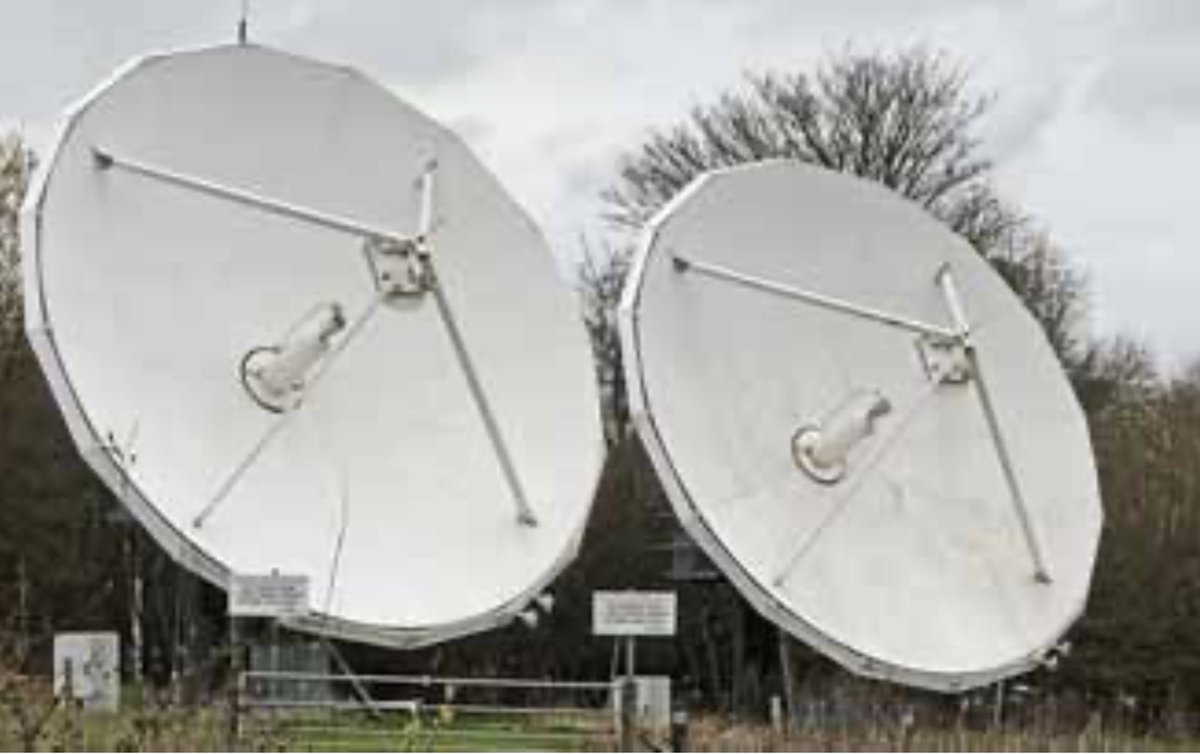
Understanding the Parabolic Reflector Antenna
The parabolic reflector or ‘dish’ antenna is the form of antenna which finds many uses in domestic satellite television reception, terrestrial microwave data links, general satellite communications, radio communications and many more.
It is used at frequencies of VHF and above.
When looking at how this type of antenna works, it can be split into its basic constituents, and these show how the antenna operates, and how some different configurations arise.
There are two main elements to any parabolic reflector antenna:
•Radiating system: The radiating element within the parabolic reflector antenna can take a variety of forms. In some antennas it may be a simple dipole, in others a horn. Its aim is to illuminate the second element of the antenna, the reflector with an even density of radiation with the minimum spillage or radiation missing the reflector and being radiated elsewhere.
•Reflector: The reflector is the distinctive part of the parabolic reflector antenna. The parabolic shape is key to the operation of the RF antenna because the paths taken from the feed point at the focus to the reflector and then outwards are in parallel. However more importantly the paths taken are all the same length and therefore the outgoing waveform will form a plane wave and the energy taken by all paths will all be in phase. This enables the antenna to perform in a particularly effective manner. The parabolic shape of the reflector surface of the antenna enables a very accurate beam to be obtained. In this way, the feed system forms the actual radiating section of the antenna, and the reflecting parabolic surface is purely passive.
When looking at parabolic reflector antenna systems there are a number of parameters and terms that are of importance:
•Focus The focus or focal point of the parabolic reflector is the point at which any incoming signals are concentrated. When radiating from this point the signals will be reflected by the reflecting surface and travel in a parallel beam and to provide the required gain and beamwidth.
•Vertex This is the innermost point at the centre of the parabolic reflector.
•Focal length The focal length of a parabolic antenna is the distance from its focus to its vertex.
•Aperture The aperture of a parabolic reflector is what may be termed its "opening" or the area which it covers. For a circular reflector, this is described by its diameter. It can be likened to the aperture of an optical lens.
•Gain: The gain of the parabolic reflector is one of the key parameters and it depends on a number of factors including the diameter of the dish, wavelength and other factors.
•Feed systems: The parabolic reflector or dish antenna can be fed in a variety of ways. Axial or front feed, off axis, Cassegrain, and Gregorian are the four main methods.
For most domestic systems like those used for satellite television reception, a small reflector combined with a focal point feed are used, providing the simplest and most economical form of construction.
These antennas may not always look exactly like the traditional full dish antenna. For mechanical and production reasons the feed is often offset from the centre and a portion of the paraboloid used, again offset from the centre as this provides mechanical advantage.
For more information about the parabolic reflector antenna, head over to my website (URL in my profile) then navigate to Antennas & propagation >> Parabolic reflector antenna.
BREAKING: Winlink 📧 has requested that all non-essential traffic on the Winlink system be suspended, including tests, weekly nets, etc., until after Hurricane Milton. They are still experiencing high volumes of traffic from Helene, so please keep the gateways open. #HamRadio
@DrMcbeardface Why give them a reason to remove their wide area network when there are other means? It’s about saving people first, then calling out government interference. You all seem to be confusing the boot licking hams with the rest of us. We are not a monolithic block of humans.
@DrMcbeardface I think you are missing the point. But, know I’m trying to help with 30+ years of emergency comms and working as a ham and as a municipal partner. Get work done, don’t invite the powers that be to take an enforcement action and put a nail through the repeater feed line.
@DrMcbeardface The hams will have access to FRS and GMRS frequencies, contact them to find out where they are coordinating non-ham comms. Please DO NOT use the ham freqs and repeaters without a license or you are handing the FCC the rules violations they will cite to shut off the ham repeaters.