One of the biggest problems for researchers in the age of AI: how to ensure citations are fake or not.
Gensparks' Fact Check Agent can verify citations without you having to read a bunch of papers.
Here's how to verify citations with Genspark:
Chat Academia now offers a FREE plan.
• Brainstorm research questions
• Run searches across multiple databases
• Generate literature maps
• Extract relevant information from papers
Here's how to use Chat Academia for free:
We all know BlackBerry fell to Apple. But that’s not the full story.
Behind their rapid rise, there was a fatal flaw. A single decision that sparked the collapse.
And here’s the shocking truth—BlackBerry could have saved themselves. But didn’t.
Here's why:
In 1965, Singapore was forced out of Malaysia.
No army.
No resources.
No fresh water.
A tiny island of 2M people living in slums.
Then ONE man's ruthless vision built modern Asia's greatest success...
🧵
ChatGPT generates fake references to papers that don't exist.
So, researchers at Stanford built Storm.
It's an AI-powered app that generates well-researched articles with references to published sources.
Here's how to use it:
Major academic publishers' revenue and what they pay authors and reviewers:
Revenue:
Elsevier: $3.9 billion
Springer Nature: $2 billion
Taylor & Francis: $800M
Wiley: $1.8 billion
They pay:
Academic authors: $0
Peer reviewers: $0
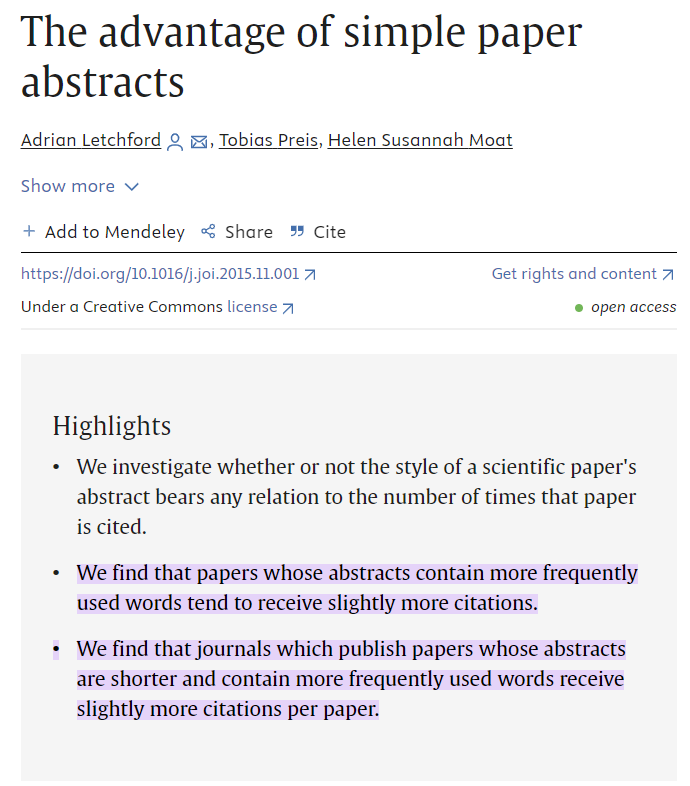
Abstract is one of the most important parts of a research paper. A short and simple abstract can lead to more citations.
But many researchers struggle with writing abstracts.
Here's a template you can use to write short and precise abstracts:
ChatGPT is dead.
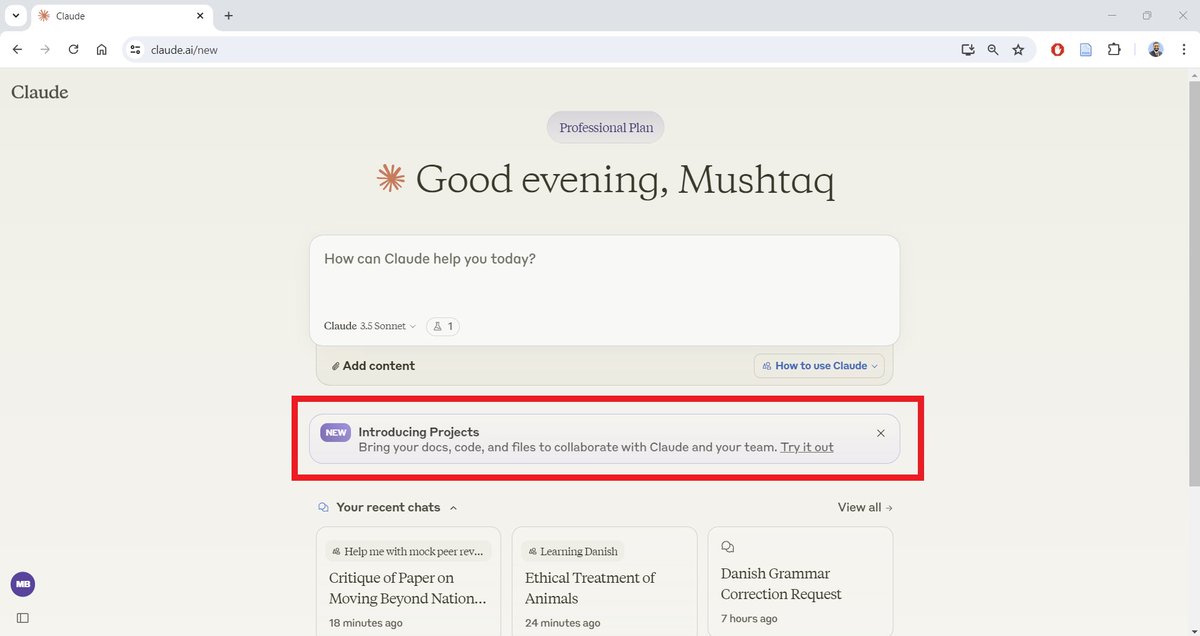
Claude just launched a powerful new feature: Projects.
It lets you build your own customized chatbots.
You can upload multiple documents as its knowledge base and add your own specific instructions.
Here's how to create a Project in Claude:
How to use Research Kick (to find research gaps and craft compelling research questions):
1. Go to https://t.co/5sbZbsNwHm and click “Get started” to create an account.
2. You will need to buy credits to start using Research Kick. We have monthly, annual, and one-time plans.
3. Click on “Change Database” in the top-left corner and select the database relevant to your field. If you are unsure, select “Scite AI.”
4. Type the title of your research project in the chat bar at the bottom. You can also type keywords related to your project.
5. Research Kick will give you a set of preliminary questions. Read through them carefully and choose one question you find particularly interesting.
6. Copy that question and paste it in the chat bar. Tell Research Kick that you find this question compelling and would like to refine it further.
7. Research Kick will give you a set of refined research questions.
8. Again, read through the suggested questions and choose one that you find particularly compelling.
9. Copy the selected question and paste it in the chat bar. Then ask Research Kick if this question has already been addressed in published literature or not.
10. If there is not enough literature available regarding that question, Research Kick will tell you so. This would mean that you have successfully identified a potential research gap.
11. If the selected question has already been addressed, Research Kick will give you links to the papers in which that question has been addressed.
Don't use ChatGPT for academic purposes (without customizing it).
Try Lumina — an AI-powered search engine designed for academics.
It answers your questions with references to published articles. It also gives you research articles for free!
Here's how to use it:
@gamaholicX Ugh, Mega Pint we know there’s nothing more annoying than slow internet. Let us try and fix that for you. Can you please tell us more about your data issue? Are you facing problems with uploading, downloading, browsing or just overall? - Wajid