🚨 New Publication Alert
Our latest Policy Memo examines why Nigeria's 2013 power sector privatisation has failed to deliver on its promise and calls for structural reforms, not just tariff adjustments, to reposition the sector for better performance 👇🏾
https://t.co/39PzwHN7zX
People don't understand how electricity works.
Electricity is not a self contained business with easily exportable out like a cement factory or a refinery.
It's highly dependent on a conplex network. No amount of 20,000MW IPPs can solve that without the network.
The Empire State Building shines red and white tonight in celebration of @Arsenal’s Premier League Title and trophy celebration.
See the lights live: https://t.co/iavtXSm3Fx
Senegal is becoming a perfect case study of what happens when revolutionary politics finally meets the realities of governing.
It’s easy to unite people against a system.
It’s much harder to run the economy, negotiate debt, satisfy voters and still maintain the purity of the movement.
A lot of liberation-style movements in Africa struggle once they transition from opposition to government because charisma and slogans eventually collide with budgets, IMF pressure and state institutions.
That’s exactly what we’re watching in Senegal right now.
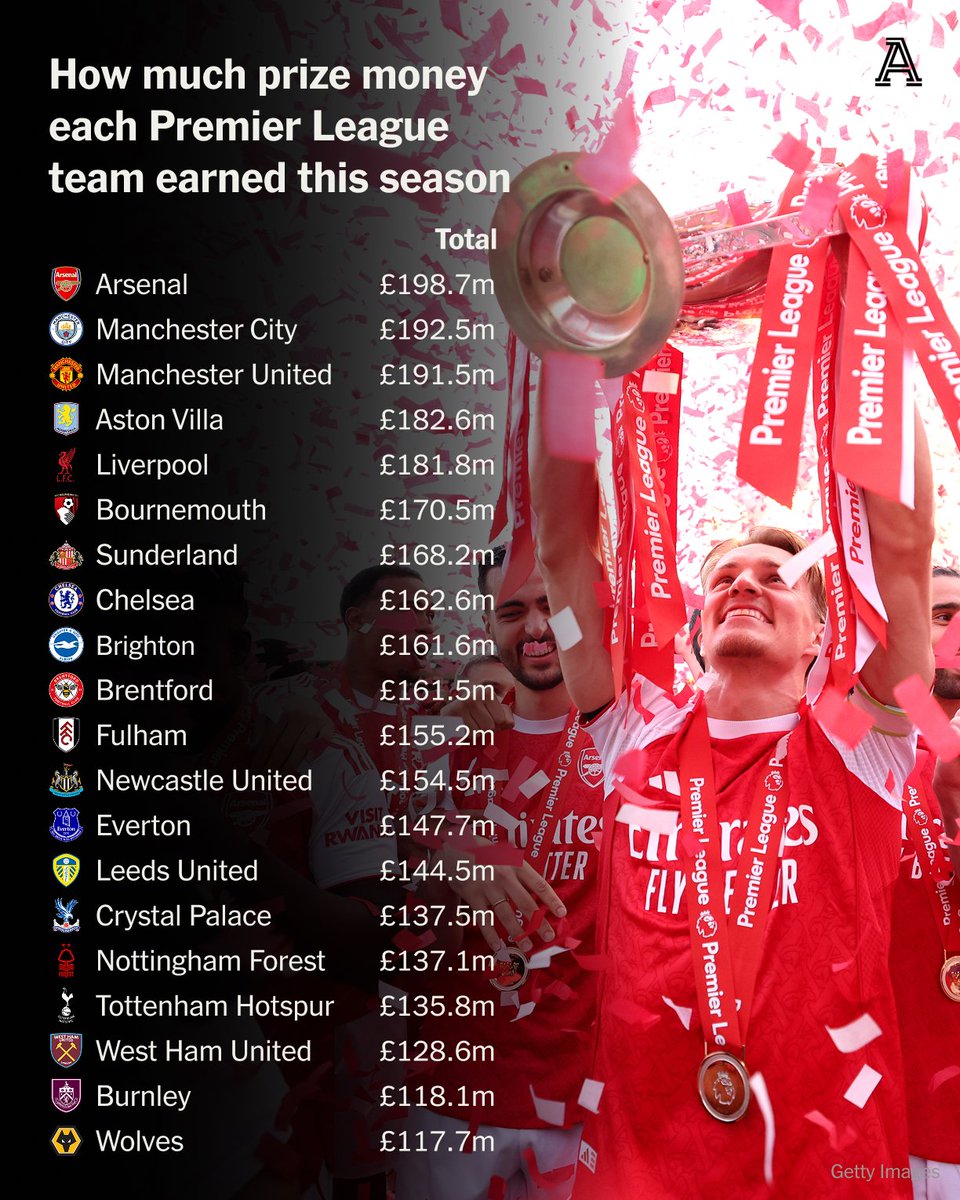
Arsenal’s first Premier League title for over two decades is expected to generate almost £200 million in domestic prize money.
Calculations undertaken by The Athletic, based upon information provided by various club sources across the division, project that the Premier League will distribute over £3 billion to its 20 member clubs for the first time.
@CWeatherspoon_
FREE READ: https://t.co/LVLvflAwQU
Because I'm American, I feel I should explain how I became an Arsenal fan -- so that I can't be accused of jumping on the bandwagon. It started in Fall 1998, when Leslie and I were on our first MSU sabbatical. We went to London for a month -- with two-year-old in tow.
Although Nigeria’s variant of fiscal federalism evolved largely as a mechanism for managing ethnic competition and conflict, its current form—built around highly accommodative revenue-sharing arrangements—has produced a weak socio-economic model.
🚨 New Publication Alert
Our latest policy paper expands the discussion about fiscal federalism in Nigeria, arguing for an urgent review that aligns spending responsibility with taxing powers and takes account of the shrinking profile of oil revenue. 👇🏽
https://t.co/vK7FR4uyfZ
This will take the form of constitutional amendments that seek to strengthen state taxing powers over consumption and activity taxes; safeguard free interstate commerce; provide for central revenue administration by agreement.
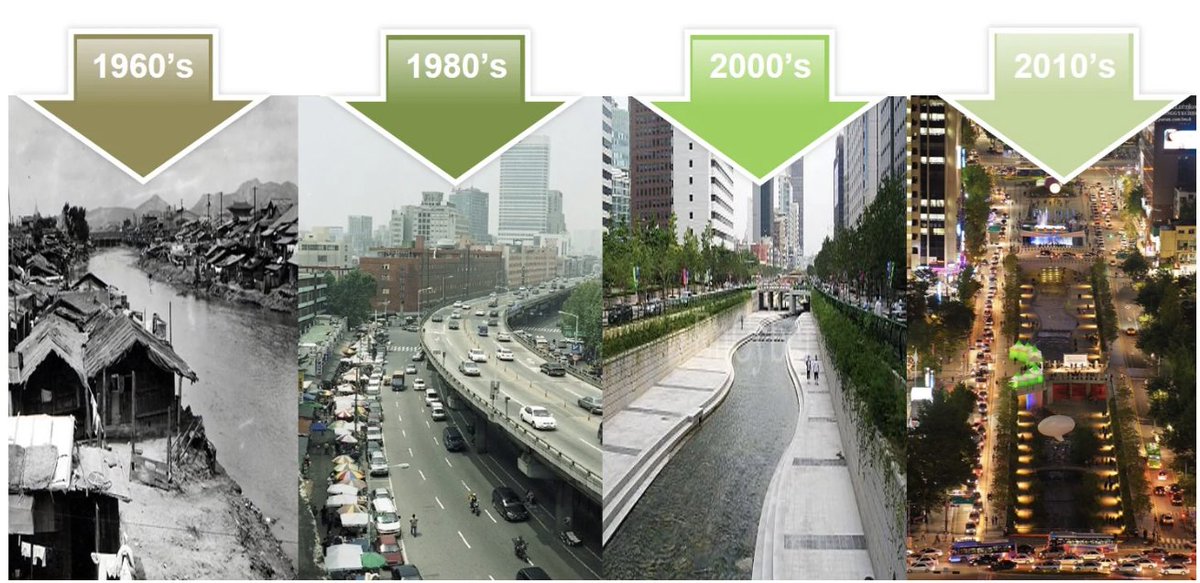
A fundamental lesson from my posts these last two weeks on modernization, industrial policy, and development is that development economics should be about understanding why South Korea got rich but Bolivia did not.
The current field has largely given up on that question. Sharply identified RCTs on small micro programs are a fine way to publish in the AER and get tenure at a fancy university, but a profession that knows everything about microfinance impact evaluations and almost nothing about industrialization has misallocated its own intellectual capital on a pretty heroic scale.
Four images of Seoul: