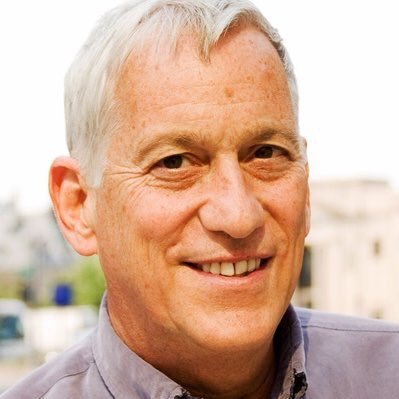
Very sharp interview about why we should not only blame billionaires when the fault is on us, why I created a new company to write biographies, and why AI shouldn’t do the writing. Also, a shoutout to Fitzsimmons on who Harvard admits. https://t.co/7gZaY08Bc9 via @YouTube
> notorious womanizer despite being fat and bald
> retires at 42 as the richest man in the colonies by building a fortune on posting
> world-leading scientist in his SPARE TIME despite little formal education
> hired by the government during the revolution to schmooze people in France
> founded the future most powerful country on earth
> died at an old age universally admired
Reminder: Ben Franklin was the biggest baller of all time
Ahead of America's 250th anniversary, author Walter Isaacson has turned his attention to a single sentence in the Declaration of Independence.
@JudyWoodruff spoke with Isaacson about the enduring power of those words and his new book, "The Greatest Sentence Ever Written." This report is part of her series, Crossroads: America at 250.
Isaacson makes a distinction worth holding on the 250th anniversary. The sentence has never described America as it was. It has always described America as it was obligated to become. That is what makes it a forcing mechanism rather than a historical document. Lincoln invoked it to bury 7,058 men. The suffragettes invoked it at Seneca Falls. Johnson invoked it signing the Civil Rights Act. Each invocation is an argument that the gap between the aspiration and the reality is unacceptable and must be closed.
We are at 250 years. The gap is still there. The birthright citizenship case sits before the Supreme Court. Green card holders change their travel plans because the border is now a place where rights are diminished. The Smithsonian is being pressured to change how it tells the history of slavery. The sentence was always aspirational. The question at 250 is whether the next generation will treat it as a charge or as a relic. That question has been asked before. The answer has not always been the right one.
Two hundred and fifty years ago, the Declaration of Independence stated that “all men are created equal.”
“You realize it doesn't really describe the way it was in 1776, but you think of it as a forcing mechanism,” author Walter Isaacson said.
He later called the sentence something "that keeps pushing us forward, even though our progress comes in fits and starts.”
Ahead of America's 250th anniversary, Judy Woodruff spoke with Isaacson about the enduring power of the document’s words and his new book, "The Greatest Sentence Ever Written."
Watch part of her conversation with Isaacson, which is part of her recent Crossroads: America at 250 report.
Ahead of America's 250th anniversary, author Walter Isaacson has turned his attention to a single sentence in the Declaration of Independence. https://t.co/wHrJ6jPVMn
Re-reading the 2002 SpaceX chapter in @WalterIsaacson’s Elon Musk, when the entire industry said reusable rockets, Starlink & cheap access to space were impossible.
Musk’s mindset:
“If you were negative or thought something couldn’t be done, you were not invited to the next meeting.” - Tom Mueller
He filled the team with reality-bending willfulness and extreme risk tolerance. People who would make things happen.
That same drive created a culture that achieved the “impossible”; but also one where bad news sometimes got filtered.
SpaceX 2002–2026 IPO proves it: First principles + insane determination beats conventional wisdom every time.
What a journey. 🚀
Eternally grateful for the team and leaders at @SpaceX that I’m privileged to work with every day. From Dragon, to landing Falcon, to developing Starship to take us to the Moon and Mars. Proud of what we have accomplished but even more excited about what comes next. SpaceX is a special place.
"It's not that you're just getting a trillionaire, it's that you're getting a whole new economy - the space economy," says @WalterIsaacson of @elonmusk ahead of the @SpaceX IPO. https://t.co/Yea418abPL