⚠️ تنبيه لأصحاب كروت NVIDIA
ظهرت تقارير عن مشكلة في تعريفات NVIDIA الأخيرة 621.14 و621.24 تتسبب في عمليات كتابة متكررة على أقراص SSD حتى والجهاز في وضع الخمول
بعض المستخدمين سجلوا نشاط كتابة يصل إلى 30GB بالساعة بسبب خدمة NVDisplay.Container.exe مما قد يؤثر على العمر الافتراضي للـ SSD مع استمرار المشكلة
كيف تتأكد أن جهازك متأثر؟
• افتح Run بالاختصار Win + R
• اكتب resmon واضغط Enter
• انتقل إلى تبويب Disk
• راقب نشاط الكتابة لخدمة NVDisplay.Container.exe
الحل المؤقت
إذا تأكدت من وجود المشكلة يمكنك الرجوع إلى تعريف 621.01 حيث أفاد بعض المستخدمين باختفاء المشكلة بعد تثبيته
المشكلة لا تصيب جميع الأجهزة ولم تعلن NVIDIA عن إصلاح رسمي لها حتى الآن
🤖 Hoy el FBI Dallas avisó que criminales y hackers alineados a un Estado están usando ARTEX, un framework de pentesting con modelos de lenguaje, para automatizar ataques en todo el mundo. Según ellos, hay casos que van del blanco inicial a acceso privilegiado en menos de tres horas, y lo ligan al compromiso de la cadena de suministro de ConnectWise en octubre, con intentos de autenticación contra más de 2,250 inquilinos de Microsoft 365.
¿Y qué hace de verdad? No es un virus ni un exploit mágico. Es una plataforma de pentesting autónomo, de código abierto, licencia AGPL-3.0. Le das un objetivo en lenguaje natural, un planificador lo parte en tareas y unos workers corren herramientas reales de laboratorio, guardando evidencia de lo que encontraron. El repo original lo publicó Autumn-27 en julio y lo bajó el 8 de octubre, después de reportes de abuso. El que sigue público, con más de 6,500 estrellas y la versión v0.6.0 del 11 de noviembre, es la traducción al inglés y continuación de BaaRai:
https://t.co/zmoSAvdq9C
Ojo: el aviso del FBI habla del framework y de que sigue circulando en forks, copias y una versión comercial. No nombra este repositorio en concreto. El propio README lo dice sin rodeos: es herramienta ofensiva, solo contra sistemas que te autoricen a probar.
Si defiendes una red, el recado es aburrido y correcto: endurezcan controles de acceso, vigilen actividad automática rara y reporten en https://t.co/o0RMPe6OOH. El truco no es un zero-day de película, es la velocidad. Ya no hace falta ser un crack para apretar el botón.
Process Injection Techniques
[2025]
Process Stacking Injection - A Novel Approach to Covert Process Injection
https://t.co/MvtLEPUn4k
[2026]
Divide and Conquer: Stealth Code injection via Split Memory Permission Manipulation Across Processes
https://t.co/9iVaErq68i
Full write-up: https://t.co/PgFi3sIrsi
F5 advisories: https://t.co/TE8SM44wPg https://t.co/ULKuVMQFQH
Thanks to @F5 /@nginx , @theori_io, @ikotas00, @MetnirAI, @rapid7 for their work and coordinated disclosure. 🙏
In case you were wondering, yes it works with the latest #Windows 11 build 26H2 (26300.9974) fully patched.
Sorry for the fcked up resolution.
#phoenix
Any local user → arbitrary file/registry ops as SYSTEM.
TrustFall / CVE-2026-88235: confused deputy in Windows TrustedInstaller / CBS.
• INTERACTIVE can activate CBS Session COM class
• CreateExternalTransformerExecutor + Initialize/Install/Commit runs inside TiWorker.exe as LocalSystem
• poc.exe copy/move/cleanup lets you plant DLLs into System32 or overwrite registry as TI
• Patched in November 2026 updates
PoC + writeup: https://t.co/kYUAPMgzLL
Credit: Fudan University (h4urek + crispr)
Default config LPE. Update now.
#Windows #LPE #CVE #TrustedInstaller
Today we released WhisperLoader, a stealthy loader that combines Thread Name-Calling for payload delivery with a TP_DIRECT.Callback hijack for execution on the victim's own pool worker thread.
The loader injects the shellcode into the target remote process using thread descriptions via APC queues, skipping PROCESS_VM_WRITE access on the process handle and skipping NtWriteVirtualMemory. If the target process already exposes a PAGE_EXECUTE_READWRITE memory region, the loader reuses it skipping both NtAllocateVirtualMemory and NtProtectVirtualMemory calls.
The shellcode is executed by hijacking a TP_DIRECT.Callback pointer inside an existing thread pool object (TP_IO / TP_ALPC / TP_JOB), then posting a single completion packet so the victim's own worker dispatches into it.
https://t.co/epouhr8B0K
🚨 A Windows Common Log File System flaw can let a local attacker escalate privileges to SYSTEM; CVE-2023-28252
PoC: https://t.co/l9SNanl8ZJ
The vulnerability is a heap-based buffer overflow in the Windows CLFS driver. Successful exploitation can allow a local attacker to elevate privileges and execute code with SYSTEM-level permissions.
Microsoft patched the flaw in April 2023, and CISA added it to the Known Exploited Vulnerabilities catalog the same day.
Windows CLFS | Local Privilege Escalation:
• CVSS: 7.8 High
• Attack: Local
• Impact: Privilege escalation to SYSTEM
• CWE: CWE-122 Heap-based Buffer Overflow
• Status: Actively exploited in the wild / patched by Microsoft
The PoC demonstrates exploitation of the vulnerable CLFS driver on affected Windows systems.
🔴 TÜM ALTCOİN SAHİPLERİ, SÖYLEDİKLERİMİ DİKKATLE DİNLEYİN!
Çünkü bu noktadan itibaren, sadece bir tahmin paylaşmıyorum…
KENDİ İTİBARIMI VE 9 YILLI ÇALIŞMAMIN TÜMÜNÜ RİSK ALTINA ATIYORUM!
SOL'u 5 dolarda, AVAX'ı 2 dolarda, XRP'yi 0.50 dolarda ve MATIC'i 0.003 dolarda çağırdım.
Üç yıl önce, 8.000 dolarlık bakiyemi 2.5 milyon dolardan fazlaya çevirdim.
Gelecek üç ay, hem benim hem de piyasa için belirleyici olacak.
🔴 KASIM — ARALIK — OCAK
Bitcoin → 180.000$
Ethereum → 10.000$
Altcoinlerde → 60X BAŞLANGIÇ İÇİN.
Bazı coinlerde 100X, 150X, 200X+ göreceğiz.
BU OCAK'TA BİTECEK…
Eğer söylediklerim gerçekleşmezse, 9 yıllık emeğimi koyduğum bu işi bırakacağım ve X HESABIMI SONSuza DEK SİLECEĞİM!
Bu sözleri unutma.
Ekran görüntüleri al.
Tarihi işaretle.
Çünkü piyasa döndüğünde, herkes her zaman ne kadar haklı olduklarını söyleyecek…
AMA EKRAN GÖRÜNTÜLERİ YALAN SÖYLEMEZ!
Zirveyi kaçırmak istemiyorsan beni takip et.
FİNALDE GÖRÜŞÜRÜZ…
Process Injection is one of the most fundamental capabilities of malware. It plays a role both in establishing a foothold after initial access and during post-exploitation, but the technique suffers from a fundamental problem: its traditional behavior is predictable and well understood by defensive solutions.
The classic Remote Process Injection flow can be roughly summarized in four stages:
1. Enumerate processes on the compromised machine;
2. Obtain a handle to the target process;
3. Allocate and write shellcode into the target process's memory space;
4. Change the memory region's permissions from RW to RX.
The set of WINAPIs designed for these operations is relatively small, which makes life easier for EDRs. The list of the most sensitive APIs is short:
VirtualAllocEx → NtAllocateVirtualMemory
VirtualProtectEx → NtProtectVirtualMemory
WriteProcessMemory → NtWriteVirtualMemory
Whether through kernel callbacks or userland hooks on ntdll, these calls are easily monitored. There are ways to deal with this problem, including simply not performing process injection, at least not during initial access, and choosing something like DLL Sideloading. But we want a challenge, right? :)
In the screenshot I show something different. It is possible to write into a remote process's memory without invoking sensitive APIs such as NtAllocateVirtualMemory or NtWriteVirtualMemory.
Based on an article written by the amazing researcher @TwoSevenOneT, I developed a shellcode runner that successfully evades Windows Defender (with Cloud-Delivered Protection enabled) by poisoning a target process hStdInput. The technique abuses Windows console applications (such as netsh.exe) by redirecting the child process's hStdInput handle via CreateProcess with STARTF_USESTDHANDLES. The content written to the Named Pipe ends up allocated in the target process's memory by the operating system itself, with no explicit call to VirtualAllocEx or WriteProcessMemory.
To locate the shellcode in remote memory, the payload is preceded by a previously established byte sequence that serves as a marker. The runner scans the target process's memory for this pattern, identifies the region, adjusts permissions, and redirects execution to the shellcode.
None of the most sensitive APIs are used for writing the payload. Three APIs that are also used, among other purposes, in traditional injection are present (VirtualProtectEx, CreateProcessW, and ResumeThread), but outside their traditional context they are far less suspicious.
Currently, this shellcode runner PoC would not successfully evade top-tier EDRs, but the goal was to demonstrate viability, not perfection. A little bit more evasion tomfoolery would be enough.
The link to the article that guided me through this experiment will be down below, make sure to do something useful with your life and read it.
Keep Hacking,
Sp1d3rM_*!^
call me crazy but its pretty clear now.
rea + mitmproxy is going to expose more apps in 2026 than every data leak combined.
mitmproxy records everything an app sends over the network. rea reads that recording and points at the exact code that sent it.
so you dont just see "something phoned home". you see what left, where it went, and which part of the app did it.
if this lands on your timeline dont scroll past it.
heres the 60-second setup, free:
1. install mitmproxy and point one app on your own machine at it
2. save the session as a .har file
3. run npx rea-agents setup
4. tell claude code: "read session.har with rea. list every request that carries my data and the code that sent it"
run it on the apps you already trust. thats where it gets uncomfortable.
thats it. thank me later.
most people will never check what their apps send.
the ones who do will stop trusting the rest.
simple as that.
🔥💀🔥 Webmin Remote 0day! 🧪📡 3M+ Users! 🔥💀🔥
💣 Critical 9.1 · Command injection · Remote LDAP Users, move-home denied. A quote in the home path still runs mv as miniserv (usually root). The clerk account you thought was fenced just got a shell-shaped hole. https://t.co/Fx8aKyLV5y
🔑 Critical 9.1 · Session theft · Remote sessions=1, switch=0. The session list prints a hex string. That string is the live cookie. Copy it. You are that user, including root. https://t.co/JLcG15MEFH
🕳️ High 8.1 · Unauth file R/W · Remote During an RPC copy, the data port accepts the first peer for 30s. No sid. Read the file. Replace the file. https://t.co/y5E8tiJz5Y
📦 High 8.8 · Path write · Remote File Manager, one allowed folder. Unpack an RPM. A cpio member named /somewhere/else lands outside the jail as root. https://t.co/1AdbYGxhGE
📝 High 8.8 · Path write · Remote MySQL backup already refused the path. CSV export wrote it anyway. https://t.co/Pyj1raIow1
✉️ High 8.0 · Stored XSS · Remote A stranger sends mail. Admin clicks View. Unclosed <script> comes back as text/html on the Webmin origin. Cookie is HttpOnly. Same-origin requests still fire as them. https://t.co/O1rrsnp5cl
🔥 High 8.0 · CSRF · Remote Logged into FirewallD. Click a foreign link. Default zone becomes trusted. ACCEPT. No form. No password. https://t.co/RSEyRgjLUh
📬 High 8.1 · ACL bypass · Remote Postfix helpdesk. General Options is denied. save_opts_misc.cgi still rewrites https://t.co/VywuraD8Bb and reloads. https://t.co/wy00FlJtb8
🏠 Medium 6.5 · Path prefix · Remote Home ACL /home/a. Batch create still mkdir /home/ab. The form already said no. https://t.co/7RmEB6j2CN
👁️ Medium 6.5 · IDOR · Remote Apache module, that vhost denied. show.cgi still dumps document roots, cert paths, rewrites, proxy backends. https://t.co/lUMXSqIrtt
📂 Medium 5.3 · Path listing · Remote File picker jail. file=../ is rejected. chroot=/jail/../ lists names, sizes, dates outside it. https://t.co/4f9kyhioIe
Write-ups
https://t.co/1QDIiiG80r
https://t.co/pS3QQISZtn
https://t.co/cTNrstHZqJ
https://t.co/hgN6Jjobfz https://t.co/fI5YmKKZkU
https://t.co/anmVP19Ygp https://t.co/1FLq4qafyz
https://t.co/JEUAVwqjD4
https://t.co/SG8Pnxp01W
https://t.co/ZBn8A6hbtt
https://t.co/d2I8OcLpHS
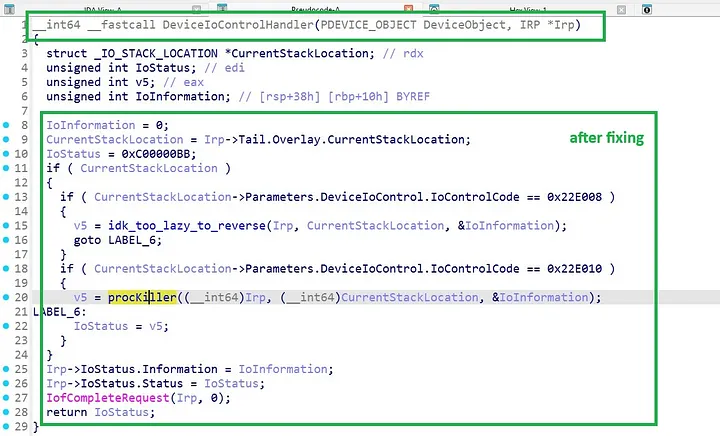
Reversed and Weaponized Microsoft-Signed Driver Used to Kill CrowdStrike EDR.
15+ variants of a kernel driver (PoisonX) used in BYOVD attacks against EDRs - all carrying valid Microsoft signatures, none blocked, revoked, or detected by any AV vendor.
Reverse engineering revealed a single IOCTL (0x22E010) that takes a PID as an ASCII string and calls ZwOpenProcess() + ZwTerminateProcess() against PPL-protected processes.
A post by Jehad Abudagga
Source: https://t.co/Jr9KT6lGW9
#redteam #blueteam #byovd #edr #windowssecurity
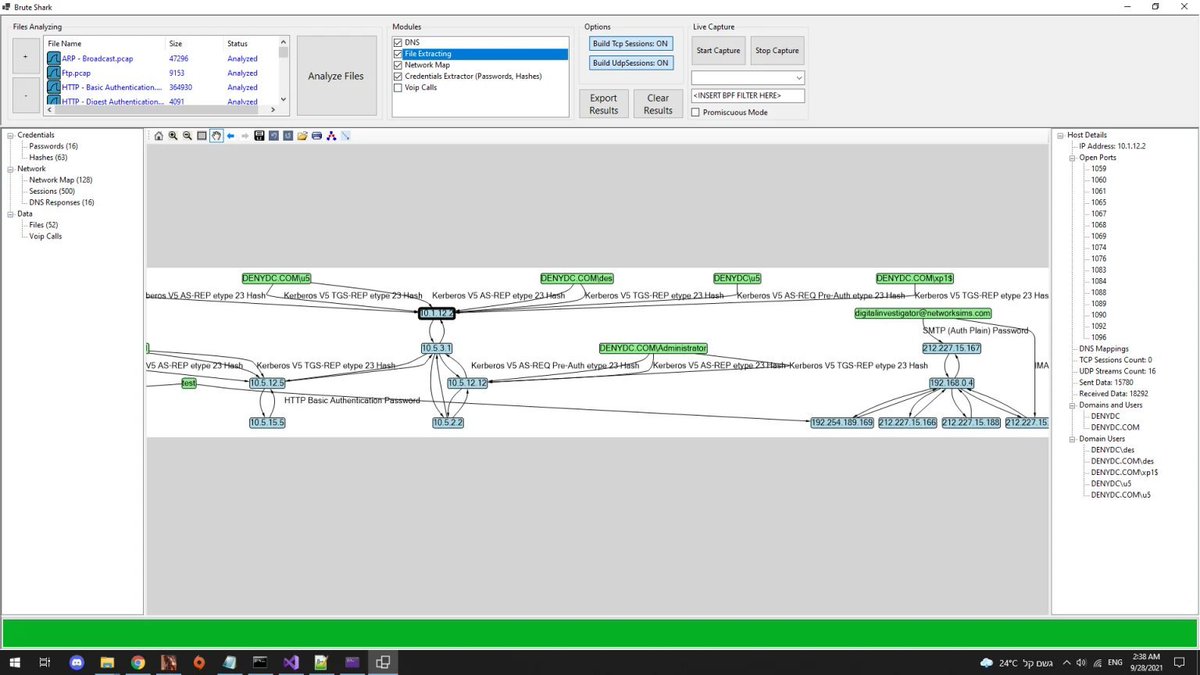
BruteShark
Extracting Files and Credentials from Network Traffic with BruteS
BruteShark can extract credentials and media from live network traffic and PCAPs. If you're stuck during a pentest, the network traffic may hold some secrets.
It saves VoIP calls and hashes in hashcat format. You can also build a map of hosts from the PCAP files
https://t.co/pgdlIjpi0n