🚨 Nearly three‑quarters plan to increase allocations, and 74% expect crypto prices to rise over the next 12 months.
💥 2026 survey of 351 institutional decision‑makers, there was a clear shift toward greater discipline, more robust governance, and access via regulated products. At the same time, respondents continue to believe in the long-term prospects for the asset class 💥
Ive been an $XRP holder for 10 years something I have come to understand
This isn’t a “Canton vs Ripple” narrative.
It never was.
You’re starting to see the same names show up in the same rooms for a reason
Ripple
Canton Network
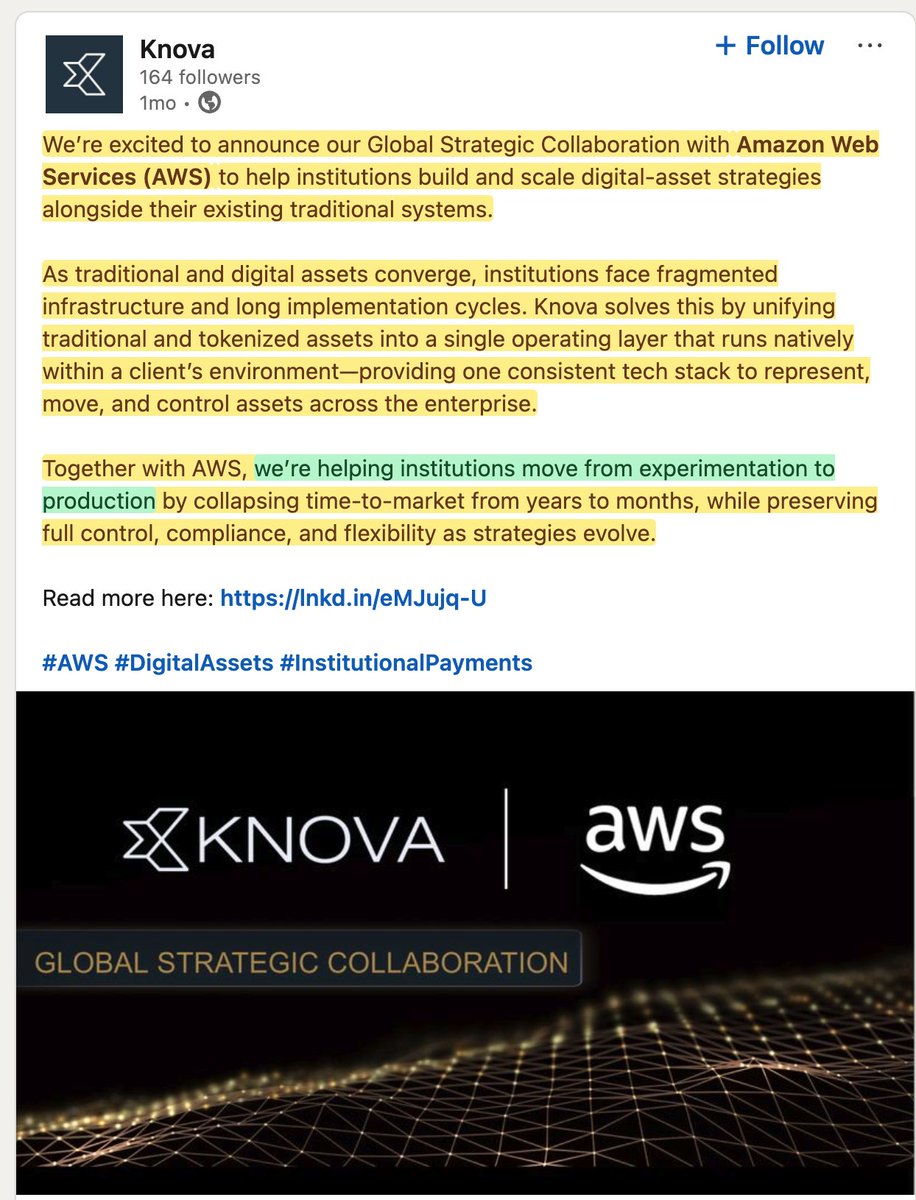
Amazon Web Services
Coinbase
Circle
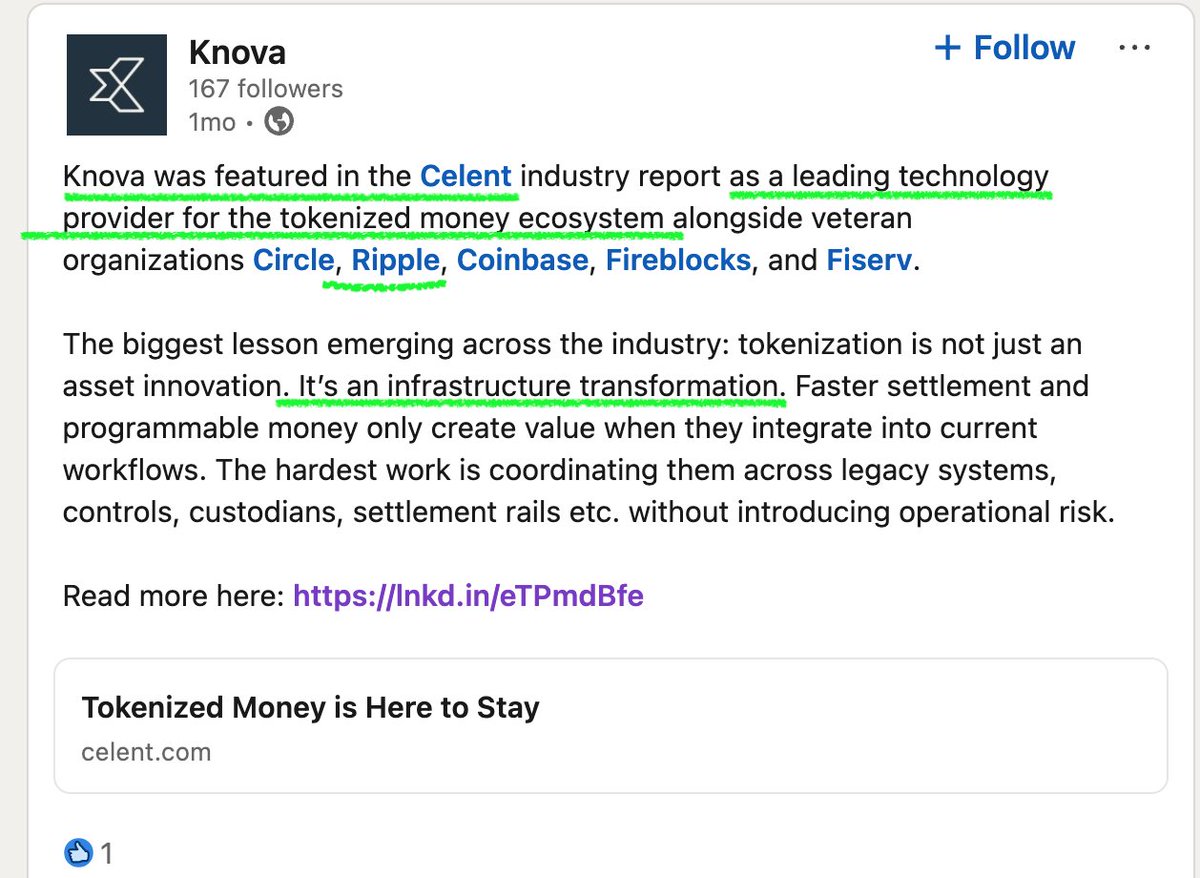
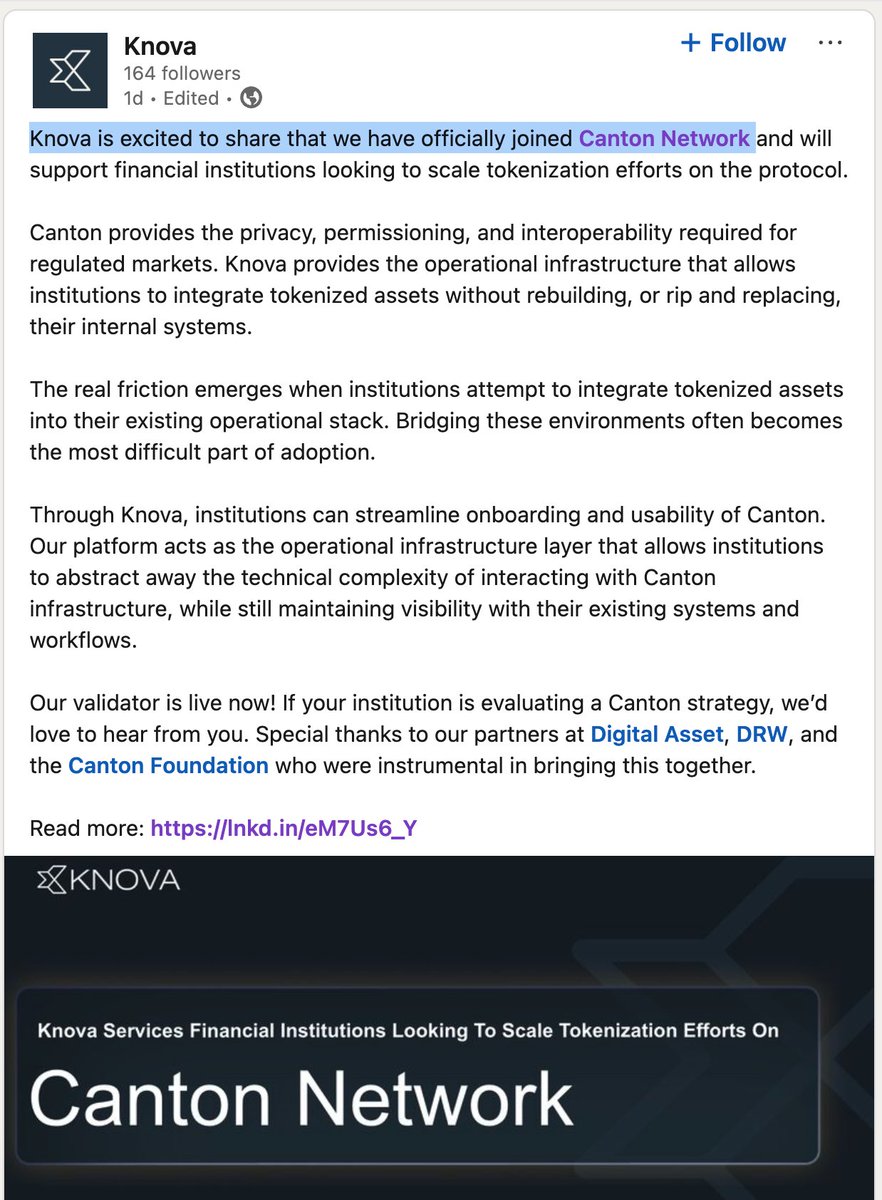
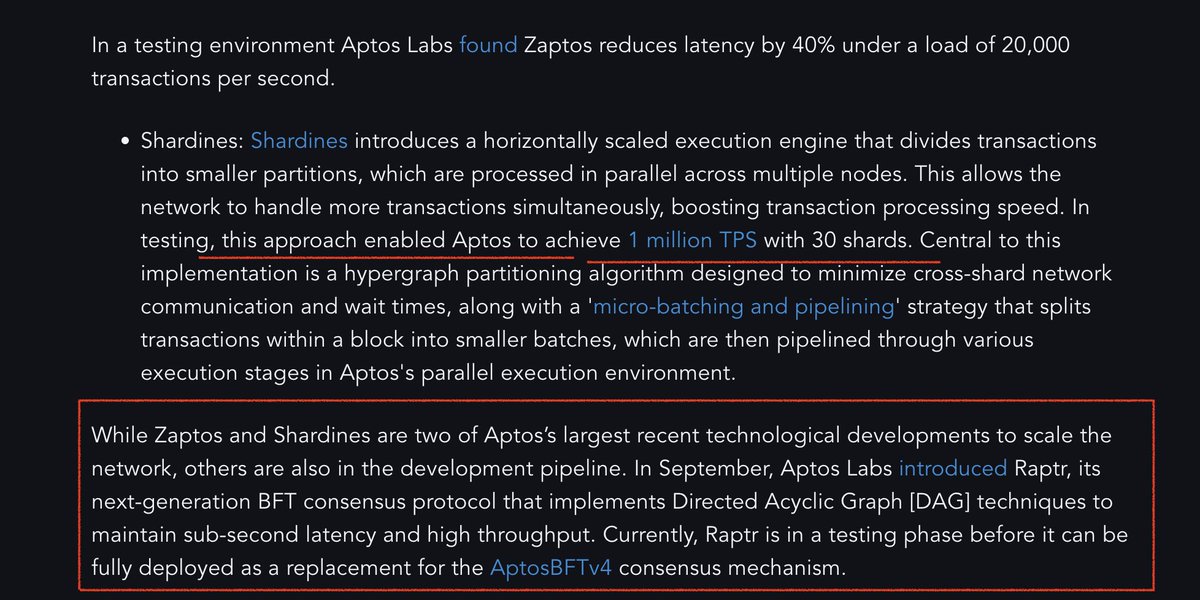
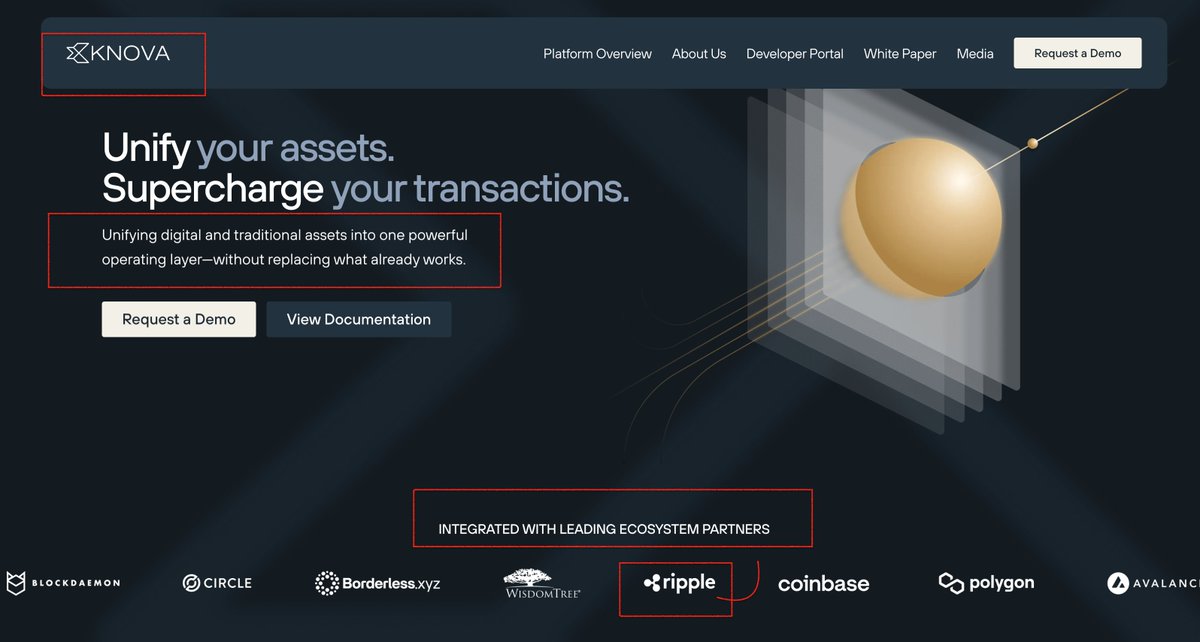
And now even platforms like Knova are integrating across ecosystems while joining Canton as a Validator.
That should tell you everything.
This space is not about ONE chain winning.
It’s about interoperability, infrastructure, and scale.
Canton is focused on
Privacy for institutions
Permissioned environments
Tokenized assets at scale
Ripple / XRP is focused on
Liquidity
Settlement
Cross-border flows
Those are complementary roles, not competing ones.
The real alpha?
Institutions don’t care about tribalism.
They care about systems that WORK together.
And when you see
Infrastructure layers like Knova bridging systems working with BOTH @Ripple & @CantonNetwork
…it’s clear the future is multi-network, interoperable finance.
If you’re emotionally attached to one ecosystem, you’re thinking like retail.
If you’re watching how these pieces connect,
you’re starting to think like an institution.
Follow the overlap.
That’s where the real money flows. $CC $XRP
🚨Very big news: the U.S. Treasury Department has officially sent the CARF regulations to the White House for review.
CARF, the Crypto Asset Reporting Framework, is a lengthy, international standard developed by the OECD. Nearly 90 countries have already signed on, agreeing to implement it. Full implementation begins in 2027, which is basically tomorrow in regulatory time.
The core idea of CARF is simple. Every participating country must require all crypto exchanges and service providers, what they call VASPs, Virtual Asset Service Providers, to collect detailed information about their users. That means full KYC, due-diligence data, tax residency, and your tax ID number.
At the end of each year, every exchange must report your activity to your home country.
So, if you’re a U.S. taxpayer using Binance, Kraken, Bybit, Bitstamp, OKX, any exchange operating inside a CARF country, that exchange will send your activity to the United States automatically.
CARF is basically the crypto version of the Common Reporting Standard (CRS), the banking-reporting law the rest of the world already uses to share bank balances. The U.S. didn’t join CRS, it created FATCA instead, but now, Treasury is proposing that the U.S. does join CARF.
Congress already hinted at this. The crypto regulatory bill that came out earlier this year also supported CARF implementation.
So what does this actually mean?
CARF requires the reporting of all transactions, not just sales, but exchanges and transfers. And, when it comes to transfers, CARF requires the reporting of either the to or from wallet address.
Here’s the punchline: The 1099-DA requirements already cover most of what CARF demands.
CARF is basically 1099-DAs coming from foreign exchanges.
But here’s the critical difference: 1099-DAs from U.S. companies go to you as the taxpayer.
CARF reports do not.
You will not get a copy of what a foreign exchange reports about you. It goes straight to the IRS, silently.
The IRS will plug all this data, domestic and foreign, into tools like Palantir and run matching algorithms to see who reported their crypto activity accurately… and who didn’t.
And the ones who didn’t? They’re getting audited.
This is extremely significant.
The era of hiding, ignoring, or “forgetting” to report is ending, and CARF is the global mechanism that makes sure of it.
Please share this to help spread awareness.
I appreciate the response, but it seems like you may have missed a key part of what I said. I’m not looking at this through a fiat lens quite the opposite.👀
I literally explained that I’ve been using my staking yield to accumulate scarce assets like gold since it was around $1,900, continuing all the way to $4,000 today. On top of that, I’m looping stablecoin yields into higher-yielding crypto positions, effectively turning protocol rewards into appreciating assets that outperform dollar debasement.
implying I’m looking at things through a fiat lens felt like you were correcting me, not engaging in a mutual discussion. Especially considering I literally explained that I use my staking yield to accumulate scarce assets like gold which is the exact opposite of a fiat lens.
what I am describing is simple 👉🏻 compounding scarce assets and leveraging yield strategically. The difference is I’ve structured it so the fiat component is just a vehicle, not the end goal.
So respectfully, I’m not arguing against your point I’m showing a real, functioning example of it in practice.
Also, the “I’m replying as a professional courtesy” line wasn’t necessary. This could’ve just been a respectful exchange between two people sharing different approaches and strategies. I wasn’t disagreeing with your core point.
I value intelligent discussion, and this topic is layered, so next time I encourage you to keep it in that spirit than let the tone make it seem combative when it doesn’t need to be because I am sure we will run into each other in person again.
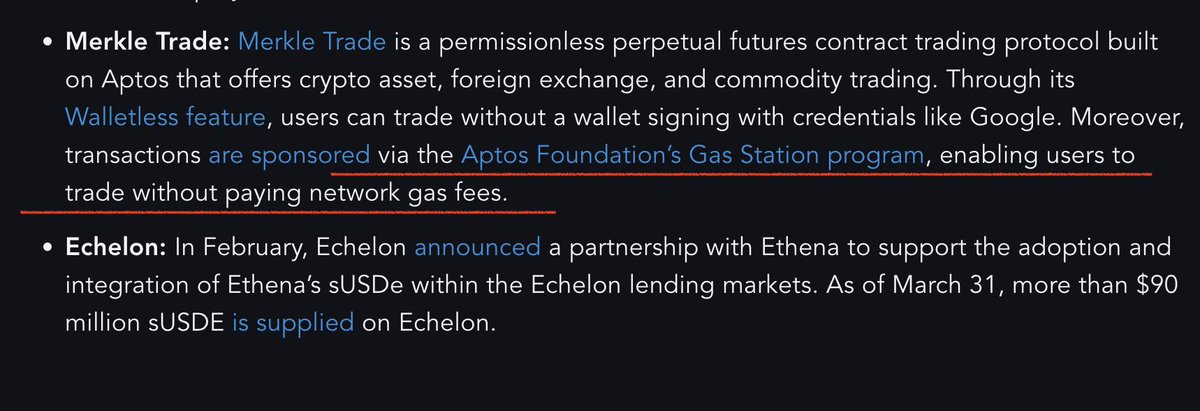
@Aptos what the bucket balls is this?issues affecting my ARCULUS wallets ability to sync, I’m not able to sell or trade my crypto?! When will this be resolved?
Now is not the time for fear 😰
They’re building a new digital infrastructure for a new financial world
And they tell you straight to your face 🔥💪🏽💎
Real research
When it matters most = Cyprx 🤝🏽
$XRP $HBAR $LINK $XLM $XDC
First they fight you…
“It’s all about the utility of $XRP ”
🔻 “$0.28 XRP? Ripple is getting sued. XRP is a scam. Don’t touch it.”
Now look around…
🔺 $2.28 XRP — Ripple is applying for a national bank charter from the OCC. Everyone’s hyped.
Funny how the narrative flips when it’s convenient.
Don’t forget all the voices that swore Ripple would never be like a bank. That XRP was useless. That it was finished.
Now? It’s clearly becoming part of the new financial system if the researchers didn’t already make it clear enough and yes, they will use $XRP
Stay ahead. Stay educated. Repost
And LOCK IN 🔒
Ripple and @OpenPayd are expanding access to fast, compliant cross-border payments. https://t.co/GyOc86rjFY
With Ripple Payments now supported by OpenPayd’s real-time EUR and GBP rails, and direct RLUSD minting and burning, enterprises can seamlessly move between fiat and stablecoins.
Explore the infrastructure behind real-world stablecoin utility.
You will see a lot more of this‼️
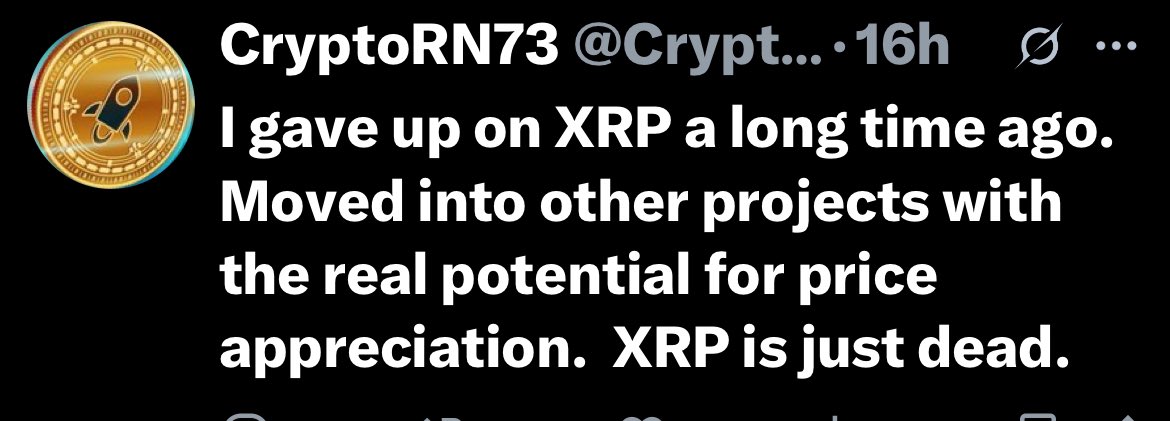
What you’re seeing in that post is the exhaustion phase of a long term psychological cycle.
Retail investors, especially in assets like XRP, have been through years of regulatory uncertainty, suppressed price action, endless promises of “imminent adoption,” and watching other tokens pump while XRP stagnates. The effect is cumulative. It wears people down.
This phase isn’t about fundamentals anymore, it’s about emotional fatigue. People sell not because they’ve done deep macro research, but because they’re tired of waiting. Tired of narratives. Tired of ridicule. It’s the capitulation mindset that always shows up before a system level shift.
Meanwhile, institutions are positioning quietly, building infrastructure, integrating interoperability layers, regulatory clarity is coming into focus, and wholesale rails are being finalized behind the scenes. XRP’s design liquidity provision, trustless bridge asset, regulatory compliance was never retail focused in the short term. It was always infrastructure level, meant to move value across borders when new payment systems go live.
The people walking away now are the same ones who; if XRP ever does become a backbone asset will later say, “I was in early… I just didn’t hold long enough.”
- Hold the line. 🫡
THIS SHOWS YOU EVERYTHING YOU NEED TO KNOW
Crypto illicit transactions in 2024 = $40-$50 billion
traditional finance illicit transactions in 2024 = $3.1 TRILLION
HAHAHA and crypto is SO BAD right ?
💥 #Crypto isn't just about buying and holding.
Whether you're new to crypto or a seasoned investor, our course covers #DeFi from beginner to advanced perspectives. Discover the possibilities of decentralized finance and how to make your crypto work for you! 💥
Limited spots available! $XRP $HBAR $XDC $VELO $TURBO $BRETT $XLM $ETH
Visit https://t.co/mZKkC0otpg
🚨Strategic XRP Reserve breakdown in value:🚨
Let’s presume there’s an XRP strategic reserve for the U.S., and presuming the same could happen to the other currencies within the IMF’s SDR architecture.
Ripple has escrowed 37.7B XRP.
We’ll presume the XRP is escrowed for the Fed, BoE, ECB, PBoC, and BoJ, like in the IMF’s SDR basket. All participants of RippleNet MUST hold an amount of XRP.
So we can presume the IMF would need some as well.
Based on the weighted amounts provided in the image, the 37.7 billion XRP would be allocated as follows:
•USD: 2,725,710,000 XRP
•EUR: 1,841,645,000 XRP
•CNY: 771,593,333 XRP
•JPY: 476,905,000 XRP
•GBP: 467,480,000 XRP
•IMF: 6,283,333,333 XRP
This assumes the IMF takes an equal share alongside the five major currencies in the SDR basket.
So now that we have a number of allocated XRP per jurisdiction let’s determine what the value of XRP would need to be to clear US debt.
This calculation does not include the other central banks, just the U.S. debt of $37T.
How much would XRP need to be to clear the U.S. debt, and do the same for the other central banks.
To clear the U.S. debt of $37 trillion using the allocated 2,725,710,000 XRP, the value of XRP would need to be approximately $13,574.44 per.