🚨 #XRPArmy — is your exchange actually backing $XRP or just listing it?
@BitrueOfficial has been the real one-stop home for $XRP holders since 2018:
✅ Spot + Futures + Earn + Crypto Loans
✅ Running their own XRP validator (actual network support)
✅ First movers on ecosystem plays like $RLUSD & $FLR
✅ They don’t just list it — they build with the $XRP Army
Hold $XRP? Time to move your bags here.
💰Complete KYC → Grab 100 USDT Spot Bonus + 6.8% APR on $XRP instantly
🎁https://t.co/dgIE9aB4FJ
How do you do that? By being obsessed with your mission.
An undervalued characteristic in entrepreneurship that most people don’t have. If you are a founder or builder, being obsessed with what you do is a necessity to make an impact and build great products.
Exactly. Ripple is already multichain, uses multiple networks because on XRPL there isn't any liquidity, options or many RWAs either way. Ripple Custody also uses Ethereum and Solana. Without real consumer and institutional use cases on XRPL with lots of volume and liquidity, nothing significant will happen.
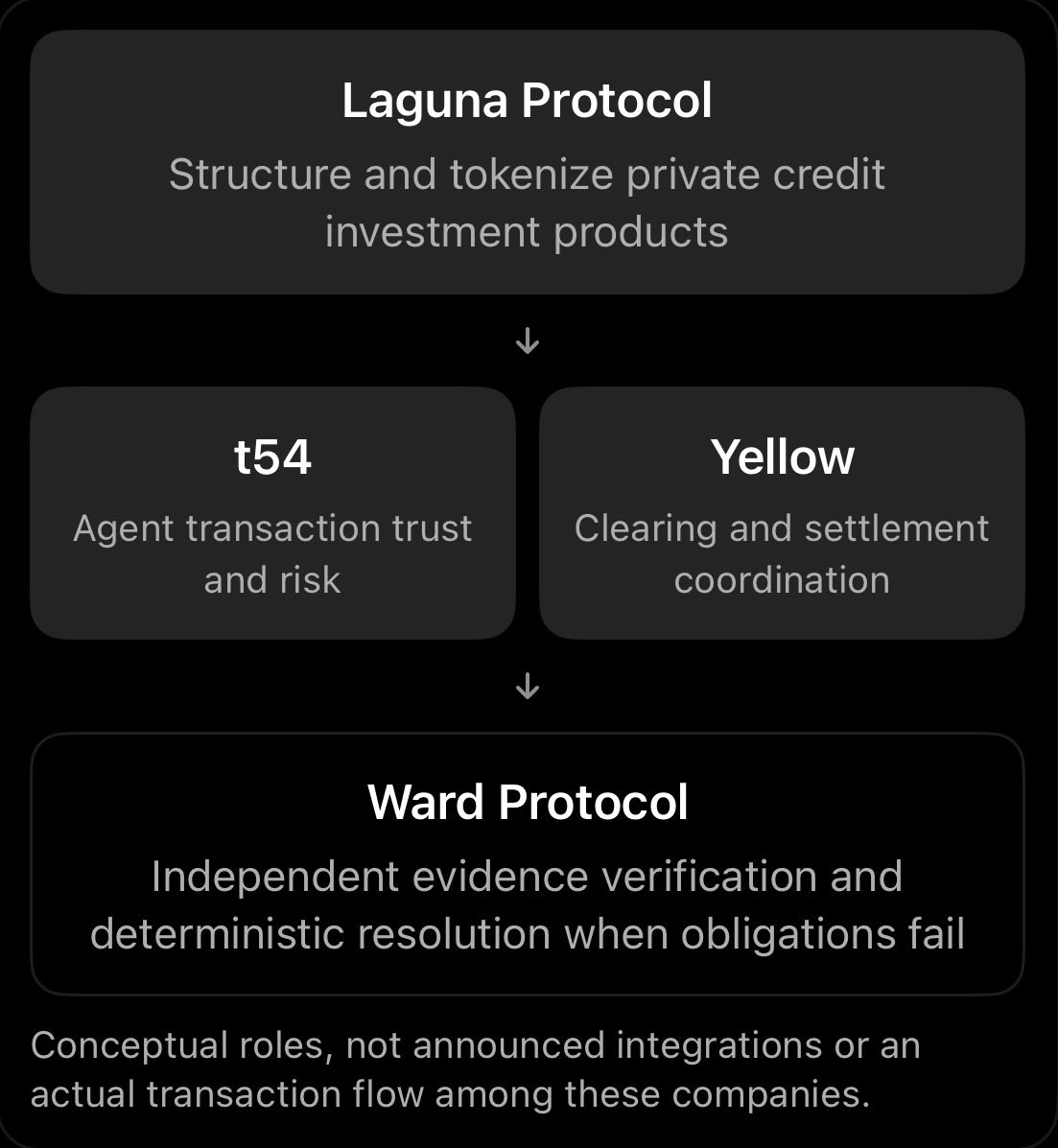
@Vet_X0 Settlement is step one. Credit follows — and default resolution needs to be ready when it does. That's Ward. https://t.co/dn1ZrfPp0e
Let's go! 🫡
@panosmek@Vet_X0 The infrastructure conversation is moving fast. What's still missing is a defined resolution layer when RLUSD lending defaults on-chain. That's what Ward Protocol is building — deterministic, no oracle, no judgment. https://t.co/dn1ZrfPp0e
@_JackMcDonald_@Mastercard Settlement is step one. Credit follows. Ward Protocol defines what happens when RLUSD lending defaults — nine deterministic checks, no oracle, no arbiter. https://t.co/dn1ZrfPp0e
Mastercard just announced stablecoin settlement on XRPL and Solana.
Settlement is step one. Credit is step two. Default resolution is the missing piece.
Ward Protocol defines exactly what happens when a borrower defaults in an on-chain lending vault — nine deterministic checks, no oracle, no human judgment.
The infrastructure is ready.
ward_signed = False — always.
https://t.co/SnoRK8Upwa
The Ward Protocol Discord is live.
If you're building on XLS-66, integrating default protection into a lending vault, or just want to understand how deterministic on-chain settlement works — this is the place.
🛡️ ward_signed = False — always.
https://t.co/bJyXAo0zYz
Programmable credit without deterministic default handling is just credit with extra steps.
You can define the payment intent perfectly.
You can gate execution.
You can attest cryptographically.
But if the ledger state at settlement is a defaulted vault — what happens?
That's not a cognition problem. That's a protocol problem.
The hardest rule in agentic finance:
AI may propose.
Protocols must decide.
Ledgers must enforce.
The moment cognition bleeds into enforcement, you’ve built a system that’s only as reliable as your model’s last good day.
XLS-66 defines how loans are created on XRPL.
It does not define what happens when they fail.
Every system building on XRPL lending will eventually hit this wall.
Undefined failure behavior isn’t an edge case.
At scale, it’s a systemic constraint.
The most dangerous assumption in any lending system is that defaults will be handled correctly when they occur.
The only safe assumption is that they will be handled exactly as the protocol specifies — and that specification must exist before the first loan.
A borrower who agrees to a Ward-governed vault is not conceding anything unusual.
They are agreeing to the same thing every secured lender has always required: that the collateral can be claimed if the obligation is not met.
Orderly default resolution is not a secondary concern in lending infrastructure.
It is the primary one. The entire value of collateralized lending rests on the assumption that enforcement will be fast, complete, and non-negotiable.