Did you know that it has been 100 years since the initial development of quantum mechanics?
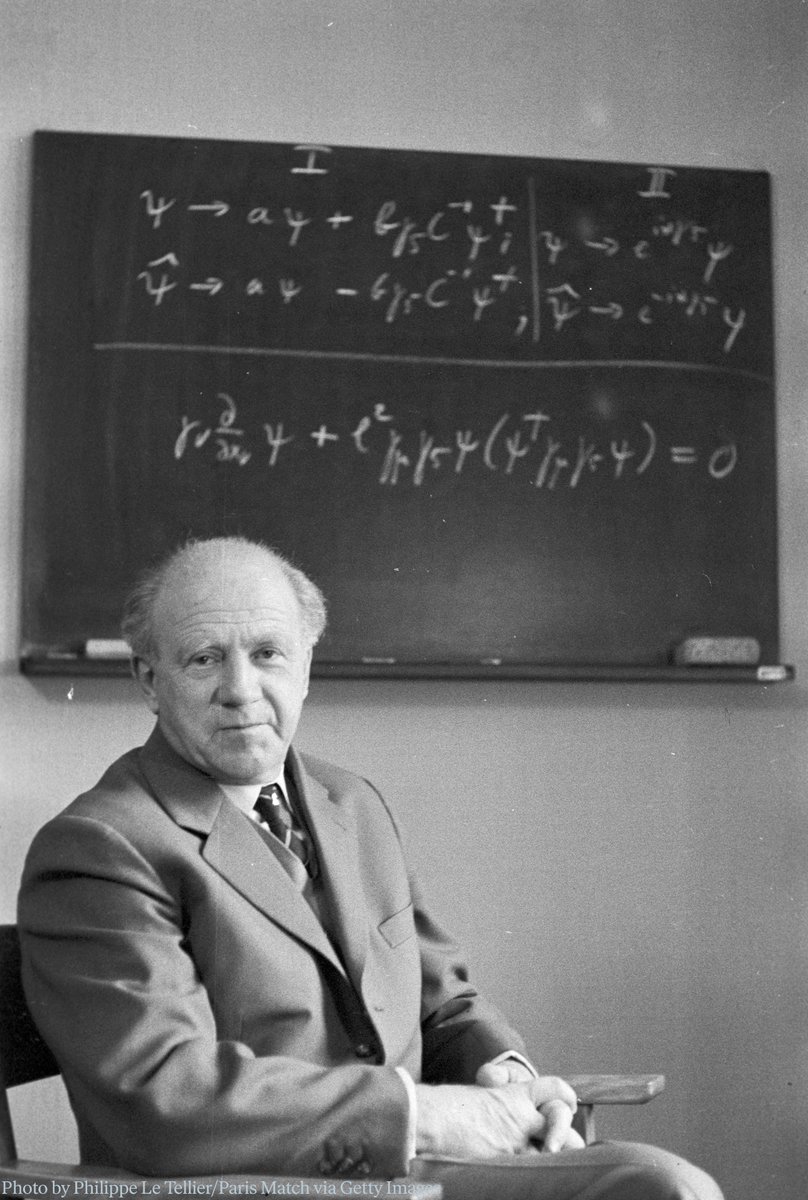
It began with physics laureate Werner Heisenberg who formulated a type of quantum mechanics based on matrices 100 years ago. Two years later in 1927 he proposed the “uncertainty relation”, setting limits for how precisely the position and velocity of a particle can be simultaneously determined.
Heisenberg’s quantum mechanics could be used for studying the properties of the spectra of atoms and molecules. It enabled a systemisation of spectra of atoms. It should also be mentioned that Heisenberg, when he applied his theory to molecules consisting of two similar atoms, found among other things that the hydrogen molecule must exist in two different forms which should appear in some given ratio to each other.
Heisenberg was awarded the Nobel Prize in Physics in 1932 “for the creation of quantum mechanics, the application of which has, inter alia, led to the discovery of the allotropic forms of hydrogen.”
#IYQ2025 #QuantumCurious
BREAKING NEWS
The Royal Swedish Academy of Sciences has decided to award the 2025 #NobelPrize in Chemistry to Susumu Kitagawa, Richard Robson and Omar M. Yaghi “for the development of metal–organic frameworks.”
BREAKING NEWS
The Royal Swedish Academy of Sciences has decided to award the 2025 #NobelPrize in Physics to John Clarke, Michel H. Devoret and John M. Martinis “for the discovery of macroscopic quantum mechanical tunnelling and energy quantisation in an electric circuit.”
BREAKING NEWS
The 2025 #NobelPrize in Physiology or Medicine has been awarded to Mary E. Brunkow, Fred Ramsdell and Shimon Sakaguchi “for their discoveries concerning peripheral immune tolerance.”
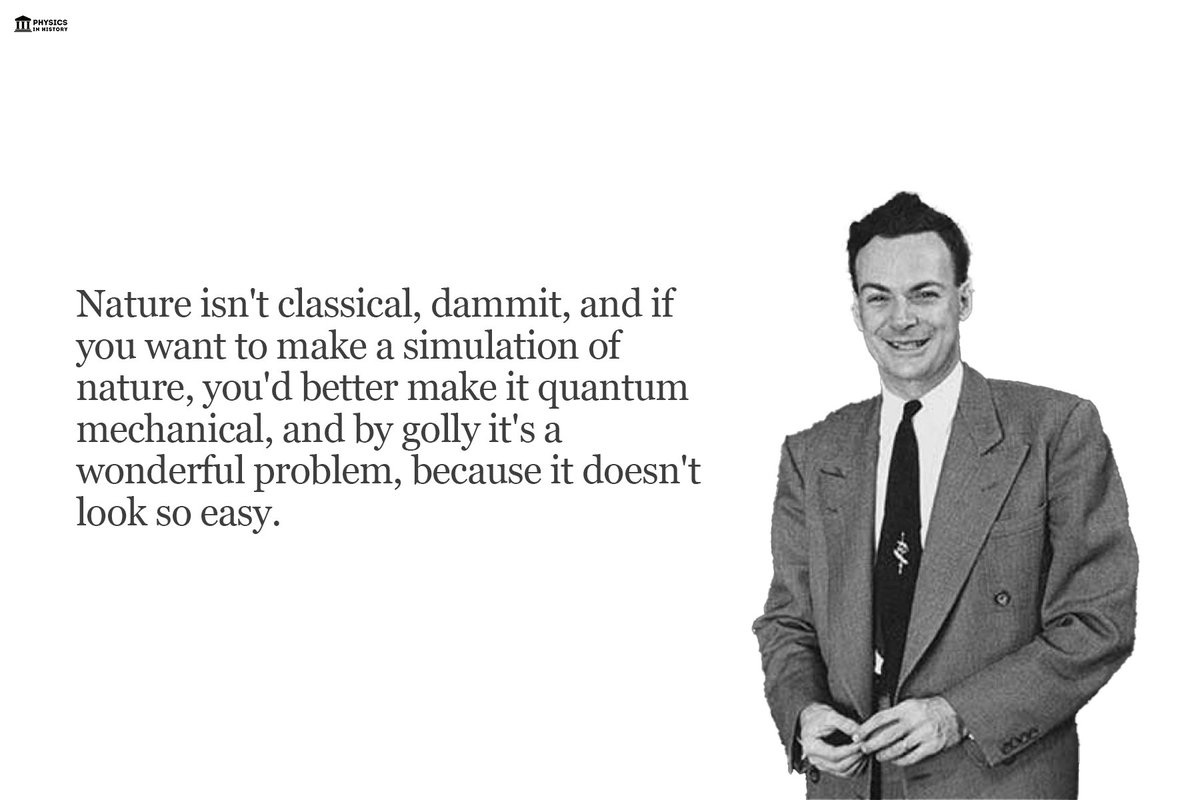
Richard Feynman was a brilliant physicist best known for his exceptional contributions to quantum mechanics and his captivating teaching style, among others.
Here are all of Feynman's Freely available Lectures at one place.
A Thread 🧵
We’re back with #AskAPhysicist🏃
If you’re keeping with the CERN news, you know that the #HeavyIon run started last week at the Large Hadron Collider.
In this episode, @ALICEexperiment physicists Chiara Pinto, Ananya Rai and Tulika Tripathy tell us more about the quark-gluon plasma and the purpose of studying heavy-ion collisions.
Stay tuned for part two! 👀
Find out more: https://t.co/lbdqBZXiqb
“It’s absolutely extraordinary.”
John Jumper just heard the news of his 2024 #NobelPrize in Chemistry when we spoke to him. His plan was to sleep in today - it didn’t quite work out.
He talks about AI's role in science – and being the youngest chemistry laureate in over 70 years.
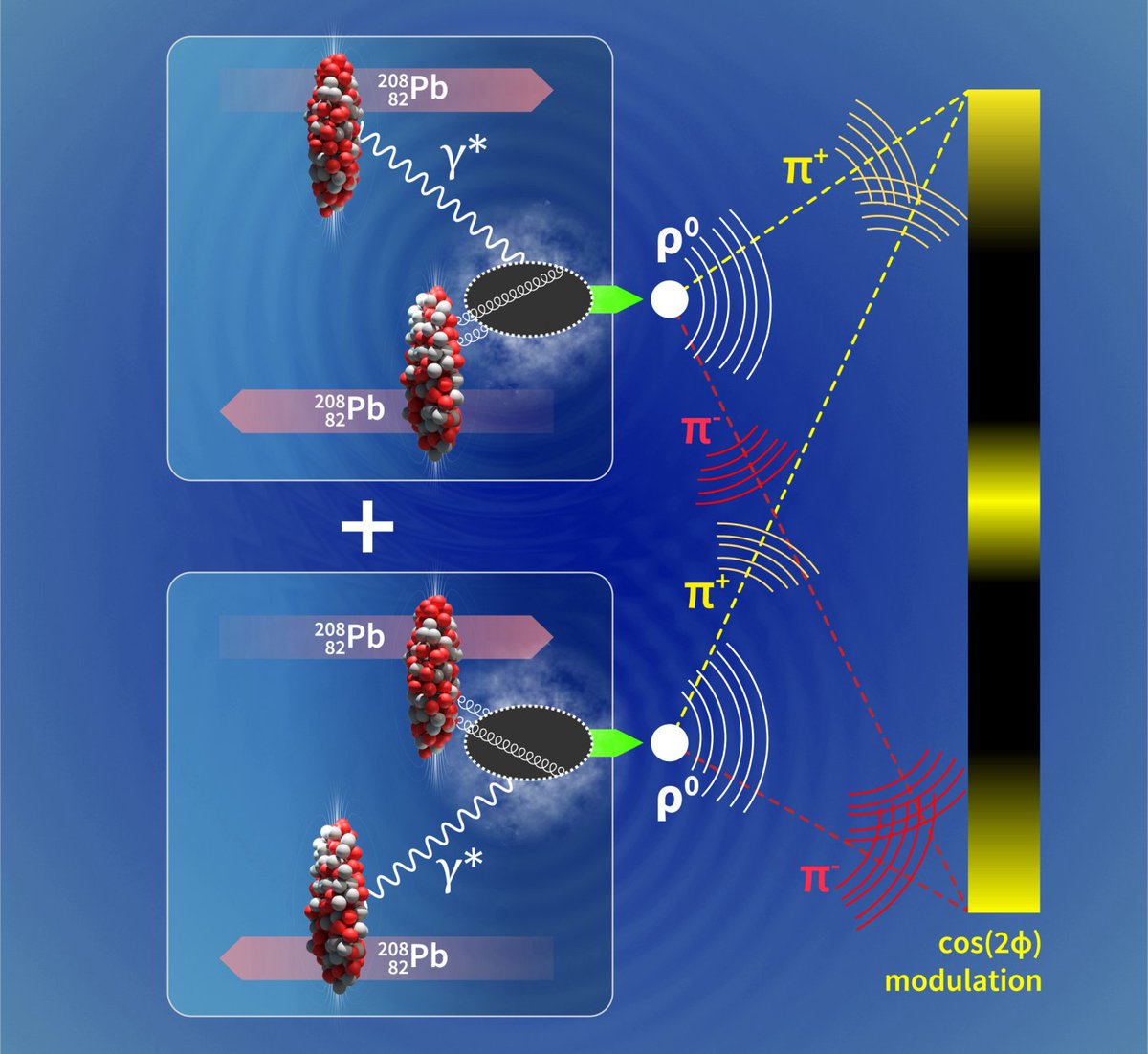
ALICE does the double-slit
Using collisions between lead nuclei at the #LHC, the @ALICEexperiment has measured an interference pattern akin to that of the famous double-slit experiment.
Find out more: https://t.co/T0qxkrWhYm
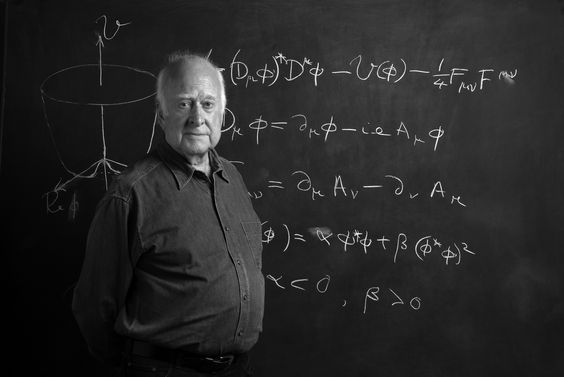
Peter Higgs would turn 95 today. He passed away last month this year due to a short illness. In the early 1960s, Higgs and several other physicists independently proposed a mechanism to explain how particles acquire mass. This mechanism, now known as the Higgs mechanism, involves a field—later named the Higgs field—that permeates all of space. According to the theory, particles acquire mass through their interaction with this field. The Higgs boson is the quantum manifestation of this field. Higgs's groundbreaking work was initially met with skepticism, but it gained traction as the Standard Model of particle physics developed. The search for the Higgs boson became one of the primary goals of high-energy physics experiments. The existence of the Higgs boson was finally confirmed on July 4, 2012, by the ATLAS and CMS experiments at the Large Hadron Collider (LHC) at CERN in Switzerland. This discovery provided crucial evidence for the Higgs mechanism and validated a fundamental component of the Standard Model.
Mathematics. Symmetry. Beauty. Welcome to a Polyhedral Paradise.
"Modified Great Rhombicosidodecahedron."
By RobertLovesPi, https://t.co/mQiaNWnMNT, Source: https://t.co/5FbP0pcSu6, created with https://t.co/ie8DyTFLKs.