The last time I posted was around 5 years ago, as a pediatric dentist coordinating COVID relief in the heat of the chaos, while just entering my research journey into the fascinating world of human molecular genetics and cancer.
Since then, this platform, this world, and I have all undergone a fundamental metamorphosis. It is time for a reintroduction. (1/8)
@sambit_dash@MAHE_Manipal I was there :D 'Unruly actions ' is an understatement. Will never forget that night though. The chaos began when the MIT kids showed up with dhols.
@theliverdoc I vaguely remember an Indian anatomy textbook's introduction on the chapter on nose stating that the nose is important because 'a great mythological war began due to the cutting of nose'
For those clinicians who think moving to a research lab will help you move away from a toxic work environment, trust me when I say it is a 1000 times worse out there.
The clinics at least teach you basic human empathy.
Translational medicine research that focuses on publications, patents and the next big biotech startup idea goes nowhere without a basic understanding of empathetic patient care. Laurels are either pointless or will not be achieved with the wrong mindset.
Indian research bodies are wasting precious resources funding cancer research led by PIs whose only contact with any cancer patient is through said patient's cell on a petri dish.
PhD Advisor Red Flag No.2: An unhappy married life. Most of these faculty members are going through a mid life crisis, and running after students half their age. Sexual predators are barely ever punished by Indian universities.
Scarcity mindset is one the biggest red flags to watch out for when choosing a PhD Advisor.
Worst indicator of this is their h-index.
Best indicator: they have surrounded themselves with mediocre students who will say 'yes' to everything.
ALWAYS meet their previous students.
Currently, the only plausible way I can think of AI causing unemployment in precision surgical and dental fields is by causing mass unemployment in other fields. We cannot work if our patients cannot pay us.
Some of the best and most outstanding clinicians and doctors I know, have not published a single paper.
They listened, were always available, and provided exceptional care.
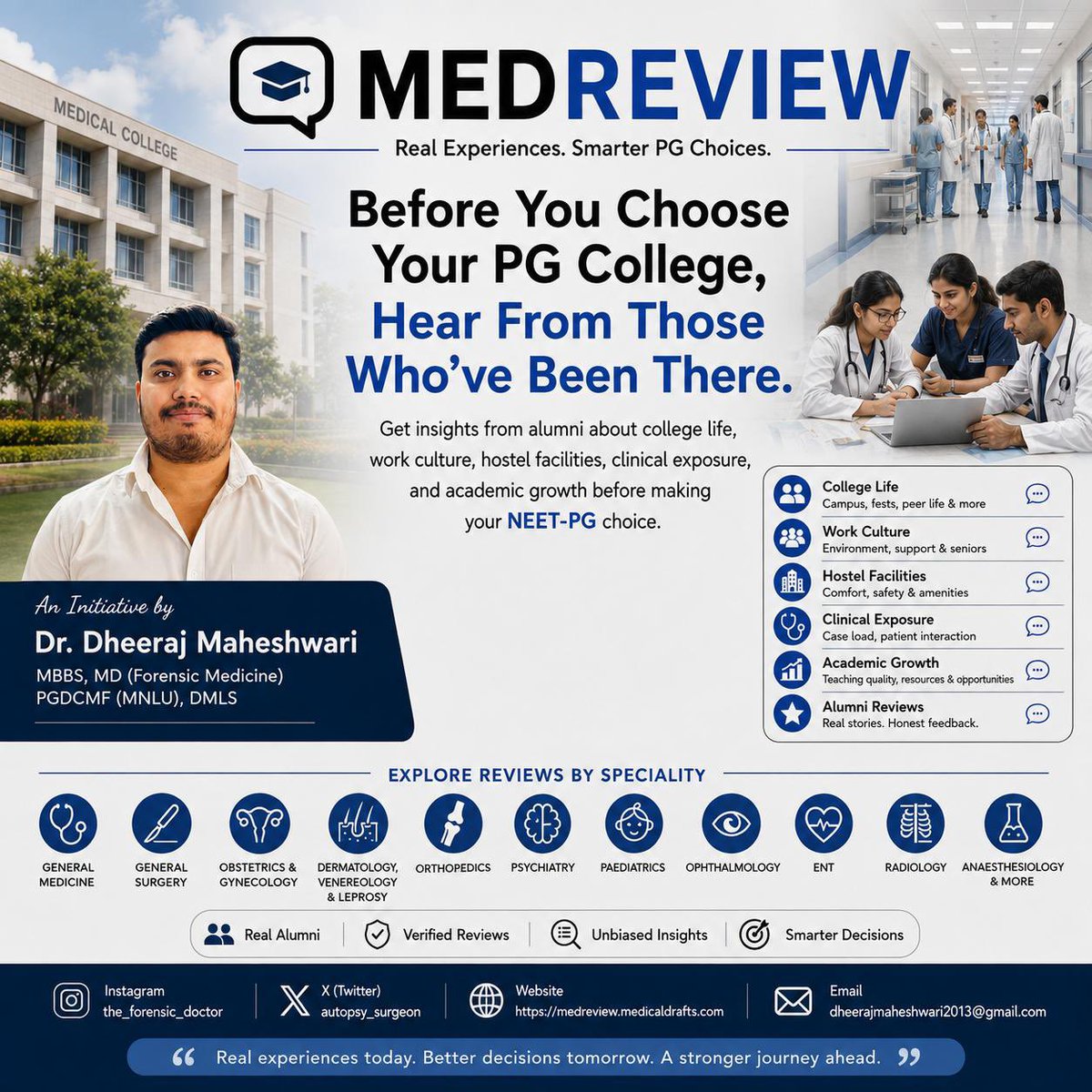
One honest review today could potentially save someone from years of regret tomorrow. Comment “NEET-PG” to get the details.
Tap here to fill the review: https://t.co/WQTMHvac3q
Excellent points. A patient's Frankl Rating is far more useful in longitudinal, than cross sectional frameworks. As you see more patients, you quickly realised that the score for many patients is as fickle as the day's weather.
The Frankl Behavior Rating Scale in Pediatric Dentistry: Useful Shorthand, Dangerous Shortcut
The Frankl Behavior Rating Scale has endured for more than 60 years because it solves a real clinical problem. In seconds, it communicates how a child behaved during a visit. But the score is only a snapshot, not the whole story.
A Frankl rating records observable behavior, not the reason behind it. Fear, pain, communication, developmental stage, sensory differences, treatment complexity, and trust all shape how a child responds. The same child may be Frankl 4 for an exam and Frankl 1 during local anesthesia.
The biggest mistake is letting the score replace clinical judgment. Experienced pediatric dentists don’t make decisions based on Frankl alone. They combine it with the child’s age, development, medical history, previous dental experiences, treatment needs, family dynamics, and their own capabilities.
The 2024 American Academy of Pediatric Dentistry guideline reflects this shift. Behavior guidance is no longer about gaining compliance. It is about building trust, reducing anxiety, controlling pain, and helping children develop positive lifelong relationships with dental care.
A better chart note doesn’t just record “Frankl 2.” It explains what triggered distress, what behavior guidance techniques were tried, what worked, and what should happen next.
The Frankl scale is an excellent headline. It should never be the entire story.
Would your treatment plan change if the Frankl score disappeared from the chart?
@Ashashmiii Presented a seminar on this during my PhD on cancer genetics at the Dept of Medical Genetics. Extremely interesting intersection of both my fields of study.
𝗕𝗲𝘆𝗼𝗻𝗱 𝗣𝗿𝗲𝘃𝗲𝗻𝘁𝗶𝗼𝗻 𝗮𝗻𝗱 𝗣𝘂𝗯𝗹𝗶𝗰 𝗛𝗲𝗮𝗹𝘁𝗵: 𝗧𝗵𝗲 𝗔𝗱𝘃𝗮𝗻𝗰𝗲𝗱 𝗦𝘂𝗿𝗴𝗶𝗰𝗮𝗹 𝗦𝗰𝗼𝗽𝗲 𝗼𝗳 𝗣𝗲𝗱𝗶𝗮𝘁𝗿𝗶𝗰 𝗗𝗲𝗻𝘁𝗶𝘀𝘁𝗿𝘆
While public health education and preventive care (such as flossing, brushing, fluoride treatments, routine cleanings, SDF, etc.) are fundamental pillars of pediatric dentistry, the field extends far beyond them to include complex, invasive oral and maxillofacial surgical procedures, among a plethora of other specialized procedures. 𝑵𝒐 𝒐𝒕𝒉𝒆𝒓 𝒇𝒊𝒆𝒍𝒅 𝒊𝒔 𝒄𝒐𝒎𝒑𝒂𝒓𝒂𝒃𝒍𝒆!
As shown in the video, pediatric dentists and oral surgeons frequently manage severe anatomical pathologies, trauma, and developmental abnormalities using advanced surgical techniques. Here is an expansion on how pediatric dentistry is a true surgical specialty:
1. 𝐒𝐮𝐫𝐠𝐢𝐜𝐚𝐥 𝐌𝐚𝐧𝐚𝐠𝐞𝐦𝐞𝐧𝐭 𝐨𝐟 𝐎𝐝𝐨𝐧𝐭𝐨𝐠𝐞𝐧𝐢𝐜 & 𝐍𝐨𝐧-𝐎𝐝𝐨𝐧𝐭𝐨𝐠𝐞𝐧𝐢𝐜 𝐋𝐞𝐬𝐢𝐨𝐧𝐬: In the video, a surgical intervention is shown to expose, enucleate, or excise pathologic tissue or impacted tooth structures embedded within the mandibular bone in a child.
-Lesion Enucleation and Cyst Curettage: Children may develop odontogenic cysts (e.g., dentigerous cysts, odontogenic keratocysts) or benign tumors (e.g., odontomas) in the jawbones. Surgical intervention is required to enucleate the lesion while preserving surrounding structures, bone density, and adjacent permanent tooth buds.
-Complex Tooth Extractions & Exposure: Impacted, supernumerary (extra), or severely decayed teeth often require full-flap reflection, bone removal with rotary handpieces, and sectioning of the tooth structure for removal—far beyond standard noninvasive dental care.
2. 𝐒𝐩𝐞𝐜𝐢𝐚𝐥𝐢𝐳𝐞𝐝 𝐒𝐮𝐫𝐠𝐢𝐜𝐚𝐥 𝐃𝐢𝐬𝐜𝐢𝐩𝐥𝐢𝐧𝐞𝐬 𝐢𝐧 𝐏𝐞𝐝𝐢𝐚𝐭𝐫𝐢𝐜 𝐃𝐞𝐧𝐭𝐢𝐬𝐭𝐫𝐲
Pediatric surgical care encompasses several high-stakes, specialized procedures:
-Maxillofacial Trauma Management: Facial injuries in children from sports, accidents, or falls can result in jaw fractures (mandibular or maxillary) and dentoalveolar trauma (avulsed, intruded, or fractured teeth). Pediatric dentists and oral surgeons stabilize fractures, place splints, and perform soft-tissue repair.
-Cleft Lip and Palate / Craniofacial Anomalies: Pediatric dental specialists work as part of multidisciplinary surgical teams to manage congenital anomalies. This includes pre-surgical infant orthopedics (NAM), alveolar cleft bone grafting, and surgical orthognathic alignment as the child grows.
-Soft Tissue Procedures (Frenectomies, Mucocele, & Biopsies): Laser or scalpel-based surgical corrections of ankyloglossia (tongue-tie) or severe labial frenulums are routine minor procedures that prevent speech and feeding impairments.
3. 𝐏𝐞𝐝𝐢𝐚𝐭𝐫𝐢𝐜 𝐒𝐮𝐫𝐠𝐢𝐜𝐚𝐥 𝐍𝐮𝐚𝐧𝐜𝐞𝐬 & 𝐎𝐩𝐞𝐫𝐚𝐭𝐢𝐧𝐠 𝐑𝐨𝐨𝐦 𝐃𝐞𝐧𝐭𝐢𝐬𝐭𝐫𝐲
Surgery on pediatric patients involves unique technical and physiological considerations that differ significantly from those in adult surgery:
-Growth and Development Preservation: Surgeons must navigate around unerupted tooth buds, soft bone structures, and active growth centers (such as the mandibular condyles) to avoid disrupting normal facial development.
-General Anesthesia & Sedation: Due to patient age, fear, or the extensive scope of the surgery (as in open-flap bone procedures), pediatric oral surgeries are often performed under behavioral management strategies, nitrous-oxide sedation, oral and/or intravenous (IV) deep sedation or general anesthesia in hospital operating rooms.
-Hemostasis and Airway Control: The pediatric oral cavity presents a small, high-risk surgical field. Precise suctioning, retraction, and topical and systemic hemostatic control are critical to maintain clarity of the surgical field and protect the pediatric airway.
𝐓𝐚𝐤𝐞-𝐡𝐨𝐦𝐞 𝐦𝐞𝐬𝐬𝐚𝐠𝐞
Preventive public health measures reduce disease incidence, but pediatric dentistry ultimately spans the entire spectrum of medical care. When disease, structural impaction, or physical trauma occurs, pediatric dentistry serves as a precise surgical discipline essential to restoring form, function, and normal facial growth.
If you are considering donating for #assam flood relief and are unsure if the organisation is legitimate, please DM me, and I will do the research on the ground.
As parents and teachers increasingly find it hard to reconcile with the beliefs and actions of their wards, especially in politics and the workspace, I am reminded of these timeless words from Kahlil Gibran
If you are 15yr old student in India, contemplating medicine as your career, there are a few things to consider -
1. Why do you want to be a doctor?
2. What is your track record for sustained study to the exclusion of "normal life" ?
3. What are your financial aims in life ?
4. Is at least one of your parents a practicing doctor ?
I will elaborate each in the following discussion -
1. Why be a doctor - only reason should be " कामये दुःखतप्तानां प्राणिनाम् आर्तिनाशनम् l " ( i desire destruction of affliction of the ones in pain/suffering )
This may appear lofty but this is a moment-to-moment reward of practice of medicine. And this is the only thing that sustains you over 4-5 decades of work.
2. Your track record for sustained study -
You need 2-3 years of preparation for medical entrance exam
Another 5.5yr for MBBS
Additional 3 for MD
And beyond that 2-5 years of superspecialization if you choose.
All these years daily you need at least 10-12 hr of classroom / lab / ward time and self study. Gets a lot worse in 3 years of MD/MS residency.
If you look forward to this cognitive, physical and emotional challenge then medicine is meant for you.
3. Financial Aim - by the time you enter practice (12 years from now) - medicine is going to be very different from what it looks now. Earnings of most doctors will slip from being in top 3% earners to being in top 10-15% earners and falling.
And that brings us to the last point - your family
4. If your parents are in medical profession, you will have a head start in almost all areas over those who dont. But it ends there. In the new world with oversupply of doctors, parents reputation can not hide your shortcomings. If they help you set up and run a hospital where other doctors work for you, then it is a good run.
So think carefully before you stake your life. Mid life change of career is impossible. Especially for a male doctor.
Your parents, teachers, society are enamoured by bygone days of prestige, honour and money in medicine. Your future is different. Think for your self. Fulfilling others' dream always ends up bad.
It is a nobel profession. Joy comes in small and large packages everyday.
Poverty line will be far below you. So life will be good if you know how to really live it.
So think well and take the plunge. Then it is all worth it.
I am a practicing postgraduate doctor since 27 years and i love my work and its rewards. I would do this again if i get a second chance.
But thats me. You must decide for yourself. Good luck.
DocBhooshan
Stop pouring money into schemes that attempt to bring back Indian origin scientists from US/Western labs.
Devote resources to nurture talent that has survived and thrived in the often brutal Indian science ecosystem through sheer talent and grit, minus the right opportunities.
The greater irony lies in the fact that even after clearing NEET, NEET-PG, NEET-SS, NEET-MDS and whatever else the Indian system throws at you, the greatest aspiration for the Indian doctor is to leave India.
#NEETProtests