It's often said the church today faces the unprecedented task of re-discipling a post-Christian civilization.
Whatever the truth of that characterization of the West, the task isn't entirely unprecedented. Judah faced the same challenge.
Under the kings of Israel, the north was re-Canaanitized. They worshiped Baals and Asherahs.
Late in Judah's history, Hezekiah and Josiah launched partially-successful campaigns of de-Canaanitization. Reforming kings were effective, but only temporarily.
The fuller restoration came later, when the returned exiles rebuild the temple and city and, under Ezra, re-establish torah as the community rule.
Re-Christianization will come, but only after the death of exile.
The CRA certainly played a role in rising criminality starting in the 1960s. But the welfare state (LBJ’s Great Society/war on poverty) arose at the same time and also played a role in increasing criminality. Statist welfare creates a sense of entitlement. It subsidizes all the worst features of human fallenness. If you’re going steal people’s stuff via the vote, why not skip the voting part and just take just what you want when you want it?
The same mentality drove the sexual revolution. Economic and sexual libertininsm, socialism and sexual perversion, are driven by the same mentality: taking what isn’t yours. In the book of Proverbs, theft and adultery are related sins. Gang violence (Proverbs 1) and sexual license (Proverbs 7) are linked. Both are perversions of the creation mandate, which calls on man to be fruitful and multiply (= to engage in family formation) and to rule the earth (= to engage in productive labor). Social policy and economic policy are inextricably intertwined.
As Thomas Sowell has pointed out, the welfare state did what Jim Crow and segregation could not: destroy the black family. The state systematically demolished black patriarchy (and now it’s doing the same with white patriarchy). No society can prosper without fathers and when the state uses policy to subvert fatherhood, the results are always predictable.
Satan takes Jesus to a high mountain and offers Him all the kingdoms of the earth (Matt 4). Jesus refuses.
Jesus ascends to a high mountain and is transfigured as Son of Man, heir of all kingdoms of the earth (Matt 17).
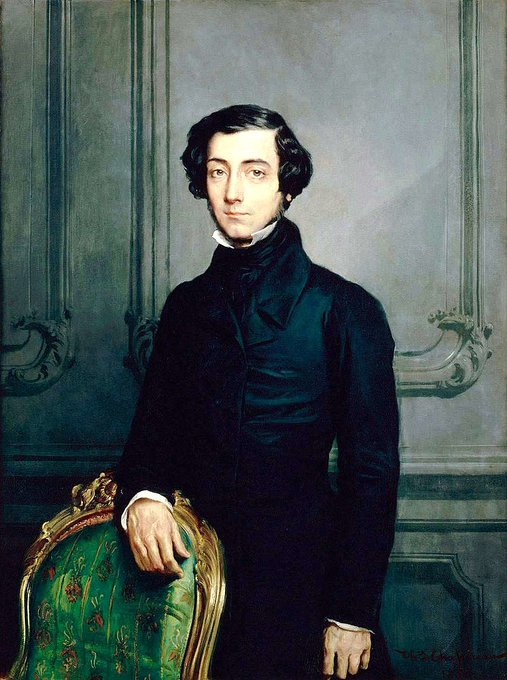
"I studied the Koran a great deal. I came away from that study with the conviction that by and large, there have been few religions in the world as deadly to men as that of Muhammad."
— Alexis de Tocqueville
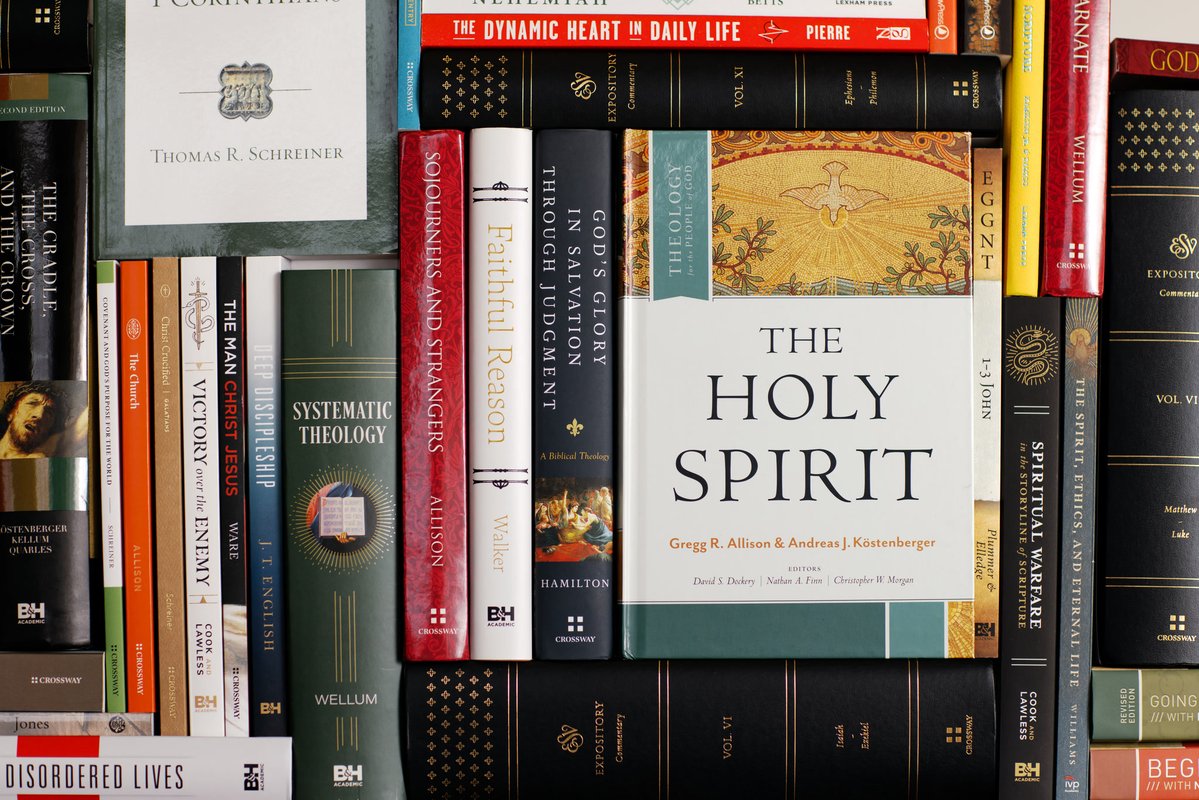
102 books. One winner. Over $2,000 worth of theology written by Southern Seminary faculty.
Commentaries. Theology. Biblical studies. Ministry. Church history. Counseling. Preaching. Ethics. Christian living.
This is the kind of library pastors spend years building. Now we’re giving it away to one person. Learn from the faculty shaping churches, classrooms, and pulpits around the world.
In partnership with @Logos , we’re giving away a theological library filled with trusted resources for ministry and Christian scholarship.
To enter:
• Mark sure you are following @SBTS
• Repost this post
• Fill out this form: https://t.co/9rNiNcv5eE
Open to U.S. residents only. Winner will be chosen and contacted Friday, June 5.
“I sought for the greatness and genius of America in her commodious harbors and her ample rivers, and it was not there; in her fertile fields and boundless prairies, and it was not there; in her rich mines and her vast world commerce, and it was not there. Not until I went to the churches of America and heard her pulpits aflame with righteousness did I understand the secret of her genius and power. America is great because she is good and if America ever ceases to be good, America will cease to be great.”
-- Alexis de Tocqueville
Tocqueville understood that America, despite not having an officially established national church, was an ecclesiocentric nation, shaped more deeply by her pulpits than any other cultural force. If America is going to be made great again, it will be through the reformation and restoration of her churches first and foremost. Goodness is the key to greatness, and goodness comes from the gospel. There can be no great nation without great churches, great pastors, and great preaching. America will not rise above the level of her churches.
--
“We the People of the United States, in Order to form a more perfect Union, establish Justice, insure domestic Tranquility, provide for the common defence, promote the general Welfare, and secure the Blessings of Liberty to ourselves and our Posterity…”
The reference to “posterity” in the preamble to the Constitution makes abortion unconstitutional. The Constitution extends its benefits to posterity, which obviously includes the unborn.
Liberals bet that nominally Christian values would survive in a secular society.
They made the mistake because they believed those values are universal.
They are, but they’re not broadly accepted and practiced without Christianity.
Ironically, secularism depends on them to work.
That’s why secularism is dead and Christians shouldn’t feel any need to hold up the old order.
It’s hard to locate Theopolis on a map of contemporary Christianity.
We’re unabashed Protestants, but Protestants with profound appreciation for the pre-Protestant Christianity of the patristic and medieval age. We’re Protestants who think that Protestantism needs to be ready to die for the church.
We’re Reformed, but critically so. We complain that Reformed churches have neglected liturgy, thinned out the Scriptures, idolized intellect, and flirted with Gnosticism. Some Reformed folks regard us as marginal, edgy if not wholly outside.
We’re sort of Lutheran, but we have Reformed convictions about predestination and the real presence. We resemble Anglicans, but we’re too regulative-principled to feel entirely at home with the Anglican ethos.
We’re liturgical, but not “high church.” We’re serious about theology, but think all theology should be pastoral. We’re devoted to the Bible, but find much biblical scholarship stultifying. We’re too theocratic for the Religious Right.
We’re catholic, but too catholic to be Roman Catholic. We love Alexander Schmemann, but believe that icon veneration violates the Second Word. We admire the zeal of Baptists and charismatics, but we baptize babies and don’t speak in tongues.
We’re “old” catholics – catholics as they were before the ascendancy of the papacy and the emergence of transubstantiation and Marian devotion. We’d be most at home in a future church that doesn’t yet exist.
We’re gratefully appreciative of everyone. But we’re also gently or severely critical of nearly everyone and don’t make a neat match with anyone. Maybe this represents undisciplined eclecticism. I like to think it’s generous, catholic orthodoxy.
Whatever it is, it creates practical problems for Theopolis. It’s hard to develop an “elevator pitch.” We have no natural constituency. To put it crassly, we’re not producing goods for an existing market. We’ve got to create the market.
I’m convinced the practical challenges are worth it. I can’t say this without sounding pretentious, but I’ll risk it: Theopolis serves the church of the present by serving the church of the future. We want the church to become biblical, liturgical, unified, culturally-transformative. We work in hope of a Theopolitan future.
We’re grateful you’re willing to throw yourselves into this future with us. It’s a thrilling ride, and we’re glad to have company. And, beyond the thrill, we live in profound certainty that the future belongs to Jesus, Lord of God’s city.
- Peter Leithart
The future of the world is not Orwell's vision of a boot stomping on a human face forever. It in the prophet's vision of Jesus' foot crushing the serpent's head forever.
"Every time we look to Christ on the cross, he seems to say to us, 'I am here because of you. It is your sin I am bearing. Your curse I am suffering. Your debt I am paying. Your death I am dying.'"
-- John Stott
@DrFrankTurek Romans 1:32
[32] Though they know God’s righteous decree that those who practice such things deserve to die, they not only do them but give approval to those who practice them.
Here’s an uncomfortable truth about the Epstein accusations:
We only find them morally reprehensible because of Christianity.
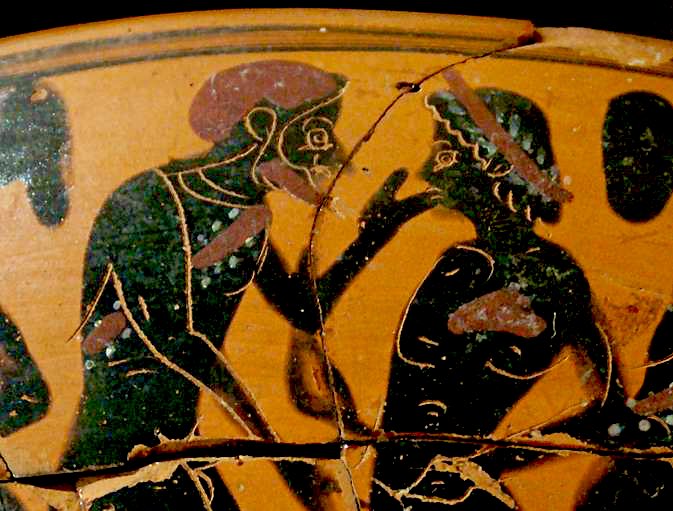
Before the spread of Christianity, “civilized” Greek and Roman elites openly flaunted underage s*x slaves. This was normal.
Emperor Hadrian built an entire city in honor of his favorite boy.
We’ve heard for decades that Christianity is a barrier to moral progress, but if you undercut the moral foundations of Christianity from the West, culture reverts back to pagan norms.
What I appreciated about the TPUSA halftime show was its simplicity and its conspicuous pro-America vision. The transition from the Kid Rock persona of the 90s to the more mature Robert Ritchie we see today was also a symbol of that paradigm.
I do not expect sophisticated theological paradigms from events like this. What I do expect are simple proclamations that can stir the drunk father, the adulterous woman, and the apathetic young adult to pursue truth. I expect something that can give the broad evangelical coalition confidence that there is someone in the public square who shares their convictions about the good life.
In that sense, TPUSA accomplished something important. They preserved what is best about the American way while not divorcing moral vision from public messaging. It was clear, accessible, and needed. And it honored Charlie’s legacy in a way that was neither outrageous nor merely honorable.
The decline of the Super Bowl halftime show into something often marked by spectacle and perversion is not accidental. The most-watched annual event in the American calendar inevitably reflects what the present culture most desires. If that is true, then Christians cannot merely complain about cultural decay. We must offer compelling alternatives. We must present a vision of the good life that is rooted in virtue, family, faith, and ordered liberty, not merely as an argument, but as something visible, embodied, and attractive to a watching world.
If we want a different culture, we must build different stages, tell better stories, and form people whose lives themselves become a testimony. Culture does not change merely by critique. It changes when a better vision is seen, heard, and lived out in public.