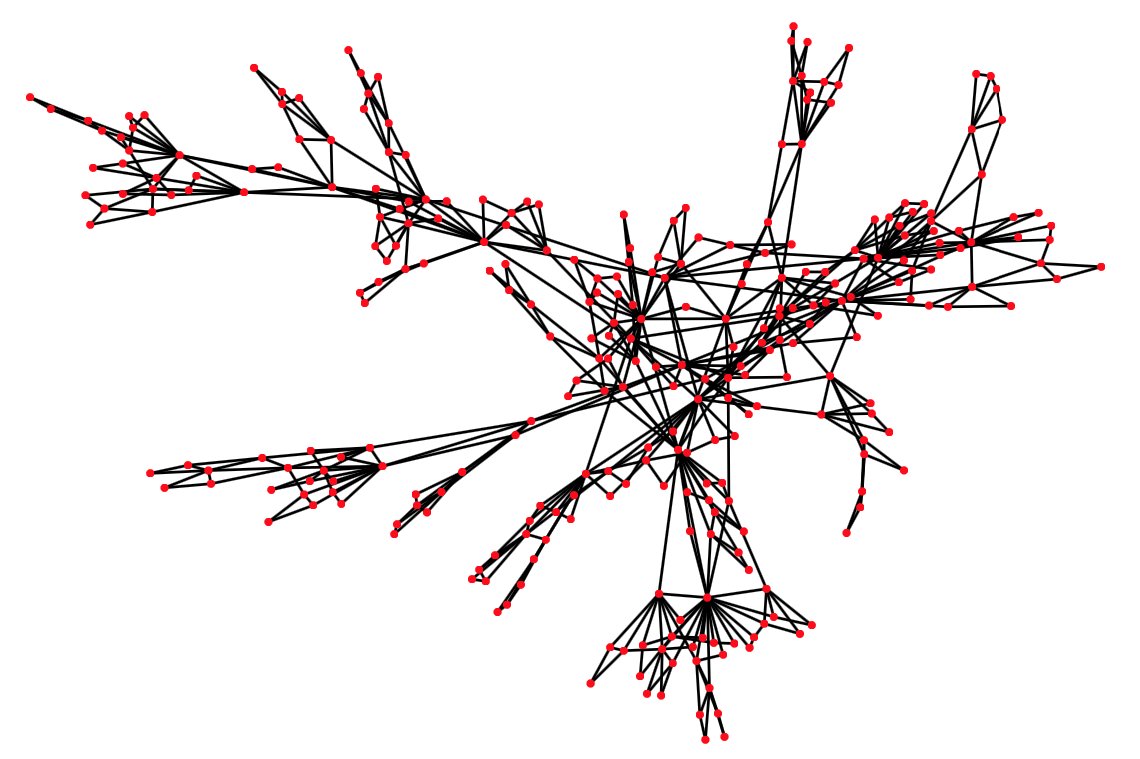
So...
Next time you follow someone your friend follows, take a second to think about how you are shaping the social world.
It is our own actions which create filter bubbles, super influencers and the small intense social world we live in.
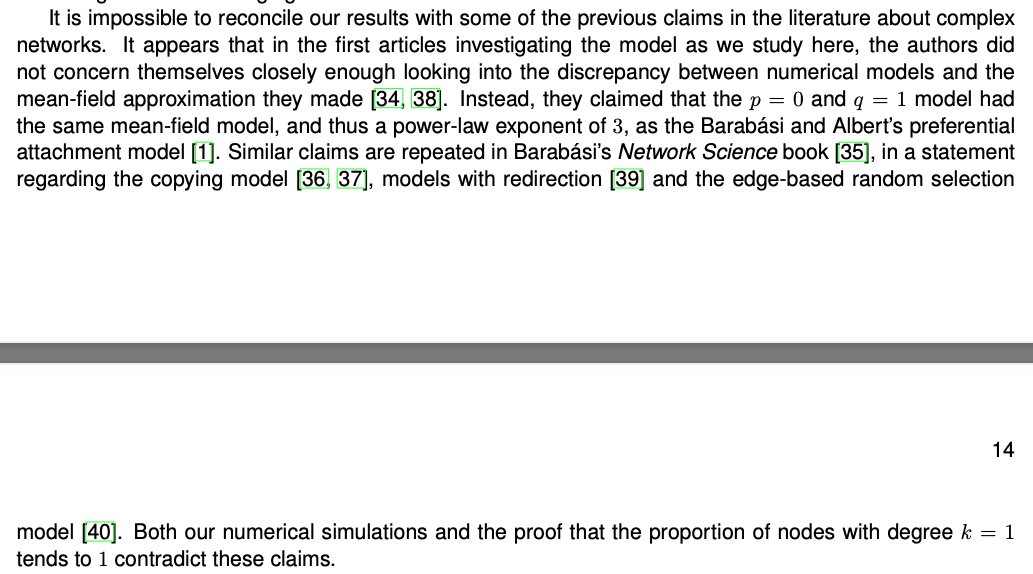
Our work is related to work by @barabasi, but we believe our model gives a much more parsimonious explanation of networks (and we correct his analysis when looking at a similar model). (Feedback appreciated! This is a preprint just now.) 10/11
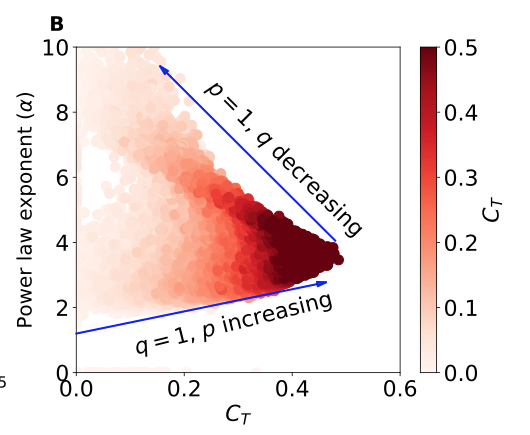
In real social networks, most of us have a few friends (at least). We can model this by setting p= 'probability of connecting to a friend' and q ='probability of connecting to a friend of that friend'. In our first example p=1 and q=1, in the example above p=0 and q=1. 7/11
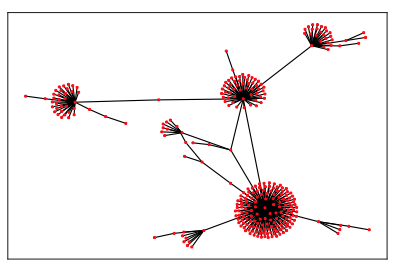
There are now individuals with a large numbers of followers. The influencers become super-influencers. We showed that as the network grows, almost everyone is a lonely, single individual connected to a super-influencer. 6/11
Doing the maths we found something fascinating..
Imagine when a person joins the network, they only follow the friend of the friend (and not the friend themselves). This is like looking at who your friends follow and following them instead. Now the network looks like this. 5/11
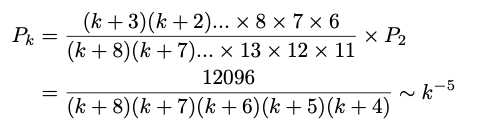
Some people in the network are more connected than others. These 'influencers' are not more 'attractive' but just happened to be someone's friend initially! A nice math result was that the following equation gives the probability you have k friends. 4/11
This phenomena is known as the friendship paradox. In our article, we look at the social network this paradox creates. In the above example, a social network of 100 people built in this way will look something like this... 3/11
Imagine you choose one person at random on Twitter and follow them. You also follow someone they follow (friend of a friend). This might feel like picking two random people to follow, but it isn't.
The second person is likely to be much more popular than the first... 2/11
We (myself, @LevensWatson and @pendelduva) have written a paper about what happens when you connect with a friend of a friend. The outcome of this simple process --- something we all do every day --- turns out to be very surprising... 1/11
https://t.co/ItByYwMSUi
We (myself, @LevensWatson and @pendelduva) have written a paper about what happens when you connect with a friend of a friend. The outcome of this simple process --- something we all do every day --- turns out to be very surprising... 1/11
https://t.co/ItByYwMSUi