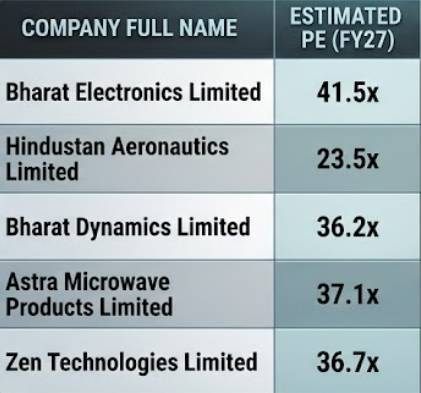
Defence Sector
The shift toward privatization is not a broad-market trend; it is heavily concentrated in a few key players. Solar Industries alone holds 38% of the listed-private defense order book, and combined with Bharat Forge, they control roughly 60%.
https://t.co/C7Tso9034p
Defence Sector
The shift toward privatization is not a broad-market trend; it is heavily concentrated in a few key players. Solar Industries alone holds 38% of the listed-private defense order book, and combined with Bharat Forge, they control roughly 60%.
https://t.co/C7Tso9034p
Battery Value Chain
PCBL is quietly building a battery materials moat — through Nanovace
Most know PCBL for carbon black. Here's what they're building next 🧵
What is Nanovace?
PCBL's dedicated battery chemicals platform. Three advanced materials under simultaneous development:
→ Nanosilicon — next-gen anode material → Conductive carbon — electrode performance additive → Acetylene black — high-purity carbon for Li-ion and HV cables
Plant location: Paleg, Gujarat. Commissioning expected within weeks.
The commercialisation path
Pilot plant → Customer qualification (this year) → Commercial plant (post-validation) → Volume ramp-up through FY28
These aren't commodity materials. Customer qualification timelines in battery materials are long and rigorous — clearing them is itself a moat.
End markets they're targeting
Li-ion batteries · EV charging systems · Energy storage · Portable batteries · High-voltage cables · Semiconductor packaging
High-margin. Structurally growing. Capital is being prioritised here.
Where the real edge might be: IP
This is the part most people will miss.
→ US patent secured — proprietary nanomaterial process (energy storage IP) → Multi-geography patent filings — several already approved → Separate patents filed for bio-sourced carbon-silicon composites and battery-grade graphite
They're not just making materials. They're locking in the process.
Global Business Developement push — Europe and South Korea
Business development teams have been expanded specifically in these two markets. Active engagement already underway with major battery manufacturers for product validation. These are exactly the geographies where battery supply chain localisation is most urgent
Himadri Speciality Chemical — Battery Value Chain
Anode material — live
April 2026: Himadri commissioned its first commercial graphite anode plant in Mahistikry, West Bengal. 200 MTPA initial capacity — fully in-house from raw material to finished product.
The key differentiator? They produce their own high-purity coal tar pitch internally. Full backward integration = cost efficiency + supply security.
"Sample A" has already been dispatched to domestic and global cell manufacturers. Early quality validation feedback: encouraging.
LFP Cathode — world first (outside China)
Himadri is building the world's first commercial-scale LFP Cathode Active Material (CAM) facility outside China.
Long-term vision: 200,000 MTPA → enabling ~100 GWh of Li-ion battery capacity.
Phase 1 roadmap: → 2,000 MTPA by Q3 FY27 → 40,000 MTPA total by FY29 (target 2x asset turnover)
Supply chain moves already underway: phosphate mine interests being explored + lithium miner discussions ongoing.
Three strategic investments — the technology layer
→ Sikona Battery (19–22% stake, ₹138 Cr) — Silicon-carbon anode tech. Exclusive India commercialisation rights. 20% higher energy density, 40%+ faster charging vs graphite. Pilot expansion by Q2 FY27.
→ IBC / International Battery Company (17.3% stake) — US-based, prismatic Li-ion cell developer. 50 MWh facility in South Korea. Gigafactory in Bengaluru (with Mahanagar Gas) targeted Q4 FY27. Himadri tests its own cathode + anode materials here in real cells.
→ Invati (40% stake) — Engineering next-gen electrode materials for higher energy density + longer battery life.
They're building the entire stack:
Coal tar pitch → Graphite anode → LFP cathode → Cell validation (via IBC)
With Sikona and Invati, they're also hedging into the next generation of battery chemistry.
Himadri Speciality Chemical — Battery Value Chain
Anode material — live
April 2026: Himadri commissioned its first commercial graphite anode plant in Mahistikry, West Bengal. 200 MTPA initial capacity — fully in-house from raw material to finished product.
The key differentiator? They produce their own high-purity coal tar pitch internally. Full backward integration = cost efficiency + supply security.
"Sample A" has already been dispatched to domestic and global cell manufacturers. Early quality validation feedback: encouraging.
LFP Cathode — world first (outside China)
Himadri is building the world's first commercial-scale LFP Cathode Active Material (CAM) facility outside China.
Long-term vision: 200,000 MTPA → enabling ~100 GWh of Li-ion battery capacity.
Phase 1 roadmap: → 2,000 MTPA by Q3 FY27 → 40,000 MTPA total by FY29 (target 2x asset turnover)
Supply chain moves already underway: phosphate mine interests being explored + lithium miner discussions ongoing.
Three strategic investments — the technology layer
→ Sikona Battery (19–22% stake, ₹138 Cr) — Silicon-carbon anode tech. Exclusive India commercialisation rights. 20% higher energy density, 40%+ faster charging vs graphite. Pilot expansion by Q2 FY27.
→ IBC / International Battery Company (17.3% stake) — US-based, prismatic Li-ion cell developer. 50 MWh facility in South Korea. Gigafactory in Bengaluru (with Mahanagar Gas) targeted Q4 FY27. Himadri tests its own cathode + anode materials here in real cells.
→ Invati (40% stake) — Engineering next-gen electrode materials for higher energy density + longer battery life.
They're building the entire stack:
Coal tar pitch → Graphite anode → LFP cathode → Cell validation (via IBC)
With Sikona and Invati, they're also hedging into the next generation of battery chemistry.
Battery Supply Chain
Balaji Amines are India's only DMC manufacturer. Balaji Amines has invested in new equipment at its Electronic-Grade Dimethyl Carbonate (DMC) plant, specifically to serve the EV battery industry. Commissioned May 2025. Installed capacity: 15,000 MTPA. DMC is a key electrolyte solvent in lithium-ion batteries. One supplier. In all of India.
They also produce: → Electronic-grade Triethylamine (TEA) — EV battery chemical → Electronic-grade N-Methyl-Pyrrolidone (NMP) — critical for battery electrode manufacturing Management is calling this a "first-mover" play. And the pipeline backs it up.
Upcoming Plants
1. DME Plant — 1,00,000 TPA capacity | Under construction | Commission: Q1 FY27 A next-gen LPG substitute for industrial, commercial & aerosol use
2. NMM Plant — 5,000 TPA | Under construction | FY27 Serving pharma + oil & gas sectors
3. Acetonitrile expansion — +9,000 TPA (total 18,000 TPA) | Q2 FY27
4. Balaji Speciality Chemicals — ₹750 Cr expansion in Maharashtra Phase I (Unit I): H1 FY27 | Phase I (Unit II): Q4 FY27
Battery Supply Chain
Balaji Amines are India's only DMC manufacturer. Balaji Amines has invested in new equipment at its Electronic-Grade Dimethyl Carbonate (DMC) plant, specifically to serve the EV battery industry. Commissioned May 2025. Installed capacity: 15,000 MTPA. DMC is a key electrolyte solvent in lithium-ion batteries. One supplier. In all of India.
They also produce: → Electronic-grade Triethylamine (TEA) — EV battery chemical → Electronic-grade N-Methyl-Pyrrolidone (NMP) — critical for battery electrode manufacturing Management is calling this a "first-mover" play. And the pipeline backs it up.
Upcoming Plants
1. DME Plant — 1,00,000 TPA capacity | Under construction | Commission: Q1 FY27 A next-gen LPG substitute for industrial, commercial & aerosol use
2. NMM Plant — 5,000 TPA | Under construction | FY27 Serving pharma + oil & gas sectors
3. Acetonitrile expansion — +9,000 TPA (total 18,000 TPA) | Q2 FY27
4. Balaji Speciality Chemicals — ₹750 Cr expansion in Maharashtra Phase I (Unit I): H1 FY27 | Phase I (Unit II): Q4 FY27
India's battery value chain adds one more player
Andhra Pradesh (AP) government has approved a ~₹2,550 crore investment by NPSPL Speciality Chemicals Pvt Ltd to establish a cathode material manufacturing facility in Chittoor district. The project, spread across 105 acres in Gudupalle Mandal is localising one of the most critical components in the electronics and battery value chain. Cathode materials are the core functional component of lithiumion batteries, determining battery performance, energy density, lifecycle, and safety
Approved under the Andhra Pradesh Electronics Component Manufacturing Policy 4.0 (2025-30), the project is classified under the supply chain of sub-assemblies and bare components
Applications of cathode material
Li-ion batteries find use in an array of highgrowth sectors such as electric vehicles (EVs) (to power cars, two-wheelers, and commercial EV fleets), consumer electronics (smartphones, laptops, wearables, and portable devices), and battery energy storage systems or BESS, and grid-scale storage for renewable energy (RE) integration. Cathode materials are integral to all modern batteries, and by association all modern electronics ecosystems. The project places Andhra Pradesh at the heart of two converging mega-trends, namely, the scaling up of electronics manufacturing and the global energy transition towards electrification
To accelerate execution, the Andhra Pradesh has extended a customised incentive package, including capital subsidies under the policy, 100% electricity duty exemption for 10 years, power cost reimbursement, and high energy-intensive industry classification
GNFC tailwinds in Q4FY26 came from Technical Grade Urea(TGU) which led to huge jump in margins
Higher TDI spreads will benefit them in Q1FY27
Seems FY27 will turn out to be bumper for the company
https://t.co/SFNMzCofxb
Expanding spreads between TDI and Toluene is highly beneficial for GNFC
India’s TDI market is ~1 lakh tonnes (GNFC holds ~60% share); domestic consumption supports full utilization of its ~65–70k tonnes capacity
GNFC aligns realizations to import parity (including extended anti-dumping duties on key origins like EU, Saudi Arabia, Middle East, and Taiwan)
One of the sector that should pick up significantly in the next 5 years in India is the Battery Value Chain
Significant pockets of new profit pools to be created
https://t.co/UjX6sBSGru
#Theme#Sectorcreation#wealthcreation#stockmarketindia
India's Lithium Imports Surge 10x in 8 Years to ₹37,624 Crore as EV Penetration Hits 8.5%; Domestic Manufacturing Lagging Badly — Only Ola Electric Has Commissioned Meaningful ACC PLI Capacity
The Import Surge — By the Numbers
Lithium imports FY18: ₹3,532 crore
Lithium imports Apr–Feb FY26: ₹37,624.6 crore — up ~10x in 8 years
FY25 imports: ₹25,458.6 crore
FY26 (11 months): already up ~48% over FY25 — acceleration intensifying
Primary driver: EV adoption + battery storage expansion + consumer electronics
EV penetration in India: estimated 8.5% — rising rapidly
Why Domestic Manufacturing Isn't Keeping Up
ACC PLI Scheme (₹18,100 crore): launched 2021, target 50 GWh domestic cell capacity
Only Ola Electric commissioned meaningful capacity — ~1.5 GWh against 20 GWh allocation
Reliance New Energy and Rajesh Exports: yet to significantly operationalise committed capacities
National Critical Mineral Mission (₹34,300 crore): slow execution
Critical Mineral Recycling Incentive Scheme (₹1,500 crore): slow execution
No meaningful domestic lithium extraction at scale
Recycling capacity remains limited
The Supply Chain Risk
India heavily dependent on imported lithium and battery materials
Much of imports flow through China-linked global supply chains
Risk: replacing crude oil dependence with new reliance on imported critical minerals
"EV adoption has accelerated rapidly, but localisation of battery manufacturing has not kept pace" — automobile OEM industry executive
What Needs to Happen
Stronger enforcement of production-linked incentives
Faster coordination between government and industry
Scale up: domestic refining, mining, and recycling ecosystems
Without matching domestic manufacturing expansion: rising EV demand will deepen import dependence and keep import bill elevated over medium term
Demand creation has "significantly outpaced supply-side readiness"
Core Theme
India's EV boom is creating a critical minerals trap — lithium imports have surged 10x in 8 years while domestic cell manufacturing remains almost entirely unbuilt despite ₹18,100 crore in ACC PLI incentives and only one meaningful commissioning (Ola Electric's 1.5 GWh); without urgent scale-up in domestic refining, mining, and recycling, India risks trading its crude oil import dependence for a potentially more dangerous critical mineral dependence routed through China-linked supply chains — making battery localisation not just an industrial policy priority but a strategic energy security imperative.
Expanding spreads between TDI and Toluene is highly beneficial for GNFC
India’s TDI market is ~1 lakh tonnes (GNFC holds ~60% share); domestic consumption supports full utilization of its ~65–70k tonnes capacity
GNFC aligns realizations to import parity (including extended anti-dumping duties on key origins like EU, Saudi Arabia, Middle East, and Taiwan)
Tata Consumer Products firing on all cylinders
Q4FY26 Result Update
FY27 Management Guidance Summary
• Revenue: Double-digit top-line growth across consolidated operations.
• EBITDA Margin: 50–75 bps expansion over FY26 levels (full-year, with quarterly seasonality).
• A&P Spend: Return to 7.5%–8.5% of sales (normalised from a slightly soft 6.7% in FY26 due to front-loaded Q2/Q3 spending).
• Growth Businesses: Sustained ~30% growth; targeting 33%+ contribution to India revenue.
• Non-Branded Solubles: Continued growth; capacity expansion approved for Vietnam (tea extracts, online in early FY28) and capacity addition for tea extracts.
• Starbucks India: Continued new store additions; SSS growth trajectory to be maintained.
• Dividends: Further improvement expected, consistent with six-year track record.
Free cash flow to EBITDA: 107%
1. Growth businesses (now 31% of India revenue) grew 33% in Q4. Sampann alone crossed ~₹1,600 Cr ARR with margins heading toward mid-teens. Dry fruits and cold-pressed oils are each near a ₹500 Cr ARR run-rate — from zero just two years ago.
2. E-commerce + quick commerce grew 62% and now contributes 19% of India revenue. Nielsen misses this entirely. The reported market share numbers are structurally understated.
3. International is no longer a laggard — 11% constant currency growth in Q4 led by US coffee. With Arabica prices at $2.99 and falling, a margin tailwind is baked in for the next 1–2 quarters.
4 .NourishCo / RTD grew 28% volume, 23% revenue in Q4. Three new channels — Food Services (₹170 Cr ARR), Vending (₹100 Cr ARR), Pharmacy (₹30 Cr ARR) — incubated and exited, essentially for free.
5. Starbucks: third consecutive quarter of positive SSS growth (+5%), now 502 stores across 80 cities. The turnaround is real.
Tea costs are benign, and wherever they weren't (H1 FY26), management proved it could hold margins and recover — Q4 standalone EBITDA grew 51%.
New GTM is fully rolled out across 64 cities — lines-per-outlet metrics are already moving. Revenue translation is a matter of quarters, not years.
Net cash of ₹3000cr with the board open to acquisitions = asymmetric optionality.
Protein, health and wellness, and premium are the next legs. Launches in Makhana, Edamame, and Tata Simply Better are the opening bets in a category that's just beginning in India.
Ambit on RR Kabel post Q4FY26 Results
RRising up to the challenge
Maintain "Buy" rating; Hiked TP to Rs 2,405 per share (+53% from current levels)
RR is consistently gaining market share in domestic & scaling its export business as well.
Company maintains its 16-18% CAGR guidance under Project RRise
Cables' capacity is currently at +90% utilization levels and new capacities will be added in a phased manner
Distribution expansion helped FMEG growth; expect to breakeven in FY27
CDSL Q4FY26 Result Update
Operating Profits are range bound for the past 11 quarter with Q4FY26 coming at the lowest levels during this period
Operating Profit Margins (OPM) in Q4FY26 are the lowest since FY20