My latest memo discusses recent attempts to rein in long-dated government bond yields and why the only sustainable solution is responding to the underlying factors pushing interest rates up, even if politically uncomfortable.
You can read it here: https://t.co/RakxMnFvOY
I've been saying "bond traders can stop panicking when the Fed starts panicking."
I guess I should have said, "bond traders can stop panicking when Scott Bessent starts panicking."
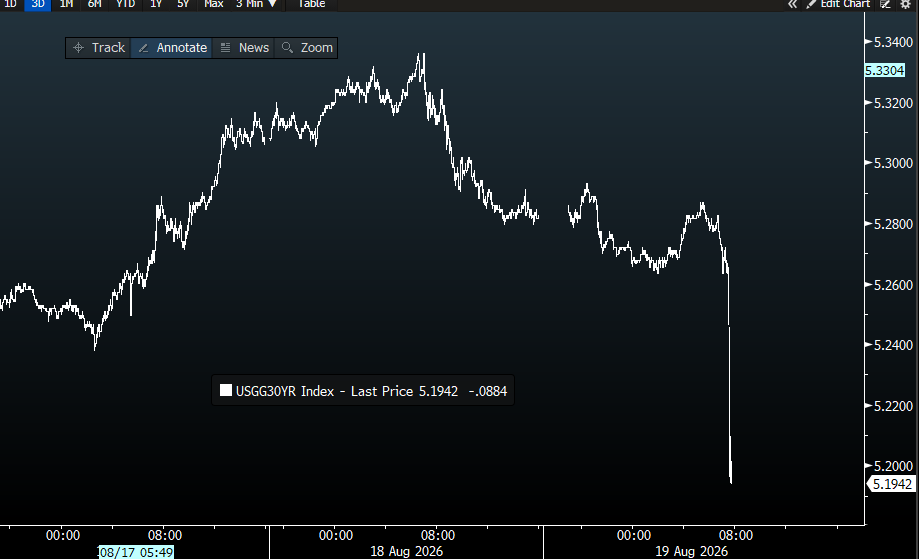
*TREASURY DEPT ANNOUNCES INCREASED SIZES OF LONG-END BUYBACKS
*LONG-TERM US YIELDS DROP ON TREASURY PLANS TO BOOST BUYBACKS
Three-day tick chart of 30-year yields.
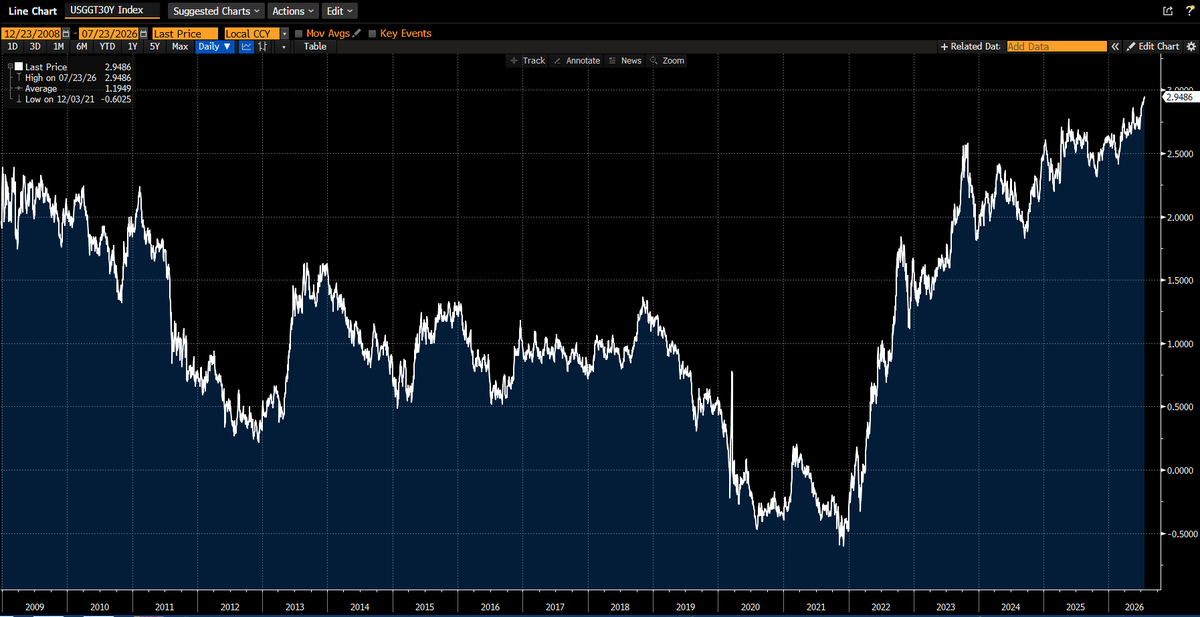
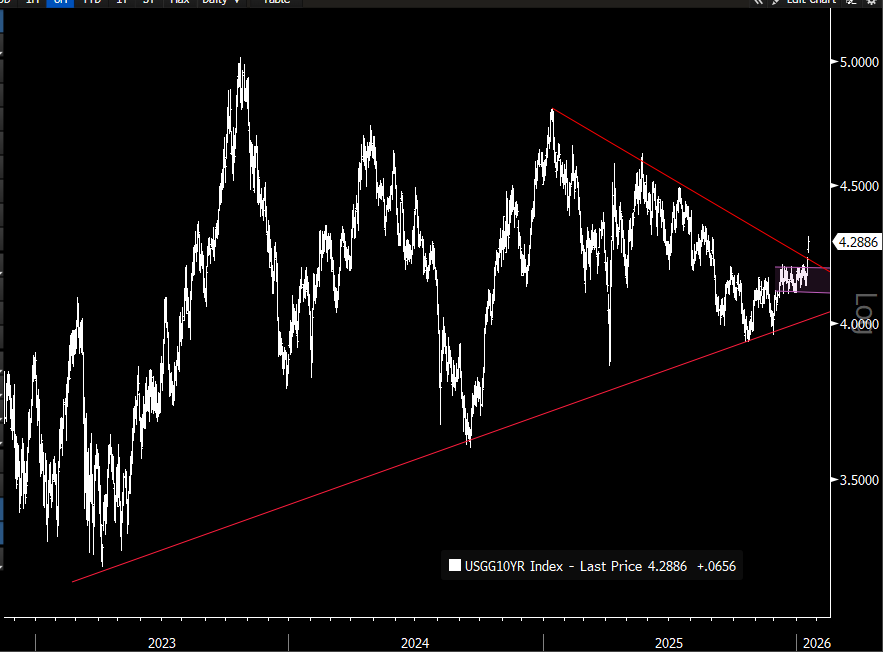
US 30-year yields have remained above 5% for 27 days this year, including the last 12 days in a row - the longest stretch since 2007. Real yields on 30-year notes are the highest since 2008, at nearly 3%. https://t.co/rCTSWBW4G8
This chart is more important
Token usage (blue bars) is exploding higher. It started in January when Agentic AI went mainstream with Claude Cowork and Moltbook (OpenClaw).
AI users are creating agents and code, leading to exponential growth in AI usage.
It's just starting.
Michael Hartnett, BofA | This Is The Biggest Bubble Since The Railroads
The current AI-driven market rally resembles one of the biggest speculative bubbles in history, comparable to the Nifty Fifty or dot-com era, but investors are unlikely to aggressively sell before two catalysts occur: a major OpenAI/SpaceX-style IPO cycle and a clear Fed policy tightening shock tied to rising CPI from tariffs and inflation.
- AI mega-caps now dominate market concentration, with the “AI bubble” larger than past railroad, Japan, and dot-com bubbles by some metrics.
- Bond yields are the main warning signal: the rise in long-term yields and global cost of capital seen as dangerous for risk assets, especially leveraged consumers, private equity, housing, and emerging markets.
- Several macro stress signals are flashing: weak Asian currencies (KRW, JPY, INR, IDR), widening high-yield spreads, EM outflows, and BofA’s Bull & Bear Indicator hitting a contrarian “sell” level.
- Historically, speculative IPO waves (Alibaba, NTT, Visa, etc.) often marked medium-term market tops rather than immediate crashes.
- Current gains are very narrow (“wealth effect, not wage effect”), while equal-weight consumer stocks remain weak versus the S&P 500.
- Despite near-term bubble concerns, structurally bullish on emerging markets and commodities.
- Preferred post-bubble opportunities would be consumer stocks and smaller AI adopters/disruptors rather than dominant mega-cap AI platforms.
- Geopolitics, energy, AI competition with China, and inflation are increasingly interconnected themes shaping markets.
Zeitgeist quote: "Everyone is now convinced that equities are the best inflation hedge."
Feedback from recent London trip, main soundbites:
- "we’re long and paranoid,”
- “wants/needs to de-escalate Iran, and stocks pop, yields drop on deal,”
- “if UK gilts find love, everything finds love,”
- “European electorate shifting decisively right, Farage in UK, Le Pen in France, and you watch the AfD in Germany will win Saxony-Anhalt in September, their first state election,”
- “the fear in bonds is nowhere near as strong as greed in equities,”
- “Warsh will be rhetorically hawkish but practically dovish over the summer,”
- “US actions in Venezuela, Ukraine, Iran, Greenland, Cuba should be viewed through single strategic lens competition with China in AI, which can only be won by securing access to critical resources.”
( h/t Octavian Adrian Tanase)
Overseas investors are piling into US stocks:
Foreign investors now allocate a record 63% of their US financial assets to equities.
This percentage has more than DOUBLED since the 2008 Financial Crisis.
This also surpasses the 2000 Dot-Com Bubble peak by ~10 percentage points.
By comparison, the long-term average allocation is ~40%.
As a result, foreign investors now own a record $21.3 trillion in US stocks and equity funds, surging +170% since 2020.
Foreign investors are doubling down on US markets.
Remember my four-phase framework for the economic and financial fallout of the Middle East War?
This latest from the Financial Times is an illustration of Phases I and II in action: what begins as a narrow price shock evolves into a broader inflationary process.
#economy #markets @ft #middleeastwar
OpenAI พลาดเป้าหมายสําหรับผู้ใช้รายใหม่และรายได้ CFO กังวลว่าบริษัทจะไม่สามารถจ่ายค่าใช้จ่ายบริการ Cloud กับสร้าง Data Center ในอนาคตได้
- Wall Street Journal
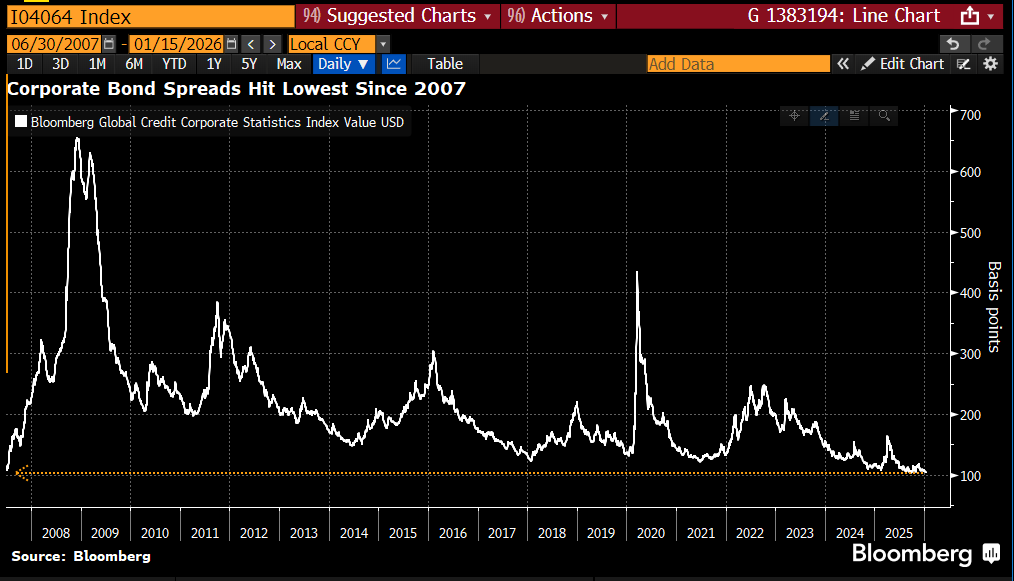
Something is happening in bond markets. Yields on 10-year Treasuries have fallen to the lowest this year, while credit spreads are widening to the highest this year.
BREAKING: Danish pension fund AkademikerPension announces they will sell all US Treasuries by month-end, citing "rising credit risk" under President Trump.
The fund's CIO says US finances are no longer "sustainable," due to weak fiscal discipline, a softer Dollar, and Trump’s push for Greenland.
Powell had hired powerhouse DC firm Williams & Connolly as outside counsel before the DOJ subpoenas arrived—a sign he has been ready for whatever turns the White House pressure campaign could take.
Powell hasn't sought a fight over the Fed's institutional autonomy, but Sunday's extraordinary two-minute video statement suggests he won't shy away from one either. https://t.co/Vs89eVAzj4