Web3 Foundation is building an internet where users are in control of their own data, identity and destiny. Primary projects include @Polkadot & @kusamanetwork.
We've been banging on about decentralisation for years.
Today, a @Google Cloud outage disrupted banking services across the UK, including @Revolut and @LloydsBank.
Turns out putting so much critical infrastructure in so few companies' hands has its drawbacks.
Who knew?
We gave the internet our attention, and it took our data, our privacy and, increasingly, our freedom to choose.
It's time to pay attention to what we're giving away.
How much does your ordinary day reveal about you?
We've looked at the scale of the problem, read the terms and conditions, and now you can explore what it could mean for you.
Try the interactive questionnaire: https://t.co/14nVy0Hkvq
👉️ All answers stay in the browser.
People routinely trade personal data for immediate convenience, creating a constant tension known as the privacy paradox.
Big thanks to @davidgokhshtein for the invite and the chance to share the research with more people.
#Software | Web3 reveals your digital breadcrumbs
A six-question website explores how connected devices and everyday activities expose your personal information, writes @Jas2Bann.
@Web3foundation
🔗https://t.co/mgPww0ZLSv
https://t.co/mgPww0ZLSv
The Web3 Foundations own @BillLaboon on The Breakdown w/ @davidgokhshtein to discuss data-harvesting practices, the influence of AI, and the need for a more human-focused internet.
🎙️Interview starts at 19.00 mins.
If you could change one thing about how the internet handles your personal information, what would it be?
Fewer organisations collecting it?
Greater control over access?
More ways to verify information without revealing your identity?
Explore the research behind these questions. https://t.co/NsimPmvNWY
Why should proving you're over 18 require revealing your full date of birth?
Digital services often ask people to disclose more information than needed to establish a specific fact.
But you can design these interactions differently. 🧵
Our latest research examines how deeply data collection is embedded in everyday digital life because we believe people should have more control over what they disclose and who can access it.
Reducing unnecessary disclosure is one important part of that.
Should people have the right to know what organisations have inferred about them?
And should they be able to challenge those conclusions?
Our latest research examines the scale of everyday data collection and the limitations of existing approaches to consent.
Explore the findings: https://t.co/NsimPmvNWY
83 hours.
That's about how long it would take one modelled UK family to read the privacy documents tied to their everyday digital lives.
257 documents. Almost 1.19 million words.
How meaningful is informed consent when understanding the terms takes more than ten working days? 🧵 👇️
Of the 143 organisations examined in Web3 Foundation's latest research, 109 describe inference or profiling in their documentation.
As AI makes analysing large collections of information easier, questions about transparency, accuracy, and individual control are becoming increasingly important.
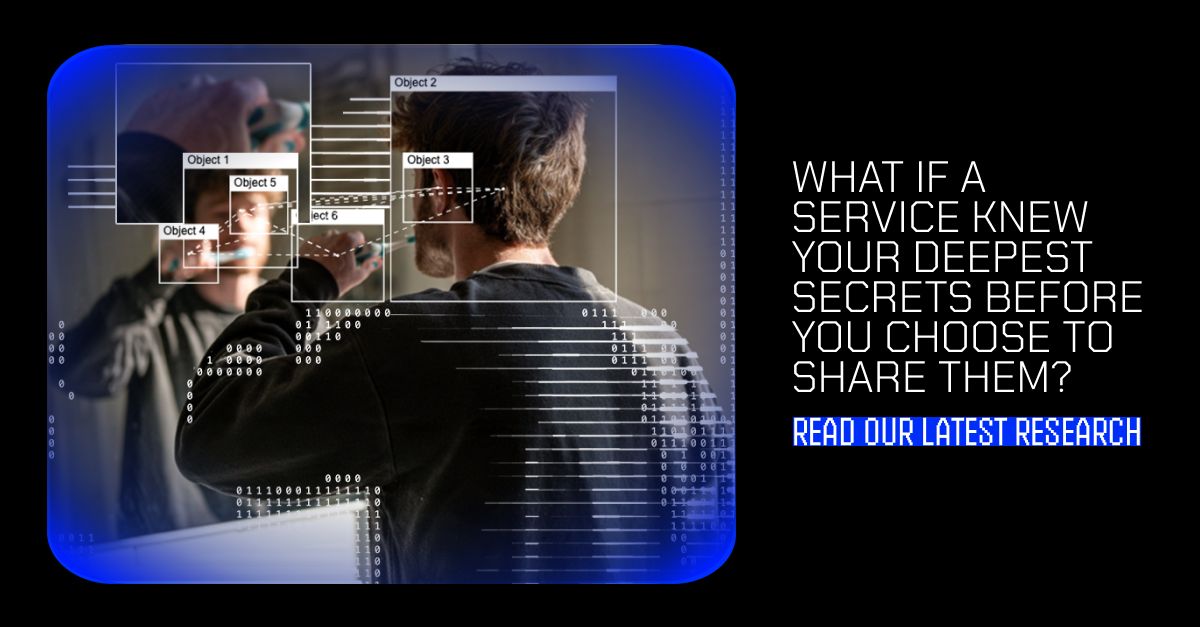
You might be surprised by how much your home knows about you. Your TV. Your car. Your smartwatch. Even your kids' devices.
Everyday technology can reveal more about your life than you realise.
Take our interactive Your Day in Data experience to see what this could look like in a household like yours.
🔒 No answers collected. No data stored.
Discover your day in data 👇
https://t.co/XTlirQCUOm
Our latest Everyday Surveillance white paper provides a more substantial follow-on for those who want to understand the wider implications.
Dive in: https://t.co/zm9yBmQOs8
Four stories. Four different ways personal data can slip out of our control.
In just a few weeks, we've seen mass surveillance, third-party breaches, commercial data exposure, and misuse of privileged access.
Here's what happened. 🧵
Different organisations. Different systems. Different failures, but one question connects them all:
Why do we continue building systems where so much personal information can be collected, accessed and exposed without meaningful control by the people it belongs to?
Privacy needs to be part of these systems' design, not just their security policies.