10 repositorios de GitHub que automatizan tu trabajo mientras duermes en 2026.
Guarda esta lista.
1. OpenHands
Agente de codificación autónomo. 76.500 estrellas. Usado por ingenieros de Apple, Google, Amazon, Netflix y NVIDIA.
Repo → https://t.co/KLWQmwHtzy
2. Hermes Agent
Nous Research lo lanzó en febrero. 191.000 estrellas en tres meses. IA personal que se mejora sola.
Repo → https://t.co/XzwstTlZmY
3. CrewAI
Flujos de trabajo multi-agente que entregan trabajo real. Usado por el 60% de las Fortune 500.
Repo → https://t.co/ElME1UbmWP
4. Aider
Programador en pareja con IA dentro de tu terminal. Hace commits automáticos de diffs limpios. Los desarrolladores indie envían 5 veces más rápido con él.
Repo → https://t.co/aOE1e8nrSR
5. n8n
El Zapier de código abierto. Más de 400 integraciones. Flujos de trabajo autoalojados que funcionan para siempre sin pagar suscripciones.
Repo → https://t.co/fkI60KPyGX
6. LangGraph
La columna vertebral de orquestación que usan todos los agentes de IA en producción en 2026.
Repo → https://t.co/jRJe3N5wov
7. Cloudflare Agentic Inbox
Cliente de correo electrónico autoalojado con un agente de IA integrado que lee tu bandeja de entrada y redacta respuestas.
Repo → https://t.co/5eRlyXb0pS
8. Browser Use
98.000 estrellas.
Agentes que navegan por la web, rellenan formularios, extraen datos y reservan reuniones.
Repo → https://t.co/RoTbS3nEIt
9. awesome-mcp-servers
El catálogo de todas las herramientas que tu agente puede usar. GitHub, Slack, Linear, Stripe, Postgres, Notion…
Repo → https://t.co/zENZ8aNjm3
10. claude-task-master
Orquestación multi-agente sobre Claude Code.
Convierte un solo prompt en un equipo que entrega una funcionalidad completa mientras duermes.
Repo → https://t.co/1vgdw7yoh1
Guarda este post.🔖
100% gratis. 100% código abierto.
LLM Knowledge Bases
Something I'm finding very useful recently: using LLMs to build personal knowledge bases for various topics of research interest. In this way, a large fraction of my recent token throughput is going less into manipulating code, and more into manipulating knowledge (stored as markdown and images). The latest LLMs are quite good at it. So:
Data ingest:
I index source documents (articles, papers, repos, datasets, images, etc.) into a raw/ directory, then I use an LLM to incrementally "compile" a wiki, which is just a collection of .md files in a directory structure. The wiki includes summaries of all the data in raw/, backlinks, and then it categorizes data into concepts, writes articles for them, and links them all. To convert web articles into .md files I like to use the Obsidian Web Clipper extension, and then I also use a hotkey to download all the related images to local so that my LLM can easily reference them.
IDE:
I use Obsidian as the IDE "frontend" where I can view the raw data, the the compiled wiki, and the derived visualizations. Important to note that the LLM writes and maintains all of the data of the wiki, I rarely touch it directly. I've played with a few Obsidian plugins to render and view data in other ways (e.g. Marp for slides).
Q&A:
Where things get interesting is that once your wiki is big enough (e.g. mine on some recent research is ~100 articles and ~400K words), you can ask your LLM agent all kinds of complex questions against the wiki, and it will go off, research the answers, etc. I thought I had to reach for fancy RAG, but the LLM has been pretty good about auto-maintaining index files and brief summaries of all the documents and it reads all the important related data fairly easily at this ~small scale.
Output:
Instead of getting answers in text/terminal, I like to have it render markdown files for me, or slide shows (Marp format), or matplotlib images, all of which I then view again in Obsidian. You can imagine many other visual output formats depending on the query. Often, I end up "filing" the outputs back into the wiki to enhance it for further queries. So my own explorations and queries always "add up" in the knowledge base.
Linting:
I've run some LLM "health checks" over the wiki to e.g. find inconsistent data, impute missing data (with web searchers), find interesting connections for new article candidates, etc., to incrementally clean up the wiki and enhance its overall data integrity. The LLMs are quite good at suggesting further questions to ask and look into.
Extra tools:
I find myself developing additional tools to process the data, e.g. I vibe coded a small and naive search engine over the wiki, which I both use directly (in a web ui), but more often I want to hand it off to an LLM via CLI as a tool for larger queries.
Further explorations:
As the repo grows, the natural desire is to also think about synthetic data generation + finetuning to have your LLM "know" the data in its weights instead of just context windows.
TLDR: raw data from a given number of sources is collected, then compiled by an LLM into a .md wiki, then operated on by various CLIs by the LLM to do Q&A and to incrementally enhance the wiki, and all of it viewable in Obsidian. You rarely ever write or edit the wiki manually, it's the domain of the LLM. I think there is room here for an incredible new product instead of a hacky collection of scripts.
If EF and Ethereum Were Under My Leadership
“#ETH to $10,000”
My First Week Plan
1. Halt ETH Sales immediately and Optimize Revenue
EF will immediately cease selling ETH for at least three years. Operational costs will be covered through AAVE lending, staking yields, and stablecoin borrowing. This ensures ETH supply remains intact, aligning with our deflationary goals and reinforcing market confidence.
2. Heavily Tax Layer 2 Solutions immediately
Significant taxes will be imposed on all Layer 2 projects, ensuring Ethereum generates at least $5 billion annually in taxes (whether in stablecoin or tokens). All collected taxes will be used to repurchase ETH and burn it in a fully decentralized manner, period.
3. Streamline EF Operations
EF staff will undergo a drastic downsizing, retaining only the most capable team members. Remaining employees will receive significant salary increases, transitioning EF into a purely merit-based system that rewards performance and results.
4. Adjust Rewards and Increase Fee Burns
Node rewards will be reduced, and more emphasis will be placed on fee-burning mechanisms. This ensures Ethereum remains DEFLATIONARY, solidifying its position as a store of value.
Focus Exclusively on Layer 1 and ETH reaches $10,000
All resources will be redirected toward Ethereum’s core Layer 1 development, prioritizing scalability, security, and adoption and ETH reaches $10,000.
With these decisive actions, ETH is poised to break $4,500 within the first week, setting the foundation for long-term success.
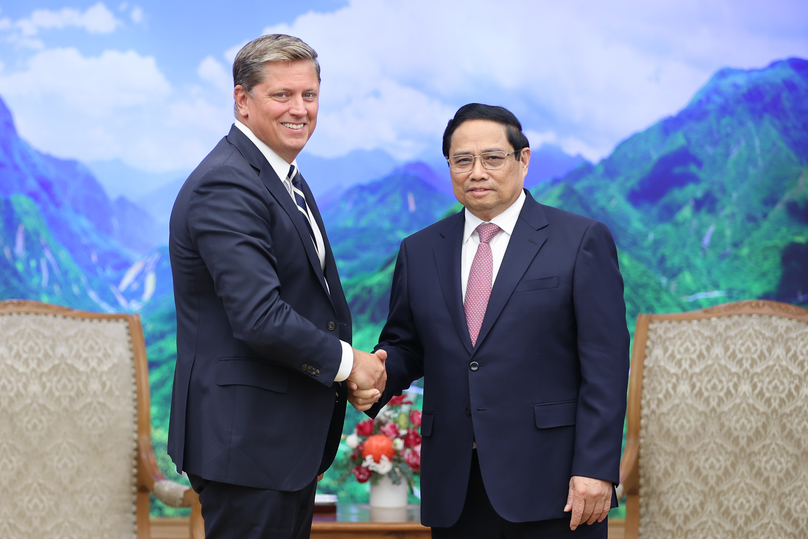
🇻🇳 SPACEX PLANS TO BRING STARLINK INTERNET TO VIETNAM
SpaceX plans to invest in Vietnam, offering its Starlink satellite internet services to support the country’s digital economy, education, disaster prevention, and more.
During a meeting with Vietnam’s PM Pham Minh Chinh, SpaceX’s senior executive Tim Hughes praised Vietnam’s business climate and proposed necessary infrastructure to expand internet coverage.
Vietnam welcomes SpaceX’s cooperation in digital projects, focusing on technology transfer and partnerships.
SpaceX, which has already invested $11 billion globally, aims to provide broadband to underserved areas in Vietnam.
Source: the investor
New channels and roles have been added to our Discord! Have you noticed the changes? 👀
+30 for NFT holders! Looks like there might be some secret alpha hidden in there...
👉 Join our Solana Mainnet channel to stay in the loop and see what awaits: https://t.co/80L3FJHUKu
Solana色に染まる夏の10日間、"Super Tokyo" 🇯🇵の開催を発表します!
(English follows below)
▶️日時: 8/17 - 8/27
▶️場所: 渋谷・恵比寿
▶️今すぐ登録してSolanaの限定スペシャルグッズ(200個)を獲得するチャンスを手に入れよう。
登録はこちら:https://t.co/DryRlEB5Lu
🔥What is Super Tokyo?🔥
▶️Super Tokyo = 1日間のカンファレンス + 1週間のSolana Village
▶️「私のソラナ初体験 (My First Solana Experience)」がテーマ
▶️1日間のカンファレンスは、8月18日(日)に渋谷で開催。国内外のSolana著名人をお呼びし、650人以上の参加者を見込む。
▶️Startup Villageは、18日のカンファレンスの翌日から約1週間にわたり開催されるワークショップ。日本の優秀な起業家やビルダーが、秋に開催予定のSolanaのグローバルハッカソンでの勝利を目指し、都内のコワーキングスペースでスキルを磨き合う。
🔥今すぐ登録!🔥
18日のカンファレンスのチケットはこちら: https://t.co/DryRlEB5Lu 今すぐ登録してSolanaの限定スペシャルグッズ(200個)を獲得するチャンスを手に入れよう。
ぜひ、Superteam JapanのX(Twitter)@SuperteamJapan をフォローし、最新情報をゲットしてください。
Stay Tuned!
We are excited to announce "Super Tokyo"!
▶️ Date: August 17 - August 27
▶️ Location: Shibuya, Ebisu in Tokyo
▶️ Register Now and get a chance to win Solana special swags (limited to 200 items): https://t.co/DryRlEB5Lu
🔥What is Super Tokyo?🔥
▶️ “Super Tokyo” consists of a one-day conference and a week-long Solana Village.
▶️ The theme is "My First Solana Experience."
▶️ The one-day conference will be held on August 18 in Shibuya. We expect over 650 participants, including prominent Solana figures from Japan and abroad.
▶️ The Startup Village is a week-long workshop following the conference on the 18th. Talented entrepreneurs and builders from Japan and overseas will hone their skills at co-working spaces in Tokyo, aiming for success at Solana's global hackathon scheduled in Autumn.
🔥Register Now! 🔥
Get your tickets for the conference on the 18th here: https://t.co/DryRlEB5Lu
Follow Superteam Japan’s X (Twitter) @SuperteamJapan and get the latest updates.
Stay Tuned!