Ramp has been building internal tools and AI systems to run their business more efficiently for years. Now they're building an operating system to help accounting firms become more efficient. This is how it's done
Building apps has never been easier.
With Sites, Codex can turn your work, ideas, and plans into an interactive website or app your team can explore, use, and share with a URL.
Rolling out to Business and Enterprise plans, before expanding more broadly.
The next evolution of Hermes Agent is here!
Introducing Hermes Desktop: everything you love about Hermes, now native on your machine.
First demoed in Jensen's GTC keynote, it's now in public preview.
macOS wrapper is the new GPT wrapper
AI labs are shipping desktop agents that can observe and control a user's Mac with full permissions. This functions essentially as a trojan horse tactic, allowing the AI to become the new primary control layer over the traditional Mac interface
The walled gardens in Apple's non-Mac platforms might end up being the thing that saves it
My guess is peak Mac use is 2026 or 2027. AI labs will use the Mac as a host and siphon users into their ecosystem. Most users will transition to mobile/tablet apps and we'll usher in the lean-back era of computing
https://t.co/qBXlBIQhGC
AI untethers knowledge workers from the daily eye and posture deterioration of office chair computing because productivity is no longer bound to keyboard activity
We may actually disrupt the predicted changes in human physiology from prolonged sitting
macOS wrapper is the new GPT wrapper
AI labs are shipping desktop agents that can observe and control a user's Mac with full permissions. This functions essentially as a trojan horse tactic, allowing the AI to become the new primary control layer over the traditional Mac interface
The walled gardens in Apple's non-Mac platforms might end up being the thing that saves it
Hermes now shipping a desktop app that installs and sets up everything for you
This is the near term future of every agent and AI tool. Full graphical user interface. Few clicks and the agent takes over your entire operating system
The next evolution of Hermes Agent is here!
Introducing Hermes Desktop: everything you love about Hermes, now native on your machine.
First demoed in Jensen's GTC keynote, it's now in public preview.
Based on the trends in websites, we're moving into an era of high-volume, AI-written web content designed to game LLMs in to citing your website in prompt responses
Websites will probably split into 3 archetypes: art, brochure, and everything else
Art
- Artistic expression of individual, company, project, etc
- Mostly human edited or curated content
- Unique aesthetic
- Tastemaker
Brochure
- Information about a local business, individual, project, etc
- Human and/or AI written
- Generic aesthetic
Everything else
- Marketing/broadcast machine with heavy focus on conversion
- High page count
- AI written, AI optimized
- Generic aesthetic
- Conformist
There will be websites that mix types, but the majority of them will decline in traffic because LLMs will deliver content and recommendations directly to users
Websites that are artistic, thoughtful, and memorable will survive much longer than the rest
There's no better time to mention the classic line from Google's original webmaster guidelines posted 20 years ago:
"Make pages for users, not for search engines"
Much of this is spot on, and it's the main reason I've pivoted away from websites and classic digital marketing
LLM citations are a race to the bottom. Content marketing has turned into buzzfeed-style top 10 listicles of companies congratulating themselves
Informational content is no longer a source of top of funnel, Google CTR is declining across the board, and unsourced citations from private datasets are increasing
Not sure how it will evolve but it's difficult for me to see a future where websites provide anything more than a visual anchor for credibility and brand
In the last 6 months at @Ahrefs, we analyzed over 1 billion data points across 14 studies. Here's what we learned about AI search optimization:
1) "Best X" blog listicles are the single most prominent content format cited by AI chatbots. They make up 43.8% of all page types cited by ChatGPT specifically.
2) 67% of ChatGPT's top 1,000 citations come from sources marketers can't influence: Wikipedia (29.7%), homepages (23.8%), app stores (6.6%). Only 32.3% are influenceable content like educational pages, reviews, news, and blog posts.
3) 28.3% of ChatGPT's most-cited pages have zero Google organic visibility. These pages get cited repeatedly by ChatGPT despite not ranking in Google at all. A completely separate discovery layer.
4) ChatGPT only cites about 50% of the URLs it retrieves. It fetches dozens of pages per query but uses half as background context without attribution. This means that being retrieved and being cited are very different things.
5) Adding schema markup had zero meaningful impact on AI citations. AI Overviews actually dipped −4.6%, while AI Mode (+2.4%) and ChatGPT (+2.2%) showed changes indistinguishable from zero.
6) YouTube mentions have the highest correlation (0.737) with AI brand visibility out of all the factors we studied (including all the conventional SEO metrics like backlinks, page count, DR, etc). This held true for both Google-owned and OpenAI products.
7) AI Overviews reduce clicks to the #1 result by 58%. That’s up from 34.5% just 10 months earlier. The trend is accelerating.
8) 99.9% of AI Overviews appear on informational intent queries. Transactional, navigational, and local searches are almost entirely AIO-free. Shopping triggers AIOs just 3.2% of the time.
9) For a given search query, Google’s AI Mode and AI Overviews reach the same conclusions 86% of the time — but cite almost entirely different sources (only 13.7% citation overlap).
10) AI Overviews change every 2.15 days on average, with 70% of content differing between consecutive observations. But semantic similarity stays at 0.95. The words, sources, and entities constantly shuffle, but the actual meaning barely moves.
Getting people to talk positively about your brand is extremely important in digital marketing and LLMs are clearly biasing towards it
Buzzfeed-style top 10 lists and juiced review sites will be back with a vengeance as marketers find that the easiest way to get LLMs to recommend your brand is by feeding it self-promotion slop
Once marketers get on the AI search optimization train it turns into this:
Today we're announcing @Special and a new financing led by @a16z.
Our DOGE teammates also invested: Human Capital, Steve Davis, Antonio Gracias, Anthony Armstrong, plus @brian_armstrong from Coinbase and @ssankar from Palantir.
DOGE for the private sector is here.
The $119 billion SpaceX/Tesla Terafab will be built right in the center of the Texas Triangle
Total economic powerhouse megaregion building the world's best technologies
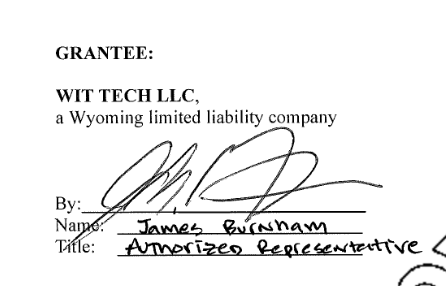
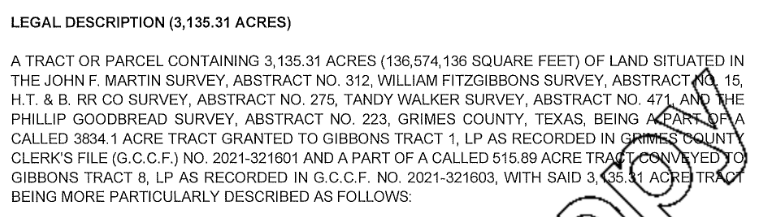
TERAFAB: Wit Tech LLC, a purchasing company that shares the physical address of xAI in Palo Alto, California, is purchasing 3,135 acres in Grimes County, Texas, around the Gibbons Creek Reservoir area.
This is the area for the $55 billion, up to $119 billion, SpaceXAI Multiphase, next gen, vertically integrated semiconductor manufacturing and advanced computing fabrication facility. Part of the SpaceX Reinvestment Zone No. 1 – 2026-001 located at Gibbons Creek Reservoir and surrounding areas.
The land acquisition deed records for these purchases were filed with the county clerk on May 28th, indicating preparations for development prior to June 3rds official Public Hearing and economic zone votes.
xAI General Counsel on Law and Government Affairs, James Burnham, has signed each document.
I will be going to the June 3rd public hearing.
More Elon Musk company news in today's ELON CHRON below!