Java is hitting the small screen! 🎥
At #JavaOne, we debuted the first trailer for the upcoming Java documentary from the team at @CultRepo. Take a peek, and mark your calendar for this summer for the full feature. 📆 https://t.co/rfPF0KwPmR
📚 1987. Enquanto a indústria perseguia computadores cada vez mais potentes, um professor teve uma ideia diferente. Andrew S. Tanenbaum, físico formado pelo Massachusetts Institute of Technology e professor na Vrije Universiteit Amsterdam, decidiu criar um sistema operacional que servisse como ferramenta de aprendizado. Assim nasceu o MINIX, um Unix simplificado cujo código-fonte aparecia no apêndice de seu livro para que estudantes pudessem estudar cada detalhe.
⚙️ A proposta era totalmente educacional: permitir que alunos enxergassem por dentro o funcionamento de um sistema operacional real. O MINIX era compacto, modular e baseado na arquitetura de microkernel architecture, onde o núcleo contém apenas o essencial e os demais serviços rodam separadamente. Para Tanenbaum, esse modelo tornava sistemas mais confiáveis, seguros e fáceis de compreender.
🔍 Alguns anos depois, em 1991, um estudante finlandês começou a usar o MINIX e sentiu falta de mais liberdade para expandi-lo. Esse estudante era Linus Torvalds. Como Tanenbaum preferia manter o sistema enxuto e voltado ao ensino, Torvalds decidiu criar seu próprio kernel. Nascia ali o Linux, que acabaria rodando em servidores, smartphones e na infraestrutura de grande parte da internet.
🚀 Em 1992, os dois protagonizaram um debate histórico na rede Usenet. A discussão girava em torno de duas visões diferentes: microkernel, defendido por Tanenbaum, e kernel monolítico, usado no Linux. Apesar das divergências técnicas, o debate ficou marcado pelo respeito intelectual entre os dois, um professor e um ex-aluno seguindo caminhos distintos.
🧭 Décadas depois, Tanenbaum continua ativo. Aos 80+, lançou o MINIX 3, uma evolução do sistema original focada em confiabilidade extrema para dispositivos embarcados, com um kernel surpreendentemente pequeno. Autor de livros que formaram gerações de programadores, ele mostra que ensinar pode ter impactos que atravessam décadas, às vezes até inspirando tecnologias que mudam o mundo.
Langchain4j is a library that enables developers to easily integrate language models and AI workflows into Java applications. 📚
In this #Devoxx keynote, Lize Raes explores the core patterns and covers validation strategies that keep your agents in check. https://t.co/dIs7MdLwdz
🔥 Want to build multi-agent AI systems? We've got you covered!
Learn the open-source Strands Agents SDK in our new @AnalyticsVidhya course - the first of many to come!
From zero to your first AI agent and more in hours, not weeks.
Start learning here! 👉 https://t.co/is3EINa2OS
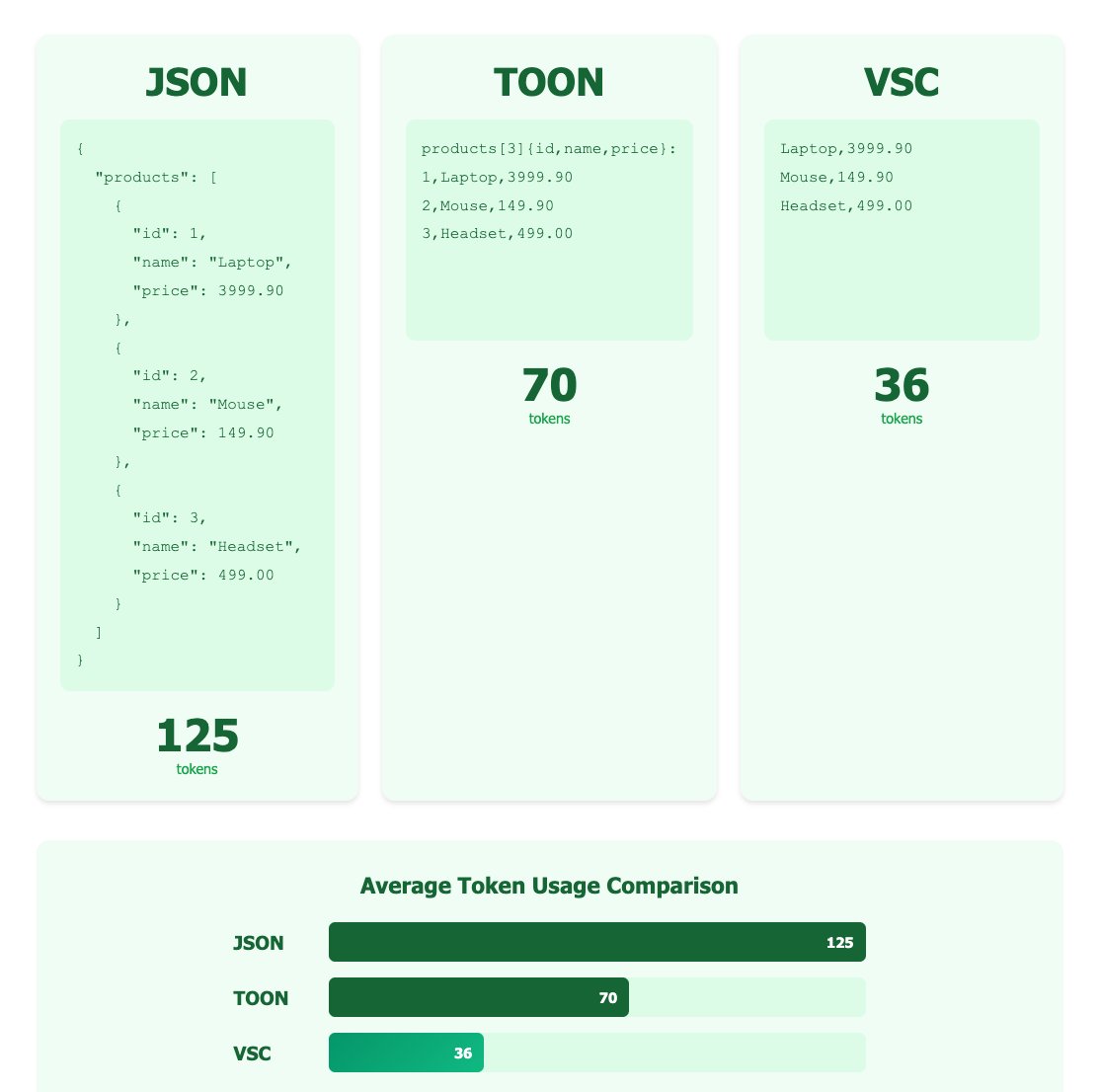
BREAKTHROUGH: I have invented a novel object notation format that provides an additional 71% token savings over JSON and 59% over TOON.
I have named it VSC (Values Separated by Comma), patent pending.
Weekend reading for all you ambitious folks. 🔥 Learn how to architect a database [Free full-length book on SQL and relational DBMS]
Here are this week's five freeCodeCamp resources that are worth your time:
1. freeCodeCamp just published this full length book on how to architect a database using SQL and relational database management systems. This book is aimed at beginners, and includes a Jupyter Notebook you can interact with as you follow along. It will teach you Postgres and a bit of SQL. Then you'll learn how to design and maintain efficient, secure databases that support complex data-driven apps. (Full length book): https://t.co/NszcJf1RNQ
2. freeCodeCamp also published this comprehensive data science course on Time Series Forecasting with Python. You'll learn about key Time Series components like trend, seasonality, and residuals. You'll start by building some baseline models. Then you'll dive into Cross-Validation, Exogenous Features, Prediction Interval Generation, and more. (2 hour YouTube course): https://t.co/m6DX0ixzxz
3. On this week's freeCodeCamp podcast, I interview Edidiong Asikpo about her journey from medical school into software engineering. She talks about Nigeria's tech scene, how to break into tech when you live outside the Silicon Valley ecosystem, and how she transitioned from mobile app development to DevOps. Tons of actionable tips here. (1 hour watch or listen in your favorite podcast app): https://t.co/XqVURG98g7
4. freeCodeCamp also published this in-depth guide to passing the Google Cloud Associate Engineer certification exam. Andrew Brown will teach you about Infrastructure as Code, Serverless, Google Kubernetes Engine, data storage solutions, and more. If you're interested in a career in DevOps, take a gander. (11 hour YouTube course): https://t.co/TTsbnAInvW
5. Learn how the popular Next.js web development framework handles caching and rendering. This course uses the latest version of Next.js – version 15. It will teach you all about Static Site Generation, Server-Side Rendering, Incremental Static Regeneration, and other important concepts. (2 hour YouTube course): https://t.co/LQkOkST2Ds
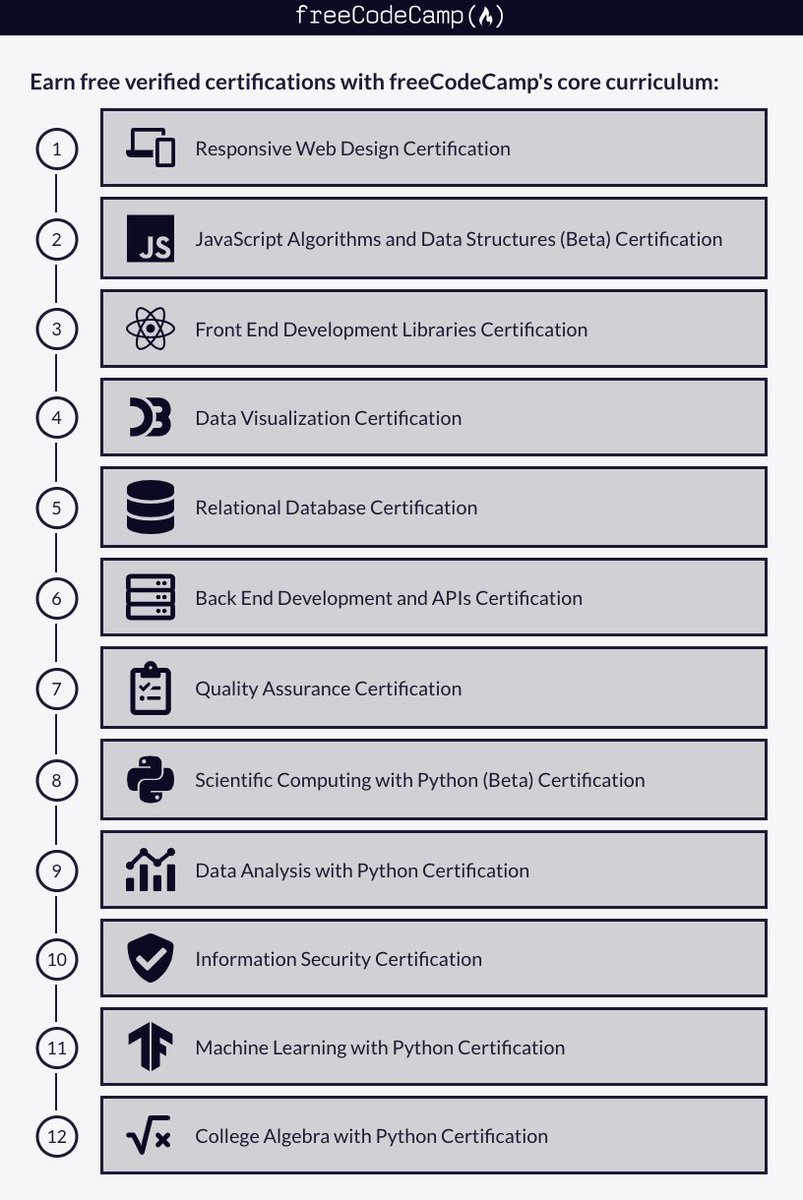
These are just some of the open source learning resources that the freeCodeCamp community published this week. Our core curriculum is also under heavy development. We're launching new certifications in the coming months. You can help us accelerate open source education. Start supporting our charity and our mission directly: https://t.co/PJXlqTfhI9
Quote of the Week:
“To this day, I remember when my first open source pull request got merged. It was one of the best days of my life. I was so, so happy. I couldn't believe that a code contribution that I made was now part of an application used by thousands of people.” — Software Engineer @Didicodes on this week's freeCodeCamp podcast
Until next week, happy coding.
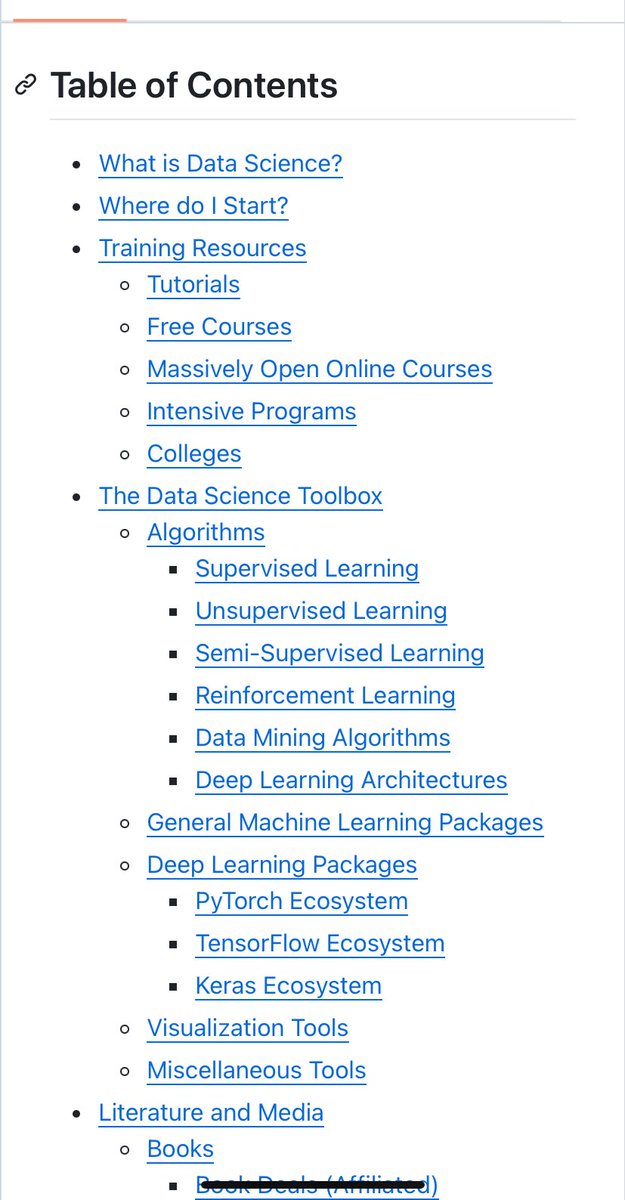
An open-source Data Science repository to learn and apply towards solving real world problems.
This is a shortcut path to start studying Data Science.
Find everything you need here: https://t.co/fCbORAcpbM
Java : JDK 24 drops wild updates.
• Quantum-proof encryption
• Faster startups
• Simpler APIs
• Bye 32-bit support
But Quantum Proof Encryption details are yet to be disclosed as work in progress.
Link: https://t.co/9SSUqFUZ4a
#Java#TechUpdates#springboot#code
Spring Boot is a powerful framework that helps you develop Spring applications.
And this course will teach you how to build apps with Spring Boot and Java.
You'll learn about Java build tools & database integration and then build and test a REST API.
https://t.co/faUgzww5Qd
Ready to elevate your #AWS journey? 🤩
The AWS Community Builders program provides access to technical resources, education, & insights from AWS experts. The program accepts a limited number of members each year!
Learn more and apply now: https://t.co/o60EOCufn9
#AWSCommunity
Cut your AWS Lambda logging costs! 🪙 By filtering logs with AWS SAM and switching to JSON format, you can capture only what's essential, reducing storage expenses during high load times. Streamline your logging and save money! #AWS#Serverless#CloudWat… https://t.co/7OTKtr0yzn




![ossia's tweet photo. Weekend reading for all you ambitious folks. 🔥 Learn how to architect a database [Free full-length book on SQL and relational DBMS]
Here are this week's five freeCodeCamp resources that are worth your time:
1. freeCodeCamp just published this full length book on how to architect a database using SQL and relational database management systems. This book is aimed at beginners, and includes a Jupyter Notebook you can interact with as you follow along. It will teach you Postgres and a bit of SQL. Then you'll learn how to design and maintain efficient, secure databases that support complex data-driven apps. (Full length book): https://t.co/NszcJf1RNQ
2. freeCodeCamp also published this comprehensive data science course on Time Series Forecasting with Python. You'll learn about key Time Series components like trend, seasonality, and residuals. You'll start by building some baseline models. Then you'll dive into Cross-Validation, Exogenous Features, Prediction Interval Generation, and more. (2 hour YouTube course): https://t.co/m6DX0ixzxz
3. On this week's freeCodeCamp podcast, I interview Edidiong Asikpo about her journey from medical school into software engineering. She talks about Nigeria's tech scene, how to break into tech when you live outside the Silicon Valley ecosystem, and how she transitioned from mobile app development to DevOps. Tons of actionable tips here. (1 hour watch or listen in your favorite podcast app): https://t.co/XqVURG98g7
4. freeCodeCamp also published this in-depth guide to passing the Google Cloud Associate Engineer certification exam. Andrew Brown will teach you about Infrastructure as Code, Serverless, Google Kubernetes Engine, data storage solutions, and more. If you're interested in a career in DevOps, take a gander. (11 hour YouTube course): https://t.co/TTsbnAInvW
5. Learn how the popular Next.js web development framework handles caching and rendering. This course uses the latest version of Next.js – version 15. It will teach you all about Static Site Generation, Server-Side Rendering, Incremental Static Regeneration, and other important concepts. (2 hour YouTube course): https://t.co/LQkOkST2Ds
These are just some of the open source learning resources that the freeCodeCamp community published this week. Our core curriculum is also under heavy development. We're launching new certifications in the coming months. You can help us accelerate open source education. Start supporting our charity and our mission directly: https://t.co/PJXlqTfhI9
Quote of the Week:
“To this day, I remember when my first open source pull request got merged. It was one of the best days of my life. I was so, so happy. I couldn't believe that a code contribution that I made was now part of an application used by thousands of people.” — Software Engineer @Didicodes on this week's freeCodeCamp podcast
Until next week, happy coding.](https://pbs.twimg.com/media/GybE8I8XUAAWEmt.jpg)