Good evening!
Let our words be timely and truthful
Let our deeds be virtuous and honorable
Let our thoughts be pure and wholesome
Let us strive in all things for the ultimate
❤️
We are laying the foundation of the world to come *right now.* If there is something you want in the world in the future, Now is the time to be working to make that so
Good evening!
As a mighty oak sprouts from a small seed,
Let us expand our minds to vast and limitless states.
As a lotus' leaves rest dry above the water,
Let us remain unsullied by mundane affairs.
❤️
Good evening!
As babbling rivers disturb not the mighty sea,
Let no trifling matters thwart our practice.
As the sun shines on all beings without exception,
Let us radiate infinite, undiscriminating benevolence.
❤️
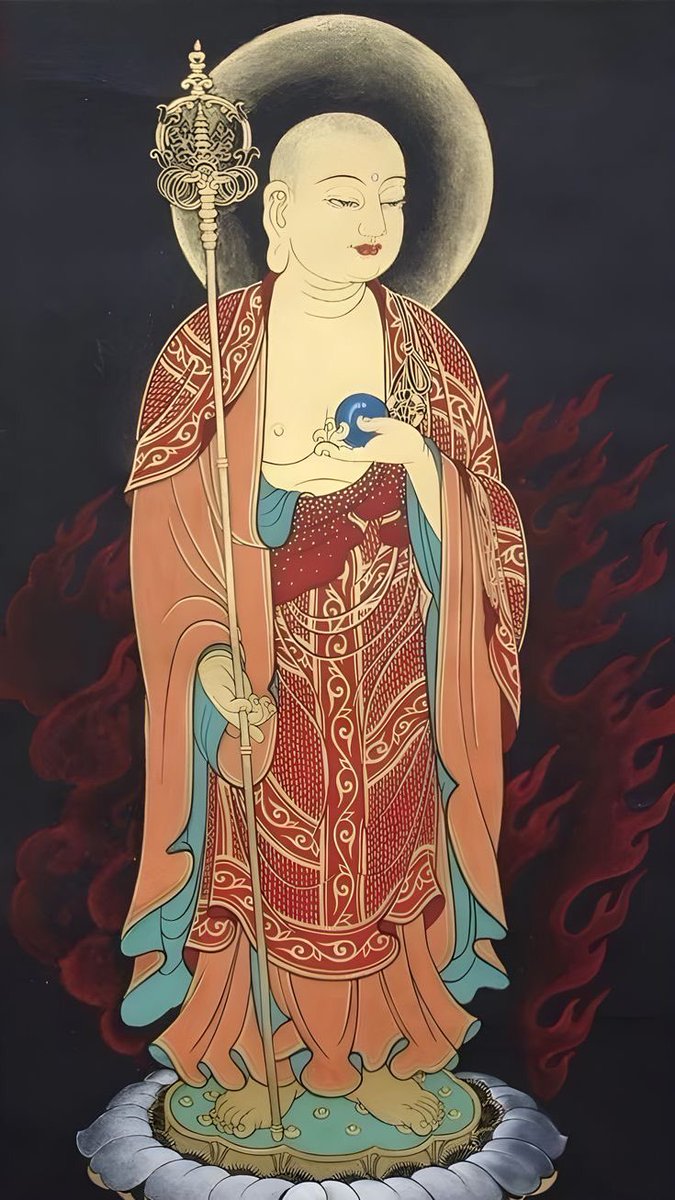
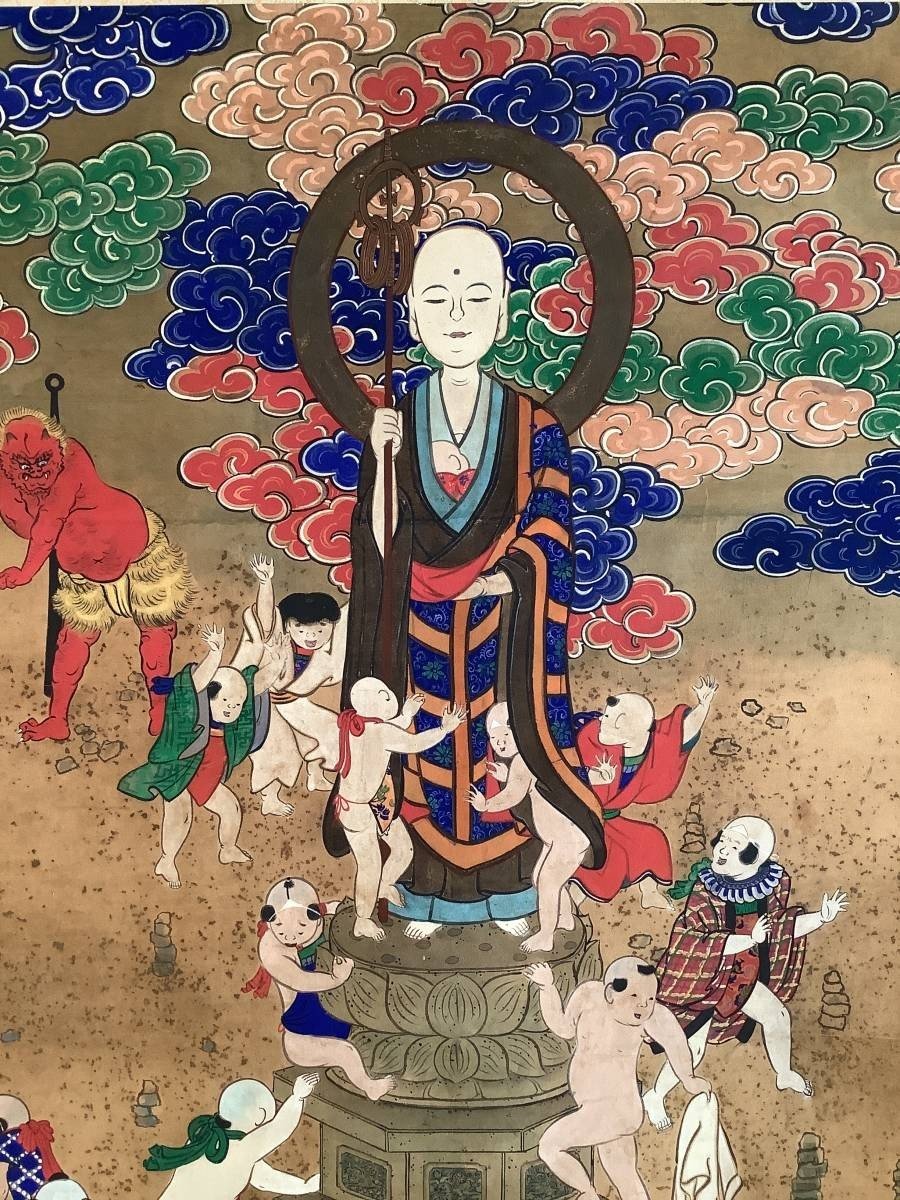
This is an interesting thread, and reminds me of a story around Jizo Bosatsu (Ksitigarbha Bodhisattva) that is not only well known in Japan, but perhaps the most popular story about Jizo in the west.
It's said that infants who die early in life or before they are born end up in a section of hell called Sai no Kawara, a riverbed that acts as a sort of purgatory.
There, the souls of the children build small towers of stones as penance, as it's the only act of devotion they can really do. The entire time, they are menaced by demons who constantly knock the towers over.
To save these children and bring them back to the higher realms, Jizo descends to hell, drives off the demons, and brings the babies into his robes in order to carry them back up.
An interesting story that can really stick with you. The only problem is that it's nowhere in the scriptures. I was surprised the first time I read the Ksitigarbha Sutra and saw no mention of such children or this purgatory.
Instead, it is a piece of folklore that was spread around the Pure Land schools of Japanese Buddhism around the 14th century and has simply remained in the popular imagination, and Jizo is forever associated with babies!
In Buddhist cosmology, gods are said to think like this: “life isn’t suffering life is awesome” when that condition finally ends as it must,. imagine the suffering they feel when they realize their lives of perceived non-suffering are over. it’s even worse than human suffering
In Chinese #mythology, Di Ting(諦聽) is the mount of the Bodhisattva Kṣitigarbha (Dizang Pusa). Before Kṣitigarbha attained enlightenment, he raised a large white dog and named it "Di Ting." #mythologyMonday
The name "Di" represents "truth," and "Ting" means "to listen," so "Di Ting" implies listening to the truth.
After Kṣitigarbha attained enlightenment, the white dog transformed into his mount. Di Ting can distinguish all things in the world by listening, especially skilled at hearing people's hearts.
It embodies the characteristics of various creatures: it has the head of a tiger, a single horn, dog ears, the body of a dragon, the tail of a lion, and the feet of a qilin. The dragon body symbolizes auspiciousness, the tiger head represents wisdom and courage, the dog ears signify keen hearing, the lion tail symbolizes patience, and the qilin feet represent stability.
The divine dog Di Ting understands Buddhist teachings, perceives human nature, repels evil, and is considered a symbol of good fortune.
Good morning!
May those stricken with fear be endowed with courage
May those paralyzed by craving be freed by dispassion
May those burning with anger find relief in benevolence
May all beings struggling in delusion know the happiness of wisdom
❤️