I’ll help you upgrade your stress response with insights and techniques backed by modern science and ancient wisdom. Breathwork coach & meditation teacher.
Ever wondered why a tortoise lives so long?🐢
Picture this: It breathes just 1-2 times per min.
This rate is known as the breathing rate.
It reflects the degree of peace and serenity in mind and body.
The Yogis knew this.
Curious about your breathing rate and what it means?
Try this: Set a timer for 1 min.
Breathe naturally and count your breaths.
If it exceeds 15, anxiety might be knocking.
A healthy human must take fewer than 12 breaths per minute.
But fear not!
A few minutes of belly breathing and nasal exhalation can bring it under 12.
A daily Pranayama (breathwork) practice will help bring your breathing rate under 12.
It's a must for maintaining tranquility.
Ready to unlock the secrets of peace.
How many breaths do you take in a minute?
95% of boundary advice is useless.
You're not overworked because you can't say no.
You're overworked because you became the reliable one....
And your nervous system won't let you stop.
Here's how to break free: 🧵
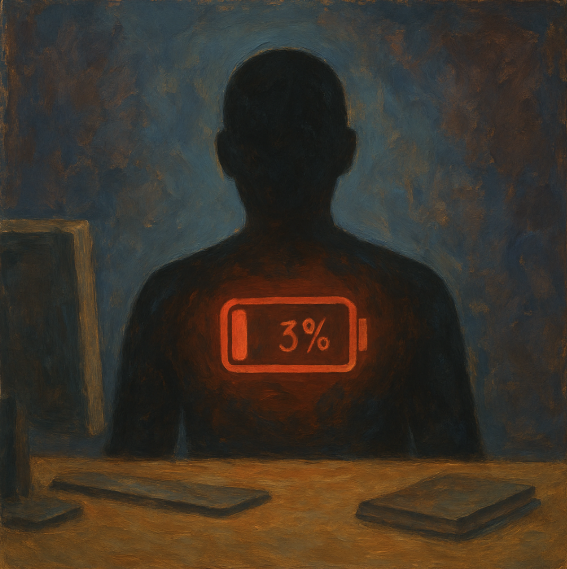
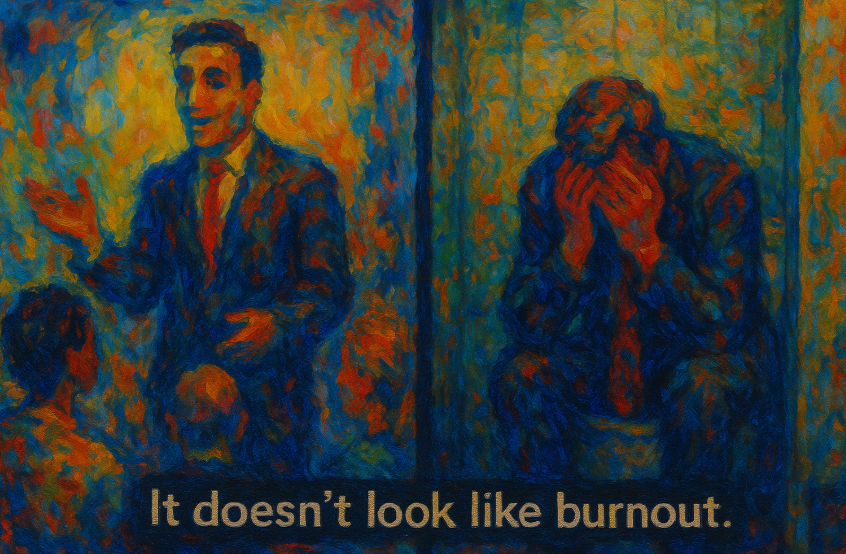
There’s a kind of burnout that doesn’t look like burnout.
You still perform. Still reply. Still lead.
But inside? You’ve gone quiet.
This isn’t tiredness.
It’s your nervous system going into shutdown.
Let’s break it down: Functional Freeze 🧵
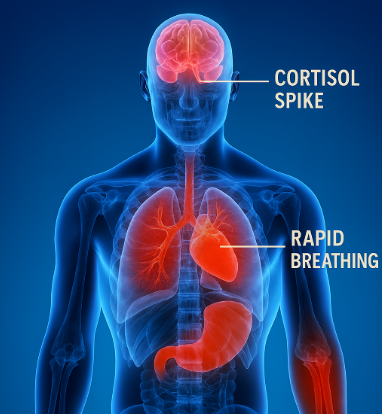
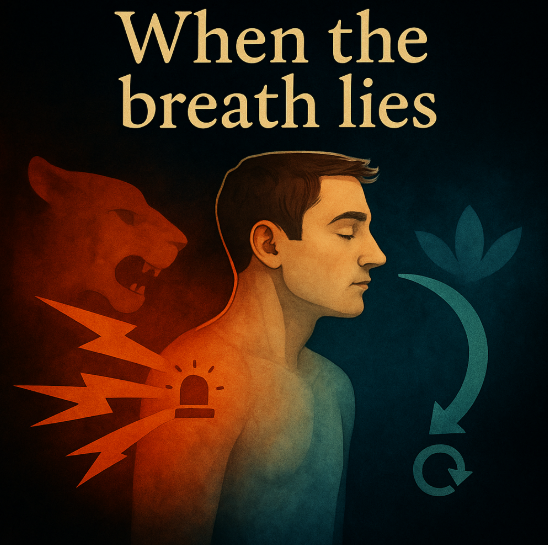
You’re breathing like you’re being chased by a tiger.
You don’t notice it.
Unfortunately your nervous system does.
Here’s how your breath is keeping you stressed, anxious, and exhausted:
(plus one simple technique to break the cycle) 🔄
T-30 minutes to the 'big meeting.'
Your heart is racing... Body is on the edge...
Funny - because you've done this 100 times before.
⁍ You know you're prepared.
⁍You know you're qualified.
Then why, even after 10 years, you can't stay calm? Here's why: 🧵
Why does EVERYTHING feel harder on Monday morning?
Your coffee isn't working.
Your brain feels foggy.
Your body feels heavy.
No, it's not just "Monday blues."
A thread on the body-brain gap that's really causing this:🧵
Why do you feel more tired AFTER the holiday break?
You slept in.
You Netflixed.
You 'relaxed.'
But instead of feeling recharged, you feel drained.
There's a reason for this: (A thread on deep rest)🧵
Are you tired of being "Always On"? or
Are you trying to stay "Always On"?
Here's the fact about it you need to know:
Let's cut through the typical advice.
Most people will tell you to "disconnect," "set boundaries," and "practice work-life balance."
That's cute.
The whole "disconnect to recharge" advice sounds great until you're actually building something meaningful.
When you're in the thick of creating, scaling, or leading - you can't just "switch off" and hope everything works out.
Can you? I can't.
See...
Being "always on" doesn't mean what you think it means.
I used to think it meant being available 24/7, responding to every ping, and basically living in my inbox.
I was wrong. Dead wrong.
Here's the truth I have learned & I preach now:
There's a massive difference between being always reactive and always ready.
Most people are stuck in reactive mode:
• Jumping at every notification
• Living in constant low-grade anxiety
• Letting our inbox run our lives
• Mistaking busy for productive
And they're proud of it.
Wearing "constant availability" like a badge of honor.
"Look at me, I'm always hustling!"
But let me ask you something:
When was the last time your best work came from responding to a notification?
When was your last breakthrough idea born in your inbox?
Yeah, that's what I thought.
The real game isn't about staying connected longer.
It's about being more awake when you're awake.
Think about it.
Your brain isn't designed for constant input.
It's designed for rhythms.
Cycles of engagement and recovery.
Just like your body.
You don't go to the gym 24/7.
You don't eat constantly.
You don't run marathons every hour.
So why do you expect your brain to operate that way?
Here's what works for me and my students:
1. Stop confusing readiness with reactivity
Being ready doesn't mean being available to everyone all the time.
It means being fully present for what actually matters.
2. Use stress like training, not punishment
Stress isn't your enemy.
Poor recovery is.
Every athlete knows this. Why don't we?
3. Master your modes
You're not a computer with just an ON/OFF switch.
You need different modes:
• Deep dive mode (when you're creating)
• Scanning mode (when you're monitoring)
• Recovery mode (when you're restoring)
• Connection mode (when you're collaborating)
The key isn't picking one. It's knowing when to use each.
4. Rest before you have to
Don't wait until you're burned out to recover.
That's like waiting until you're dehydrated to drink water.
Stupid, right?
5. Be selective about your attention
Being "always on" doesn't mean knowing everything. It means knowing the right things at the right time.
Your attention is your most valuable currency. Stop giving it away for free.
Look, you don't need to choose between being available and being effective.
You need to redefine what availability means for you.
For me & my student, it means:
• Being fully present when working
• Being intentional about when engaging
• Being strategic about recovery
Not:
• Being everyone's 24/7 help desk
• Being a slave to notifications
• Being proud of constant exhaustion
The real secret isn't working more hours. It's bringing more life to the hours you work.
So stop trying to stay ON longer. Start being ON better.
Because here's what I know for sure:
Your best work doesn't come from being always available. It comes from being fully present.
Choose that instead.
Ok?
*******************************************************
Hope you see being on in a new light.. if you do leave a comment & share this with your friends.
********************************************************
"This job is killing me..."
said my old friend over a call.
I had to smile.
Because I used to say the exact same thing.
Each morning, that knot in my stomach.
Every notification making my chest tight.
Every deadline feeling like life or death.
I used to stand outside my office building, trying to gather courage to walk into the office.
Taking deep breaths that somehow never felt deep enough.
I was convinced my job was slowly destroying me.
Until I realized that:
My job wasn't the problem.
My interpretation of my job was.
Let me explain...
When you:
- Get a critical email from your boss
- See a deadline approaching
- Face a difficult conversation
Your body responds exactly the same way as if:
- A tiger was chasing you
- A snake was about to strike
- A fire was surrounding you
Survival threat = Survival response
But the difference is:
The tiger would kill you in minutes.
The email... wouldn't.
Yet your body doesn't know the difference.
You have to understand:
This isn't your fault.
This isn't a weakness.
This is simply outdated wiring.
Your nervous system is running code written for a world of physical threats. In a reality of psychological challenges.
It's like running Windows 95 on a quantum computer.
The problem isn't your job.
The problem is the operating system you are using to handle it.
And the good news?
Operating systems can be upgraded.
Neural pathways can be rewired.
Responses can be reprogrammed.
I know this because I've done it.
I've watched my clients do it.
I've seen the transformation firsthand.
Your job isn't killing you.
Your response to it is draining you.
And that?
That we can work with.
That we can change.
That we can upgrade.
Because here's what you need to know:
"Work stress" isn't going anywhere.
But your relationship with it can transform completely.
It starts with understanding:
You're not broken.
Your job isn't toxic.
Your wiring just needs an update.
And that's something we can actually fix.
I know... because I fixed it.
***
Stress is not the enemy.
It's a signal your system is sending you.
Most people try to manage stress.
That's why they stay stuck.
The real reason you're overwhelmed (and the permanent solution): 🧵
Depression & anxiety usually share a common cause:
The mind’s inability to stay in the present moment.
It jumps back & forth between:
🔸 bringing back past traumas
🔸 worrying the story will repeat itself
To fix this, build your present-moment awareness.
Like any other skill
@FitFounder All good points but I’ll give you one better for self-regulating your nervous system - real breathing techniques (not just hyperventilation) :)
Ever wondered why a tortoise lives so long?🐢
Picture this: It breathes just 1-2 times per min.
This rate is known as the breathing rate.
It reflects the degree of peace and serenity in mind and body.
The Yogis knew this.
Curious about your breathing rate and what it means?
Try this: Set a timer for 1 min.
Breathe naturally and count your breaths.
If it exceeds 15, anxiety might be knocking.
A healthy human must take fewer than 12 breaths per minute.
But fear not!
A few minutes of belly breathing and nasal exhalation can bring it under 12.
A daily Pranayama (breathwork) practice will help bring your breathing rate under 12.
It's a must for maintaining tranquility.
Ready to unlock the secrets of peace.
How many breaths do you take in a minute?
Crazy stat I just learned on a cast.
The average American breath rate is like 15 to 20 breaths a minute.
In the 80s the average American breath rate in 1980 is 7.5 breaths a minute.
We need to expand the scope of how we define progress beyond GDP and convenience.