Ever heard of foundation models but not sure where to start? 🤔 We wrote a review for RNA biologists, no AI background required 😊 Everything explained through RNA biology examples you already know 🧬 @YiliangDing
https://t.co/72RAhbU1L1
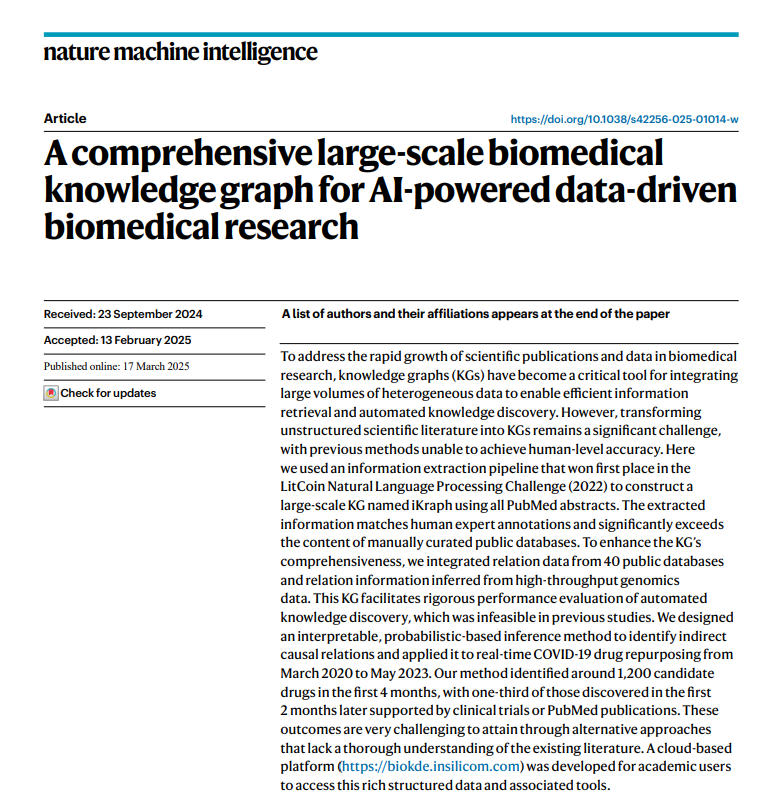
A comprehensive large-scale biomedical knowledge graph for AI-powered data-driven biomedical research
https://t.co/PmwLyvT3mx
#iKraph#AI_for_science
Summary: In this study, authors built a large biomedical knowledge graph called iKraph using all PubMed abstracts. It extracts information with human-level accuracy and integrates data from 40 public databases.
The system can discover indirect causal relationships and predict new drug candidates. Overall, the study demonstrates that large-scale, literature-integrated knowledge graphs combined with interpretable inference methods can enable powerful, real-time biomedical discovery. The authors also released a cloud-based platform for academic users to access the structured data and analytical tools.
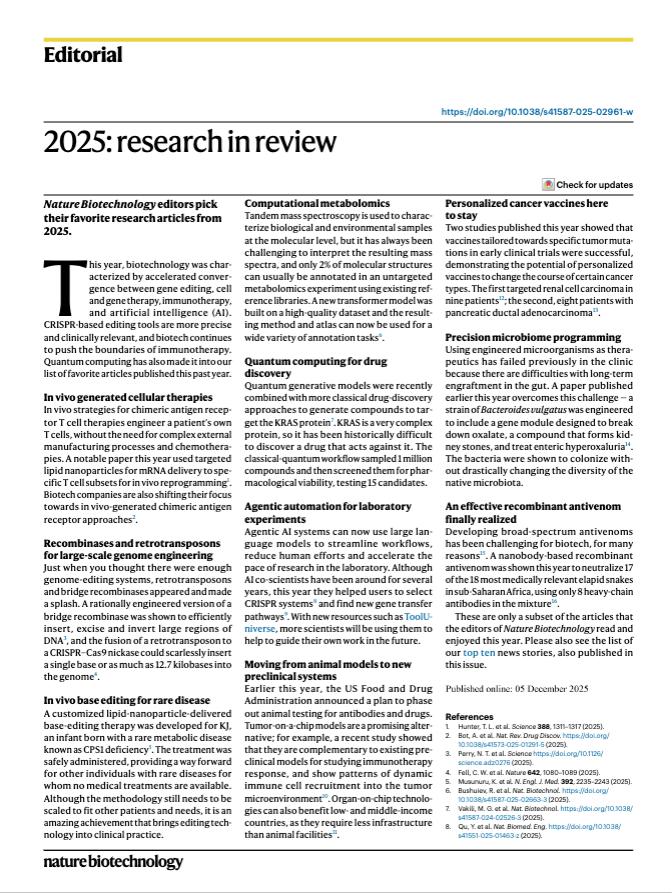
This year, biotechnology was characterized by accelerated convergence between gene editing, cell and gene therapy, immunotherapy, and AI. CRISPR-based editing tools are more precise and clinically relevant, and biotech continues to push the boundaries of immunotherapy. Quantum computing has also made it into our list of favorite articles published this past year https://t.co/zFB9iG1bSq
Want to learn about how we use computational approaches at different scales to study biomolecular condensates?
Check out our latest review, out in Advances in Physics X
@JuliaMaristany@A_Emelianova@pinyuchew Anne Aguirre @rcollepardo
https://t.co/0RpqBxOWfF
In light of James Watson's death, I post this article which clarifies Rosalind Franklin's contributions to the discovery of the structure of DNA. It is richer than the conventional narrative.
https://t.co/BW5abtUUba
Light pollution is causing birds around the world to sing for longer each day, prolonging their vocalizations on average by 50 minutes, according to a new study in Science.
Learn more: https://t.co/DneC4mTJf2
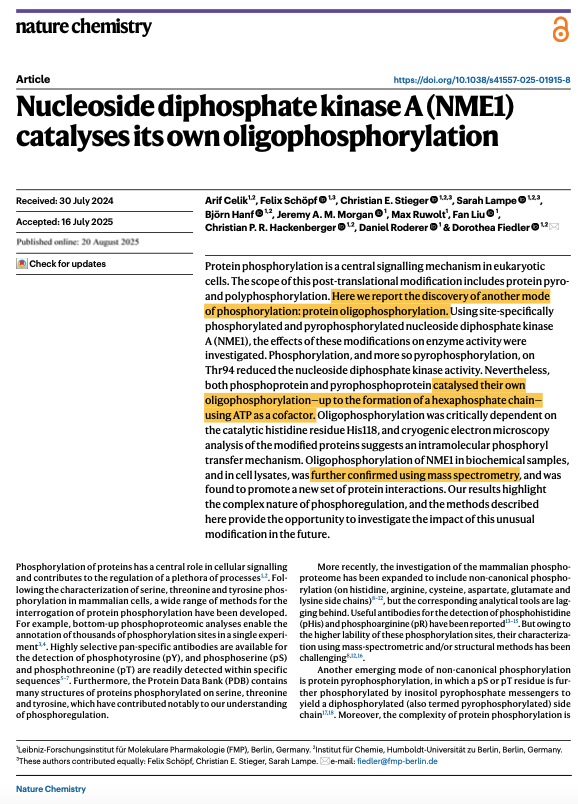
A new paper, in Nature Chemistry, proves that there are still tons of "basic" things to discover in biology. There is so much room at the bottom.
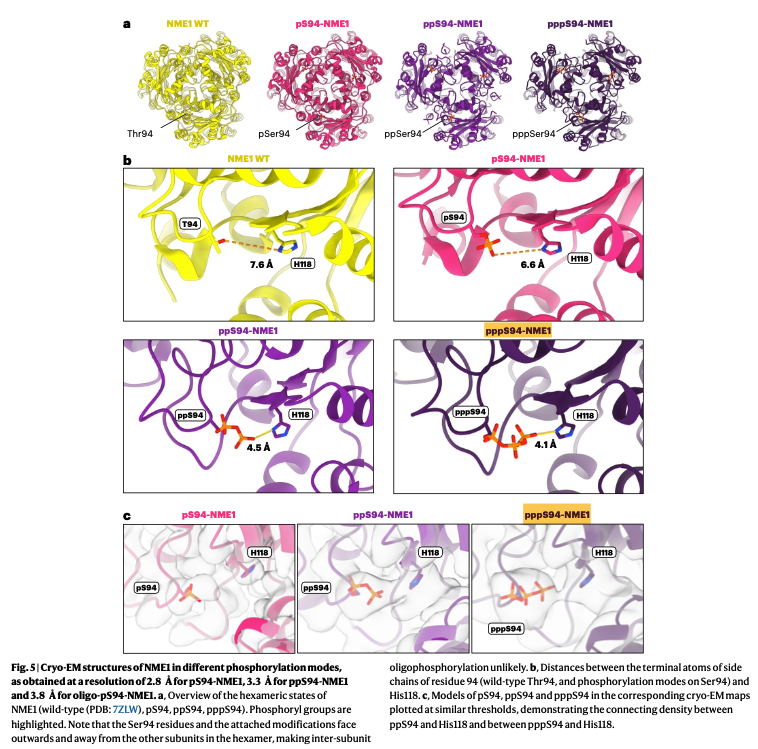
TL;DR: Researchers discovered a new type of post-translational modification, called “oligophosphorylation.” Rather than being tagged with a single phosphate, some proteins are instead decorated with a chain of phosphates...all on a single amino acid!
In human cells, phosphates are often added to serine, threonine, or tyrosine amino acids in proteins. These additions happen after a protein is already made by a ribosome, hence why they are called “post-translational modifications.” Adding a phosphate can flip enzymes on or off. Tagging proteins with a molecule called ubiquitin targets them for destruction. Lipids are fused to proteins to anchor them to membranes, and so on.
These post-translational modifications are a way for cells to “tune” the behaviors of proteins after they are made, rather than investing lots of energy to make new proteins from scratch.
For this paper, researchers were studying a single protein, called NME1, when they found the oligophosphorylation. NME1’s job is to move a phosphate from ATP (an energy currency of cells) to other nucleotides, like GDP→GTP. The key amino acid that does this reaction is a HISTIDINE at position 118. This histidine strips a phosphate from ATP and then passes it to the next molecule.
Now, if you look at NME1 in 3D, you will see that the HISTIDINE at 118 is located right next to a THREONINE at position 94. And the chain of phosphates--the new type of post-translational modification--was discovered on that threonine!
How was this discovered? A simple experiment: The researchers put NME1 proteins in a liquid and chemically fused a phosphate at residue 94. Next, they added some ATP to this liquid and used mass spectrometry to measure how the protein’s mass changed over time. They saw clear, stepwise “jumps” in mass of about 80 Daltons (the mass of a phosphate) after adding ATP.
Turns out that, if the threonine at 94 has a phosphate before the histidine encounters ATP, the histidine will begin stripping phosphates from ATP and adding it to the threonine. If you mutate the histidine to another amino acid, this stops happening. (This same phenomenon was also found in living cells.)
What's the point of proteins making these phosphate chains, though?
The answer comes down to charge; a single phosphate carries a negative charge, but a CHAIN of phosphates carries a much bigger charge! And this big charge blocks molecules from moving into the enzyme’s active site. It’s basically a really powerful off switch. (Also, the negative charge ATTRACTS other molecules and proteins; it seems to facilitate new types of binding.)
Now that we know these chains exist, we can look for them elsewhere, too. This discovery actually reminds me of glycoRNAs, which are RNA molecules fused to sugar. For decades, nobody thought glycoRNAs could exist, but then researchers found them (in 2021). The reason we missed them for all those years was because our methods were biased. Standard RNA purifications filtered out these molecules.
Our tools are often designed to produce more of what we expect, in other words. If we don’t know to look for something, we cannot easily find it.
Our HIV-1 nuclear import study is now online in Nature Microbiology
📄 Read the paper: https://t.co/45CzNIx4CN
🎥 Watch the stunning movie of the virus in action: https://t.co/DmA5xl1VTV
Huge congratulations! @OxfordStrubi@eBIC_Diamond
We released the Open Molecules 2025 (OMol25) Dataset last week! 🚀🧪 OMol25 is a large (100M+) and diverse molecular DFT dataset for training machine learning models. It was a massive collaborative and interdisciplinary effort and I’m super proud of the whole team! 🙌
1/7
A 'one-drug-fits-all' approach to mental health often doesn’t work, but hopes for drugs for ‘domains’ of psychiatric disorders took a blow with the discontinuation of J&J's aticaprant for depression with anhedonia. Read about paths forward in the May issue https://t.co/OQTsQAhjVT
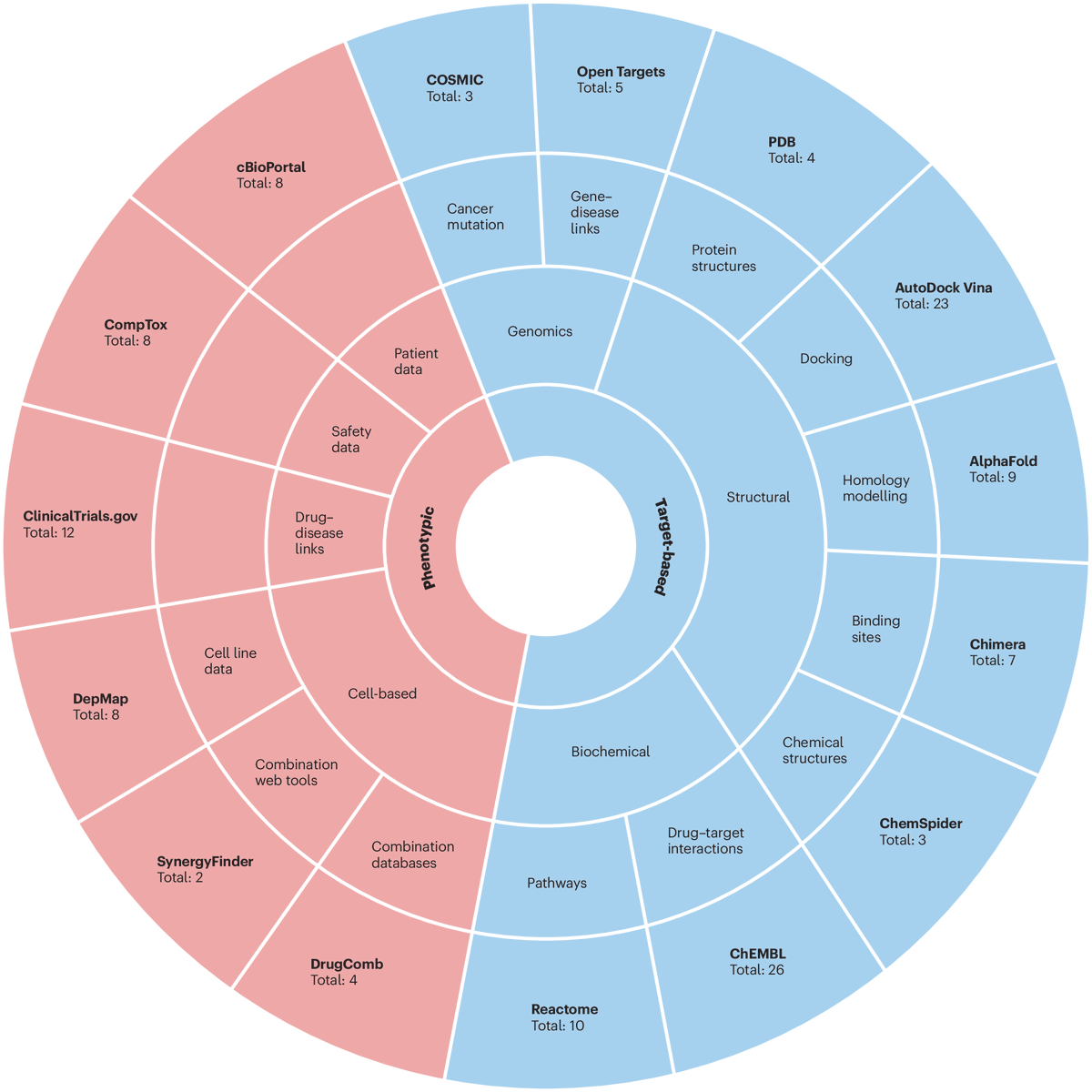
Computational drug repurposing: approaches, evaluation of in silico resources and case studies https://t.co/yuKQ0U1Bj7
This new review from @REMEDi4ALL evaluates computational approaches to drug repurposing based on categorization of available resources into an online catalogue
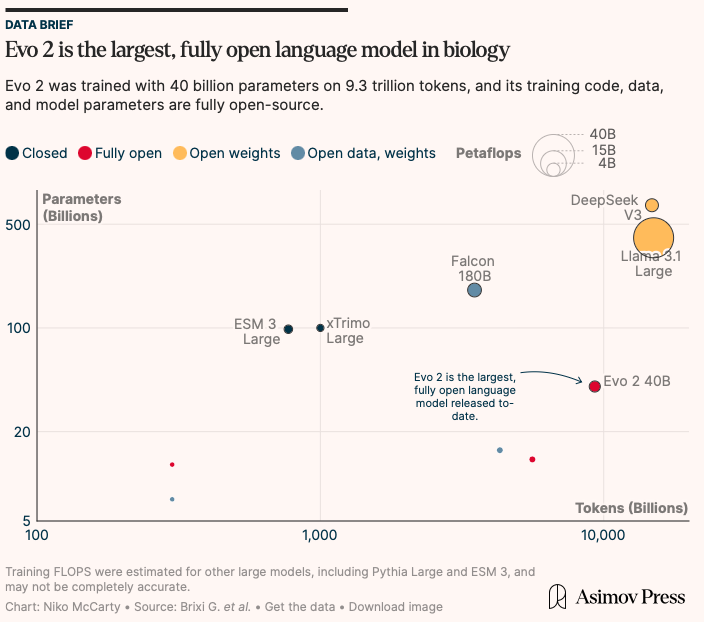
Just now: @arcinstitute and @nvidia release Evo 2, the largest AI model for biology. It is fully open-source.
Evo 2 can predict which mutations in a gene are likely to be pathogenic, or even design entire eukaryotic genomes.
We covered it in @AsimovPress! Check it out 🔻