Announcing Flapping Airplanes!
We’ve raised $180M from GV, Sequoia, and Index to assemble a new guard in AI: one that imagines a world where models can think at human level without ingesting half the internet.
We @novaholdings crafted the most complete library of founder biographies — origin stories from the formative years of the out-of-distribution individuals behind history’s defining companies.
Founder Profiles, by Nova Global
Honored to be published in @ForeignAffairs.
For 2 years we've made the case for local AI. Here's the geopolitical angle: the U.S.–China race isn't about who trains the best model. It's about whose models, chips, and frameworks run by default on billions of devices.
Joint work w/@jdunnmon & @JonSaadFalcon
(1/N)
The dominant story in AI has been the growing cloud: bigger clusters, larger models, more gigawatts.
We believe the future is in the opposite direction: on-device inference, smaller models, watts instead of gigawatts.
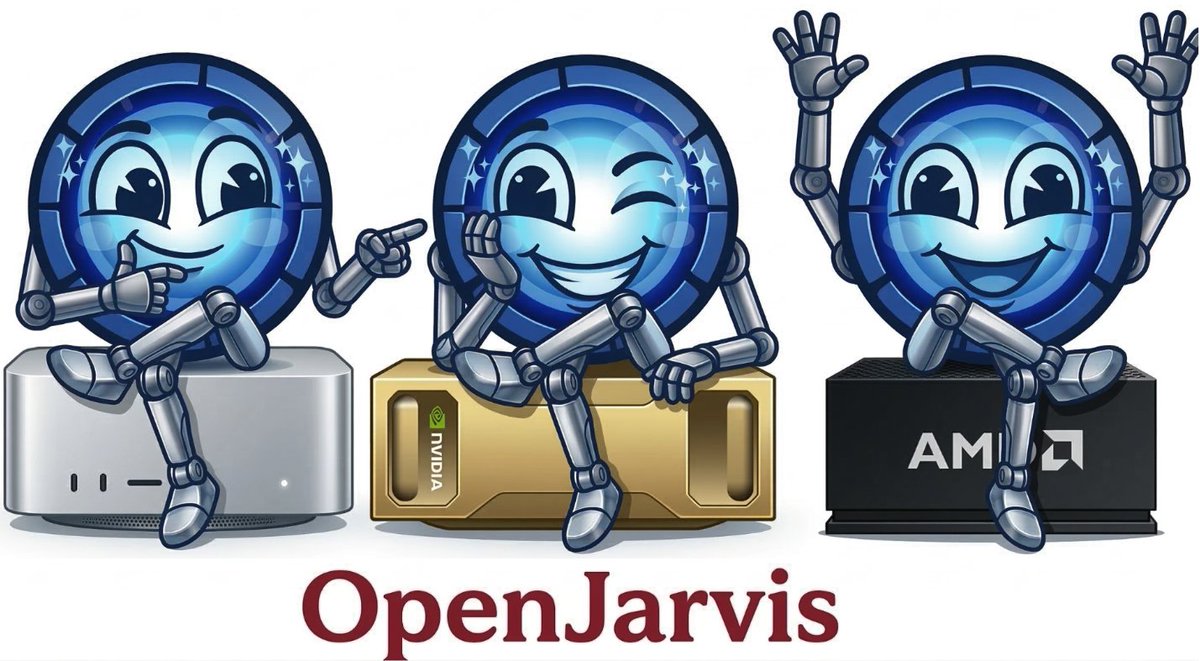
Today we're releasing @OpenJarvisAI v1.0: a personal AI assistant that lives, learns, and works on your device.
megakernels remain underrated. if you haven’t dug into them before go look them up! flappy seems to be hinting at some really powerful training megakernel stuff which is sick
ex: fully contained training megakernel could be great for automated research
(1/5) Great to be at @sequoia to give a sneak peek of one of our research directions!
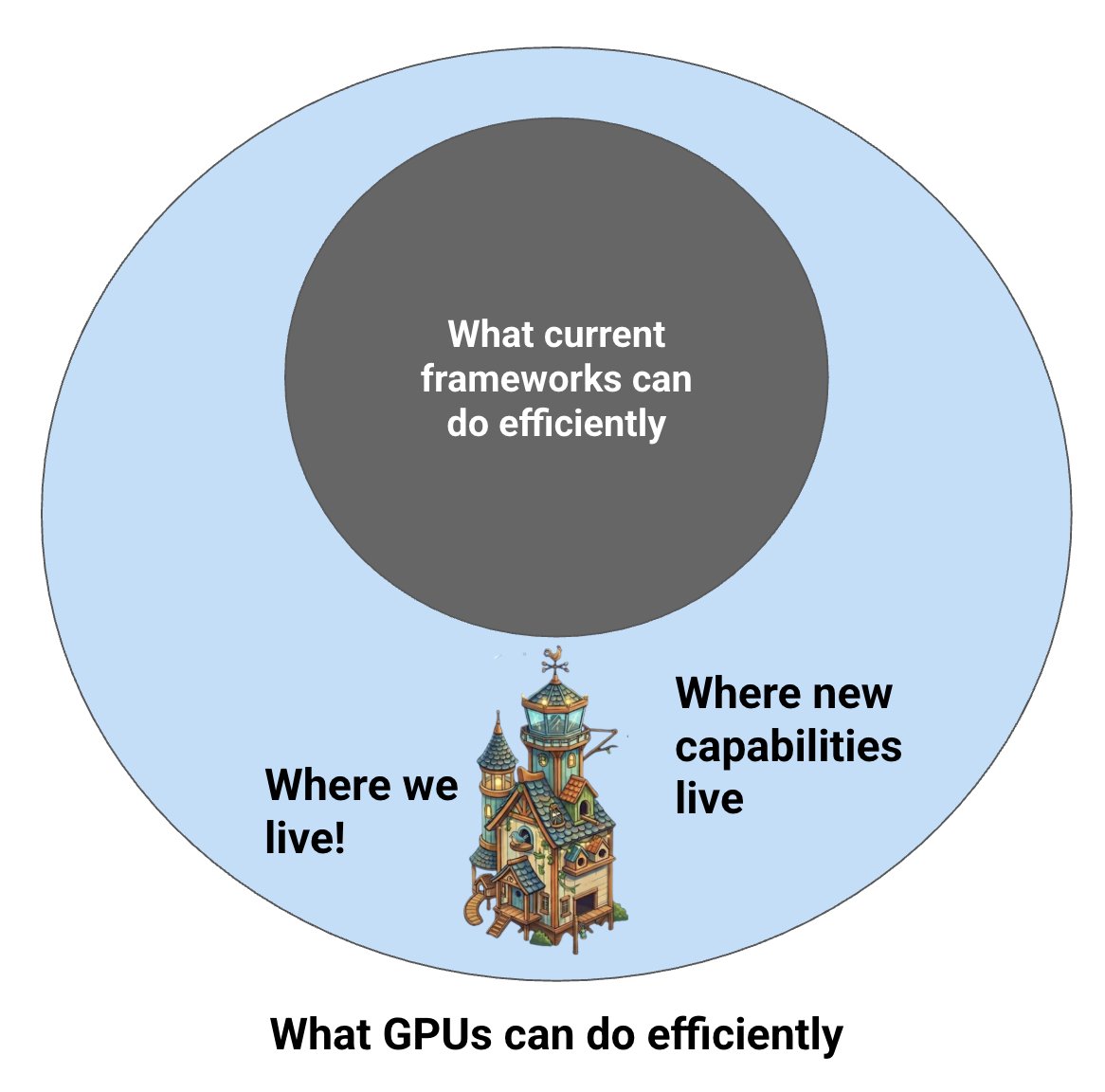
TL;DR one path to data-efficiency may be to “abuse GPUs like they���ve never been abused before”
Personal AI should run on your personal devices. So, we built OpenJarvis: a personal AI that lives, learns, and works on-device.
Try it today and top the OpenJarvis Leaderboard for a chance to win a Mac Mini!
Collab w/ @Avanika15, John Hennessy, @HazyResearch, and @Azaliamirh. Details in thread.
Announcing Flapping Airplanes!
We’ve raised $180M from GV, Sequoia, and Index to assemble a new guard in AI: one that imagines a world where models can think at human level without ingesting half the internet.
Announcing Flapping Airplanes!
We’ve raised $180M from GV, Sequoia, and Index to assemble a new guard in AI: one that imagines a world where models can think at human level without ingesting half the internet.
The U.S.–China AI race won’t be decided by who builds the most datacenters, but by who deploys the most intelligence.
We call this Gross Domestic Intelligence (GDI): intelligence per watt × usable power.
If the U.S. activates its dense installed base of local AI accelerators in a hybrid local–cloud system, it could add ~30–40% inference capacity and ≈2-4× GDI for single-turn chat and reasoning queries without building any new datacenters or grid infrastructure.
Winning the GDI race means treating local compute as critical infrastructure and making hybrid inference the default.
(1/N)
ES might help here… instead of backpropping through a value function that’s also trying to learn the physics, you could just ask “did the orbit work?” and hill-climb in parameter space. Recent work (EGGROLL) makes this a lot more scalable as well.. would love to hear your thoughts.
Agreed - something that might explain it is that AR models train on a single factorization order whereas DLLMs train over a much larger distribution of mask-induced orders - with many epochs, that larger distribution might provide more diverse training signal, ultimately allowing the model to better fit the given data distribution.
Intelligence efficiency is now measurable⚡️
We added intelligence per watt calculation + expert-level benchmarks (MMLU-Pro, SuperGPQA) to our profiling harness.
Now you can see exactly how efficiently your laptop converts power into intelligence—accuracy per watt, measured automatically.
Check it out here: https://t.co/jJZZT8NSTV
Intelligence per watt: the metric that matters for getting AI out of data centers and into every device. Absolute privilege working on this with @Avanika15 and @JonSaadFalcon
Data centers dominate AI, but they're hitting physical limits. What if the future of AI isn't just bigger data centers, but local intelligence in our hands?
The viability of local AI depends on intelligence efficiency. To measure this, we propose intelligence per watt (IPW): intelligence delivered (capabilities) per unit of power consumed (efficiency).
Today’s Local LMs already handle 88.7% of single-turn chat and reasoning queries, with local IPW improving 5.3× in 2 years—driven by better models (3.2×) and better accelerators (1.7×).
As local IPW improves, a meaningful fraction of workloads can shift from centralized infrastructure to local compute, with IPW serving as the critical metric for tracking this transition.
(1/N)