How does the brain link a novel food to illness that happens later? We found that acetylcholine, released in part by parabrachial Calca neurons, can work through GPCRs in central amygdala to bridge the gap.
New preprint from @gstuber + Palmiter labs: https://t.co/thcod1hJE8
Excited to see this preprint out! An elegant demonstration of how neuromodulatory GPCR signaling can bridge long temporal gaps to support associative learning.
How does the brain link a novel food to illness that happens later? We found that acetylcholine, released in part by parabrachial Calca neurons, can work through GPCRs in central amygdala to bridge the gap.
New preprint from @gstuber + Palmiter labs: https://t.co/thcod1hJE8
Music is an incredibly powerful retrieval cue. What is the neural basis of music-evoked memory reactivation? And how does this reactivation relate to later memory? In our new study, we used Eternal Sunshine of the Spotless Mind to find out. https://t.co/6yXyRLdyZT
Thrilled to announce that our paper is now finally out! 🎉We combine scRNAseq, 2p imaging, ephys, and behavior to understand the role of lateral septal Nts neurons in opioid withdrawal. Curious about the septum and addiction? Give it a read👇
https://t.co/3ZLg0EEStJ
Chk out our @NAPECenter 5th annual Imaging and Genetics Workshop this fall (10/21-10/24/24) in Seattle, WA Thx @NIDAnews for support. Please register/apply now. Reach out to me,@gstuber or @NAPECenter for more details. Local, US and international attendees are welcome!
Congratulations to #PrincetonU professor @IlanaWitten who has been named to the 2024 cohort of #HHMIInvestigators by @HHMINEWS!
Witten's research investigates the brain circuits behind learning and decision-making. https://t.co/huUml8asIL
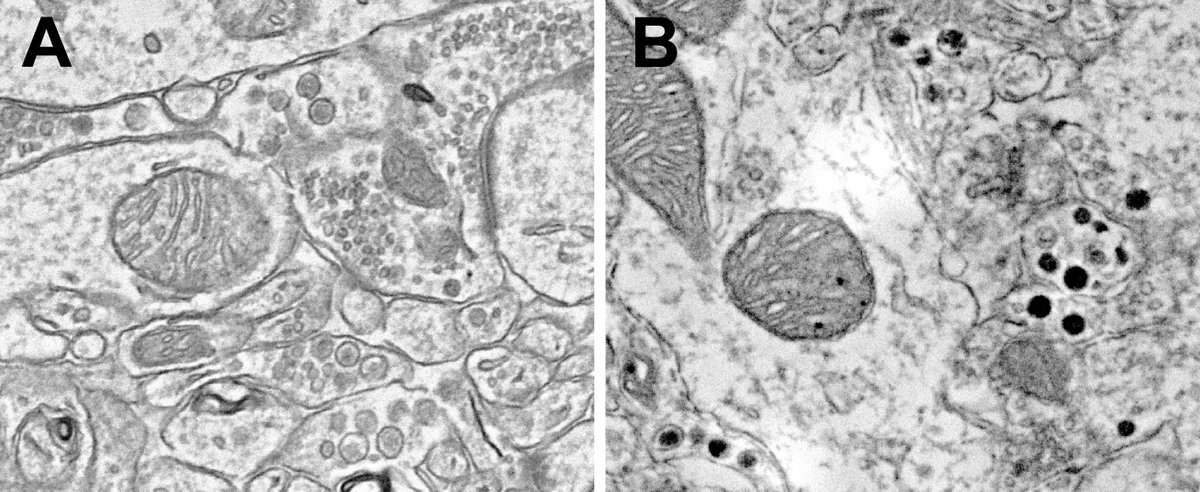
1/6 Exciting news! Our paper is now online in @CellCellPress! We've developed PRESYNAPTIC sensor and silencer for peptidergic transmission. The sensor detects LDCV release events, and the silencer specifically degrades neuropeptides inside the LDCV. https://t.co/mSvwVxVCgU
Very excited to have posted a new preprint on my PhD work in the @brody_lab where we show that rats can achieve near-optimal time investment in a confidence-guided waiting task https://t.co/ogMkGIMN6w.
Excited to share new long-brewing work from the lab! Is the world feeling…..at bit too aggressive? Maybe it would be good to just take it down a notch? We have thoughts about this! https://t.co/iVzOeVCyQX
Check out our new preprint on single cell transcriptomics in the septal complex. Lots of exciting cell types and data following opioid withdrawal to dig in to!
Excited to share that my graduate dissertation work is now finally live on bioarxiv! Take a look if you're interested in learning more about the lateral septum's role in opioid withdrawal: https://t.co/si1xUl32U2
Pleased to share the first preprint from the Opendak Lab! We identified the infant lateral habenula as a site promoting developmental transitions in social behavior and a locus of dysfunction following early adversity. Congrats team!! https://t.co/iVR4YCI6fm
@ryanjhcho GACh3.0 is good, and they also have a newer version (4.0) that I’ve had success with here. Their red-shifted sensor (rACh1.7) is pretty good too! Happy to share details if you want!
Happy to contribute to this special issue on the Hypothalamus and share my thoughts on neurocircuits for motivation. Lots of great reviews in this issue on the diversity of physiological and behavioral functions orchestrated by these critical brain structures!
Our in vivo deep-brain fluorescence recording (photometry, miniscope, multiphoton) primer is finally out! Many thanks to Adam Gordon-Fennell, @PiantadosiSean , @NaJiBerkeley , @Labrigger , @mbruchas , @gstuber for sharing expertise and best practices. https://t.co/uF8ndjKdTa